- Company Articles
- Products and Technology
- Product knowledge
- 4080B EU Standard Aluminum Profile for Laboratory Equipment Frames: Chemical Resistance

4080B EU Standard Aluminum Profile for Laboratory Equipment Frames: Chemical Resistance
Related Product
4080B EU Standard Aluminum Profile
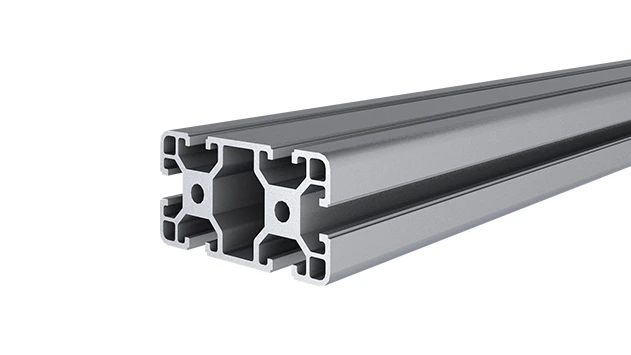
4080B is a 4.00x8.00 CM fractional 40 series square extrusion T-slot profile with two side open T-slots, each side with 4.00cm face, two side with 8.00cm face. The profile has align-a-grooves to assist in aligning connecting profiles.
Walk into any modern laboratory, and you'll likely be struck by the precision—glassware arranged with care, instruments humming softly, and workspaces designed for efficiency. But behind that seamless functionality lies a hidden backbone: the frames that hold everything together. From reagent racks to workbenches, from fume hood supports to equipment carts, these structures don't just need to be strong—they need to stand up to one of the harshest environments on the planet. Labs are battlefields of chemicals: acids, bases, solvents, and corrosive agents that can eat through lesser materials in months. That's where the 4080B EU Standard Aluminum Profile steps in. It's not just a piece of metal; it's a silent guardian, ensuring lab equipment stays sturdy, safe, and reliable for years. Let's dive into why this specific aluminum extrusion profile has become the go-to choice for lab managers and engineers worldwide.
Why Lab Equipment Frames Can't Afford to Cut Corners
Imagine a busy research lab where technicians are pipetting corrosive solutions, spills happen (even with the best protocols), and cleaning agents like ethanol or bleach are used daily. Now, picture the frame of a workbench made from low-grade steel. Within weeks, rust would start to creep in, weakening joints and creating tiny crevices where bacteria could hide. Plastic frames? They might warp under heat from hot plates or crack when exposed to solvents. Wood? Absorbent and prone to harboring contaminants—hardly ideal for sterile environments. The stakes here are high: a failing frame could lead to equipment damage, compromised experiments, or even safety hazards. That's why material choice for lab frames is a decision that demands careful consideration.
Aluminum has long been a favorite in industrial settings, but not all aluminum is created equal. When it comes to labs, the 4080B EU Standard Aluminum Profile stands out for a reason. It's not just about being lightweight or easy to shape—it's about meeting the rigorous demands of chemical resistance, structural integrity, and compliance with strict EU safety standards. Let's break down what makes this aluminum extrusion profile a game-changer.
What Makes 4080B EU Standard Aluminum Profile Special?
First, let's clarify the basics: "4080B" refers to the profile's dimensions—40mm in width and 80mm in height. The "EU Standard" tag isn't just a marketing buzzword; it means the profile adheres to strict European norms for material purity, mechanical properties, and safety. This isn't some generic aluminum extrusion profile churned out in a factory with loose quality control. Every 4080B profile is engineered to meet DIN EN 755 standards, which govern the mechanical properties of aluminum and aluminum alloys for structural applications. For labs, this compliance isn't optional—it's a guarantee that the frame can handle the stresses of daily use without unexpected failures.
But the real star here is the material itself: aluminum alloy 6063, the workhorse of the extrusion world. Known for its excellent extrudability, corrosion resistance, and smooth finish, 6063 is alloyed with magnesium and silicon, which form a tight, protective oxide layer when exposed to air. This layer isn't just a surface coating; it's integral to the metal, self-healing if scratched, and impervious to most common lab chemicals. Unlike steel, which requires constant painting or galvanizing to resist rust, aluminum's oxide armor is built-in—no extra maintenance needed. That's a huge win for labs where time and resources are better spent on research than on frame upkeep.
The Science of Chemical Resistance: Why Aluminum Oxide Beats Rust
To understand why 4080B profiles thrive in chemical environments, let's get a little technical (but don't worry—we'll keep it simple). When aluminum reacts with oxygen, it forms aluminum oxide (Al₂O₃), a thin, transparent layer just a few nanometers thick. This layer is dense, non-porous, and chemically inert to most substances. Think of it as a microscopic shield that covers every inch of the profile. Even if you scratch the surface, the exposed aluminum immediately reacts with oxygen to reform the oxide layer, sealing the wound before corrosion can set in.
Compare this to steel, which forms iron oxide (rust) when exposed to moisture and oxygen. Rust is porous and flaky, meaning it doesn't protect the underlying metal—in fact, it accelerates corrosion by trapping water and oxygen. For labs using acids like hydrochloric acid or bases like sodium hydroxide, steel frames would be a disaster. Aluminum, on the other hand, laughs off these threats. Tests show that 6063 aluminum resists corrosion in solutions with pH levels ranging from 4 to 9—covering most common lab chemicals, including ethanol, isopropyl alcohol, acetone, and dilute acids/bases. Even in cases of accidental spills, the 4080B profile won't pit, crack, or weaken. It just keeps doing its job, quietly supporting the equipment that powers scientific breakthroughs.
Fun Fact: The same aluminum oxide layer that protects lab frames is also used in industrial coatings, abrasives, and even gemstones (sapphires and rubies are just aluminum oxide with trace impurities!). Nature's way of making aluminum tough is pretty impressive, right?

Beyond Resistance: The Practical Perks of 4080B Profiles
Chemical resistance is non-negotiable, but labs need more than just a corrosion-proof frame. They need flexibility, too. Research needs change—today's reagent rack might need to be reconfigured into a workbench tomorrow, or a cart might need to be modified to hold new equipment. 4080B profiles excel here thanks to their modular design, made possible by aluminum profile accessories that turn a simple extrusion into a customizable system.
Take aluminum profile end caps, for example. These small, unassuming pieces snap onto the ends of the 4080B profile, covering sharp edges and preventing dust, liquids, or debris from getting inside the T-slot (the groove that runs along the profile's length). In a lab, where spills are inevitable, end caps act as a first line of defense, stopping corrosive liquids from pooling inside the profile and weakening it from within. They also add a clean, finished look—important for maintaining a sterile environment where even tiny crevices can harbor contaminants.
Then there are aluminum guide rails, like Aluminum Guide Rail A, which slide into the T-slots of the 4080B profile. These rails create smooth, low-friction surfaces for drawers, shelves, or sliding panels. Imagine a reagent rack where each shelf glides open with a gentle push, even when loaded with heavy bottles. That's the magic of combining 4080B profiles with guide rails. The T-slot design means you can position the rails anywhere along the profile, no drilling or welding required. Need to adjust shelf heights? Just loosen the bolts, slide the rail, and retighten. It's that easy—no need to call in a contractor or disrupt lab operations.
A Table: How 4080B Aluminum Stacks Up Against Other Materials
| Material | Chemical Resistance | Weight (kg/m) | Customization | Long-Term Cost |
|---|---|---|---|---|
| 4080B EU Standard Aluminum Profile | Excellent (resists most lab chemicals; self-healing oxide layer) | 2.5–3.0 (lightweight, easy to maneuver) | High (modular with T-slots and accessories like end caps, guide rails) | Low (no maintenance; long lifespan) |
| Mild Steel | Poor (rusts quickly; requires painting/galvanizing) | 7.8–8.5 (heavy, hard to reconfigure) | Low (welding required for modifications) | High (frequent repainting; replacement every 3–5 years) |
| Plastic (PVC/PP) | Good (resists some chemicals, but not heat) | 1.2–1.5 (very lightweight, but prone to warping) | Medium (limited by mold design; no T-slots) | Medium (replacement every 2–4 years due to warping/UV damage) |
| Stainless Steel (304) | Good (resists corrosion, but vulnerable to chloride solutions) | 8.0–9.0 (heavy, difficult to reposition) | Medium (welding required; limited modularity) | High (expensive upfront; heavy, so shipping/installation costs add up) |
As the table shows, 4080B aluminum isn't just better than steel or plastic—it's smarter. Its lightweight nature makes it easy to install and reconfigure, while its chemical resistance ensures it lasts for decades. And while stainless steel might seem like a close competitor, its weight and lack of modularity make it a poor fit for labs that need flexibility. Plus, stainless steel is prone to pitting corrosion in the presence of chlorides (think bleach or salt solutions), which are common in lab cleaning protocols. 4080B aluminum? No such issues.
Real-World Stories: How Labs Are Using 4080B Profiles
Let's take a trip to a pharmaceutical lab in Berlin to see the 4080B profile in action. This lab specializes in developing new cancer treatments, and their workflow demands strict sterility and adaptability. A few years ago, they were using steel frames for their reagent racks, but frequent rusting meant they had to replace the racks every 2–3 years. The cost wasn't just financial—each replacement disrupted experiments, forcing researchers to pause work for days. Then, they switched to 4080B profiles with aluminum profile end caps and Aluminum Guide Rail A.
Today, their racks are still going strong after five years. Even with daily exposure to ethanol wipes and occasional spills of DMSO (a common solvent), the profiles show no signs of corrosion. The modular design has been a game-changer, too. When the lab expanded its research into mRNA vaccines, they needed to add new shelves to hold larger equipment. Instead of buying new racks, they simply added more 4080B sections and repositioned the guide rails. The whole project took a single afternoon, with zero downtime for experiments. "It's like having a lab that can grow with us," one lab manager told me. "We don't have to plan around the frames anymore—they adapt to us."
Another example comes from a food science lab in Barcelona, where researchers test food safety by exposing samples to harsh acids and enzymes. Their workbenches, once made of wood, were constantly warping and staining, even with protective coatings. Switching to 4080B frames topped with chemical-resistant laminate has been transformative. The aluminum frames don't absorb liquids, so spills wipe clean in seconds. The T-slots allow them to attach tools like pipette holders and waste bins directly to the bench, keeping the workspace clutter-free. "We used to spend hours scrubbing stains off the old benches," a technician said. "Now, we just wipe and get back to work. It's saved us so much time."
Installation Tips: Getting the Most Out of Your 4080B Profile
So, you're convinced—4080B is the way to go for your lab. But how do you ensure a smooth installation? Here are a few pro tips from lab engineers:
- Start with a sketch: Plan your frame layout before buying materials. Measure the space, note where you'll need shelves or rails, and mark T-slot positions. This prevents overbuying or underbuying profiles.
- Invest in quality accessories: Cheap end caps or guide rails can compromise the profile's performance. Stick with reputable brands that specialize in aluminum extrusion profile accessories—they'll fit better and last longer.
- Use torque wrenches: When attaching accessories to the T-slots, don't overtighten the bolts. Aluminum is strong, but excessive force can strip the threads. A torque wrench set to 8–10 Nm will ensure a secure fit without damage.
- Clean before assembly: Wipe down the profiles with isopropyl alcohol to remove any oils or debris from manufacturing. This ensures a tight bond between the profile and accessories.
The Future of Lab Frames: Why 4080B Profiles Are Here to Stay
As labs evolve—becoming more automated, more sustainable, and more focused on collaboration—the demand for flexible, durable frames will only grow. 4080B EU Standard Aluminum Profiles are perfectly positioned to meet this demand. Their lightweight design aligns with sustainability goals (less energy to transport and install), while their modularity supports the shift toward adaptable lab spaces. Plus, aluminum is 100% recyclable, so when a frame finally reaches the end of its life (which could be 15–20 years from now), it can be melted down and reused—no waste, no guilt.
Manufacturers are also innovating, adding new features to 4080B profiles like integrated cable management (channels for wires and tubes) and antimicrobial coatings for extra protection in sterile labs. These advancements mean the profile will only become more versatile in the years ahead. For lab managers, this is reassuring: investing in 4080B profiles today isn't just a short-term fix—it's a long-term investment in the lab's future.
Final Thoughts: The Quiet Power of a Well-Chosen Frame
In the world of lab equipment, it's easy to focus on the flashy stuff—the high-tech spectrometers, the automated pipettors, the ultra-cold freezers. But without strong, reliable frames, none of that equipment would have a stable home. The 4080B EU Standard Aluminum Profile is the unsung hero here, working behind the scenes to keep labs safe, efficient, and adaptable. Its chemical resistance, modular design, and compliance with EU standards make it more than just a material choice—it's a strategic decision that impacts everything from research productivity to long-term costs.
So, the next time you walk into a lab, take a moment to look at the frames. Chances are, they're 4080B profiles, quietly doing their job. And if they're not? Maybe it's time to have a chat with the lab manager. After all, in science, as in life, the best innovations often start with the basics—like choosing the right frame to build on.