- Company Articles
- Products and Technology
- Product knowledge
- 4080B EU Standard Aluminum Profile for Material Flow Systems in Lean Warehouses

4080B EU Standard Aluminum Profile for Material Flow Systems in Lean Warehouses
Related Product
4080B EU Standard Aluminum Profile
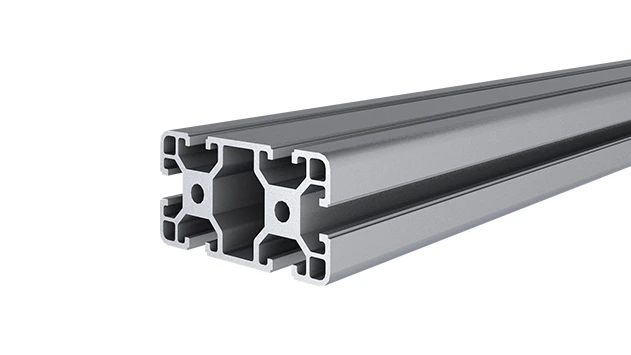
4080B is a 4.00x8.00 CM fractional 40 series square extrusion T-slot profile with two side open T-slots, each side with 4.00cm face, two side with 8.00cm face. The profile has align-a-grooves to assist in aligning connecting profiles.
In the fast-paced world of modern warehousing, where every second counts and efficiency is the name of the game, lean principles have become more than just a buzzword—they're the backbone of sustainable success. At the heart of any lean warehouse lies a well-oiled material flow system: the invisible force that ensures products move smoothly from receiving to shipping, minimizing waste, reducing bottlenecks, and keeping operations running like clockwork. But here's the thing: even the best lean strategies can fall flat without the right tools to support them. That's where the 4080B EU Standard Aluminum Profile steps in—a unsung hero that's quietly revolutionizing how warehouses build, adapt, and optimize their material flow systems.
The Rise of Aluminum Extrusion Profiles in Lean Systems
Gone are the days when warehouses relied on clunky, one-size-fits-all steel structures that took weeks to assemble and even longer to reconfigure. Today's lean operations demand flexibility, durability, and speed—and aluminum extrusion profiles have emerged as the answer to these demands. Lightweight yet surprisingly strong, these profiles are engineered to be modular, meaning they can be easily connected, extended, or modified using simple tools and a range of aluminum profile accessories. This modularity is a game-changer for lean systems, where adaptability is key to responding to shifting product lines, seasonal demands, or unexpected changes in workflow.
Aluminum extrusion profiles aren't just about flexibility, though. They're also about precision. Designed with standardized T-slots along their length, these profiles allow for seamless integration with everything from roller tracks and swivel roller balls to casters, leveling feet, and workbench surfaces. This compatibility means that a single profile can serve as the foundation for a flow rack one month, a workbench the next, and a conveyor system the month after—all without needing to invest in entirely new infrastructure. For lean warehouses, this translates to lower costs, less waste, and a system that grows and evolves right alongside the business.
What Makes the 4080B EU Standard Aluminum Profile Stand Out?
Among the many aluminum profiles on the market, the 4080B EU Standard Aluminum Profile has earned a reputation as a workhorse for material flow systems—and for good reason. Let's start with the basics: the "4080" in its name refers to its dimensions, measuring 40mm in width and 80mm in height. This unique size strikes a perfect balance between strength and versatility, making it sturdy enough to support heavy loads (think pallets of electronics or bulk goods) while remaining lightweight enough to be maneuvered by a small team during assembly or reconfiguration.
But the 4080B isn't just about size—it's about quality. Manufactured to strict EU standards, this profile is made from high-grade aluminum alloy (typically 6063-T5, known for its excellent strength-to-weight ratio and corrosion resistance), ensuring it can withstand the wear and tear of daily warehouse life. Whether it's exposed to humidity, frequent impacts from moving goods, or the constant vibration of conveyor systems, the 4080B holds its own, reducing the need for frequent repairs or replacements. For lean operations, this durability translates to less downtime and more consistent performance—two critical factors in maintaining optimal material flow.
Another standout feature of the 4080B is its precision-engineered T-slots. These slots, which run the length of the profile, are spaced at standardized intervals, allowing for easy attachment of aluminum profile accessories like brackets, connectors, and roller track mounts. Unlike some cheaper profiles with irregular slot sizes, the 4080B's slots are designed to fit industry-standard fasteners and accessories, eliminating the frustration of mismatched parts and ensuring a secure, wobble-free connection every time. This attention to detail might seem small, but in a warehouse where even a loose bracket can disrupt an entire flow line, it's invaluable.

Why 4080B is a Lean Warehouse's Best Friend
So, what exactly makes the 4080B EU Standard Aluminum Profile so well-suited for lean material flow systems? Let's break it down into the benefits that matter most to warehouse managers, operators, and bottom lines.
1. Modularity that Reduces Waste
Lean is all about eliminating waste, and one of the biggest sources of waste in traditional warehouse setups is "overproduction" of infrastructure—building systems that are larger or more permanent than needed, only to tear them down months later when requirements change. The 4080B's modular design puts an end to this. Since it can be assembled and disassembled in hours (not days), warehouses can build exactly what they need, when they need it. Need to add a new flow rack for a seasonal product? Just connect a few 4080B profiles with aluminum angle codes and roller track placon mounts. No longer need that workbench? Disassemble it and reuse the profiles elsewhere. This "build-as-you-go" approach cuts down on excess materials, storage costs for unused parts, and the labor hours wasted on unnecessary construction.
2. Durability that Lowers Long-Term Costs
While aluminum might seem pricier upfront than some plastics or lower-grade metals, the 4080B's longevity more than makes up for it. Unlike steel, which can rust over time (especially in humid warehouse environments), aluminum is naturally corrosion-resistant, meaning it won't degrade or weaken even after years of use. Its high tensile strength also means it can support heavy loads without bending or warping, reducing the risk of system failures that could lead to damaged products or injured workers. When you factor in the reduced need for replacements, repairs, or repainting, the 4080B quickly becomes one of the most cost-effective investments a lean warehouse can make.
3. Compatibility with a World of Accessories
A profile is only as good as the accessories it works with—and the 4080B plays well with just about everyone. From roller track placon mounts that secure roller tracks to the profile, to swivel roller balls that let products glide smoothly across flow racks, to caster wheels that turn a stationary workbench into a mobile workstation, the 4080B is designed to integrate seamlessly with a vast array of aluminum profile accessories. This compatibility means warehouses aren't locked into a single supplier or a limited set of configurations. Want to add ESD protection to a workbench for electronics assembly? There's an ESD-compatible accessory for that. Need to adjust the height of a flow rack to match a new conveyor line? Leveling feet and height-adjustable brackets have you covered. The possibilities are nearly endless, making the 4080B a truly versatile foundation for any material flow system.
| Aluminum Profile Accessory | Function | Benefit for Material Flow |
|---|---|---|
| Roller Track Placon Mount (Flat) | Secures roller tracks to the flat surface of 4080B profiles | Creates stable, low-friction pathways for products on flow racks |
| Swivel Roller Balls (1 inch) | Allows 360° movement of goods on workbench surfaces | Reduces manual lifting, speeding up picking and packing tasks |
| Adjustable Leveling Feet | Levels uneven workbenches or racks on warehouse floors | Prevents product jams on flow lines caused by tilting |
| 90° Aluminum Profile Connector | Joins two 4080B profiles at a right angle | Enables quick assembly of sturdy, square frames for racks or workbenches |
| Caster Wheels with Brake | Adds mobility to workbenches or mobile racks | Facilitates on-demand reconfiguration of workstations or flow paths |
4. Speed of Assembly (and Reassembly)
In a lean warehouse, time is money—and the 4080B saves plenty of both when it comes to setup. Unlike steel structures that require welding, drilling, or specialized tools, assembling a 4080B-based system is as simple as sliding accessories into the T-slots, tightening a few bolts, and you're good to go. Even complex setups, like a multi-tier flow rack or a custom workbench with integrated tool storage, can be put together in a fraction of the time it would take with traditional materials. And when it's time to reconfigure? Just loosen the bolts, disconnect the profiles, and rearrange—no cutting, grinding, or messy cleanup required. This speed means warehouses can respond quickly to new orders, seasonal spikes, or process improvements, keeping material flow efficient even as demands change.
Real-World Applications: 4080B in Action
Talk is cheap—so let's take a look at how the 4080B EU Standard Aluminum Profile is actually being used to transform material flow systems in lean warehouses today.
Flow Racks: The Heartbeat of Material Flow
Flow racks are the workhorses of many warehouses, using gravity to move products from the back (loading) to the front (picking), ensuring first-in, first-out (FIFO) inventory management and reducing the need for manual restocking. The 4080B profile is ideal for building these racks because of its strength-to-weight ratio—able to support multiple levels of roller tracks loaded with heavy boxes or totes without sagging. By pairing 4080B frames with plastic roller track guide rails (yellow or grey, depending on visibility needs) and swivel roller balls, warehouses can create flow paths that are both smooth and quiet, minimizing product damage and operator fatigue. One electronics manufacturer in Germany, for example, replaced their old steel flow racks with 4080B-based systems and reported a 25% reduction in picking errors, thanks to the improved stability and better alignment of the roller tracks.
Workbenches: Where Precision Meets Productivity
Workbenches are more than just tables—they're command centers where operators assemble products, inspect goods, or pack orders. A wobbly, poorly designed workbench can slow down tasks, increase errors, and even lead to ergonomic injuries. The 4080B profile addresses all these issues by providing a rock-solid base that can be customized to fit any workflow. Want a workbench with a single deck (without casters) for a stationary assembly line? Just connect 4080B profiles with internal rotary aluminum joints and add a sturdy top. Need a mobile workstation that can be wheeled to different areas of the warehouse? Attach caster wheels with brakes to the base. Some warehouses even add swivel roller balls to the workbench surface to make it easier to slide heavy components into place, cutting down on manual lifting and speeding up assembly times. The result? Happier, more productive operators and a noticeable boost in throughput.
Conveyors: Bridging the Gaps in Material Flow
Conveyors are the arteries of a warehouse, moving products between stations, floors, or departments. But traditional conveyor systems can be rigid and expensive to modify—until now. The 4080B profile is changing the game by making conveyor systems modular and adaptable. By using 4080B frames to support roller tracks, belt conveyors, or even chain conveyors, warehouses can build custom conveyor lines that fit their exact space and load requirements. And when needs change? Simply extend the frame with additional 4080B profiles and connect new roller track sections using roller track placon mount connectors. A food distribution center in France recently used this approach to add a new conveyor branch to their existing system in just two days, allowing them to handle a sudden influx of frozen goods without disrupting their main flow line.
Why 4080B Beats Other Materials Hands Down
It's easy to see why the 4080B is gaining popularity, but how does it stack up against other materials commonly used in warehouse systems? Let's compare:
Steel: Steel is strong, but it's also heavy, prone to rust, and requires welding or specialized tools to assemble. A steel flow rack might last for decades, but if you need to move it or adjust its height, you're looking at a major project. The 4080B, by contrast, is lightweight enough for two people to carry, resists corrosion, and can be reconfigured in hours—not days.
Plastic: Plastic profiles are cheap and lightweight, but they lack the strength to support heavy loads. A plastic flow rack might work for small, lightweight items, but try stacking pallets on it, and you'll likely end up with a collapsed system. The 4080B's aluminum alloy construction offers the best of both worlds: lightness and strength.
Wood: Wood is affordable and easy to work with, but it's not durable enough for high-traffic warehouse environments. It warps with humidity, splinters with heavy use, and can't be easily reconfigured. The 4080B, on the other hand, stands up to moisture, impacts, and daily wear, making it a far more reliable long-term investment.
The Future of Lean Warehousing: Built on 4080B
As warehouses continue to embrace automation, IoT, and data-driven optimization, the demand for flexible, smart material flow systems will only grow. The 4080B EU Standard Aluminum Profile is perfectly positioned to meet this demand, thanks to its compatibility with modern warehouse technologies. Imagine a flow rack built with 4080B profiles that's equipped with sensors to track inventory levels in real time, or a workbench that can be adjusted automatically via motorized brackets connected to the profile's T-slots. These aren't just pipe dreams—they're already being tested in forward-thinking warehouses, and the 4080B is the foundation making it all possible.
What's more, as sustainability becomes a key focus for businesses worldwide, the 4080B's eco-friendly credentials are hard to ignore. Aluminum is 100% recyclable, and since the 4080B is modular, it can be reused or repurposed instead of ending up in a landfill when a system is no longer needed. This aligns perfectly with lean principles, which emphasize reducing environmental waste alongside operational waste.
Final Thoughts: Invest in the Foundation, Reap the Rewards
At the end of the day, a lean warehouse is only as strong as the systems that support it. And when it comes to material flow, the 4080B EU Standard Aluminum Profile isn't just a support system—it's a strategic investment in efficiency, adaptability, and long-term success. By choosing a profile that's durable, modular, and compatible with a wide range of aluminum profile accessories, warehouses can build material flow systems that grow with their business, reduce waste, and keep operations running smoothly no matter what challenges come their way.
So, if you're looking to take your lean warehouse to the next level, don't overlook the power of a well-chosen aluminum profile. The 4080B might not be the most glamorous part of your operation, but it's the quiet force that will keep your material flow moving, your waste minimized, and your bottom line healthy—today, tomorrow, and for years to come.