
In the fast-paced world of mechatronic systems—where precision engineering meets automated processes—one thing remains constant: the need for reliable, adaptable structural support. Whether you're building a high-tech assembly line, a custom workbench, or a material handling system, the backbone of these setups often comes down to the components that hold everything together. Enter the 4080B EU Standard Aluminum Extrusion Profile—a workhorse in the industry that's quietly revolutionizing how manufacturers approach structural design. Let's dive into why this unassuming piece of aluminum has become a cornerstone for mechatronic systems, and how it delivers the strength, flexibility, and efficiency modern operations demand.
Understanding Mechatronic Systems: Why Structural Support Matters
Mechatronic systems blend mechanical engineering, electronics, and software to create everything from robotic arms to automated packaging lines. These systems are dynamic—they move, lift, sort, and assemble with pinpoint accuracy. But all that motion and precision puts immense strain on their structural frameworks. A weak or rigid support system can lead to vibrations that throw off calibrations, uneven weight distribution that causes premature wear, or inflexible designs that can't adapt when production needs change.
Traditionally, manufacturers leaned on steel for structural support. It's strong, sure, but it's also heavy, hard to modify, and prone to rust. As mechatronics evolved—demanding lighter, more agile setups—steel started to feel like a relic. That's where aluminum extrusion profiles stepped in. And among them, the 4080B EU Standard stands out as a top choice for engineers and plant managers who refuse to compromise on performance.
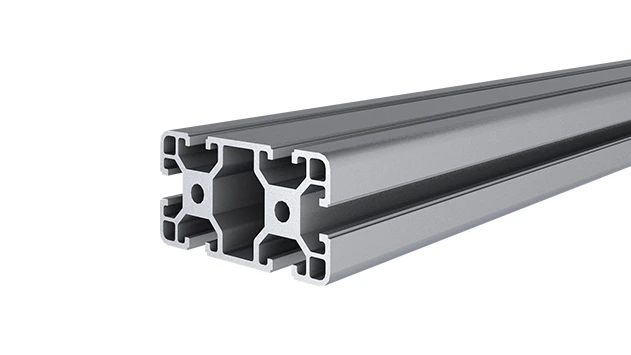
What Is the 4080B EU Standard Aluminum Extrusion Profile?
Let's start with the basics: the 4080B is a type of aluminum extrusion profile, meaning it's created by forcing heated aluminum alloy through a die to form a specific cross-sectional shape. Its name gives away its dimensions: 40mm in width and 80mm in height. But there's more to it than just size. This profile is designed to meet strict EU standards, which cover everything from material quality to dimensional accuracy and safety.
Most 4080B profiles are made from 6063-T5 aluminum alloy—a popular choice for structural applications. Why? Because 6063 aluminum offers an unbeatable balance of strength, corrosion resistance, and workability. The T5 tempering process (artificial aging) further enhances its mechanical properties, making it rigid enough to support heavy loads while remaining lightweight. For mechatronic systems, where every gram counts (especially in moving parts), this lightweight strength is a game-changer.
EU compliance isn't just a stamp of approval—it's a guarantee. When you use a 4080B profile, you know it meets EN 755 standards for aluminum extrusions, ensuring consistent quality across batches. This matters for manufacturers operating in Europe or exporting to EU markets, as non-compliant components can lead to costly delays or rejected shipments.

The Role of 4080B in Structural Support: Key Advantages
So, what makes the 4080B such a standout for structural support in mechatronic systems? Let's break down its biggest advantages:
1. Impressive Load-Bearing Capacity Without the Bulk
Don't let its sleek design fool you—the 4080B is a heavyweight when it comes to carrying loads. Thanks to its wide 80mm height and optimized cross-section (often featuring internal ribs for added rigidity), it can support hundreds of kilograms per linear meter. This makes it ideal for building sturdy workbenches, multi-tiered material racks, or even conveyor frames that need to handle continuous product flow without sagging.
Compare that to smaller profiles like the 3030A (30mm x 30mm), which, while useful for lighter applications, simply can't match the 4080B's load capacity. For mechatronic systems that involve heavy machinery or large components, this extra strength is non-negotiable.
2. Modularity: Build, Adapt, Repeat
One of the 4080B's most loved features is its T-slot design. Running along its length are grooves (T-slots) that allow for easy attachment of aluminum profile accessories—think brackets, joints, panels, or even custom components. This modularity means you're not stuck with a "one-and-done" structure. Need to add a shelf to your workbench? Just slide in a bracket. Want to reconfigure a conveyor system for a new product line? Loosen a few fasteners, adjust the profiles, and you're good to go.
In mechatronics, where production lines are constantly evolving, this flexibility reduces downtime and keeps operations agile. Unlike welded steel structures, which require cutting and rewelding to modify, the 4080B lets you adapt on the fly—saving time, labor, and money.
3. Corrosion Resistance for Longevity
Mechatronic systems often operate in environments where moisture, oils, or chemicals are present (think automotive or food processing plants). Steel might rust under these conditions, but aluminum's natural oxide layer acts as a protective barrier against corrosion. The 4080B takes this a step further: many suppliers offer anodized finishes, which thicken the oxide layer, making it even more resistant to wear and tear. This means your structural framework will last longer, reducing replacement costs and maintenance headaches.
How Does 4080B Stack Up Against Other Aluminum Profiles? A Quick Comparison
To truly appreciate the 4080B, it helps to see how it compares to other common aluminum extrusion profiles. Let's take a look at a few popular options and how they measure up in key areas like load capacity and application suitability:
| Profile Type | Dimensions (WxH) | Max Load Capacity (Approx.) | Best For |
|---|---|---|---|
| 4080B EU Standard | 40mm x 80mm | 400-500 kg/m (uniformly distributed) | Heavy-duty workbenches, material racks, conveyor frames |
| 4040A EU Standard | 40mm x 40mm | 200-300 kg/m | Light to medium shelving, small workstations |
| 3030A EU Standard | 30mm x 30mm | 100-150 kg/m | Prototyping, lightweight frames, desktop setups |
| 2020 EU Standard | 20mm x 20mm | 50-80 kg/m | DIY projects, small-scale automation, hobby robotics |
As the table shows, the 4080B outperforms smaller profiles in load capacity, making it the go-to for heavy-duty structural tasks. But it's not just about raw strength—it's about versatility. The 4080B's size strikes a perfect balance: it's beefy enough to support serious weight, yet not so large that it becomes cumbersome to work with. This makes it adaptable to a wide range of mechatronic applications, from static workbenches to dynamic conveyor systems.
Aluminum Profile Accessories: Taking 4080B to the Next Level
A profile is only as good as the accessories that bring it to life. The 4080B's T-slot design is compatible with a vast array of aluminum profile accessories, turning a simple length of aluminum into a fully functional structural system. Let's explore some key accessories that make the 4080B so versatile:
Joints and Connectors: Building Without Welding
Gone are the days of welding metal frames together. With 4080B, you can use modular joints and connectors to assemble structures in minutes. For example, 90° aluminum profile connectors let you join two profiles at a right angle securely, while internal rotary aluminum joints allow for adjustable angles—perfect for creating slopes in flow racks or tilting work surfaces. These joints are designed to fit snugly into the T-slots, ensuring a tight, rattle-free connection that can withstand vibrations in mechatronic systems.
Aluminum Guide Rail A: Smoothing Material Flow
Many mechatronic systems rely on the smooth movement of parts—think conveyors, pick-and-place machines, or assembly lines. That's where aluminum guide rail A comes in. This accessory is designed to mount directly onto 4080B profiles, creating a linear track for rollers, sliders, or even small carts. The precision-machined surface of aluminum guide rail A ensures minimal friction, allowing parts to glide effortlessly. Whether you're building a gravity-fed flow rack or a powered conveyor, this guide rail turns the 4080B into a foundation for seamless material handling.
Casters and Leveling Feet: Mobility and Stability
Sometimes you need your structure to stay put; other times, you need it to move. 4080B profiles work with both caster wheels (for mobility) and adjustable leveling feet (for stability). Heavy-duty casters with brakes can transform a static workbench into a mobile workstation, letting operators reposition tools as needed. Leveling feet, on the other hand, ensure that even on uneven factory floors, your 4080B frame remains steady—critical for precision tasks like electronics assembly.
End Caps and Covers: Finishing Touches That Matter
It's the little things that count. 4080 aluminum profile end caps snap onto the ends of the profile, covering sharp edges and preventing dust, debris, or moisture from entering the T-slots. This not only improves safety (no more scraped knuckles!) but also extends the life of the profile by protecting it from corrosion. For mechatronic systems in cleanrooms or food processing environments, where hygiene is a priority, these end caps are more than accessories—they're essential.
Real-World Applications: How 4080B Powers Mechatronic Systems
Enough theory—let's look at how the 4080B is used in actual mechatronic setups. From automotive plants to electronics factories, this profile is the backbone of some of the most innovative systems on the market.
Workbench Construction: The Heart of the Assembly Line
A mechatronic assembly line is only as efficient as its workbenches. These are where operators spend hours assembling components, testing circuits, or programming robots. A flimsy workbench can lead to fatigue, errors, or even equipment damage. That's why many manufacturers choose 4080B profiles to build their workstations.
Imagine a workbench E (single deck, without casters) built with 4080B frames. The profile's load capacity easily supports a heavy aluminum honeycomb panel top, while T-slots along the sides allow for mounting tools, monitors, or ESD (electrostatic discharge) mats. Aluminum guide rail A might run along the back edge, feeding components to the operator via gravity, reducing the need for manual reaching. The result? A sturdy, organized workspace that keeps operators comfortable and productive—exactly what mechatronic systems need to thrive.
Material Handling: Flow Racks and Conveyors
Mechatronic systems often require a steady stream of materials—PCBs, sensors, motors—to keep production moving. 4080B profiles excel at building material racks and conveyors that ensure this flow never stops. For example, a material rack B (3 rows, 3 floors) constructed with 4080B can hold hundreds of kilograms of components, with each shelf reinforced by cross-bracing made from the same profile. The modular design means you can add or remove shelves as inventory needs change, supporting lean system principles by eliminating waste (like excess storage space).
Conveyors are another area where 4080B shines. Roller tracks mounted on 4080B frames create smooth, reliable transport systems for parts. The profile's rigidity prevents sagging, even over long distances, ensuring parts move at a consistent speed. And because it's lightweight, the entire conveyor system is easier to install and modify—no need for heavy machinery or permanent foundations.
Lean System Integration: Flexibility for Changing Needs
Lean manufacturing is all about maximizing value while minimizing waste—and the 4080B is a lean system's best friend. Its modular design allows manufacturers to adapt their structural setups quickly. Need to reconfigure an assembly line to produce a new product? Simply disassemble the 4080B frames, swap out accessories, and rebuild. No cutting, welding, or repainting required. This flexibility reduces downtime and ensures that mechatronic systems can keep up with fast-changing market demands.
Additionally, the 4080B's compatibility with aluminum profile accessories means you only buy what you need, when you need it. No over-investing in custom steel structures that become obsolete in a year. This "build-as-you-go" approach aligns perfectly with lean principles, helping manufacturers stay agile and cost-effective.
Why Choose 4080B Over Other Materials?
We've talked a lot about why 4080B is great, but how does it stack up against other structural materials like steel or plastic?
Steel is strong, but it's heavy and prone to rust. A steel frame for a mechatronic workbench might require a forklift to move and regular painting to prevent corrosion. The 4080B, by contrast, can be carried by two people and resists rust naturally. Plastic profiles are lightweight but lack the load capacity—they're fine for DIY projects but not for industrial mechatronics.
Wood? It's cheap, but it warps, splinters, and can't handle the moisture or chemicals often found in manufacturing environments. The 4080B's aluminum construction is durable, low-maintenance, and built to last for decades—making it a smarter long-term investment.
Conclusion: The 4080B—A Foundation for Mechatronic Success
In the world of mechatronic systems, where precision, reliability, and adaptability are non-negotiable, the 4080B EU Standard Aluminum Extrusion Profile stands out as a structural champion. Its unique combination of strength, lightweight design, and modularity makes it the ideal choice for engineers who refuse to compromise. Whether you're building a heavy-duty workbench, a dynamic conveyor system, or a lean manufacturing setup, the 4080B delivers the support you need—today and tomorrow.
And let's not forget the aluminum profile accessories that make it all possible: joints that simplify assembly, aluminum guide rail A that ensures smooth material flow, and casters that add mobility. Together, they turn the 4080B into more than just a profile—it's a complete structural solution.
So, the next time you walk through a manufacturing plant or a tech facility, take a closer look at the frames holding everything together. Chances are, you'll spot the 4080B hard at work—quietly, reliably, and efficiently supporting the mechatronic systems that power our modern world.