- Company Articles
- Products and Technology
- Product knowledge
- 4080B EU Standard Aluminum Profile for Packaging Machinery Frames: Reliability in High-Speed Operations

4080B EU Standard Aluminum Profile for Packaging Machinery Frames: Reliability in High-Speed Operations
Related Product
4080B EU Standard Aluminum Profile
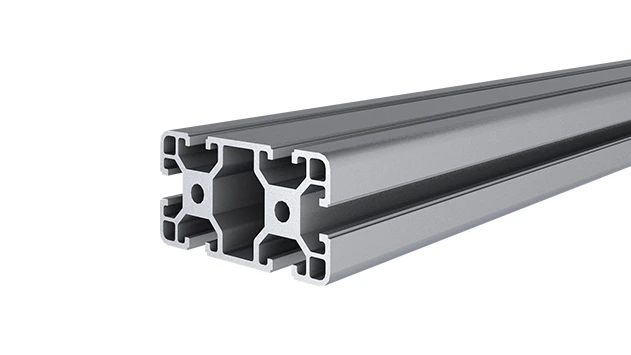
4080B is a 4.00x8.00 CM fractional 40 series square extrusion T-slot profile with two side open T-slots, each side with 4.00cm face, two side with 8.00cm face. The profile has align-a-grooves to assist in aligning connecting profiles.
The Unsung Hero of High-Speed Packaging Lines
Walk into any modern packaging facility, and you'll likely be met with a symphony of motion: bottles zipping along conveyors, cartons folding with pinpoint precision, and machines humming at speeds that seem almost inhuman. In these high-stakes environments, where a single second of downtime can cost thousands in lost production, every component matters—but none more so than the frames that hold everything together. These frames are the silent workhorses, absorbing vibrations, supporting heavy loads, and maintaining alignment even when machines run at full tilt for hours on end. And when it comes to reliability in these conditions, one material has emerged as a game-changer: the 4080B EU Standard Aluminum Profile.
Packaging machinery today isn't just fast—it's relentless . Whether it's a beverage line cranking out 1,000 bottles per minute or a pharmaceutical packaging system handling delicate vials with zero room for error, the frames must withstand constant stress. They need to be rigid enough to prevent machine wobble (which throws off precision), lightweight enough to keep energy costs low, and adaptable enough to accommodate layout changes as production needs evolve. Enter the 4080B aluminum extrusion profile—a solution designed to meet these demands head-on.
What Makes the 4080B Profile Stand Out?
At first glance, aluminum profiles might all look similar, but the 4080B is in a league of its own. Let's start with the basics: it's an aluminum extrusion profile, meaning it's crafted by forcing heated aluminum alloy through a die to create a consistent, complex cross-section. This process isn't just efficient—it results in a material with exceptional structural integrity. The "4080" in its name refers to its dimensions: 40mm in width and 80mm in height, a sweet spot that balances strength and versatility. The "B" denotes its specific design within the EU standard range, optimized for heavy-duty applications like packaging machinery frames.
But numbers alone don't tell the story. What truly sets the 4080B apart is its ability to handle the unique challenges of high-speed operations. Let's break it down:
- Rigidity Under Stress: High-speed machinery generates significant vibrations. If a frame flexes even slightly, it can throw off alignment, leading to misfeeds, jams, or product defects. The 4080B's thick, uniform walls and internal ribbing (a hallmark of quality aluminum extrusion profiles) provide exceptional torsional rigidity. This means it stays stable, even when supporting heavy motors, conveyors, or robotic arms.
- Lightweight Strength: Steel frames might offer brute strength, but they're heavy—adding unnecessary load to conveyor systems and increasing energy consumption. Aluminum, by contrast, is about 1/3 the weight of steel while still boasting impressive tensile strength (around 200 MPa for the 6063-T5 alloy commonly used in 4080B profiles). This lightweight nature also makes installation and reconfiguration easier, a boon for facilities that need to adapt quickly to new product lines.
- Corrosion Resistance: Packaging environments are often harsh. Beverage lines deal with spills, pharmaceutical lines require strict sanitization, and food packaging lines face humidity and cleaning chemicals. Aluminum's natural oxide layer acts as a barrier against corrosion, ensuring the frame won't rust or degrade over time—unlike uncoated steel, which needs constant maintenance to stay functional.

Building a Better Frame: The Role of Aluminum Profile Accessories
A profile is only as good as the accessories that bring it to life. The 4080B doesn't work in isolation; it's part of a ecosystem of aluminum profile accessories that turn it from a simple extrusion into a fully functional frame. These accessories—connectors, brackets, end caps, and T-slot nuts—are the unsung heroes of modular design, allowing engineers to build, modify, and repair frames with minimal hassle.
Take connectors, for example. Traditional steel frames often require welding, which is time-consuming, permanent, and messy. With 4080B, you can use drop-in connectors or corner brackets that slide into the profile's T-slots and tighten with a hex key. This means frames can be assembled in hours instead of days, and reconfigured in minutes if production needs change. Need to add a new workbench to your packaging line? Simply attach a bracket to the 4080B frame, secure it with T-slot nuts, and you're ready to go—no welding, no cutting, no downtime.
Another key accessory is the end cap, which protects the profile's open ends from dust, debris, and moisture. In high-speed environments, even small particles can cause problems—gumming up moving parts or contaminating products. End caps keep the frame clean and extend its lifespan. Similarly, rubber strips (another common aluminum profile accessory) can be inserted into T-slots to dampen vibrations further or protect cables and hoses routed through the frame.
The beauty of this system is its flexibility. Whether you're building a standalone packaging machine frame or integrating it into a larger production line with roller tracks and conveyors, the 4080B and its accessories adapt to your needs. It's not just a frame—it's a platform for innovation.
Real-World Impact: 4080B in Action
To understand the 4080B's value, let's look at a real-world example: a mid-sized food packaging facility that upgraded from steel to 4080B aluminum frames for its snack bar packaging line. The line runs at 300 bars per minute, with a robotic arm placing bars into cartons and a conveyor system transporting finished packages to palletizing. Before the upgrade, the steel frame vibrated noticeably during operation, leading to occasional misalignments where bars would skew in their cartons—resulting in a 2% defect rate and frequent stops to readjust.
After switching to 4080B frames, the difference was immediate. The aluminum extrusion profile's rigidity reduced vibration by 60%, cutting defects to under 0.5%. The lighter frame also allowed the facility to increase conveyor speed by 10% without overloading the motor, boosting throughput by 800 bars per hour. And when the facility added a new quality control station (a workbench with cameras and sensors), the modular aluminum profile accessories made installation a breeze—they simply bolted the workbench to the existing frame in under an hour, with no need for welding or structural modifications.
Another example comes from the pharmaceutical industry, where a vaccine packaging line needed to meet strict GMP (Good Manufacturing Practice) standards. The line requires frequent cleaning with harsh disinfectants, which had corroded the previous steel frame. The 4080B's corrosion resistance eliminated this issue, reducing maintenance costs by 40% and ensuring compliance with regulations. Plus, the T-slots in the profile made it easy to mount stainless steel panels and roller tracks for smooth, hygienic material flow—critical for preventing contamination.
How Does 4080B Compare to Other Profiles? A Quick Guide
Not all aluminum profiles are created equal. To help you see why the 4080B is the top choice for packaging machinery frames, let's compare it to two common alternatives: the 4040 EU Standard (a smaller profile) and the 3030 National Standard (a lighter-duty option). The table below highlights key factors like load capacity, rigidity, and ideal use cases:
| Profile Type | Dimensions (WxH, mm) | Max Static Load Capacity (kg/m) | Torsional Rigidity (N·m²) | Ideal Application |
|---|---|---|---|---|
| 4080B EU Standard | 40x80 | 1,200 – 1,500 | 2,800 | Heavy-duty packaging machinery frames, high-speed conveyor supports, robotic workstations |
| 4040 EU Standard | 40x40 | 600 – 800 | 1,200 | Light to medium machinery, small workbenches, shelving |
| 3030 National Standard | 30x30 | 300 – 500 | 650 | DIY projects, lightweight frames, non-critical support structures |
As the table shows, the 4080B outperforms smaller profiles in both load capacity and rigidity—critical for high-speed packaging lines where stability is non-negotiable. While 4040 and 3030 profiles have their place, they simply can't match the 4080B's ability to handle the stress of continuous, high-speed operation.
Maintenance Made Simple: Why Aluminum Saves Time and Money
In fast-paced packaging facilities, downtime is the enemy. That's why maintenance is a top priority—and the 4080B excels here, too. Unlike steel, which requires regular painting or coating to prevent rust, aluminum's natural corrosion resistance means it needs minimal upkeep. A quick wipe with a damp cloth is often enough to keep it clean, even in dusty or humid environments.
The modular design of aluminum profile accessories also simplifies repairs. If a bracket cracks or a connector wears out, you don't need to replace the entire frame—just swap out the faulty part. This "plug-and-play" approach reduces repair time from days (with welded steel frames) to minutes. For example, if a roller track connector on a packaging line frame fails, a technician can slide a new one into the T-slot, tighten a bolt, and have the line back up and running in under 15 minutes.
Long-term durability is another plus. Aluminum extrusion profiles like the 4080B have a lifespan of 15–20 years in typical industrial environments, outlasting steel frames that may rust or degrade within a decade. This longevity translates to lower total cost of ownership, even if the initial investment is slightly higher than steel.
The Future of Packaging Frames: Why 4080B is Here to Stay
As packaging machinery continues to evolve—faster, more automated, and more integrated—the demand for reliable, adaptable frames will only grow. The 4080B EU Standard Aluminum Profile is perfectly positioned to meet this future. Its combination of rigidity, lightweight strength, and modularity aligns with the industry's shift toward flexible manufacturing, where lines need to reconfigure quickly for new products or seasonal demand.
Moreover, sustainability is becoming a key concern for manufacturers. Aluminum is 100% recyclable, with recycled aluminum requiring just 5% of the energy needed to produce new aluminum. For facilities aiming to reduce their carbon footprint, choosing 4080B frames is a tangible step toward greener operations.
In the end, the 4080B isn't just a piece of metal—it's a partner in productivity. It's the reason a packaging line runs smoothly for 24-hour shifts. It's the foundation that allows innovators to design faster, more efficient machines. And it's the quiet confidence that comes with knowing your frame can keep up with whatever the future throws at it.
Final Thoughts: Reliability That Drives Results
High-speed packaging operations leave no room for compromise. Every component must perform at its best, and the frame is the backbone of that performance. The 4080B EU Standard Aluminum Profile, with its exceptional rigidity, lightweight strength, and compatibility with aluminum profile accessories, isn't just a frame—it's a commitment to reliability. It reduces downtime, improves product quality, and adapts to your changing needs—all while keeping maintenance costs low and sustainability high.
So, the next time you walk through a packaging facility and marvel at the speed and precision of the machines, take a moment to appreciate the unsung hero holding it all together. Chances are, it's a 4080B aluminum extrusion profile—quietly ensuring that every bottle, carton, and package gets where it needs to go, on time and in perfect condition. In the world of high-speed packaging, reliability isn't just a nice-to-have; it's everything. And the 4080B delivers.