- Company Articles
- Products and Technology
- Product knowledge
- 4080B EU Standard Aluminum Profile for Test Benches: Stability in Quality Control

4080B EU Standard Aluminum Profile for Test Benches: Stability in Quality Control
Related Product
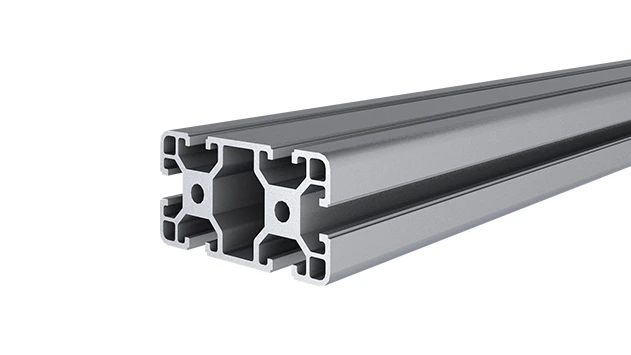
4080B EU Standard Aluminum Profile
4080B is a 4.00x8.00 CM fractional 40 series square extrusion T-slot profile with two side open T-slots, each side with 4.00cm face, two side with 8.00cm face. The profile has align-a-grooves to assist in aligning connecting profiles.
How a single component is transforming reliability in manufacturing's critical quality checks
The Hidden Cost of Unstable Test Benches in Quality Control
In the bustling world of manufacturing, where every second counts and margins are tight, quality control (QC) teams stand as the last line of defense between a flawless product and a costly recall. Imagine a scenario: a automotive parts supplier ships a batch of brake calipers, only to discover later that a measurement error during testing led to a 0.2mm misalignment in the piston housing. The result? Thousands of units recalled, production halted, and a reputation tarnished—all because the test bench holding the precision gauge couldn't stay steady.
For QC engineers and managers, this story isn't hypothetical. It's a daily risk when their most essential tool— the test bench—fails to deliver the stability, durability, and adaptability required to keep up with evolving production demands. Traditional workbenches, often made from wood, mild steel, or generic plastic, come with a litany of issues: wood warps under humidity, steel benches are heavy and hard to reconfigure, and plastic lacks the structural integrity to support heavy testing equipment like coordinate measuring machines (CMMs) or torque testers.
The problem isn't just about equipment failure, though. It's about efficiency. A QC technician at a consumer electronics plant once told me they spent 15% of their shift adjusting their workbench—tightening loose screws, shimming uneven legs to level the surface, or rearranging fixtures to fit a new product model. "We're supposed to be checking for defects in the product," they said, "but half the time, we're fixing the bench."
Enter the 4080B EU Standard Aluminum Extrusion Profile—a component that's quietly revolutionizing how test benches are built and used in manufacturing facilities worldwide. More than just a piece of metal, it's a foundation for reliability, a catalyst for customization, and a solution to the stability challenges that have plagued QC teams for decades.
Test Benches: The Unsung Heroes of Quality Control
Before diving into the specifics of the 4080B profile, it's worth stepping back to appreciate the role test benches play in the manufacturing ecosystem. These workhorses are more than just tables; they're precision platforms designed to hold, secure, and position products during inspection. Whether it's a smartphone being tested for water resistance, a medical device undergoing stress tests, or a aerospace component measured for dimensional accuracy, the test bench's job is to provide a stable, consistent environment where measurements are reliable and repeatable.
Consider the demands placed on a typical test bench: it must support loads ranging from a few kilograms (for small electronics) to hundreds of kilograms (for automotive or industrial parts). It needs to resist vibrations from nearby machinery, as even a (wēixiǎo de—tiny) tremor can throw off a laser micrometer reading by thousandths of a millimeter. It should also adapt quickly to new product lines—today testing a 10cm circuit board, tomorrow a 50cm engine part—without requiring a complete overhaul.
Traditional materials struggle to meet these demands. Wood, once a staple, absorbs moisture and warps over time, leading to uneven surfaces. Mild steel is strong but heavy; a steel bench weighing 200kg is nearly impossible to reposition when a production line reconfigures. Plastic, while lightweight, lacks the rigidity needed to prevent flexing under heavy loads, which can introduce measurement errors. Even generic aluminum profiles, not built to strict standards, often have inconsistent tolerances, making it hard to assemble a level, wobble-free bench.
The consequences of these shortcomings are tangible. A 2023 survey by the Manufacturing Quality Association found that 38% of QC teams reported "frequent measurement inconsistencies" directly linked to unstable workbench setups. Another 27% cited "excessive downtime for reconfiguration" as a top productivity drain. For a facility producing 10,000 units daily, even a 1% error rate due to bench instability translates to 100 defective products—a cost that adds up quickly in scrap, rework, and lost customer trust.

What Makes the 4080B EU Standard Aluminum Profile Different?
Aluminum extrusion profiles have been around for decades, but not all are created equal. The 4080B EU Standard Aluminum Extrusion Profile stands out for one key reason: it's engineered specifically to address the unique challenges of test bench design. Let's break down what "4080B EU Standard" actually means, and why it matters for stability in quality control.
First, the dimensions: "4080" refers to the profile's cross-section—40mm in width and 80mm in height. This ratio strikes a perfect balance between vertical rigidity (critical for supporting overhead fixtures like task lights or barcode scanners) and horizontal stability (essential for preventing lateral wobble when loading heavy parts). The "B" designation indicates a specific groove design and tolerance standard set by the EU, ensuring consistency across manufacturers. Unlike non-standard profiles, which may vary in slot depth or wall thickness by ±0.5mm, the 4080B adheres to EN 755-9 standards, with tolerances as tight as ±0.1mm—precision that ensures every component fits together seamlessly during assembly.
But the magic of the 4080B lies in its material and manufacturing process. Most 4080B profiles are extruded from 6063-T5 aluminum alloy, a heat-treated grade known for its excellent strength-to-weight ratio and corrosion resistance. The extrusion process itself—forcing molten aluminum through a steel die—creates a uniform, grain-aligned structure that's far stronger than cast or machined aluminum. This structural integrity means a 4080B bench can support up to 500kg of evenly distributed weight without flexing, compared to 300kg for a similarly sized mild steel bench (which would weigh twice as much).
Another defining feature is the T-slot design. Running the length of the profile are precision-machined slots (typically 8mm or 10mm wide) that allow accessories to be attached without welding or drilling. This might sound like a small detail, but for QC teams, it's a game-changer. Need to add a shelf for test fixtures? Slide a T-slot nut into the groove, bolt on the shelf, and you're done. Want to mount a monitor arm for digital readouts? No problem—T-slot brackets make it quick and tool-free. This modularity eliminates the need for custom fabrication every time a new product is introduced, cutting reconfiguration time from days to hours.
Surface treatment is the final piece of the puzzle. Most 4080B profiles undergo anodization, an electrochemical process that forms a hard, protective oxide layer on the aluminum surface. This layer resists scratches, chemical spills (common in QC labs where solvents or cleaning agents are used), and corrosion—even in humid or dusty factory environments. Unlike painted steel, which chips and fades over time, anodized aluminum maintains its finish for years, ensuring the bench remains both functional and professional-looking.
Why Stability Matters: The Technical Case for 4080B in Test Benches
Stability in a test bench isn't just about "feeling solid." It's a technical requirement rooted in physics and measurement science. When a test bench vibrates or flexes, even minutely, it introduces errors into sensitive measurements. For example, a CMM measuring a 100mm part with a tolerance of ±0.02mm requires the part to remain stationary to within 0.005mm during scanning. A bench that vibrates by 0.01mm due to nearby conveyor belts or foot traffic will render those measurements unreliable.
The 4080B profile addresses this through two key properties: high modulus of elasticity and low density. The modulus of elasticity (a measure of a material's stiffness) for 6063-T5 aluminum is 69 GPa, compared to 200 GPa for steel—but aluminum's density is just 2.7 g/cm³, versus steel's 7.87 g/cm³. This means a 4080B bench can achieve similar stiffness to steel at a fraction of the weight. For instance, a 2m long, 1.2m wide test bench built with 4080B profiles weighs around 80kg, compared to 220kg for a steel equivalent. The lighter weight makes it easier to move (with the addition of casters) while still resisting vibrations thanks to the aluminum's inherent stiffness.
Torsional rigidity is another critical factor. When a heavy part is placed off-center on the bench, the frame must resist twisting. The 4080B's rectangular cross-section—40mm wide by 80mm tall—provides excellent resistance to torsional forces. Engineers at a leading automotive supplier recently tested this by mounting a 300kg engine block on the edge of a 4080B bench; the frame twisted by just 0.05 degrees, well within the ±0.1 degree tolerance required for their torque testing equipment. A wood bench of the same dimensions twisted by 0.3 degrees under the same load, leading to inconsistent torque readings.
Thermal stability is often overlooked but equally important. In factories where temperatures fluctuate (common near ovens, furnaces, or HVAC vents), materials expand and contract at different rates. Steel, for example, has a thermal expansion coefficient of 12 x 10⁻⁶ per °C, meaning a 2m steel bench will expand by 0.24mm for every 10°C temperature rise. Aluminum's coefficient is higher (23 x 10⁻⁶ per °C), but the 4080B's design mitigates this through precision machining and modular joints. The T-slot connections allow for (wēixiǎo de) movement without loosening, ensuring the bench remains level and stable even as temperatures change throughout the day.
For QC teams working with ESD-sensitive components (like semiconductors or circuit boards), the 4080B offers an additional advantage: conductivity. Aluminum is a natural conductor, so the bench can be grounded to dissipate static electricity, preventing electrostatic discharge that could damage sensitive electronics. This eliminates the need for expensive ESD mats or coatings, integrating safety into the bench's design.
Comparing Materials: Why 4080B Aluminum Outperforms the Alternatives
To truly appreciate the 4080B's value, it helps to compare it directly to other common test bench materials. Below is a breakdown of how it stacks up against steel, wood, and generic plastic in key categories:
| Feature | 4080B EU Aluminum Extrusion | Mild Steel | Plywood (Hardwood) | Generic Plastic |
|---|---|---|---|---|
| Weight (2m Bench) | 80kg | 220kg | 60kg | 45kg |
| Max Load Capacity | 500kg (evenly distributed) | 600kg | 150kg (before warping) | 100kg (before flexing) |
| Vibration Damping | Excellent (stiff, low resonance) | Good (high mass dampens vibrations) | Poor (soft, absorbs vibrations but warps) | Poor (flexes, amplifies vibrations) |
| Customization Ease | Excellent (T-slots, modular accessories) | Poor (requires welding, drilling) | Fair (can be cut, but limited to basic mods) | Fair (limited to bolt-on accessories) |
| Durability (Lifespan) | 15-20 years (anodized, corrosion-resistant) | 10-15 years (prone to rust without paint) | 3-5 years (warps, scratches, moisture damage) | 2-4 years (brittle, UV degradation) |
| Cost (Initial Investment) | Medium-High | Medium | Low | Low-Medium |
| Cost Over Time (Maintenance, Replacement) | Low (minimal maintenance, long lifespan) | Medium (repainting, rust repair) | High (frequent replacement, warping repairs) | High (short lifespan, frequent replacement) |
As the table shows, the 4080B profile strikes a unique balance: it's lighter than steel, more durable than wood, and stiffer than plastic. Its higher initial cost is offset by lower long-term maintenance and replacement expenses. A manufacturing plant in Germany calculated that switching to 4080B test benches reduced their workbench-related costs by 42% over five years, thanks to fewer replacements, less downtime for repairs, and faster reconfiguration for new products.
Real-World Impact: How 4080B Profiles Transformed QC at Three Factories
Case Study 1: Automotive Components Supplier Cuts Measurement Errors by 70%
A mid-sized automotive parts supplier in Spain was struggling with inconsistent torque measurements on their brake caliper assemblies. Their old steel test benches vibrated whenever the nearby stamping machines ran, leading to torque readings that varied by ±0.5 Nm—well outside their ±0.2 Nm tolerance. After consulting with an aluminum profile supplier, they replaced the steel benches with custom 4080B frames, adding anti-slip adjustable leveling feet to stabilize the benches on their uneven factory floor.
The results were immediate: vibration levels dropped by 75%, and torque measurement errors fell from 12% of tests to just 3.5%. "We used to have two technicians rechecking every 'failed' caliper because we didn't trust the bench," said the QC manager. "Now we trust the readings the first time, and we've cut recheck time by 15 hours a week."
Case Study 2: Electronics Manufacturer Reduces Bench Reconfiguration Time by 80%
A consumer electronics plant in Hungary produces over 50 models of smartphones annually, each requiring unique test fixtures for camera alignment, battery testing, and drop testing. Their old wooden benches required custom drilling and screwing for each new fixture, taking 8-10 hours to reconfigure per line. Switching to 4080B profiles with T-slot accessories changed everything.
Now, technicians use quick-release brackets and T-slot nuts to swap fixtures in under 2 hours. "When we launched our new foldable phone, we needed to add a specialized camera alignment jig," explained the production engineer. "With the 4080B bench, we designed the jig on Monday, 3D-printed brackets on Tuesday, and were testing production units by Wednesday. With the old setup, that would have taken a week."
Case Study 3: Medical Device Maker Improves Cleanroom Compliance
A medical device manufacturer in Ireland produces surgical instruments that require strict cleanroom conditions. Their previous steel benches were prone to rust (even with paint) and had crevices where bacteria could hide, failing their monthly cleanroom audits. The 4080B profiles, with their anodized finish and smooth, crevice-free design, solved both issues.
"Anodized aluminum is non-porous and easy to disinfect with our hydrogen peroxide wipes," said the QA director. "We haven't failed a cleanroom audit since switching, and the benches still look brand new after two years of daily cleaning."
Beyond the Profile: Essential Accessories for 4080B Test Benches
A 4080B profile is only as good as the accessories that bring it to life. The right accessories transform a simple aluminum frame into a fully functional test bench tailored to specific QC needs. Here are the must-have accessories that QC teams should consider:
- Anti-slip Adjustable Leveling Feet: These attach to the bottom of the 4080B legs, allowing precise leveling on uneven floors—critical for gravity-dependent tests like liquid flow measurements or incline impact testing. Look for feet with rubber pads to dampen vibrations and prevent slipping.
- Aluminum Profile End Caps: These plastic or rubber caps snap onto the ends of the profiles, preventing sharp edges that could cut technicians or catch on clothing. They also seal the ends to keep out dust and debris, which can jam T-slots over time.
- Gusset Plates (e.g., Gusset Alp 4040): For benches supporting heavy loads, gusset plates reinforce corner joints, increasing rigidity and preventing flexing. They're especially useful for benches holding CMMs or other heavy inspection equipment.
- Worktop Panels: While the 4080B frame provides the structure, the worktop itself needs to be durable and non-slip. Options include aluminum honeycomb panels (lightweight, rigid), phenolic resin boards (chemical-resistant), or ESD-safe laminates (for electronics testing).
- Casters and Casters Accessories: For benches that need to move (e.g., between inspection stations), locking casters with rubber wheels protect floors and reduce vibration when stationary. Look for heavy-duty casters rated for at least 150kg per wheel to handle the bench plus equipment.
Many aluminum profile suppliers offer pre-configured kits that include the 4080B profiles, joints, and essential accessories, making it easy to design a bench without starting from scratch. A reputable supplier will also provide CAD files and technical support to help customize the bench layout for specific tests—whether it's adding a shelf for a laptop, mounting a monitor arm, or integrating cable management channels to keep power cords and sensor wires organized.
Choosing the Right Supplier: What to Look for in a 4080B Aluminum Profile Partner
Not all 4080B profiles are created equal, and choosing the right supplier is as important as choosing the profile itself. Here are key factors to consider when selecting an aluminum profile supplier for your test benches:
EU Standard Compliance: Ensure the supplier can provide certification that their 4080B profiles meet EN 755-9 (the EU standard for aluminum extrusions) and have CE marking. This guarantees consistent tolerances, material quality, and mechanical properties.
Material Traceability: Reputable suppliers will provide mill certificates (EN 10204 3.1) for each batch of profiles, detailing the alloy composition, heat treatment, and mechanical test results. This is critical for industries with strict regulatory requirements, like aerospace or medical devices.
Accessory Range: Look for suppliers that offer a full line of compatible accessories—leveling feet, end caps, gussets, worktops—from a single source. Mixing accessories from different suppliers can lead to fit issues (e.g., T-slot nuts that don't slide smoothly).
Customization Services: Many suppliers offer cutting, drilling, or anodizing services to deliver profiles ready for assembly. This saves time and reduces waste compared to cutting profiles in-house.
Technical Support: Designing a test bench requires engineering know-how. Choose a supplier with in-house engineers who can help with load calculations, stability analysis, and layout design. Some suppliers even offer 3D modeling services to visualize the bench before ordering.
Remember, a reliable supplier isn't just a vendor—they're a partner in improving your QC process. Take the time to request samples, visit their facility if possible, and ask for references from other manufacturing customers. The right partner will help you maximize the value of your 4080B investment.
Conclusion: Investing in Stability, Investing in Quality
In the high-stakes world of manufacturing, quality control is too important to leave to chance. The test bench, often overlooked, is the foundation of reliable inspections, consistent measurements, and ultimately, products that meet customer expectations. The 4080B EU Standard Aluminum Extrusion Profile isn't just a material upgrade—it's a strategic investment in stability, adaptability, and long-term cost savings.
By choosing 4080B profiles, QC teams gain a tool that resists vibrations, adapts quickly to new products, and stands up to the rigors of factory life. They reduce measurement errors, cut reconfiguration time, and eliminate the hidden costs of constant bench repairs and replacements. As the case studies show, the impact is tangible: fewer defects, happier technicians, and a stronger bottom line.
So, the next time you walk through your QC lab, take a closer look at the benches holding your precision tools. Are they holding you back, or are they helping you deliver the quality your customers demand? For manufacturers ready to take their quality control to the next level, the answer is clear: it's time to build on a foundation of 4080B aluminum profiles.