- Company Articles
- Products and Technology
- Product knowledge
- 4080B EU Standard Aluminum Profile for Tool Storage Racks: Organization in Workshops

4080B EU Standard Aluminum Profile for Tool Storage Racks: Organization in Workshops
Related Product
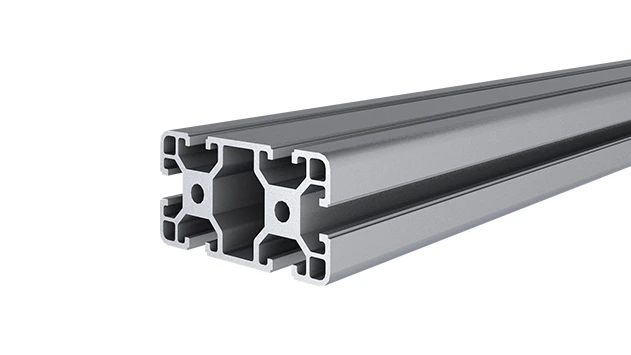
4080B EU Standard Aluminum Profile
4080B is a 4.00x8.00 CM fractional 40 series square extrusion T-slot profile with two side open T-slots, each side with 4.00cm face, two side with 8.00cm face. The profile has align-a-grooves to assist in aligning connecting profiles.
Walk into any manufacturing plant, auto repair shop, or electronics assembly workshop, and you'll likely encounter a familiar scene: tools strewn across workbenches, parts in unlabeled bins, and employees pausing mid-task to rummage for the right drill bit or wrench. It's a quiet chaos that eats away at productivity—studies suggest the average worker spends up to 20% of their day searching for tools—and creates unnecessary stress. Worse, cluttered spaces increase the risk of trips, falls, or misplaced inventory, turning disorganization into a safety hazard. But what if there was a way to transform this chaos into a streamlined, efficient workspace? Enter the 4080B EU Standard Aluminum Profile, a versatile solution that's redefining how workshops approach tool storage and organization.
The Hidden Cost of Workshop Disorganization
Before diving into solutions, let's unpack why workshop organization matters. Disorganization isn't just an eyesore—it's a silent drain on resources. Consider a small automotive repair shop with five mechanics. If each mechanic spends 15 minutes daily searching for tools, that's 75 minutes of lost productivity per day, or over 300 hours per year. At an average hourly rate of $30, that's $9,000 in wasted labor annually. Multiply that across larger facilities, and the numbers become staggering.
Then there's the human cost. A cluttered workspace increases frustration and fatigue. When tools are hard to find, employees rush, skip proper safety protocols, or make mistakes—like grabbing the wrong size socket, leading to stripped bolts or damaged parts. In regulated industries, disorganization can even result in compliance violations, especially if hazardous tools or materials aren't stored properly. Traditional storage solutions—think wooden shelves, welded metal racks, or plastic bins—often exacerbate these issues. They're either too rigid to adapt to changing needs, too flimsy to hold heavy tools, or too cumbersome to reconfigure when workflows shift. What workshops need is a system that's strong, flexible, and built to grow.
Introducing the 4080B EU Standard Aluminum Profile
At the heart of the modern workshop organization revolution is the 4080B EU Standard Aluminum Profile. Part of the broader family of aluminum extrusion profiles—manufactured by forcing heated aluminum through a die to create precise, consistent shapes—this profile stands out for its balance of strength, versatility, and ease of use. Let's start with the basics: the "4080B" refers to its dimensions (40mm width, 80mm height), while "EU Standard" guarantees compliance with strict European regulations for material quality, load-bearing capacity, and safety. This isn't just any aluminum bar; it's a engineered component designed for industrial use.
What makes the 4080B profile unique is its T-slot design—longitudinal grooves running along its length that allow accessories like brackets, shelves, and hooks to slide into place and lock securely. Unlike traditional welded racks, which require specialized tools and permanent assembly, the 4080B system uses simple fasteners and connectors, making setup and adjustments possible with basic hand tools. This modularity is key: workshops can start small with a single tool rack and expand or reconfigure it as their needs change, without replacing the entire system.

Why Aluminum Extrusion Profile Stands Above the Rest
Aluminum extrusion profiles like the 4080B aren't the only option for workshop storage, but they outshine alternatives in critical areas. Let's compare:
- Wooden shelves : Inexpensive upfront, but prone to warping, splintering, and moisture damage. They can't support heavy loads (most max out at 50-75kg per shelf) and offer zero flexibility—once built, you can't add a shelf or adjust heights without rebuilding.
- Welded steel racks : Strong (some hold 200kg+ per shelf) but incredibly heavy, making them hard to move. Welding requires skilled labor, and reconfiguring means cutting and rewelding, which is time-consuming and costly.
- Plastic shelving : Lightweight and affordable, but limited to light loads (often under 30kg) and easily cracked by heavy tools or impacts. They also degrade under heat or harsh chemicals common in workshops.
Aluminum extrusion profiles, by contrast, hit the sweet spot. The 4080B, for example, typically supports 150-200kg per linear meter—enough for power tools, bulky machinery parts, or stacks of metal sheets—while weighing 60% less than steel. Its anodized finish resists corrosion, scratches, and chemical spills, ensuring it holds up in humid or oily environments. And because it's modular, you can add a shelf, mount a tool hook, or extend a rack in minutes, not days.
The Role of Aluminum Profile Accessories: Building Blocks of Customization
A profile is only as useful as the accessories that bring it to life. The 4080B system shines here, thanks to a wide range of aluminum profile accessories designed to work seamlessly with its T-slot design. These accessories turn a simple aluminum bar into a fully functional storage solution, no welding or drilling required.
Essential Accessories for Tool Storage Racks
Connectors : These are the "glue" of the system. 90° aluminum profile connectors join profiles at right angles for rack frames, while 45° connectors add angled supports for stability. For more complex setups, 135° connectors or three-way joints let you build multi-tiered racks or L-shaped workstations.
End caps : Simple but critical, these plastic or aluminum caps fit over the ends of profiles to prevent sharp edges (a common workplace hazard) and keep dust or debris from collecting in T-slots. The 4080B profile, for instance, pairs with 4080 aluminum profile end caps for a clean, finished look.
Shelving brackets : These attach to the T-slots to support shelves made of plywood, metal, or even aluminum honeycomb panels (lightweight but strong). Adjustable brackets let you raise or lower shelves by 10mm increments, adapting to tools of different heights—no need to build a new rack if you add taller equipment.
Tool hooks and holders : From pegboards to magnetic strips, tool storage often relies on one-size-fits-all solutions. With T-slot hooks, you can mount everything from wrenches and screwdrivers to power drills directly onto the rack frame, keeping tools visible and within arm's reach. Specialized holders for hammers, tape measures, or even small parts bins click into T-slots, ensuring every item has a designated spot.
Caster wheels : For mobile storage (think a rack that follows you to the workbench), add caster wheels with brake locks. These attach via castor install bases, turning a stationary rack into a rolling cart that holds tools exactly where you need them.
Building Tool Storage Racks with 4080B: From Design to Reality
The beauty of the 4080B system is its simplicity. Even someone with basic DIY skills can design and assemble a custom tool storage rack in a few hours. Here's how it works:
Step 1: Assess Your Needs
Start by listing what you need to store: power tools (drills, grinders), hand tools (wrenches, pliers), small parts (screws, washers), or bulky items (engine components). Measure the available space—height, width, and depth—to avoid overcrowding. For example, a workshop with 2.5m ceiling height might opt for a 2m tall rack with 5 shelves, while a garage with limited floor space could build a wall-mounted rack to save footprint.
Step 2: Design the Frame
Using 4080B profiles, sketch the rack frame: vertical posts (40mm width for stability), horizontal beams (80mm height for load-bearing), and cross-braces for rigidity. Most racks use a 4-post design (two on each side) for stability, but smaller racks can use 2 posts if wall-mounted. Online design tools or templates from aluminum extrusion profile suppliers can help visualize the layout.
Step 3: Assemble with Accessories
Cut profiles to length (many suppliers offer custom cutting), then join them with connectors. For a basic 1.2m wide, 1.8m tall rack, you'll need 4 vertical posts (1.8m each), 8 horizontal beams (1.2m each for shelves and top/bottom), and 4 cross-braces (diagonal for stability). Slide shelf brackets into the T-slots at your desired heights, secure with bolts, and lay shelves on top. Add tool hooks or bins as needed—no special tools required.
Step 4: Adapt and Evolve
Six months later, if you add a new tool cabinet or need more shelf space, simply loosen the bolts, reposition the brackets, or add extra profiles. The system grows with your workshop, eliminating the need to buy new racks or waste money on temporary fixes.
Beyond Racks: Integrating Workbenches into the System
Tool storage doesn't exist in a vacuum—it's part of a larger workflow. The 4080B profile excels here, too, by integrating with workbenches to create cohesive, efficient workstations. A workbench built with 4080B profiles can share the same design language as your storage racks, ensuring tools are stored steps away from where they're used.
Take the "workbench e (single deck-without caster)" configuration, a popular choice for assembly lines or repair stations. Its frame uses 4080B vertical posts and horizontal beams, with a plywood or steel top for durability. Underneath, you can mount shelves, drawers, or hanging tool holders using the same aluminum profile accessories as your racks. This creates a "one-stop" workstation: tools are stored below the bench, parts on overhead racks, and the work surface stays clear for tasks. For mobile workbenches, add caster wheels to the base—lock them in place during use, then roll the bench to a new location when needed.
Lean System Benefits: Efficiency Redefined
In the world of manufacturing, lean system principles—focused on eliminating waste and maximizing value—have become a gold standard. Disorganized storage is a classic example of "waste" in lean terms: wasted time searching for tools, wasted motion moving between cluttered work areas, and wasted space storing unused items. The 4080B system aligns perfectly with lean goals by:
- Reducing search time : With tools stored in designated, visible spots on T-slot racks, employees grab what they need in seconds, not minutes.
- Optimizing space : Modular racks use vertical space efficiently, freeing up floor area for equipment or workflow.
- Supporting 5S practices : 5S (Sort, Set in Order, Shine, Standardize, Sustain) is a cornerstone of lean. The 4080B system makes "Set in Order" easy—each tool has a fixed position—and "Standardize" simple, as racks can be replicated across workstations for consistency.
- Minimizing inventory waste : When tools are visible, it's easier to spot duplicates or unused items, reducing over-purchasing.
Why EU Standards Matter: Quality You Can Trust
The "EU Standard" label on the 4080B profile isn't just marketing—it's a guarantee of quality. EU standards for aluminum extrusion profiles (EN 755-9, for example) mandate strict tolerances for dimensions, strength, and finish. This ensures every 4080B profile you buy is consistent: the T-slots align perfectly with accessories, the load capacity is verified via testing, and the material is free of defects that could compromise safety. For workshops in regulated industries (like aerospace or medical device manufacturing), EU compliance is often a requirement, as it demonstrates a commitment to safety and quality control.
Traditional vs. 4080B Tool Storage: A Comparison
| Feature | Traditional Wooden Shelves | Welded Steel Racks | 4080B Aluminum Profile Racks |
|---|---|---|---|
| Assembly Time | 4-6 hours (cutting, sanding, nailing) | 8-12 hours (welding, painting) | 1-2 hours (no tools beyond a hex key) |
| Weight Capacity (per shelf) | 50-75kg | 200-300kg | 150-200kg |
| Customization | None (fixed shelves) | Limited (requires cutting/welding) | Unlimited (adjust shelves, add hooks, extend racks) |
| Durability | 2-3 years (warping, splintering) | 10-15 years (prone to rust without maintenance) | 15-20 years (corrosion-resistant, scratch-proof finish) |
| Cost Over 5 Years* | $800 (replacement every 3 years) | $1,200 (initial + welding repairs) | $600 (initial + minor accessory additions) |
*Estimates based on a 1.2m wide, 1.8m tall rack with 5 shelves. Costs include materials and labor.
Real-World Impact: A Workshop Transformation Story
Consider a mid-sized electronics assembly workshop with 10 employees. Before switching to 4080B racks, their tool storage consisted of a mishmash of wooden shelves and plastic bins. Mechanics spent 10-15 minutes per shift searching for specialized tools like torque wrenches or precision screwdrivers. Inventory checks took hours, as parts were scattered across multiple locations.
After installing 4080B tool storage racks, they organized tools by type (hand tools on lower shelves, power tools on upper shelves) and labeled each hook with a tool's silhouette. Parts were stored in color-coded bins on rack shelves, with clear labels. Within a month, search time dropped to 2-3 minutes per shift, freeing up over 120 hours of productive labor annually. Inventory checks now take 30 minutes instead of 2 hours, and the workshop has expanded twice without needing to replace storage systems—they simply added more 4080B profiles and accessories.
Choosing the Right Supplier: What to Look For
Not all 4080B profiles are created equal. To ensure you get a system that meets your needs, look for a supplier that offers:
- EU standard compliance : Ask for certification to EN 755 or similar standards to verify quality.
- Custom cutting : Suppliers that cut profiles to your exact length save you time and reduce waste.
- A full range of accessories : Look for suppliers that stock connectors, brackets, shelves, and hooks—mismatched accessories can compromise stability.
- Technical support : Designing a rack can be daunting; a good supplier offers templates, design tools, or even consultation to help you plan.
Conclusion: Investing in Order, Investing in Success
Workshop organization isn't a luxury—it's a foundational element of productivity, safety, and employee satisfaction. The 4080B EU Standard Aluminum Profile, paired with aluminum profile accessories, offers a solution that's strong enough for heavy tools, flexible enough to adapt to changing needs, and efficient enough to support lean system goals. It transforms cluttered, frustrating workspaces into havens of order, where tools are easy to find, workflows are smooth, and employees can focus on what they do best: creating value.
Whether you're running a small auto shop or a large manufacturing plant, the 4080B system isn't just a storage solution—it's an investment in your workshop's future. After all, in a world where time is money, there's no better return than a space that works as hard as your team does.