- Company Articles
- Products and Technology
- Application Cases
- 4080B EU Standard Aluminum Profile in Automotive Manufacturing: Assembly Line Applications

4080B EU Standard Aluminum Profile in Automotive Manufacturing: Assembly Line Applications
Related Product
4080B EU Standard Aluminum Profile
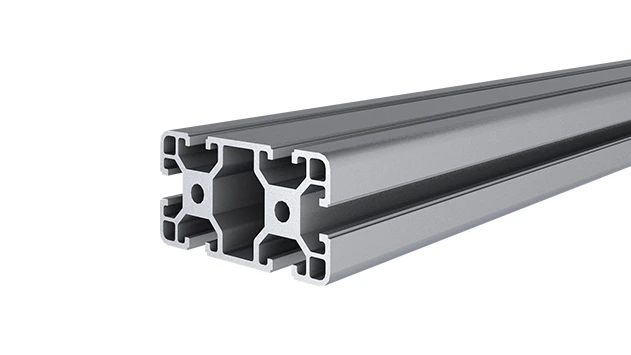
4080B is a 4.00x8.00 CM fractional 40 series square extrusion T-slot profile with two side open T-slots, each side with 4.00cm face, two side with 8.00cm face. The profile has align-a-grooves to assist in aligning connecting profiles.
Walk into any modern automotive assembly plant, and you'll witness a carefully choreographed dance of machinery, workers, and parts. Every second counts, and every component—from the smallest screw to the largest frame—needs to move with precision. Yet behind this efficiency lies an unsung hero: the 4080B EU Standard Aluminum Profile. This unassuming structural component has quietly revolutionized how assembly lines are built, adapted, and optimized, becoming a cornerstone of flexible manufacturing in the automotive industry. Let's dive into how this aluminum extrusion profile, paired with the right accessories, is reshaping the future of car production.
What Makes 4080B Aluminum Profile a Game-Changer?
First, let's get to know the star of the show: the 4080B EU Standard Aluminum Profile. Part of the broader family of aluminum extrusion profiles, this specific model is defined by its dimensions—40mm in width and 80mm in height—and adherence to European manufacturing standards. But its real power lies in its design: a lightweight yet robust aluminum structure with integrated T-slots running along its length. These slots act like built-in channels, allowing for quick and tool-free attachment of accessories, from brackets to wheels to work surfaces. Unlike rigid steel frames or one-size-fits-all wooden structures, 4080B profiles are modular by nature, making them the perfect fit for automotive plants that need to adapt to changing vehicle models, production volumes, and technological upgrades.
Aluminum, as a material, brings its own set of advantages. It's about one-third the weight of steel, which reduces the load on assembly line structures and makes manual adjustments easier for workers. It's also naturally corrosion-resistant, a critical feature in factories where lubricants, coolants, and occasional spills are part of daily life. And perhaps most importantly for today's eco-conscious manufacturers, aluminum is 100% recyclable, aligning with sustainability goals that are no longer optional in the automotive sector.
Building the Backbone: 4080B in Assembly Line Workbenches
Ask any automotive worker what makes or breaks their productivity, and chances are "the workbench" will top the list. These stations are where the magic happens—where technicians install wiring harnesses, attach door panels, or test electronic components. A poorly designed workbench leads to fatigue, errors, and slowdowns. This is where 4080B profiles shine, offering a customizable solution that prioritizes ergonomics and functionality.
A typical workbench built with 4080B starts with a frame constructed from the profiles, connected using 90° aluminum profile connectors (a common type of aluminum profile accessory). The T-slots allow for easy height adjustment, ensuring workers of different statures can set the bench to a comfortable level—no more stooping or stretching. The work surface itself might be an aluminum honeycomb panel (lightweight but strong) or a wooden top, secured to the frame with brackets that slide into the T-slots. Need to add a tool rack above? Simply attach an aluminum profile extension using a three-way connector. Want to mount a monitor for digital work instructions? A few T-slot nuts and bolts later, and it's secure. Even small details, like cable management, are simplified: T-slot rubber seal covers can hide wires, keeping the bench clutter-free and reducing trip hazards.
Take, for example, a workbench used in electric vehicle (EV) battery assembly. These benches need to support heavy battery packs while providing access to precision tools. A 4080B frame, paired with reinforced brackets and a non-slip surface, can handle the weight without flexing. If the plant switches to a larger battery model next year, the bench can be easily extended by adding more profiles—no need to replace the entire structure. This adaptability is why automotive manufacturers are increasingly replacing old steel workbenches with 4080B-based setups: they're an investment in long-term flexibility.

Smoothing the Flow: 4080B and Roller Track Systems
In automotive manufacturing, "flow" is everything. Parts need to move from storage to assembly stations, and finished subassemblies need to glide to the next line—all without getting stuck, damaged, or requiring excessive manual lifting. This is where roller tracks come into play, and 4080B profiles serve as the ideal support structure for these systems. Roller tracks, which consist of wheels or balls mounted on a frame, allow parts to slide or roll with minimal friction, cutting down on physical labor and speeding up production.
A typical roller track setup using 4080B might involve mounting the track to vertical 4080B posts using roller track placon mounts—specialized brackets that attach to the profile's T-slots. The track itself could be a 40 steel roller track with yellow wheels (chosen for visibility and durability) or a plastic roller track guide rail in grey for lighter parts like interior trim pieces. The beauty of using 4080B here is adjustability: if a station needs the track higher to align with a robot arm, or lower to match a worker's waist height, the brackets can be loosened, slid up or down the T-slots, and retightened in minutes. No welding, no drilling, no waiting for a maintenance crew.
Consider a scenario where a plant is shifting from producing sedans to SUVs. The larger SUV doors require a wider roller track to prevent tipping. With 4080B, the solution is simple: add an extra parallel profile to widen the frame, attach new roller track connectors, and the system is ready. Traditional steel tracks would require cutting and rewelding, a process that could take hours or even days. With 4080B, it's a job that can be done during a lunch break.
Mobility Matters: Caster Wheels and 4080B Trolleys
Not all assembly line components need to be fixed in place. Trolleys carrying tools, parts bins, or even entire subassemblies are essential for keeping workers supplied without them having to walk to a distant storage area. Here again, 4080B profiles prove their worth, forming the frames of lightweight yet sturdy trolleys, often paired with caster wheels for easy movement.
Caster wheels might seem like a small detail, but they're critical for trolley functionality. A well-chosen caster can handle heavy loads (up to 300kg or more per wheel), roll smoothly over factory floors, and lock securely when the trolley is in use. 4080B profiles make it easy to mount these casters using caster installation bases—another type of aluminum profile accessory that slides into the T-slots and provides a stable platform for the wheel assembly. For added safety, many trolleys use 360° swivel expanding stem casters with brakes, allowing workers to maneuver tight corners and lock the trolley in place during loading or unloading.
One automotive plant in Germany, for instance, replaced its fleet of heavy steel tool trolleys with 4080B-based models and saw immediate benefits. The new trolleys were 40% lighter, reducing worker fatigue during shifts. The T-slot design allowed for custom tool holders to be added, keeping equipment organized and reducing time spent searching for tools. And when a new vehicle model required different tool sets, the trolleys were reconfigured with new brackets and holders—no need to buy new ones.
The Glue That Holds It All Together: Aluminum Profile Accessories
A profile is only as good as the accessories that bring it to life, and 4080B's versatility is largely thanks to the wide range of aluminum profile accessories available. These small but mighty components turn basic profiles into fully functional systems, and they're designed to work seamlessly with the T-slot structure. Let's break down some of the most essential ones:
- Connectors: These join profiles at angles—90°, 45°, 135°—or in straight lines. A 90° aluminum profile connector, for example, lets you attach a vertical 4080B post to a horizontal beam without welding. Some connectors even allow for rotation, adding another layer of flexibility.
- End Caps: These simple plastic or aluminum covers snap into the ends of profiles, preventing dust and debris from collecting in the T-slots and giving the structure a clean, finished look. The 4080 aluminum profile end cap is specifically designed for 4080B profiles.
- Brackets and Plates: Used to mount everything from work surfaces to monitors to roller tracks. A roller track placon mount, for example, bridges the gap between the track and the 4080B profile, ensuring a secure fit.
- Hinges and Latches: For foldable or opening components, like safety guards or access panels on workbenches. Aluminum hinges attach directly to the T-slots, allowing for smooth movement.
- Rubber Seal Covers: These soft, flexible strips fit into the T-slots, protecting workers from sharp edges and hiding unsightly cables or bolts.
The beauty of these accessories is that they're standardized. A 90° connector that works with a 4080B profile will also work with other EU-standard profiles, like 4040 or 3030, giving manufacturers even more flexibility to mix and match components based on their needs.
Real-World Impact: A Case Study
To put this all into perspective, let's look at a hypothetical (but realistic) case study of an automotive plant that switched to 4080B profiles. Let's call it "AutoFlex Motors," a mid-sized manufacturer producing both gasoline and electric vehicles. Before adopting 4080B, AutoFlex's assembly lines were built with welded steel frames and fixed wooden workbenches. When the company decided to ramp up EV production, they faced a problem: the existing lines couldn't be easily modified to accommodate the larger battery packs and different component layouts of EVs. Rewelding steel frames would take weeks, disrupting production and costing hundreds of thousands of euros.
AutoFlex's solution? Retrofitting key sections of their assembly line with 4080B aluminum profiles. They replaced steel workbenches with adjustable 4080B-based stations, allowing workers to lower or raise surfaces as needed for EV components. They added roller track systems mounted on 4080B frames to transport battery packs, reducing the need for forklifts in tight spaces. And they equipped tool trolleys with 4080B frames and locking caster wheels, making it easier for workers to move heavy EV-specific tools.
The results were striking: the retrofitting took just 10 days (compared to the projected 6 weeks for steel modifications), and production downtime was minimized. Within three months, AutoFlex reported a 15% increase in assembly line throughput, thanks to smoother material flow and more ergonomic workstations. Worker satisfaction also improved, with fewer reports of back strain and fatigue. Perhaps most importantly, when AutoFlex introduced a new EV model six months later, they reconfigured the 4080B-based lines in just two days—no welding, no major construction, just loosening bolts, sliding accessories, and tightening everything back up.
Why 4080B Beats Traditional Materials
It's worth pausing to ask: why not stick with steel or wood? After all, these materials have been used in manufacturing for decades. The answer lies in three key areas: cost, adaptability, and sustainability.
For automotive manufacturers, the long-term savings of 4080B profiles far outweigh the initial investment. When a production line needs to change, the ability to reuse existing profiles and accessories cuts down on waste and reduces the need for new materials. And in an industry where (vehicle model updates) happen every 3-5 years, that adaptability is priceless.
Looking Ahead: 4080B in the Age of Industry 4.0
As automotive manufacturing moves toward Industry 4.0—smart factories with connected machines, AI-driven analytics, and automated systems—4080B profiles are evolving right along with it. The T-slot design that makes them great for mechanical accessories also makes them ideal for integrating sensors and smart technology. Imagine a 4080B workbench with embedded IoT sensors that track tool usage, monitor worker ergonomics, or alert maintenance when a caster wheel starts to wear. Or roller tracks mounted on 4080B frames with built-in cameras that scan parts for defects as they roll by.
Some manufacturers are already experimenting with "smart" 4080B profiles that include power rails within the T-slots, allowing tools or small robots to draw electricity without messy cords. Others are using the profiles as mounting points for collaborative robots (cobots), which work alongside humans to perform repetitive tasks. Because 4080B is modular, adding these technologies doesn't require a complete overhaul of the assembly line—just new accessories that plug into the existing T-slots.
Final Thoughts: More Than Just a Profile
At the end of the day, the 4080B EU Standard Aluminum Profile is more than just a piece of metal. It's a symbol of how manufacturing is evolving—away from rigidity and toward flexibility, away from waste and toward sustainability, away from one-size-fits-all and toward customization. For automotive plants, it's not just about building cars; it's about building systems that can grow, change, and thrive in an industry that never stands still.
Whether it's supporting a workbench where a technician assembles a dashboard, forming the frame of a roller track that carries a battery pack, or serving as the base for a mobile trolley loaded with tools, 4080B profiles are quietly powering the next generation of automotive manufacturing. And with aluminum profile accessories continuing to evolve, and new innovations in smart integration on the horizon, the future looks bright—for both the profiles and the cars they help build.