- Company Articles
- Products and Technology
- Application Cases
- 4080B EU Standard Aluminum Profile in Consumer Electronics Manufacturing: Case Studies

4080B EU Standard Aluminum Profile in Consumer Electronics Manufacturing: Case Studies
Related Product
4080B EU Standard Aluminum Profile
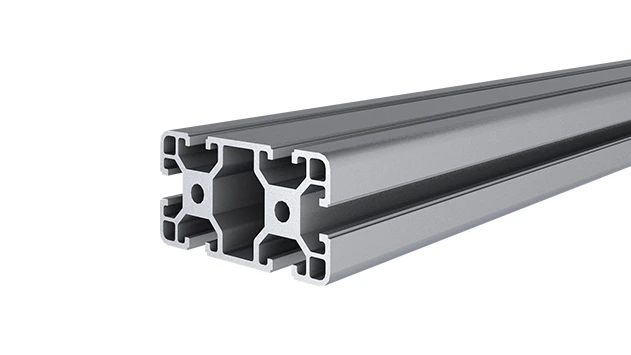
4080B is a 4.00x8.00 CM fractional 40 series square extrusion T-slot profile with two side open T-slots, each side with 4.00cm face, two side with 8.00cm face. The profile has align-a-grooves to assist in aligning connecting profiles.
In the fast-paced world of consumer electronics, where new smartphones, laptops, and wearables hit the market every few months, manufacturers face a relentless pressure to adapt. Rigid production lines, slow reconfiguration times, and clunky workstations have long been bottlenecks—until now. Enter the 4080B EU Standard Aluminum Profile, a game-changing solution that's redefining flexibility, efficiency, and sustainability in electronics manufacturing. This isn't just about metal and bolts; it's about empowering teams to innovate faster, reduce waste, and stay ahead in an industry where standing still means falling behind.
From bustling factories in Shenzhen to precision-focused plants in Eastern Europe, the 4080B profile has become the backbone of modern manufacturing setups. Its modular design, compatibility with a vast range of aluminum profile accessories, and adherence to strict EU quality standards make it the go-to choice for brands aiming to balance speed with precision. In this article, we'll dive into real-world case studies of how leading consumer electronics manufacturers leveraged the 4080B profile to solve critical challenges—from adapting to rapid product launches to ensuring ESD (Electrostatic Discharge) safety for delicate components. We'll also explore why this unassuming aluminum extrusion has become a cornerstone of lean manufacturing systems, proving that sometimes, the most impactful innovations are the ones that quietly streamline the day-to-day work of the people on the factory floor.
What Makes the 4080B EU Standard Aluminum Profile Unique?
At first glance, the 4080B might look like just another aluminum extrusion—but its design tells a different story. Measuring 40mm x 80mm, this profile features a T-slot structure that allows for quick, tool-free assembly using aluminum profile accessories like connectors, brackets, and end caps. Unlike traditional steel frames, it's lightweight yet surprisingly strong, capable of supporting heavy workbenches, material racks, and even conveyor systems. What truly sets it apart, though, is its modularity: a single length of 4080B can be reconfigured into a workbench one month, a flow rack the next, and a test station after that—all without welding or specialized tools. For electronics manufacturers, this means no more waiting weeks (or months) for custom fixtures when a new product line launches. It's manufacturing on your terms, at your pace.
Case Study 1: Adapting to Smartphone Launch Cycles with Modular Workbenches
Consider a mid-sized smartphone manufacturer based in Guangdong, China, that produces over 5 million devices annually. By 2023, their biggest headache wasn't component shortages or quality control—it was keeping up with their own product roadmap. Every 6–8 months, they launched a new smartphone model, each with slightly different dimensions, port layouts, and assembly steps. Their existing workstations, built with fixed steel frames and custom wooden tops, took 4–6 weeks to reconfigure. By the time the new setup was ready, they were already behind schedule for pre-launch production runs.
Enter their lean system supplier, who proposed a radical shift: replacing all steel workstations with 4080B EU Standard Aluminum Profile setups. The goal was simple: cut reconfiguration time from weeks to days, while ensuring ESD safety for sensitive circuit boards. The team started by prototyping a modular workbench using 4080B profiles as the frame, paired with aluminum honeycomb panels for the work surface (chosen for its lightweight rigidity and ESD dissipative properties). Aluminum profile accessories—like internal rotary aluminum joints and quick-release brackets—allowed workers to adjust the height, add tool holders, or reposition ESD wrist strap ports in minutes, not days.
The results were immediate. For their 2023 flagship phone launch, the manufacturer reconfigured 30 workstations in just 3 days—a 90% reduction in setup time. "We used to have to shut down a production line entirely to swap out workbenches," said Li Wei, the plant's operations manager. "Now, we can reconfigure one station at a time during breaks, so production never stops. The 4080B profiles are so easy to work with that even our line operators can make minor adjustments themselves, without waiting for the maintenance team."
Cost savings followed, too. Instead of investing in new steel frames for each model, they reused 80% of the 4080B components, only purchasing additional accessories for new features (like extra brackets for wireless charging module assembly). Over a year, this reduced fixture costs by 35%—funds that were redirected into R&D for new phone features.
"The 4080B profiles turned our production line from a rigid machine into a living, breathing system that adapts with us. When we launched our foldable phone prototype, we needed a curved workstation to access the hinge assembly—something we never could have done with steel. With 4080B, we bent the profiles (using specialized heat-treated accessories) and had the setup ready in 48 hours. That's the difference between being first to market and playing catch-up." — Li Wei, Operations Manager

Case Study 2: Streamlining Laptop Component Flow with 4080B Material Racks
Across the globe, a European laptop manufacturer specializing in high-end gaming laptops faced a different challenge: material handling chaos. Their factory floor was cluttered with static steel racks that held components—motherboards, screens, keyboards—in fixed locations. Workers wasted 15–20 minutes per shift walking to retrieve parts, and mislabeled bins often led to production delays. Their lean system supplier diagnosed the issue quickly: poor workflow design was creating unnecessary motion waste, a key target for lean manufacturing.
The solution? A network of flow racks built with 4080B EU Standard Aluminum Profile, designed to bring components directly to the assembly line. The supplier collaborated with the manufacturer to map the assembly process, identifying bottlenecks where parts often sat idle. They then installed custom material racks using 4080B frames, paired with aluminum roller tracks (fitted with plastic roller track guide rails in yellow for visibility) to let bins glide smoothly from storage to workstation. Aluminum guide rail B, with its low-friction surface, ensured even small component trays slid without jamming—critical for delicate parts like laptop screens.
What made this setup transformative was its adaptability. Unlike fixed steel racks, the 4080B-based system could be expanded or reorganized as production needs changed. When the manufacturer added a second assembly line for their budget laptop series, they simply added more 4080B sections and reconfigured the roller tracks—no welding, no construction permits, just a few hours with basic hand tools. "We used to have to design a new rack every time we added a component," said Maria Gonzalez, the plant's lean coordinator. "Now, we just adjust the shelf height using 4080B's T-slot connectors. It's like building with industrial-grade Legos."
Productivity soared. Motion waste dropped by 45%, and workers reported a 20% reduction in fatigue from less walking. Error rates also fell—by color-coding roller tracks with yellow and grey plastic guide rails, workers could instantly identify which bins belonged to which laptop model, cutting mispicks by 60%. The manufacturer estimates the new system paid for itself in 8 months through time savings alone.
Case Study 3: ESD Workstations for Wearable Tech—Precision Meets Modularity
Wearable tech—smartwatches, fitness trackers, AR glasses—presents unique manufacturing challenges. Components are tiny (some as small as 2mm x 2mm), and ESD sensitivity is extremely high: a single static discharge can fry a $500 microchip. For a US-based wearable manufacturer, this meant their production line needed ESD workstations that were not only compliant but also flexible enough to handle frequent design tweaks (e.g., adding a new sensor to a fitness band).
Their previous setup used custom ESD workbenches made from steel, which were ESD-safe but impossible to modify without replacing the entire frame. When they introduced a new smartwatch with a curved display, the flat steel work surfaces caused components to slide, leading to scratches and wasted parts. Their lean system supplier recommended a hybrid approach: 4080B aluminum profiles for the frame, paired with ESD workstation accessories like conductive rubber mats and aluminum guide rails for micro-component transport.
The key innovation was the "micro-flow" system integrated into each workstation. Using mini aluminum roller tracks (yellow, for visibility) mounted on 4080B side rails, components like watch batteries and sensors were transported via small, ESD-safe trays directly to the worker's fingertips. The 4080B frame allowed the team to angle the roller tracks by 5–10 degrees, preventing component sliding while maintaining a smooth flow. "We used to have workers leaning over the bench to reach parts, which led to ergonomic complaints," said Raj Patel, the manufacturer's production engineer. "With the 4080B setup, we adjusted the height and angle of the roller tracks to match each worker's arm reach—no more straining, no more dropped parts."
ESD compliance was never compromised. The 4080B profiles, when grounded via specialized aluminum profile accessories, acted as a Faraday cage, dissipating static charges before they reached components. The team even added ESD wrist strap holders directly to the 4080B frame using quick-connect clamps, ensuring workers never forgot to wear them. For their 2024 AR glasses launch, which required even smaller components, they simply swapped out the mini roller tracks for 0.5-inch swivel roller balls (another aluminum profile accessory), allowing for 360-degree component movement—all without altering the 4080B frame itself.
"The best part? We didn't have to sacrifice safety for flexibility," Patel noted. "Our ESD audits now pass with zero violations, and we can reconfigure a workstation for a new product in under an hour. For wearables, where every design iteration is a step forward, that's priceless."
| Metric | Traditional Manufacturing Setups (Steel/Static) | 4080B Aluminum Profile Setups | Key Improvement |
|---|---|---|---|
| Reconfiguration Time | 4–6 weeks | 1–3 days | 90% reduction |
| Fixture Cost Over 3 Years | $150,000 (steel frames, custom builds) | $97,500 (reused 4080B components + accessories) | 35% cost savings |
| Motion Waste (Worker Walking Time) | 15–20 mins/shift/worker | 5–8 mins/shift/worker | 45% reduction |
| ESD Compliance Rate | 85% (due to fixed grounding points) | 100% (modular grounding via T-slot accessories) | 15% improvement |
| Worker Ergonomics Score (1–10) | 5 (fixed height, no adjustability) | 9 (height/angle-adjustable via aluminum joints) | 4-point increase |
Why 4080B Stands Out in Consumer Electronics Manufacturing
These case studies highlight three core reasons the 4080B EU Standard Aluminum Profile has become indispensable in consumer electronics manufacturing: modularity, sustainability, and people-centric design.
Modularity That Keeps Pace with Innovation: Consumer electronics don't stand still, and neither should manufacturing equipment. The 4080B's T-slot design and aluminum profile accessories mean manufacturers can pivot quickly—whether that's adding a new sensor to a smartwatch line or scaling up production for a viral smartphone model. Unlike traditional setups, which lock you into a single product's specs, 4080B grows with your roadmap.
Sustainability That Aligns with Brand Values: Today's consumers care about the environmental impact of their devices. Aluminum is 100% recyclable, and the 4080B's reusability cuts down on waste from discarded steel frames. The smartphone manufacturer in Case Study 1, for example, reduced metal waste by 70% by reusing 4080B components across product lines—an achievement they now highlight in their sustainability reports.
Design That Puts Workers First: At the end of the day, manufacturing is about people. The 4080B's adjustability—height, angle, tool placement—reduces fatigue and ergonomic strain, leading to happier, more productive teams. As Li Wei put it: "When your workers can tweak their workstation to fit how they move, they feel valued. And valued workers build better products."
The 4080B EU Standard Aluminum Profile isn't just a manufacturing tool—it's a catalyst for change in consumer electronics. In an industry where speed, precision, and flexibility are non-negotiable, it's the difference between keeping up and leading the pack. From smartphone assembly lines to wearable tech workstations, the case studies above prove that modularity, paired with quality engineering, can transform even the most stubborn manufacturing challenges into opportunities for growth.
As consumer electronics continue to evolve—thinner, smarter, more connected—so too will the demand for manufacturing solutions that can keep pace. The 4080B profile, with its endless adaptability and focus on the people who use it, is poised to remain at the forefront of this evolution. After all, in a world of constant change, the best innovations are the ones that change with you.