- Company Articles
- Products and Technology
- Product knowledge
- 4080B EU Standard Aluminum Profile in Electrical Enclosure Frames: Protection & Ventilation

4080B EU Standard Aluminum Profile in Electrical Enclosure Frames: Protection & Ventilation
Related Product
4080B EU Standard Aluminum Profile
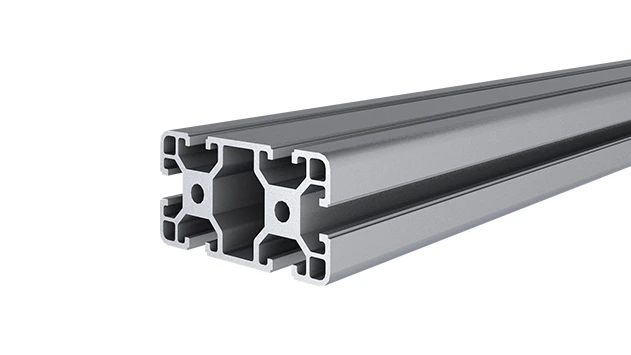
4080B is a 4.00x8.00 CM fractional 40 series square extrusion T-slot profile with two side open T-slots, each side with 4.00cm face, two side with 8.00cm face. The profile has align-a-grooves to assist in aligning connecting profiles.
Every time you walk into a manufacturing plant, a data center, or even a hospital's equipment room, there's a silent workhorse keeping operations running smoothly: the electrical enclosure. These unassuming metal boxes house circuit breakers, relays, sensors, and other sensitive electronics that power everything from assembly lines to life-saving medical devices. But here's the thing—these enclosures aren't just metal boxes. They're carefully engineered systems tasked with two critical jobs: protecting their contents from the outside world and keeping those contents from overheating. It's a balancing act, and one that's growing more complex as electronics become smaller, more powerful, and more sensitive to environmental stress. That's where the 4080B EU standard aluminum extrusion profile comes in. In this article, we'll explore how this specific aluminum profile is redefining what's possible in electrical enclosure design, seamlessly merging robust protection with efficient ventilation to keep critical systems safe and cool.
The Dual Challenge: Protection vs. Ventilation in Electrical Enclosures
Let's start with the basics: what exactly are electrical enclosures up against? On one hand, they need to be fortresses. Imagine an enclosure in a factory—dust, oil, water splashes, and even accidental impacts are part of daily life. In a food processing plant, it might face corrosive cleaning agents. In a coastal data center, salt air could eat away at unprotected metal. The enclosure's job is to keep all that out, ensuring internal components stay dry, clean, and undamaged. On the flip side, those same components generate heat. A single circuit breaker can produce enough warmth to raise the internal temperature of an enclosed space by 10°C or more—and when you stack multiple components together, that heat builds up fast. Overheating is the enemy of electronics: it shortens lifespans, causes malfunctions, and in extreme cases, can even lead to fires. So enclosures need to let heat escape, but without letting the outside in. It's a classic catch-22: more ventilation holes mean better airflow, but also more opportunities for dust, moisture, or debris to sneak inside. Too much protection, and you risk cooking the components. Too little, and you're inviting disaster. For engineers, this dual challenge has long been a design headache—until aluminum extrusion profiles, particularly the 4080B EU standard, started changing the game.
Why Aluminum? The Case for Extrusion Profiles in Enclosure Design
If you've ever wondered why aluminum is the go-to material for everything from aircraft wings to smartphone frames, the answer lies in its unique combination of strength, lightness, and versatility. When it comes to electrical enclosures, these traits are especially valuable. Steel, the traditional enclosure material, is strong but heavy—making installation and reconfiguration a back-breaking task. It's also prone to rust, which is a non-starter in humid or corrosive environments. Aluminum, by contrast, is naturally corrosion-resistant thanks to its oxide layer, which forms instantly when exposed to air and acts as a protective barrier. This means aluminum enclosures can thrive in damp warehouses, coastal facilities, or even outdoor settings without needing constant maintenance. But the real magic of aluminum for enclosures comes from its extrusion process. Unlike steel, which is often bent or welded into shape, aluminum extrusion involves forcing heated aluminum through a die to create complex, custom cross-sections. This allows manufacturers to design profiles with built-in features: T-slots for easy mounting, channels for cable management, and even integrated ventilation paths. Suddenly, enclosures aren't just boxes—they're modular systems that can be adapted to specific needs. And among all the aluminum extrusion profiles available, one stands out for electrical enclosures: the 4080B EU standard. Its dimensions, strength, and design flexibility make it a favorite for engineers looking to solve the protection-ventilation puzzle.

Meet the 4080B EU Standard Aluminum Profile: Specifications and Benefits
Let's get technical for a moment—don't worry, we'll keep it practical. The "4080B" in 4080B EU standard refers to its dimensions: 40mm in width and 80mm in height. It's part of the EU standard series of aluminum extrusion profiles, which are known for their consistent quality, precise tolerances, and compatibility with a wide range of accessories. But numbers alone don't tell the story. What makes the 4080B special is its cross-sectional design. Picture a rectangle with rounded edges, but instead of a solid core, it has internal ribs that add strength without adding unnecessary weight. Along its length, it features T-slots—those iconic grooves that run the entire profile—allowing for easy attachment of brackets, panels, and other components. These T-slots are the secret to the 4080B's versatility: they let engineers mount everything from circuit breaker rails to ventilation fans without drilling holes or welding, making customization a breeze.
Strength-wise, the 4080B punches above its weight. Thanks to its extrusion process and internal rib structure, it can support heavy loads—up to 200kg per linear meter in some configurations—making it ideal for enclosures that need to hold multiple layers of equipment. And at just 1.8kg per meter (depending on wall thickness), it's light enough to be assembled by a single person, reducing installation time and labor costs. But perhaps the most underrated benefit of the 4080B is its thermal conductivity. Aluminum is an excellent heat conductor, meaning it can draw heat away from internal components and dissipate it into the surrounding air. When combined with strategic ventilation design, this conductivity becomes a powerful tool for managing temperature. For enclosure designers, this is a game-changer: they can rely on the profile itself to help cool the system, reducing the need for bulky fans or complex cooling units.
Protection: How 4080B Profiles Shield Sensitive Electronics
Structural Integrity: The Foundation of Protection
At its core, an enclosure's first job is to protect. For the 4080B, this starts with structural integrity. The profile's 40x80mm dimensions and internal ribbing create a rigid frame that can withstand impacts, vibrations, and even minor collisions—common hazards in busy industrial settings. Imagine a forklift accidentally bumping into an enclosure: a flimsy frame might dent, bending panels and exposing internal components. A 4080B frame, however, will absorb the impact, keeping the enclosure's shape intact. This rigidity also helps maintain the seal between panels, which is critical for keeping out dust and moisture. Speaking of seals, the 4080B's T-slots are a godsend for engineers designing weatherproof enclosures. By using aluminum profile accessories like rubber gaskets and end caps, they can create a tight seal around doors and panels. For example, EPDM rubber gaskets, which are resistant to heat and chemicals, can be inserted into the T-slots along the edges of the enclosure, compressing when the door is closed to block out water droplets, dust particles, and even insects. End caps, another essential accessory, plug the open ends of the 4080B profiles, preventing debris from collecting inside the T-slots and ensuring the enclosure remains airtight where needed.
IP Ratings: Measuring Protection Performance
To quantify just how well an enclosure protects against the elements, engineers use IP (Ingress Protection) ratings. An IP rating has two digits: the first measures protection against solids (0 = no protection, 6 = dust-tight), the second against liquids (0 = no protection, 9K = withstands high-pressure, high-temperature water jets). With the right design and accessories, 4080B enclosures can achieve impressive IP ratings. For example, an enclosure built with 4080B profiles, sealed with EPDM gaskets, and fitted with dust-tight hinges can easily reach IP54—meaning it's protected against dust ingress (no harmful deposits) and splashing water from any direction. In more demanding environments, like food processing plants where high-pressure hoses are used for cleaning, 4080B enclosures can be upgraded to IP66 by adding specialized seals and reinforced panels. The key here is the profile's precision: EU standard extrusion ensures consistent dimensions, so accessories like gaskets and panels fit perfectly, leaving no gaps for contaminants to sneak through. Unlike welded steel frames, which can warp or have uneven edges, the 4080B's uniform extrusion guarantees a tight, reliable seal every time.
Corrosion Resistance: Longevity in Harsh Environments
In environments with high humidity, salt, or chemicals, corrosion is a silent killer of electrical enclosures. Steel enclosures might rust through in a few years, but aluminum 4080B profiles are built to last. As mentioned earlier, aluminum forms a natural oxide layer, but for extra protection, many 4080B profiles are anodized. Anodizing is an electrochemical process that thickens the oxide layer, making it even more resistant to corrosion, scratches, and fading. Anodized 4080B profiles can withstand exposure to salt spray, industrial chemicals, and UV radiation without deteriorating—making them ideal for outdoor enclosures, coastal data centers, or wastewater treatment plants. This longevity isn't just about durability; it's also about cost savings. A 4080B enclosure might have a higher upfront cost than a steel one, but it won't need repainting, rust repairs, or replacement every few years. For facilities with hundreds of enclosures, this adds up to significant long-term savings.
Ventilation: Balancing Airflow with Security in 4080B Enclosures
Thermal Management: Why Airflow Matters
Now, let's shift to the other side of the equation: ventilation. Even the most protected enclosure is useless if its internal components overheat. Consider a typical industrial enclosure housing a variable frequency drive (VFD), which can generate up to 500W of heat. Without proper airflow, the internal temperature could rise to 60°C or more, reducing the VFD's lifespan by 50% or causing it to shut down unexpectedly. The 4080B profile addresses this by combining thermal conductivity with smart design. Aluminum's ability to conduct heat means the profile itself acts as a heat sink, drawing warmth away from components and radiating it to the outside. But to maximize this effect, enclosures need airflow. Here's where the 4080B's extrusion design shines: engineers can integrate ventilation paths directly into the profile. For example, by adding slots or channels along the top and bottom of the enclosure frame, they create a natural convection current: warm air rises and exits through the top vents, while cool air is drawn in through the bottom. This passive cooling system requires no fans, reducing energy costs and maintenance. And because the vents are part of the profile's design, they can be positioned to minimize exposure to dust and moisture—for example, angled downward to prevent rain from entering while still allowing air to flow.
Aluminum Guide Rails: Directing Airflow Where It's Needed Most
Sometimes, passive cooling isn't enough—especially in high-density enclosures with multiple heat-generating components. That's where active ventilation, like fans or blowers, comes into play. But adding fans introduces a new challenge: how to direct airflow to the hottest spots without disrupting the enclosure's protection. This is where aluminum guide rail A, a common accessory for 4080B profiles, becomes invaluable. Aluminum guide rails are extruded aluminum strips with T-slots, designed to be mounted inside the enclosure. By attaching fan brackets, ducting, or deflector panels to the guide rails, engineers can create custom airflow paths. For example, a fan mounted near the bottom of the enclosure can push cool air up through a guide rail channel, directing it straight toward a heat-generating VFD. The warm air then exits through top vents, creating a targeted cooling loop. Guide rails also help with component placement: by mounting PCBs or control modules on sliding brackets attached to the rails, engineers can ensure there's space between components for air to circulate. This modular approach means the enclosure can be reconfigured as components are added or replaced—no need to redesign the entire ventilation system. And because aluminum guide rail A is compatible with the 4080B's T-slots, installation is tool-free: just slide the brackets into the slots and tighten the screws. It's a simple solution that makes a big difference in thermal management.
Roller Tracks: A Surprising Ally in Ventilation Design
When you think of roller tracks, you might picture conveyor belts moving products through a factory. But in 4080B enclosures, roller tracks play a clever role in ventilation. Roller tracks are sets of small, free-spinning wheels mounted on a frame, designed to let objects slide smoothly. In enclosures, they're often used to mount drawers or sliding shelves that hold components. But here's the twist: the gaps between the roller wheels allow air to flow freely through the shelf, preventing heat from getting trapped. For example, a power supply mounted on a roller-track shelf doesn't sit flat against a solid surface—it's elevated slightly, with air circulating underneath and around it. This reduces heat buildup and ensures the component stays within its operating temperature range. Roller tracks also make maintenance easier: if a component needs to be replaced, the shelf can be slid out, giving technicians full access without having to disconnect wires or remove other parts. And because roller tracks are compatible with the 4080B's T-slots, they can be positioned anywhere in the enclosure—top, middle, or bottom—to optimize airflow. It's a small detail, but one that demonstrates how the 4080B's modular design turns everyday accessories into ventilation tools.
Customization with Aluminum Profile Accessories
One of the biggest advantages of the 4080B EU standard aluminum profile is its compatibility with a vast range of aluminum profile accessories. These accessories transform a basic frame into a fully functional enclosure, tailored to specific protection and ventilation needs. Let's start with joints: the connectors that hold the 4080B profiles together. There are corner joints for 90° angles, T-joints for branching frames, and even swivel joints for adjustable components. Most joints are designed to fit into the T-slots, so they can be tightened with a hex key—no welding or drilling required. This makes assembly fast and reconfiguration easy: if you need to add a shelf or expand the enclosure, just loosen the joints, adjust the profiles, and retighten. For protection, accessories like plastic end caps and rubber gaskets are essential, as we discussed earlier. But there are also specialized accessories, like cable entry glands, which seal around wires entering the enclosure, preventing moisture from following the cables inside. For ventilation, fan filters are a must: these mesh-covered vents allow air to flow in while trapping dust and debris. They're easy to install using T-slot brackets and can be swapped out for cleaning without tools. Even something as simple as a bracket for a temperature sensor can be added via the T-slots, letting engineers monitor internal temperatures and adjust ventilation as needed. The beauty of these accessories is that they're standardized—any 4080B EU standard profile will work with any EU standard accessory, so you're never locked into a single supplier. This flexibility means enclosures can evolve with your needs, whether you're adding new components, upgrading to a higher IP rating, or improving airflow.
Comparing 4080B with Other Aluminum Profiles: A Practical Table
| Profile Type | Dimensions (WxH) | Weight (kg/m) | Max Load Capacity (kg/m) | Best For |
|---|---|---|---|---|
| 4080B EU Standard | 40mm x 80mm | 1.8 | 200 | Medium to large enclosures, high protection-ventilation balance |
| 4040A EU Standard | 40mm x 40mm | 1.2 | 120 | Small enclosures, light components |
| 3030 EU Standard | 30mm x 30mm | 0.9 | 80 | Compact enclosures, desktop setups |
| 8080 EU Standard | 80mm x 80mm | 3.2 | 350 | Heavy-duty enclosures, industrial machinery |
As the table shows, the 4080B strikes a sweet spot between size, weight, and load capacity. It's not the smallest (that's the 3030) or the strongest (that's the 8080), but for most electrical enclosures, it offers the perfect balance. Its 40x80mm cross-section provides enough space for internal components and ventilation paths, while its 1.8kg/m weight makes it easy to handle. The 200kg/m load capacity means it can support multiple layers of equipment without bending, and its compatibility with accessories ensures it can be adapted to almost any protection or cooling requirement. For small enclosures, like those used in office equipment, the 4040A might be sufficient—but for industrial settings with larger components, the 4080B is the clear choice.
Real-World Applications: 4080B in Action
To understand the impact of the 4080B EU standard aluminum profile, let's look at a real-world example: a mid-sized automotive parts manufacturer in Germany. The plant uses dozens of electrical enclosures to control its assembly lines, each housing PLCs, motor drives, and sensors. Previously, these enclosures were made of steel, which was heavy and prone to rust in the humid factory environment. The maintenance team spent hours each month repainting rust spots and replacing corroded panels. Worse, the steel enclosures had poor ventilation—internal temperatures often reached 55°C in summer, causing frequent motor drive failures. When the plant decided to upgrade, they chose 4080B aluminum profiles for the new enclosures. The results were immediate: installation time dropped by 40% because the lighter aluminum frames could be moved by two people instead of four. The anodized finish eliminated rust issues, cutting maintenance costs by 60%. And by integrating aluminum guide rail A and roller tracks into the design, the engineers created a ventilation system that kept internal temperatures below 40°C, even on the hottest days. Motor drive failures decreased by 80%, and the plant saw a 15% reduction in downtime. Perhaps most importantly, the modular design of the 4080B enclosures made it easy to add new components as the assembly line was upgraded—no need to replace the entire enclosure, just reconfigure the profiles and add new accessories. It's a story repeated in factories, data centers, and labs around the world: the 4080B isn't just a profile; it's a solution that makes electrical enclosures safer, more efficient, and more adaptable.
Conclusion: The 4080B EU Standard—A New Standard for Enclosure Design
Electrical enclosures are the unsung heroes of modern infrastructure, protecting the electronics that power our world while keeping them cool enough to function. For decades, engineers struggled to balance protection and ventilation—until the 4080B EU standard aluminum extrusion profile came along. With its unique combination of strength, lightness, corrosion resistance, and modular design, the 4080B has redefined what's possible in enclosure design. Its T-slots and compatibility with aluminum profile accessories make customization a breeze, while its extrusion design allows for integrated protection and ventilation features. Whether you're building an IP66-rated enclosure for a coastal data center or a ventilated cabinet for a factory assembly line, the 4080B provides the flexibility to meet your needs. It's not just a material choice; it's a design philosophy—one that prioritizes durability, efficiency, and adaptability. As electronics continue to evolve, so too will the enclosures that protect them. And with the 4080B EU standard aluminum profile leading the way, the future looks bright (and cool, and protected).