- Company Articles
- Products and Technology
- Product knowledge
- 4080B EU Standard Aluminum Profile in Food Processing Equipment: Hygiene & Durability

4080B EU Standard Aluminum Profile in Food Processing Equipment: Hygiene & Durability
Related Product
4080B EU Standard Aluminum Profile
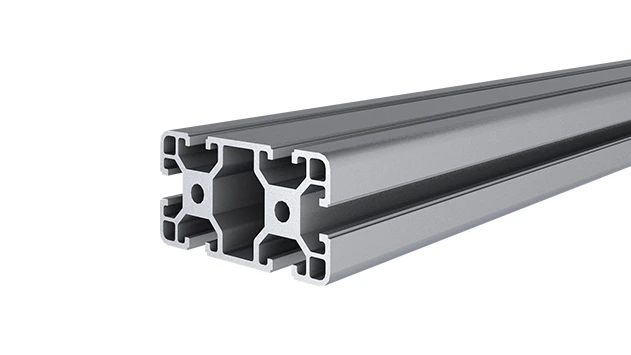
4080B is a 4.00x8.00 CM fractional 40 series square extrusion T-slot profile with two side open T-slots, each side with 4.00cm face, two side with 8.00cm face. The profile has align-a-grooves to assist in aligning connecting profiles.
Walk into any food processing facility, and you'll quickly realize it's a world of contrasts: precision and chaos, cleanliness and grit, innovation and tradition. Every piece of equipment—from the conveyor belts shuffling ingredients to the workbenches where workers inspect products—has to keep up with relentless demands. Moisture from daily washdowns, corrosive cleaning agents, heavy loads of raw materials, and the ever-present need to avoid bacterial growth: these are just a few of the hurdles food processors face. In this high-stakes environment, the choice of materials for equipment isn't just about cost or convenience; it's about safety, reliability, and long-term performance. That's where the 4080B EU Standard Aluminum Profile comes into play—a material that's quietly transforming how food processing equipment is built, used, and maintained.
The Unique Demands of Food Processing Equipment
Let's start by understanding why food processing is such a tough industry for equipment. Unlike, say, a warehouse or a workshop, food facilities operate under strict regulations. The FDA, EU Food Safety Authority, and other global bodies have zero tolerance for contamination. That means every surface that touches or comes near food must be easy to clean, non-porous, and resistant to the harsh chemicals used in sanitization. Imagine scrubbing a workbench with a high-pressure hose or dousing a conveyor with alkaline cleaners daily—equipment that can't handle that will degrade quickly, creating cracks or crevices where bacteria can hide. And once bacteria take hold, the risk of product recalls, health scares, or shutdowns becomes very real.
Then there's durability. Food processing isn't gentle. Heavy sacks of flour, crates of vegetables, or metal containers of (sauces) are moved around constantly. Conveyors run for hours on end, bearing the weight of thousands of products. Workbenches get banged with tools, and material racks are loaded to their limits. Equipment that bends, rusts, or breaks under this stress isn't just an inconvenience—it's a bottleneck. Downtime to repair or replace a warped shelf or a seized conveyor can cost thousands in lost production. And let's not forget adaptability: consumer tastes change fast, and food processors need to switch between products quickly. A workbench that's bolted down and impossible to reconfigure, or a conveyor that can't be extended for a new product line, becomes a liability.
Why Aluminum Extrusion Profile Stands Out
So, what materials have traditionally been used to meet these demands? Stainless steel is a common choice—it's strong and corrosion-resistant, but it's also heavy and expensive. Plastic is lightweight and cheap, but it scratches easily and can't handle high temperatures or heavy loads. Then there's aluminum extrusion profile—a material that's been gaining ground not just in food processing, but in industries from automotive to aerospace. Why? Because aluminum checks a lot of boxes: it's lightweight yet surprisingly strong, naturally resistant to corrosion, and highly customizable thanks to the extrusion process.
Aluminum extrusion works by pushing heated aluminum through a die to create complex cross-sectional shapes—like the 4080B profile, which has a specific 40mm x 80mm design with T-slots running along its length. These T-slots are game-changers. They allow for easy attachment of accessories—think brackets, guides, casters, or panels—without welding or drilling. That means equipment can be assembled, disassembled, or reconfigured in hours, not days. For food processors needing to switch from packaging cookies to packaging frozen vegetables, that flexibility is invaluable.
But not all aluminum profiles are created equal. The EU Standard designation (like the 4080B) isn't just a label—it's a promise of quality. EU standards for aluminum extrusion profile mandate strict tolerances for dimensions, material composition, and surface treatment. This ensures consistency: whether you order a 4080B profile from a supplier in Germany, Spain, or China, it will fit with accessories and perform the same way. In food processing, where precision matters, that consistency eliminates the guesswork of whether a replacement part will fit or if a new section of conveyor will align with the old one.

Diving Into 4080B EU Standard Aluminum Profile
What Makes the 4080B Profile Unique?
Let's get specific about the 4080B. First, its dimensions: 40mm in width and 80mm in height. This balance of width and height gives it a sturdy, rectangular cross-section that's ideal for load-bearing applications. Unlike smaller profiles (like the 2020 or 3030), the 4080B can support heavier weights without bending—think of it as the "workhorse" of aluminum profiles. Whether it's forming the frame of a workbench or the rails of a conveyor, that extra height adds rigidity, making it suitable for both vertical and horizontal use.
Then there's the material itself. The 4080B is typically made from 6063-T5 aluminum alloy, a grade known for its excellent corrosion resistance and mechanical properties. The "T5" refers to the tempering process—heat-treated and artificially aged to enhance strength. This means the profile can withstand impacts from dropped tools or heavy containers without denting, and it won't weaken over time from repeated stress. For food processors, that translates to equipment that lasts longer, reducing the need for frequent replacements.
Surface treatment is another critical feature. Most 4080B profiles undergo anodization—a process that creates a thin, protective oxide layer on the aluminum surface. Anodized aluminum isn't just shiny; it's non-porous, which means liquids (like water, oils, or cleaning chemicals) can't seep into the material. It's also scratch-resistant, so daily scrubbing with brushes or pads won't wear away the finish. Compare that to painted steel, where chips in the paint expose the metal underneath to rust, or plastic, which can develop micro-scratches that trap bacteria. Anodized aluminum is a blank canvas for cleanliness—no hidden spots, no degradation, just a smooth surface that wipes clean with minimal effort.
T-Slots: The Secret to Adaptability
If there's one feature that makes the 4080B indispensable, it's the T-slots. Running along the length of the profile, these slots are designed to accept a wide range of aluminum profile accessories—from bolts and brackets to handles and hinges. What's special about T-slots is that they allow for tool-free or minimal-tool assembly. Instead of welding two pieces together (which requires skilled labor and creates permanent joints), you can slide a T-nut into the slot, tighten a bolt, and have a secure connection in seconds. Need to move a shelf up by a few inches? Loosen the bolts, adjust, and retighten. Want to add a side panel to a workbench? Attach a bracket via the T-slot. This flexibility is a game-changer for food processors who need to reconfigure equipment for seasonal products, new recipes, or updated safety protocols.
Take, for example, a bakery that produces both bread and pastries. Bread requires larger workbenches for kneading, while pastries need smaller, more precise stations for decorating. With 4080B frames, the bakery can quickly disassemble the bread workbenches, add shorter legs, and reattach the tabletops to create pastry stations—all without calling in a welder or buying new equipment. That's adaptability that saves time, money, and space.
Hygiene First: Design Features That Keep Food Safe
In food processing, hygiene isn't just a feature—it's the foundation. The 4080B profile is engineered with this in mind, from its smooth surface to its minimal crevices. Let's break down how it addresses key hygiene concerns:
- No Weld Seams or Rivets: Traditional steel equipment often relies on welding or rivets to join parts. These create uneven surfaces, gaps, and sharp edges—perfect hiding spots for bacteria, flour dust, or food particles. The 4080B, however, uses T-slot connections with aluminum profile accessories like internal straight aluminum joints, which fit flush against the profile. This creates seamless, smooth corners that are easy to wipe down with a cloth or spray with sanitizer.
- Anodized Finish Resists Chemicals: Food processing uses aggressive cleaning agents—chlorine-based sanitizers, acidic detergents, and high-alkaline solutions. The anodized layer on the 4080B is inert, meaning it won't react with these chemicals or leach substances into food. Even after years of daily exposure, the finish remains stable, ensuring no contamination risks.
- Moisture Resistance: Aluminum naturally forms a protective oxide layer, but anodization enhances this. Unlike steel, which rusts when exposed to water, the 4080B won't corrode, even in high-moisture environments like meat processing or dairy plants. This resistance to rust means no flaking metal particles in food and no degradation of the equipment's structural integrity over time.
- Heat and Cold Tolerance: Food processing involves extreme temperatures—from freezing cold storage rooms to hot ovens or pasteurization units. The aluminum 4080B profile expands and contracts minimally with temperature changes, avoiding cracks or warping that could create hygiene risks. It also conducts heat evenly, so it won't develop hot spots that might melt plastic accessories or cold spots that trap condensation.
To put this in perspective, consider a meat processing plant that uses 4080B-based material racks. These racks hold raw meat in coolers overnight, then are wheeled into a washing area for sanitization before reuse. The anodized surface resists the cold, the moisture, and the sanitizing spray, while the T-slot connections ensure no meat juices get trapped in seams. After cleaning, a quick inspection with a UV light shows no bacterial residue—something that's hard to achieve with painted steel racks that often have hidden rust spots.
Durability That Withstands the Daily Grind
Hygiene is critical, but equipment also needs to last. Food processing is a 24/7 operation for many facilities, and downtime is expensive. The 4080B profile is built to handle this relentless pace, thanks to its robust material and engineering.
Strength Without the Weight
Aluminum is often mistaken for being "weak" because it's lightweight, but that's a myth. The 6063-T5 alloy used in the 4080B has a tensile strength of around 180 MPa—strong enough to support heavy loads without bending. For context, that's more than enough to hold a 200kg sack of flour on a material rack or a 100kg conveyor belt loaded with vegetables. And because aluminum is 30% lighter than steel, equipment built with 4080B is easier to move (when fitted with casters) and puts less strain on floors and support structures. This is a big plus for facilities where equipment needs to be shifted for deep cleaning or reconfiguration.
Resistance to Wear and Tear
Let's talk about daily use. A workbench made with 4080B will see everything from cutting tools to heavy containers being dragged across its surface. The anodized finish, which has a hardness of around 80-100 HV (Vickers hardness), resists scratches and dents better than untreated aluminum or plastic. Even repeated impacts from metal mixing bowls or dropped utensils won't leave permanent marks. Conveyors built with 4080B rails also benefit—rollers glide smoothly along the T-slots, and the profile's rigidity prevents bending, which can cause jams or misalignment.
Corrosion resistance is another durability win. In environments with high humidity, salt (like in seafood processing), or acidic foods (like tomatoes or citrus), steel would rust quickly. The 4080B, however, holds its own. Anodized aluminum has a corrosion rate of less than 0.1 mm per year in most food processing environments, meaning it can last 10-15 years or more with basic maintenance. Compare that to plastic, which can degrade from UV light or chemical exposure in 3-5 years, or untreated steel, which might rust through in 2-3 years in wet conditions. The 4080B isn't just a purchase—it's an investment.
Aluminum Profile Accessories: The Unsung Heroes
A profile is only as good as the accessories that complement it, and the 4080B works seamlessly with a range of aluminum profile accessories designed for food processing. Let's highlight a few that enhance its functionality:
Internal Straight Aluminum Joints
These joints are used to connect two 4080B profiles end-to-end, creating longer lengths for conveyors or material racks. What makes them ideal for food processing is their design: they fit inside the profile, leaving no external protrusions. This means no edges to catch food particles or bacteria, and a smooth surface that's easy to clean. Unlike external brackets, which can create crevices, internal joints keep the profile's lines clean and hygienic.
Caster Wheels and Brakes
Mobility is key in food processing, and caster wheels attached via T-slots make equipment like workbenches or material carts easy to move. Look for casters with non-marking, chemical-resistant wheels (like polyurethane) that won't scratch floors or degrade from cleaning agents. Many casters also come with brakes, allowing workers to lock equipment in place during use and unlock it for cleaning or repositioning. The T-slot connection ensures casters are securely attached, even when the equipment is loaded to capacity.
Aluminum Guide Rails
For conveyors or material slides, aluminum guide rails (like Aluminum Guide Rail A or B from the keyword list) attach to 4080B profiles to keep products on track. These rails are smooth, corrosion-resistant, and can be adjusted via T-slots to accommodate different product sizes. Whether you're moving bottles, boxes, or bags, guide rails prevent spills and ensure products flow evenly—reducing waste and improving efficiency.
Real-World Applications: 4080B in Action
Let's look at how the 4080B profile is used in actual food processing equipment, and the benefits it brings to different stages of production.
Aluminum Workbenches: The Heart of Production
Workbenches are where the magic happens—inspection, assembly, packaging, and more. A typical aluminum workbench built with 4080B profiles has a frame made from 4080B rails, a tabletop (often stainless steel or food-grade plastic), and accessories like shelves, tool holders, or overhead lights attached via T-slots. The benefits here are clear: the frame is lightweight but sturdy, the T-slots allow for easy customization, and the anodized finish resists daily cleaning. Workers can adjust shelf heights to fit different products, add bins for tools, or even attach small conveyors to the bench for seamless workflow. And when it's time to deep clean, the workbench can be moved (thanks to casters), disassembled partially, or hosed down without worrying about rust or damage.
A case in point: a poultry processing plant that switched from wooden workbenches to 4080B-based aluminum workbench units. Wooden benches were prone to absorbing moisture, warping, and harboring bacteria, even with regular sanding. The aluminum workbenches, however, were easy to sanitize, didn't warp, and lasted three times longer. The plant also reported a 20% reduction in cleaning time, as workers no longer had to scrub hard-to-reach corners or sand down rough spots.
Conveyors and Material Racks
Conveyors are the arteries of food processing, moving ingredients from one station to the next. The 4080B profile forms the rails that guide conveyor belts or roller tracks, providing a stable, corrosion-resistant base. Roller tracks, in particular, benefit from the 4080B's rigidity—rollers spin smoothly, and the T-slots allow for easy adjustment of roller spacing to handle different package sizes. Material racks, used to store raw materials or finished products, also rely on 4080B for their frames. These racks can be built to custom heights and widths, with shelves adjusted via T-slots to fit everything from small spice containers to large crates of produce.
4080B vs. Other Materials: A Comparison
To truly appreciate the 4080B, let's compare it to other common materials used in food processing equipment:
| Feature | 4080B EU Standard Aluminum Profile | Stainless Steel | Plastic (PVC/PP) |
|---|---|---|---|
| Weight | Lightweight (2.7 g/cm³) | Heavy (7.9 g/cm³) | Light (1.3-1.5 g/cm³) |
| Corrosion Resistance | Excellent (anodized finish) | Excellent (but heavier and more expensive) | Good (but scratches easily) |
| Hygiene | Smooth, non-porous surface; easy to clean | Smooth, but welds can trap bacteria | Non-porous, but prone to micro-scratches |
| Customization/Adaptability | High (T-slots, easy assembly) | Low (requires welding) | Medium (limited strength for heavy loads) |
| Cost | Moderate (higher than plastic, lower than stainless steel) | High (expensive material and fabrication) | Low (but short lifespan) |
| Durability | High (10-15 year lifespan with maintenance) | High (15+ years, but heavier) | Low (3-5 years, degrades in chemicals/UV) |
As the table shows, the 4080B strikes a balance between performance, cost, and practicality. It's lighter and more adaptable than stainless steel, more durable and hygienic than plastic, and offers a longer lifespan than both in most food processing environments. For many processors, this balance makes it the clear choice.
Sustainability: A Greener Choice for Modern Food Processing
In today's world, sustainability isn't just a buzzword—it's a business imperative. Food processors are under pressure to reduce their environmental footprint, and the 4080B helps in several ways. Aluminum is 100% recyclable, and recycling it uses just 5% of the energy required to produce new aluminum. This means that at the end of its lifespan, a 4080B profile can be melted down and reused, reducing waste. Additionally, the 4080B's long lifespan (10-15 years) means less frequent replacement, cutting down on the resources needed to manufacture new equipment. Compare that to plastic, which often ends up in landfills, or steel, which requires more energy to produce and transport due to its weight. The 4080B isn't just good for business—it's good for the planet.
The Future of Food Processing: Lean System Integration
The 4080B profile isn't just a material—it's a cornerstone of lean system principles in food processing. Lean manufacturing focuses on minimizing waste, maximizing efficiency, and continuous improvement. The 4080B supports this by allowing for quick reconfiguration of equipment (reducing downtime), easy customization (eliminating the need for over-engineered, one-size-fits-all solutions), and durable, low-maintenance performance (cutting down on repair waste). As food processors strive to become more agile and responsive to market changes, the 4080B will play an increasingly important role in building the flexible, efficient facilities of tomorrow.
Conclusion: More Than a Profile—A Partner in Food Safety
The 4080B EU Standard Aluminum Profile is more than just a piece of metal. It's a solution to the unique challenges of food processing: a material that balances hygiene and durability, adaptability and strength, cost-effectiveness and sustainability. For food processors, it's a tool that doesn't just meet regulations—it exceeds them, ensuring safer products, more efficient operations, and a better bottom line. Whether you're building a new facility, upgrading old equipment, or looking to improve your cleaning protocols, the 4080B is worth considering. After all, in an industry where every detail matters, the right material can make all the difference.
So the next time you walk through a food processing plant, take a closer look at the equipment. Chances are, you'll spot the 4080B profile quietly doing its job—supporting the machines, the workers, and the millions of meals that end up on tables around the world. It's not glamorous, but in the world of food processing, reliability and safety are the ultimate compliments. And the 4080B delivers on both, day in and day out.