- Company Articles
- Products and Technology
- Product knowledge
- 4080B EU Standard Aluminum Profile in Furniture Manufacturing: Industrial & Commercial Use

4080B EU Standard Aluminum Profile in Furniture Manufacturing: Industrial & Commercial Use
Related Product
4080B EU Standard Aluminum Profile
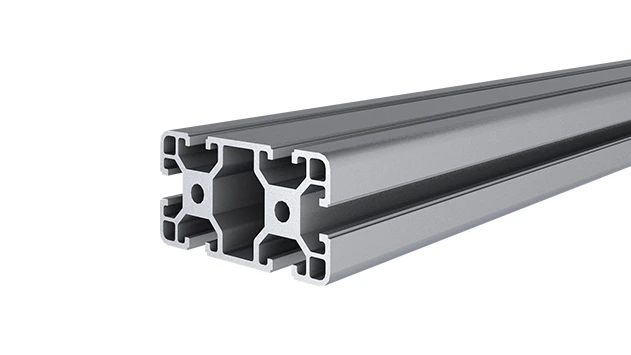
4080B is a 4.00x8.00 CM fractional 40 series square extrusion T-slot profile with two side open T-slots, each side with 4.00cm face, two side with 8.00cm face. The profile has align-a-grooves to assist in aligning connecting profiles.
Walk into any modern factory, warehouse, or commercial workspace, and you'll notice something fundamental: the furniture isn't just there to fill space. It's a silent workhorse—supporting tools, organizing materials, and keeping operations running smoothly. In these high-stakes environments, where efficiency and durability can make or break productivity, the choice of materials matters more than ever. Enter the aluminum extrusion profile —a unsung hero of industrial and commercial furniture. And among these, the 4080B EU Standard Aluminum Profile stands out as a game-changer, blending strength, flexibility, and precision to redefine what workspaces can achieve.
What is 4080B EU Standard Aluminum Profile, Anyway?
Let's start with the basics. The term "4080B" refers to the profile's cross-sectional dimensions: 40mm in width and 80mm in height. But this isn't just a random set of numbers. The "EU Standard" tag means it adheres to strict European manufacturing norms—think rigorous quality checks, safety certifications, and consistency in production. Made through the aluminum extrusion process, this profile is crafted by pushing heated aluminum alloy through a precision die, resulting in a sleek, uniform shape with internal T-slots running the length of the profile. These T-slots are where the magic happens: they allow for easy attachment of aluminum profile accessories like connectors, brackets, and panels, turning a single piece of metal into a modular building block.
Why does this matter for furniture manufacturing? Unlike traditional materials like wood or steel, aluminum extrusion profiles are designed for adaptability. Wood warps, steel is heavy, but aluminum? It's lightweight yet surprisingly strong, resistant to corrosion, and infinitely customizable. And the 4080B, with its larger cross-section compared to smaller profiles like 2020 or 3030, is built to handle heavier loads—making it ideal for industrial workbenches, material racks, and other furniture that needs to stand up to daily abuse.
The Science Behind Its Strength: Why 4080B Stands Apart
Aluminum itself is a wonder material, but what makes the 4080B profile so special? Let's break it down. First, its composition: most 4080B profiles are made from 6063-T5 aluminum alloy, a blend known for its excellent extrudability and mechanical properties. When heat-treated (the "T5" designation), it gains impressive tensile strength—around 180 MPa—and a yield strength of 110 MPa, which means it can handle heavy weights without bending or warping. For context, that's strong enough to support a fully loaded pallet of goods on a material rack or a workstation cluttered with power tools, without so much as a creak.
Then there's the T-slot design. Those grooves running along the profile's length aren't just for show. They're engineered to accept bolts, nuts, and specialized connectors, letting you build furniture without welding or drilling. Need to add a shelf to a workbench? Slide a bracket into the T-slot, tighten a bolt, and you're done. Want to reconfigure a material rack to fit taller items? Loosen the connectors, adjust the height, and lock it back in place. This modularity is a lifesaver in dynamic workspaces where needs change weekly (or even daily).
And let's not forget corrosion resistance. Aluminum naturally forms a thin oxide layer that protects it from rust, but 4080B profiles often take it a step further with anodizing—a process that thickens this layer, making the profile even more resistant to moisture, chemicals, and wear. In environments like food processing plants or labs where spills are common, this means the furniture stays looking new for years, not months.

From Workbenches to Material Racks: Real-World Applications
Enough theory—let's talk about how the 4080B profile shines in actual use. One of its most popular roles is in aluminum workbench manufacturing. Industrial workbenches need to be sturdy, customizable, and easy to maintain, and 4080B checks all three boxes. Imagine a electronics assembly line: each workstation is built with 4080B frames, topped with a durable aluminum honeycomb panel, and fitted with shelves, tool hooks, and even integrated lighting—all attached via T-slots. If a worker needs more space, the shelves can be moved; if the bench needs to be taller, adjustable feet (another aluminum profile accessory ) raise it in minutes. And because aluminum is lightweight, the bench can be fitted with casters for mobility without sacrificing stability.
Then there are material racks. In warehouses, storing goods efficiently is everything, and 4080B-based racks are a logistics manager's dream. Take "Material Rack B (3 row and 3 floor)" from common industrial catalogs—its frame is often built with 4080B profiles, allowing it to hold heavy boxes or parts bins across multiple levels. The T-slots make it easy to add dividers, label holders, or even roller tracks (more on those later) to slide materials in and out smoothly. Unlike wooden racks that splinter or steel racks that rust, these aluminum racks stay strong and clean, even in high-traffic areas.
Another standout application is in conveyor systems. While conveyors might not scream "furniture," they're critical for moving materials between workstations. 4080B profiles form the backbone of many roller or belt conveyors, providing a rigid frame that supports the weight of the conveyor belt and the goods being transported. The T-slots here allow for easy installation of guides, sensors, and motor mounts, making the conveyor adaptable to different product sizes—from small components to large packages.
The Unsung Heroes: Aluminum Profile Accessories
A profile is only as good as the accessories that bring it to life, and 4080B systems have a toolkit that would make any DIY enthusiast jealous. Let's start with the little things that make a big difference: 4080 aluminum profile end cap and 3030 aluminum profile end cap . These simple plastic or aluminum caps snap onto the ends of the profile, covering sharp edges and preventing dust, debris, or even fingers from getting stuck in the T-slots. In busy workshops, where workers are focused on tasks, these caps are a small but crucial safety feature.
Then there are the connectors—the "glue" that holds modular systems together. 90° aluminum profile connectors, 45° brackets, and three-way joints let you build frames in any shape imaginable. Want a L-shaped workbench? Use 90° connectors. Need a triangular material rack for corner spaces? Three-way joints have you covered. Many of these connectors are designed to be tight yet adjustable, so you can tweak angles without compromising stability.
Rubber strips and seal covers are another must-have. T-slot rubber seal cover (a common accessory) slides into the T-slots when they're not in use, keeping out dust and moisture. In outdoor or semi-outdoor settings, like loading docks, this prevents corrosion and keeps the slots clean for future adjustments. Rubber strips along the edges of workbenches or racks add grip, preventing tools or materials from sliding off—handy in environments like warehouses with forklift traffic.
And let's not overlook casters. Adding casters to a 4080B-based trolley or workbench turns it into a mobile unit, perfect for moving materials from one station to another. Heavy-duty casters with brakes ensure the furniture stays put when needed, while swivel casters make navigating tight corners a breeze. It's this combination of fixed strength and flexible mobility that makes 4080B furniture so versatile.
4080B vs. Other Profiles: A Quick Comparison
You might be wondering: with so many aluminum profiles out there (2020, 3030, 4040, etc.), why choose 4080B? Let's put it side by side with two popular alternatives to see how it stacks up.
| Profile Type | Dimensions (WxH) | Typical Load Capacity (per linear meter) | Best For | Key Accessories |
|---|---|---|---|---|
| 4080B EU Standard | 40mm x 80mm | 400-500 kg | Heavy workbenches, material racks, conveyor frames | 4080 aluminum profile end cap, 90° heavy-duty connectors, anodized panels |
| 3030 EU Standard | 30mm x 30mm | 200-300 kg | Light workstations, shelving, small trolleys | 3030 aluminum profile end cap, lightweight brackets, plastic panels |
| 2020 EU Standard | 20mm x 20mm | 100-150 kg | DIY projects, display shelves, small component storage | 2020 aluminum profile end cap, mini connectors, acrylic panels |
As the table shows, 4080B's larger size and higher load capacity make it the go-to for heavy-duty tasks. If you're building a workbench that needs to support a 200kg CNC machine, 3030 might struggle, but 4080B handles it with ease. That said, for lighter jobs—like a small parts shelf in an office—2020 or 3030 are more cost-effective. The key is matching the profile to the job, and 4080B excels where strength and durability are non-negotiable.
Sustainability: A Greener Choice for Modern Workspaces
These days, sustainability isn't just a buzzword—it's a business imperative. And here's where 4080B profiles truly shine. Aluminum is 100% recyclable, and recycling it uses just 5% of the energy needed to produce new aluminum. This means that even if a workspace decides to replace its 4080B furniture years down the line, the profiles can be melted down and turned into new products, reducing waste and carbon footprints.
Modularity also plays a role in sustainability. Traditional furniture is often "one and done"—if you need a bigger workbench, you throw out the old one and buy a new. With 4080B systems, you can expand or reconfigure existing furniture instead of replacing it. Need more shelf space? Add another 4080B section. Want to convert a static rack into a mobile trolley? Swap out the feet for casters. This "extend, don't replace" mindset cuts down on furniture waste, which is a big win for both budgets and the planet.
And let's not forget energy efficiency in production. Aluminum extrusion is a relatively low-waste process, and EU-standard profiles like 4080B are manufactured to strict energy guidelines, ensuring minimal environmental impact during creation. For companies aiming for LEED certification or sustainability goals, choosing 4080B furniture is a tangible way to demonstrate commitment.
Case Study: How a Manufacturing Plant Boosted Efficiency with 4080B
To really drive home the impact of 4080B profiles, let's look at a real example. A mid-sized automotive parts manufacturer in Germany was struggling with outdated wooden workbenches and steel racks. The wood was warping from oil spills, the steel was rusting, and reconfiguring the setup to accommodate new part sizes took days (and a team of contractors). Productivity was suffering, and maintenance costs were through the roof.
The solution? A complete overhaul using 4080B EU Standard Aluminum Profiles. They replaced all workbenches with 4080B-based stations, fitted with adjustable shelves, tool hooks, and anti-slip surfaces. Material racks were rebuilt with 4080B frames and roller tracks, making it easier to slide heavy part bins in and out. Even the assembly line trolleys got an upgrade, with 4080B frames and locking casters for smooth movement between stations.
The results were striking. Maintenance costs dropped by 60% in the first year—no more replacing warped wood or sanding rust off steel. Reconfiguring workstations now takes hours instead of days, thanks to the T-slot system. And workers reported less fatigue, as the adjustable height workbenches reduced strain on their backs. Most importantly, production output increased by 15% because materials moved faster and workspaces felt less cluttered.
"We didn't just buy furniture—we invested in a system that grows with us," said the plant manager. "The 4080B profiles are tough enough for our daily grind, but flexible enough to keep up with our changing needs. It was one of the best decisions we've made."
Choosing the Right Supplier: What to Look For
Ready to dive into 4080B furniture? Great—but not all suppliers are created equal. To ensure you get the best quality, here are a few tips: First, check for EU standard compliance. The "EU Standard" label isn't just a marketing term; it means the profile meets strict criteria for dimensions, strength, and safety. Ask suppliers for certification documents (like EN 12020-2) to verify this.
Second, look for a supplier with a wide range of aluminum profile accessories . A good supplier should offer everything from end caps and connectors to panels and casters, so you don't have to source parts from multiple places. This saves time and ensures compatibility between components.
Third, consider customization options. While standard 4080B profiles work for most projects, some workspaces need unique lengths, colors, or finishes. Suppliers with in-house extrusion capabilities can often accommodate custom orders, ensuring the furniture fits your space perfectly.
Finally, don't overlook customer support. Even the most modular systems can be confusing to assemble the first time. A supplier that offers guides, videos, or even on-site assembly help can make the process much smoother.
Final Thoughts: Why 4080B is More Than Just a Profile
At the end of the day, the 4080B EU Standard Aluminum Profile isn't just a piece of metal. It's a building block for better workspaces—spaces that are strong enough to handle heavy loads, flexible enough to adapt to change, and sustainable enough to last for years. Whether you're outfitting a small workshop or a large factory, 4080B-based furniture brings order to chaos, turning cluttered, static environments into dynamic, efficient hubs of productivity.
So the next time you're shopping for industrial or commercial furniture, don't just think about what it looks like—think about what it can do. With 4080B profiles, the answer is: almost anything. From aluminum workbench setups that grow with your team to material racks that reconfigure at a moment's notice, this profile is redefining what furniture can be. And in a world where workspaces need to be as agile as the businesses they support, that's not just an advantage—it's a necessity.