- Company Articles
- Products and Technology
- Product knowledge
- 4080B EU Standard Aluminum Profile T-Slot Design: Advantages for Modular Systems

4080B EU Standard Aluminum Profile T-Slot Design: Advantages for Modular Systems
Related Product
4080B EU Standard Aluminum Profile
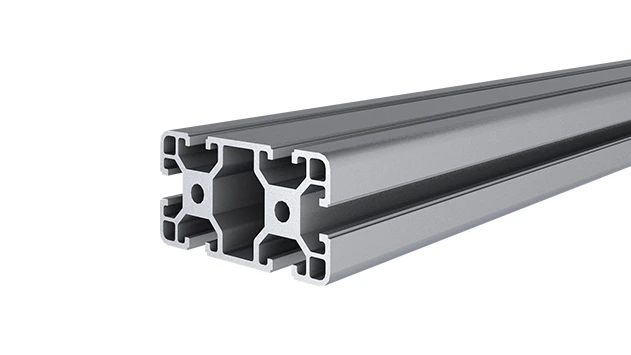
4080B is a 4.00x8.00 CM fractional 40 series square extrusion T-slot profile with two side open T-slots, each side with 4.00cm face, two side with 8.00cm face. The profile has align-a-grooves to assist in aligning connecting profiles.
How a single profile is transforming flexibility, efficiency, and adaptability in modern manufacturing
The Shift to Modular Manufacturing: Why Rigidity No Longer Works
Walk into any manufacturing facility today, and you'll likely notice a quiet revolution underway. Gone are the days of heavy, fixed steel structures bolted to the floor—permanent fixtures that took weeks to install and even longer to modify. Instead, there's a new focus on modular systems : lightweight, adaptable setups that can be reconfigured, expanded, or repurposed in hours, not months. This shift isn't just about convenience; it's about survival in an era where production needs change overnight—new products, fluctuating demand, and evolving safety standards demand a workspace that can keep up.
At the heart of this revolution lies aluminum extrusion profiles, and among them, one stands out for its versatility and reliability: the 4080B EU Standard Aluminum Profile. Its T-slot design, in particular, has become a game-changer for businesses of all sizes, from small workshops to multinational factories. Let's dive into why this unassuming piece of aluminum is quietly becoming the backbone of modern manufacturing.
What Exactly Is 4080B EU Standard Aluminum Profile?
First things first: let's demystify the name. The "4080B" isn't just a random code—it tells you exactly what you're getting. The numbers refer to dimensions: 40mm in width and 80mm in height, making it a medium-to-large profile ideal for applications that need a balance of strength and flexibility. The "B" denotes a specific groove design within the EU standard range, ensuring consistency across suppliers and compatibility with a vast ecosystem of accessories.
But what really sets it apart is the "EU Standard" label. In an industry where parts from different suppliers often feel like they're speaking different languages, EU standards act as a universal translator. This profile is made from 6063-T5 aluminum alloy—a material chosen for its winning combo of lightness (about 1/3 the weight of steel), corrosion resistance, and impressive load-bearing capacity. It's extruded, meaning it's formed by pushing molten aluminum through a die, resulting in a smooth, precise shape with consistent wall thickness—critical for structural integrity.
Real Talk: A mid-sized electronics manufacturer in Poland recently swapped their old steel workbenches for 4080B-based setups. "We used to need a welding crew just to add a shelf," says their production manager. "Now, with 4080B, a single technician can reconfigure a workstation in 20 minutes. We've cut setup time for new product lines by 70%."

The Genius of T-Slot Design: Why Those Grooves Matter
If the 4080B profile is the backbone, its T-slot design is the nervous system—what makes it tick. Look closely, and you'll see longitudinal grooves running the length of the profile, shaped like a "T." These slots aren't just for show; they're the key to its modular magic. Here's why they're so important:
Flexibility in Assembly: No Welding, No Problem
Traditional steel structures rely on welding or drilling, which are permanent and error-prone. T-slots, however, let you attach components using simple fasteners: T-nuts, bolts, and brackets slide into the grooves and lock in place with a twist. Need to mount a shelf? Slide a bracket into the slot, tighten the bolt, and you're done. Want to move it six inches to the left? Loosen the bolt, reposition, and retighten. It's assembly without the commitment—and without the sparks.
Adaptability to Changing Needs
Manufacturing isn't static. A workbench that assembles smartphones today might need to handle larger tablets tomorrow, or a material rack might need an extra shelf during peak season. With T-slots, these changes are trivial. For example, roller track systems—used to slide parts between workstations—can be mounted directly into the T-slots of 4080B profiles. If you need to adjust the angle of the track or add a new section, you don't need to rebuild the entire rack; just reposition the brackets.
Compatibility with Aluminum Profile Accessories
A profile is only as good as the accessories it works with, and 4080B plays well with others. From 90° connectors and end caps to cable management clips and aluminum profile rubber strips (which seal the slots to keep out dust), the ecosystem of compatible parts is vast. EU standards ensure that a bracket from a supplier in Germany will fit a profile from a manufacturer in Spain, eliminating the headache of mismatched components.
Aluminum Profile Accessories: The Unsung Heroes of Modularity
Let's take a moment to appreciate the accessories—those small, often overlooked parts that turn a basic aluminum profile into a fully functional system. Without them, 4080B would be just another piece of metal. With them, it becomes a blank canvas for innovation.
Connectors: The Glue That Holds It All Together
Connectors are the most critical accessories, and they come in every shape imaginable to suit different angles and loads. The 90° aluminum profile connector is a workhorse, joining two profiles at a right angle for frames or shelves. For more complex setups, there's the 135° connector (great for corner reinforcements) or the 45° connector (ideal for sloped surfaces like inclined roller tracks). What's impressive is how these connectors install: most slide into the T-slot and lock with a hex key, requiring no special tools.
End Caps and Seals: Finishing Touches with Purpose
At first glance, 4080 aluminum profile end caps might seem like a cosmetic add-on, but they serve a practical purpose. They cover the open ends of the profile, preventing dust, debris, or even fingers from getting stuck in the slots. Rubber strips, like the T-slot rubber seal cover, do the same for the grooves themselves—especially useful in cleanrooms or environments where precision matters, like electronics assembly.
Workbench Essentials: From Flat Surfaces to ESD Protection
For workbench setups, accessories like aluminum honeycomb panels (lightweight, sturdy table tops) and adjustable feet (to level uneven floors) transform 4080B into a stable workspace. For industries dealing with sensitive components, ESD (electrostatic discharge) accessories—like grounded brackets and ESD-safe end caps—turn standard workbenches into ESD workstations that protect against static damage.
Case in Point: A medical device manufacturer needed to create a custom assembly line for a new product. Using 4080B profiles, 90° connectors, and roller tracks with plastic guide rails, their team built a modular line in three days—complete with adjustable shelves, integrated lighting, and ESD protection. When the product design changed six months later, they reconfigured the entire line in under 48 hours by swapping out a few brackets and adding new roller sections.
How 4080B Stacks Up: A Comparison with Other Profiles
Not all aluminum profiles are created equal. While smaller profiles like 2020 or 3030 have their uses (think small shelves or light-duty frames), 4080B fills a sweet spot for medium-to-heavy applications. Let's see how it compares:
| Profile Type | Dimensions (WxH) | Typical Load Capacity* | Best For | Key Limitation |
|---|---|---|---|---|
| 2020 EU Standard | 20mm x 20mm | Up to 15kg (shelf) | Small shelves, 3D printer frames, light-duty carts | Too narrow for heavy tools or large components |
| 3030 EU Standard | 30mm x 30mm | Up to 50kg (shelf) | Workbenches for small parts, desktop organizers | Limited vertical space for multiple T-slot accessories |
| 4040 EU Standard | 40mm x 40mm | Up to 80kg (shelf) | Medium workbenches, small material racks | Lower vertical load capacity than 4080B |
| 4080B EU Standard | 40mm x 80mm | Up to 150kg (shelf) | Heavy workbenches, roller tracks, material racks, lean systems | Bulkier than smaller profiles; overkill for tiny projects |
| 8080 EU Standard | 80mm x 80mm | Up to 300kg (shelf) | Industrial machinery frames, heavy-duty racks | Too heavy and expensive for most general manufacturing needs |
*Load capacity based on horizontal shelf, evenly distributed weight, and proper bracing. Actual capacity may vary by supplier and wall thickness.
The data speaks for itself: 4080B offers nearly double the load capacity of 4040 while remaining more compact and affordable than 8080. Its 80mm height also provides extra vertical space for T-slot accessories, meaning you can mount more components (like multiple roller tracks or tool holders) on a single profile without overcrowding.
Real-World Applications: Where 4080B Shines Brightest
4080B isn't just a theoretical solution—it's proving its worth in factories, workshops, and warehouses around the world. Here are some of the most common (and creative) ways it's being used:
Workbenches: The Heart of the Production Line
A workbench is more than just a table—it's where products come to life. 4080B-based workbenches offer the stability needed for precision tasks (like assembling circuit boards) while remaining lightweight enough to move if needed. Many manufacturers opt for "Workbench E" setups (single deck, without casters) using 4080B frames, paired with aluminum honeycomb tops for a flat, durable surface. Add ESD accessories, and you've got a workstation that protects sensitive components from static damage.
Lean Systems: Streamlining Material Flow
Lean system principles—eliminating waste, optimizing flow—rely on tools that adapt to how work actually happens. 4080B is perfect for building flow racks (like Material Rack B, with 3 rows and 3 floors) and roller track systems that let materials glide smoothly from one workstation to the next. The T-slot design makes it easy to adjust shelf heights or add new roller sections as production needs change, ensuring the line always flows at peak efficiency.
Material Handling: Carts, Racks, and Beyond
From turnover trolleys to heavy-duty storage racks, 4080B provides the strength to haul materials without the bulk of steel. For example, a turnover trolley built with 4080B frames and swivel casters can carry up to 200kg of parts while remaining maneuverable—critical for tight factory floors. And because the T-slots allow for easy attachment of bins, dividers, or tool holders, these trolleys can be customized to carry specific parts, reducing the risk of damage during transport.
Why EU Standards Matter: Quality, Consistency, and Peace of Mind
You might be wondering: why pay extra for an EU standard profile when non-standard options are cheaper? The answer lies in three words: quality, consistency, and compatibility. EU standards (EN 755-9, for aluminum extrusions) set strict guidelines for material purity, dimensional accuracy, and mechanical properties. This means every 4080B profile you buy—whether from a supplier in France, Italy, or Slovakia—will have the same groove spacing, wall thickness, and load capacity. No more guessing if a bracket from one supplier will fit a profile from another.
For international businesses, this consistency is a lifesaver. A company with factories in Germany and China can order the same 4080B profiles and accessories for both locations, ensuring their production lines are identical. And because EU standards are recognized globally, these profiles are easy to export or import, simplifying supply chain management.
Sustainability and Cost: An Investment That Pays Off
At first glance, aluminum profiles might seem pricier than steel or plastic alternatives. But look closer, and the math shifts. Aluminum is 100% recyclable, with no loss in quality—so when a 4080B setup reaches the end of its life, the metal can be melted down and reused. This reduces waste and lowers long-term environmental impact.
Then there's the cost of change. Traditional steel structures are expensive to modify or replace; every new product line might require a complete rebuild. With 4080B, you're investing in a system that grows with you. Need to expand a workbench? Add more profiles. Need to repurpose a material rack into a conveyor? Swap out the shelves for roller tracks. Over time, these savings add up—often paying for the initial investment within a year.
Conclusion: Building the Future of Manufacturing, One Profile at a Time
The 4080B EU Standard Aluminum Profile isn't just a piece of metal. It's a symbol of how manufacturing is evolving—faster, smarter, and more adaptable than ever. Its T-slot design, compatibility with aluminum profile accessories , and adherence to EU standards make it the backbone of modern modular systems, empowering businesses to respond quickly to change, reduce waste, and focus on what matters: creating great products.
Whether you're a small workshop looking to upgrade your workbenches or a large factory overhauling your production lines, 4080B offers a simple truth: in manufacturing, flexibility isn't a luxury—it's a necessity. And with this profile, that flexibility is finally within reach.