- Company Articles
- Products and Technology
- Product knowledge
- 4080B EU Standard Aluminum Profile vs Steel: Weight, Strength & Corrosion Resistance

4080B EU Standard Aluminum Profile vs Steel: Weight, Strength & Corrosion Resistance
Related Product
4080B EU Standard Aluminum Profile
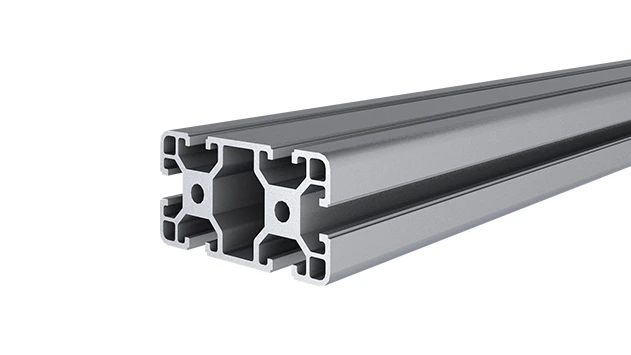
4080B is a 4.00x8.00 CM fractional 40 series square extrusion T-slot profile with two side open T-slots, each side with 4.00cm face, two side with 8.00cm face. The profile has align-a-grooves to assist in aligning connecting profiles.
Walk into any modern manufacturing facility, and you'll notice a silent hero shaping the workflow: the materials that hold everything together. From the workbench where technicians assemble delicate components to the material racks storing raw parts, the choice between aluminum and steel isn't just about cost—it's about efficiency, durability, and adaptability. Lately, one material has been turning heads in lean manufacturing circles: the 4080B EU standard aluminum profile. But how does it stack up against steel, the tried-and-true workhorse of industrial design? Today, we're diving into three critical factors that can make or break your operation: weight, strength, and corrosion resistance. Whether you're setting up a new assembly line, upgrading your workstations, or building a custom material rack, this breakdown will help you decide which material truly works harder for your team.
First Things First: What Even Is a 4080B EU Standard Aluminum Profile?
Before we pit aluminum against steel, let's get clear on what we're talking about with the 4080B. If you're new to aluminum extrusion profiles, the "4080" in the name refers to its cross-sectional dimensions: 40 millimeters wide and 80 millimeters tall. The "B" denotes a specific design variant within the EU standard, which ensures compatibility with a wide range of aluminum profile accessories—think brackets, connectors, and panels that snap into place without custom fabrication. What makes this profile special? It's extruded, meaning it's shaped by forcing molten aluminum through a die, resulting in a consistent, precision-engineered structure with built-in T-slots. These slots are like the profile's "universal language," letting you attach shelves, lights, or tools anywhere along the length without drilling or welding. It's modularity at its finest, and that's a big reason it's become a cornerstone of lean system setups.
Steel, on the other hand, comes in many forms—mild steel, stainless steel, carbon steel—but for most industrial applications, we're typically comparing to mild steel (low-carbon steel) or sometimes stainless for corrosion resistance. It's strong, widely available, and has been the go-to for everything from heavy machinery frames to simple shelving for decades. But as factories push for faster setup times, lighter equipment, and lower maintenance costs, the 4080B aluminum profile is challenging steel's reign. Let's see how they measure up.
Weight: When Every Kilogram Counts in Your Workflow
Imagine wheeling a fully loaded turnover trolley across the factory floor. If that trolley is made of steel, you're probably grunting, straining, and maybe even needing a second person to help. Swap that steel frame for 4080B aluminum, and suddenly, one person can move it with ease. Why? It all comes down to density. Aluminum clocks in at about 2.7 grams per cubic centimeter, while steel sits at a hefty 7.85 g/cm³—that's nearly three times denser. Translated to real-world terms, a 1-meter length of 4080B aluminum profile weighs roughly 2.5 kg, while a similar steel profile (same dimensions, mild steel) would weigh around 7 kg. That's a difference you can feel in your hands, your back, and your bottom line.
Real-World Impact: The Workbench Test
Let's say you're outfitting a production line with 10 workbenches. A standard steel workbench (without casters) might weigh 80 kg, making installation a two-person job and requiring heavy-duty flooring to support the load. An aluminum extrusion profile workbench, using 4080B rails for the frame, weighs closer to 35 kg. That means one technician can assemble and position it alone, cutting setup time by half. Over a full facility, that's hours of labor saved—not to mention fewer workplace injuries from lifting heavy objects.
Weight also affects transportation costs. If you're sourcing materials from a supplier, shipping 100 meters of steel profiles will cost significantly more than aluminum, thanks to higher freight fees for heavier loads. And once they arrive, storing steel requires sturdier racks and more floor space, whereas aluminum profiles can be stacked or hung with minimal support. For lean system setups, where flexibility and quick reconfiguration are key, aluminum's light weight is a game-changer. Need to rearrange your assembly line overnight? With aluminum, you're not waiting for a forklift—your team can disassemble and rebuild on the fly.

Strength: Is Aluminum "Weak" Compared to Steel? Let's Bust That Myth
"Aluminum is just too flimsy," is a comment we've all heard. But here's the truth: strength isn't just about raw power—it's about strength relative to weight . Sure, a solid steel bar might outmuscle aluminum in a side-by-side tensile test, but when you factor in how much each material weighs, aluminum often comes out on top. Let's crunch the numbers. The 4080B aluminum profile, made from 6063-T5 aluminum alloy (a common grade for structural applications), has a tensile strength of around 180 MPa (megapascals) and a yield strength of 110 MPa. Mild steel, by comparison, has a tensile strength of 370–460 MPa and yield strength of 250 MPa. On paper, steel wins—but remember, steel is three times heavier. When we calculate strength-to-weight ratio (tensile strength divided by density), aluminum shines: 180 MPa / 2.7 g/cm³ = 66.7 MPa·cm³/g, versus mild steel's 370 MPa / 7.85 g/cm³ = 47.1 MPa·cm³/g. That means aluminum gives you more strength per kilogram, which is why it's used in aerospace and automotive industries where weight savings are critical.
But what about real-world use? The 4080B's extrusion design adds another layer of strength. Unlike solid steel bars, aluminum profiles are engineered with internal ribs and hollow cores that distribute weight evenly. Think of it like an I-beam in construction—hollow, but incredibly strong because of its shape. This design makes the 4080B surprisingly rigid, even under load. For example, a material rack built with 4080B aluminum can easily support 200–300 kg per shelf, which is more than enough for most factory needs. And because the T-slots let you add cross-braces or reinforcement brackets exactly where you need them, you can customize the strength for your specific application. Steel, while stronger in absolute terms, often requires thicker walls or extra supports to avoid bending, which adds weight and cost.
Test Case: Material Rack B (3 Row and 3 Floor)
Let's take a common setup: Material Rack B, a 3-row, 3-floor storage unit used for holding bins of fasteners, electronics components, or small parts. Built with steel, this rack might weigh 150 kg and support 500 kg total. Built with 4080B aluminum profiles and aluminum profile accessories for the shelves, it weighs 65 kg but still supports 450 kg—nearly the same load, with half the weight. For a facility with 20 such racks, that's 1,700 kg of total weight saved, reducing floor stress and making relocation a breeze.
Of course, there are cases where steel still reigns. If you're building a crane arm or a press that needs to withstand thousands of kilograms of force, steel is the safer bet. But for 90% of industrial applications—workbenches, conveyor frames, lean system structures—4080B aluminum offers more than enough strength while keeping things light and agile.
Corrosion Resistance: Which Material Stands the Test of Time?
Picture this: a factory in a coastal area, where salt air hangs thick in the air, or a food processing plant with daily washdowns using caustic chemicals. In these environments, steel has a dirty little secret: it rusts. Fast. Even "rust-resistant" steel like galvanized steel will eventually corrode if the protective zinc layer is scratched or chipped. Stainless steel fairs better, but it's expensive—often twice the cost of aluminum—and still heavier. Aluminum, on the other hand, has a built-in defense mechanism: when exposed to oxygen, it forms a thin, invisible layer of aluminum oxide that seals the surface, preventing further corrosion. This layer self-heals, too—if it gets scratched, new oxide forms almost immediately. That's why aluminum profiles can withstand humidity, chemicals, and even mild acids without flaking, pitting, or weakening over time.
The difference in maintenance is staggering. A steel workbench in a humid factory might need repainting every 1–2 years to prevent rust, and even then, hidden areas (like under shelves or where joints meet) can corrode unseen. An aluminum extrusion profile workbench? Wipe it down with a damp cloth, and it's good to go. No primers, no touch-ups, no unexpected failures due to rusted bolts. For ESD workstations (where static control is critical), aluminum's corrosion resistance is even more valuable—rust can disrupt electrical grounding, leading to product damage or safety hazards. Aluminum stays conductive and reliable, day in and day out.
| Property | 4080B Aluminum Profile (6063-T5) | Mild Steel | Stainless Steel (304) |
|---|---|---|---|
| Density (g/cm³) | 2.7 | 7.85 | 7.93 |
| Tensile Strength (MPa) | 180 | 370–460 | 515 |
| Yield Strength (MPa) | 110 | 250 | 205 |
| Weight per Meter (kg/m)* | 2.5 | 7.0 | 7.1 |
| Corrosion Resistance | High (natural oxide layer) | Low (rusts without coating) | High (chromium oxide layer) |
| Typical Applications | Workbenches, lean systems, material racks | Heavy machinery, static structures | Food processing, marine environments |
*Based on 40mm x 80mm rectangular profile with 2mm wall thickness
Stainless steel does offer similar corrosion resistance to aluminum, but at a premium. A 4080B aluminum profile costs roughly 30% less than stainless steel of the same dimensions, and it's lighter. For most factories, aluminum gives you the best of both worlds: durability without the price tag or weight penalty.
Practical Applications: When to Choose Aluminum Over Steel (and Vice Versa)
By now, you might be thinking, "Aluminum sounds great, but when should I still pick steel?" Let's break it down with real scenarios:
Choose 4080B Aluminum Profile When…
- You need mobility: Trolleys, mobile workstations, or equipment that moves regularly benefit from aluminum's light weight.
- Corrosion is a concern: Humid environments, clean rooms, or areas with chemical exposure (like electronics manufacturing) will appreciate aluminum's rust-free nature.
- Modularity matters: If you might reconfigure your setup later (hello, lean system!), aluminum's easy assembly with T-slots and accessories can't be beat.
- Labor costs are high: Faster installation and solo assembly save time and money on the factory floor.
Stick with Steel When…
- Loads exceed 500 kg per linear meter: Think industrial presses or heavy storage racks for metal parts.
- You need extreme impact resistance: Steel absorbs shocks better than aluminum, making it ideal for machinery that takes heavy hits.
- Cost is the only factor: Mild steel is cheaper upfront, though aluminum often saves money long-term on maintenance and labor.
For most modern facilities, especially those adopting lean manufacturing principles, aluminum is the smarter long-term investment. It aligns with the lean goal of eliminating waste—less time spent moving heavy equipment, less money on maintenance, less space wasted on bulky steel structures. And with the 4080B EU standard, you're not sacrificing compatibility. Most aluminum profile suppliers offer a full range of connectors, panels, and accessories that work seamlessly with this profile, so you can build exactly what you need without custom fabrication.
Final Thoughts: Aluminum Profile as the Future of Lean Manufacturing
At the end of the day, the choice between 4080B aluminum profile and steel isn't about which is "better"—it's about which works harder for your operation. Steel has earned its reputation as a durable workhorse, but aluminum's light weight, impressive strength-to-weight ratio, and corrosion resistance make it the star of modern, agile factories. Whether you're building a simple workbench or a complex lean system, the 4080B EU standard aluminum profile offers a level of flexibility and efficiency that steel can't match.
Imagine a facility where reconfiguring a production line takes hours, not days. Where technicians move workstations alone, without straining their backs. Where material racks last decades without rust, even in harsh environments. That's the reality aluminum profiles deliver. And as more suppliers adopt the EU standard, sourcing 4080B profiles and aluminum profile accessories is easier and more affordable than ever.
So, the next time you're planning a facility upgrade, don't just default to steel. Ask: What would lightening the load do for my team's productivity? How much time could we save on maintenance? For most of us, the answer will point straight to aluminum. After all, in lean manufacturing, the goal is to work smarter—not harder. And with 4080B aluminum, your materials can finally keep up with your team's ambition.