- Company Articles
- Products and Technology
- Product knowledge
- 5 Critical Functions of Suction Cup Anti-Slip Foot Adjusters in Industrial Settings

5 Critical Functions of Suction Cup Anti-Slip Foot Adjusters in Industrial Settings
Related Product
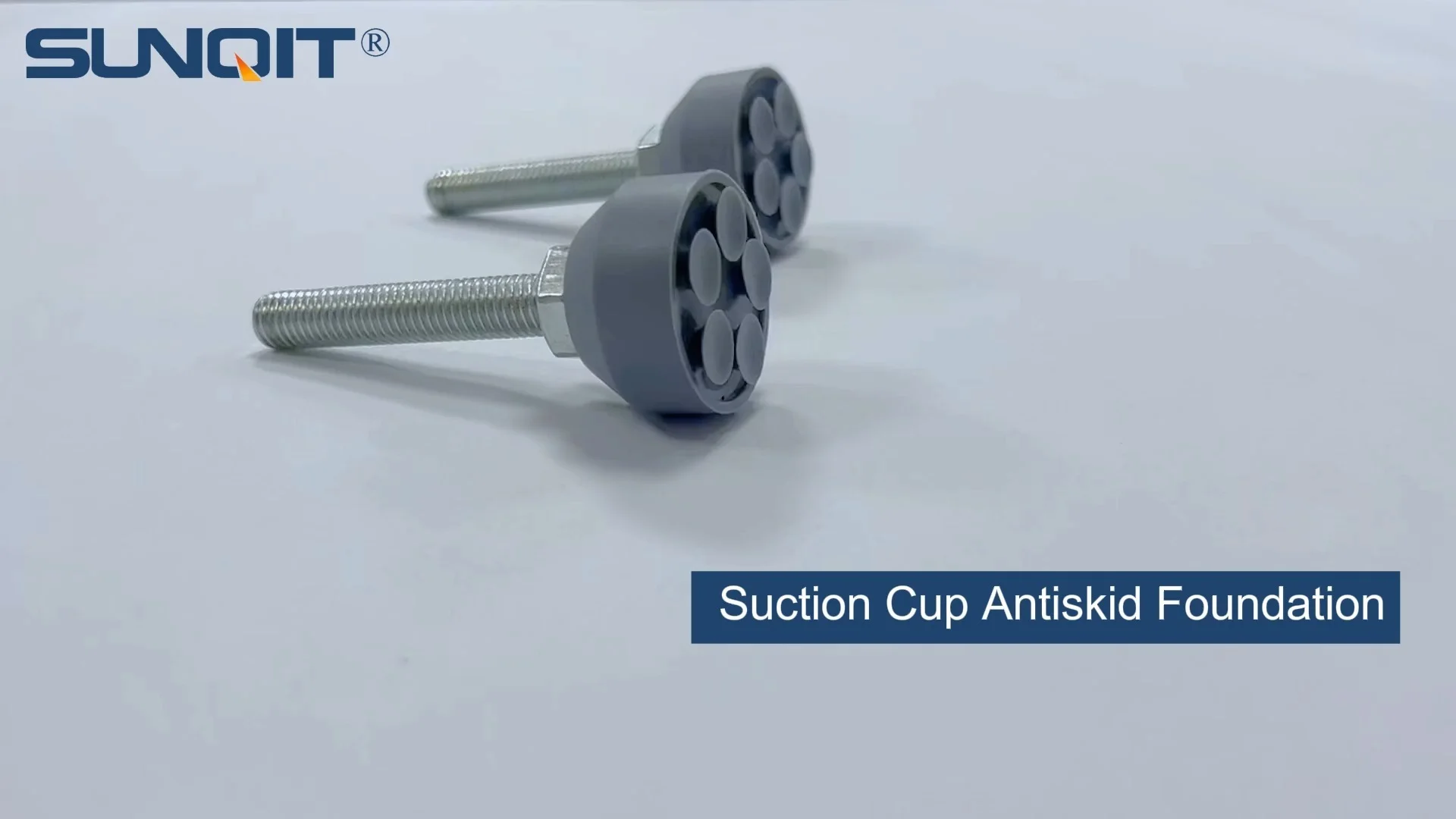
Suction Cup Anti-slip Foot Adjuster
D=35mm suction cup anti-slip foot adjusterï¼screw M10*55ï¼with a blot, used for workbench, flowrack pipe contact with groud.
In the bustling world of industrial facilities—where conveyor belts hum, assembly lines move with precision, and workbenches groan under the weight of tools and materials—success often hinges on the smallest details. While large machinery and high-tech systems grab the spotlight, it's the unassuming components that frequently keep operations running smoothly. One such unsung hero? The suction cup anti-slip foot adjuster. These compact, unobtrusive devices play a pivotal role in stabilizing equipment, protecting infrastructure, and ensuring safety in environments where even a millimeter of movement can lead to costly errors or accidents. In this article, we'll explore five critical functions of suction cup anti-slip foot adjusters, and why they're indispensable in modern industrial and lean system setups.
1. Unmatched Stability: Keeping Equipment Firmly Grounded
In any industrial setting, stability is non-negotiable. Whether it's a workbench where delicate electronics are assembled, a material rack holding heavy components, or a testing station where precision is paramount, equipment that shifts or slides can disrupt workflows, compromise product quality, and even put workers at risk. This is where suction cup anti-slip foot adjusters shine: their design combines mechanical adjustability with vacuum-like grip to create a hold that's both strong and reliable.
How Suction Technology Enhances Stability
Unlike standard rubber feet or metal pads, suction cup anti-slip foot adjusters leverage atmospheric pressure to "lock" equipment in place. When the foot is pressed against a smooth surface (like concrete, tile, or polished flooring), the flexible suction cup compresses, expelling air from beneath it. As it rebounds, it creates a partial vacuum, which adheres the foot to the floor with significant force. This isn't just friction—it's a physical bond that resists lateral movement, even when the equipment is jostled by vibrations or accidental bumps.
Consider a busy assembly line workbench in a lean system. Throughout the day, workers lean on it, tools are dropped, and heavy parts are placed or removed. Without stable footing, the workbench might creep across the floor, misaligning with adjacent conveyor systems or causing tools to slide off. With suction cup adjusters, however, the workbench stays anchored. The vacuum seal ensures that even repeated impacts don't break the grip, maintaining alignment and reducing the need for constant readjustments—saving time and minimizing frustration.
Stability in Numbers: The Role of Multiple Feet
Most industrial equipment uses multiple foot adjusters (typically four or more) to distribute weight evenly. Suction cup models amplify this effect by creating multiple anchor points across the equipment's base. If one foot encounters a minor imperfection in the floor, the others compensate, ensuring the entire unit remains level and stable. This is especially critical for tall structures like material racks or overhead conveyor supports, where a single unstable foot could lead to tipping. In lean system environments, where efficiency depends on predictable, uninterrupted workflows, this level of stability translates directly to fewer delays and higher productivity.
2. Vibration Dampening: Protecting Equipment and Precision
Industrial settings are rarely quiet. Conveyor belts rattle, machinery hums, and heavy equipment thuds as it moves. All this activity generates vibrations that can travel through floors and into nearby equipment. Over time, these vibrations can loosen bolts, damage sensitive components, or even affect the accuracy of measurements and assembly work. Suction cup anti-slip foot adjusters don't just stabilize—they also act as shock absorbers, dampening vibrations to protect both equipment and the products being manufactured.
Material Matters: The Science of Vibration Absorption
Most suction cup feet are made from durable, flexible materials like nitrile rubber or silicone. These materials have inherent elasticity, meaning they can compress and rebound when exposed to vibrations. As vibrations travel up from the floor (or down from the equipment itself), the rubber deforms slightly, absorbing energy and reducing the amount that reaches the equipment's frame. This is particularly valuable for sensitive equipment, such as calibration tools, optical inspection stations, or electronics assembly workbenches, where even minute vibrations can throw off measurements by fractions of a millimeter.
In a lean system focused on waste reduction, minimizing equipment wear and tear is a priority. By dampening vibrations, suction cup foot adjusters extend the lifespan of machinery, reducing maintenance costs and downtime. For example, a material rack holding fragile components won't transfer floor vibrations to the parts it stores, lowering the risk of damage and reducing scrap rates. Similarly, a workbench used for soldering or microchip assembly will stay steady, ensuring precise, consistent results that meet quality standards—another cornerstone of lean manufacturing.

3. Floor Protection: Preserving Infrastructure and Reducing Costs
Industrial floors take a beating. Heavy equipment, constant foot traffic, and the movement of caster wheel-equipped trolleys can scratch, dent, or crack even the toughest surfaces. Repairing or replacing damaged flooring is expensive and time-consuming, often requiring production halts. Suction cup anti-slip foot adjusters help mitigate this damage by acting as a buffer between equipment and the floor, preserving infrastructure and reducing long-term maintenance costs.
Gentle Grip, No Scratches
Unlike metal feet, which can scrape concrete or chip tile, suction cup adjusters feature soft, non-abrasive surfaces. The same rubber or silicone that creates the suction seal also acts as a protective layer, preventing direct contact between hard equipment bases and delicate flooring. Even when equipment is adjusted or repositioned (a common occurrence in flexible lean system layouts), the suction cups glide smoothly without leaving marks, thanks to their low-friction exteriors.
Consider a scenario where a workbench needs to be moved to accommodate a new production line layout. With standard metal feet, dragging or lifting the bench could scratch the floor. With suction cup adjusters, the feet can be partially deflated (breaking the vacuum seal) and the bench repositioned gently, then re-inflated to secure it in the new location—no damage, no hassle. This flexibility is key in modern industrial settings, where adaptability to changing demands is essential.
Distributing Weight to Prevent Indentation
Heavy equipment can also cause indentation, especially on softer flooring materials like epoxy or vinyl. Suction cup foot adjusters spread the weight of the equipment over a larger surface area (thanks to their broad, cup-shaped design), reducing pressure per square inch. For example, a 500kg workbench with four small metal feet might exert 125kg of pressure on each contact point, potentially denting the floor. With suction cup feet that have a 10cm diameter, the contact area increases significantly, lowering pressure and preventing permanent damage. Over time, this reduces the need for floor repairs, keeping facilities operational and budgets intact.

4. Precision Height Adjustment: Ensuring Level Surfaces for Optimal Workflow
Industrial floors are rarely perfectly level. Even newly constructed facilities can have minor slopes or unevenness due to settling, poor installation, or wear and tear. For equipment like workbenches, conveyor systems, or testing stations, an uneven surface can lead to problems: tools roll off, parts don't feed correctly into machines, and workers strain to compensate for tilted surfaces. Suction cup anti-slip foot adjusters solve this with built-in height adjustment, allowing operators to fine-tune equipment alignment for optimal performance.
Threaded Design for Micro-Adjustments
Most suction cup foot adjusters feature a threaded stem that screws into the equipment's base. By twisting the foot clockwise or counterclockwise, operators can raise or lower individual corners by fractions of a millimeter—precise enough to level even the most sensitive equipment. This is far more efficient than using shims (small pieces of material placed under feet), which are time-consuming to install and can slip out of place over time.
In a lean system, where workflows are optimized for speed and accuracy, a level workbench or conveyor is critical. For instance, a packaging line that's slightly tilted might cause boxes to jam or seal improperly, leading to rework and waste. With adjustable suction cup feet, operators can quickly level the line, ensuring products move smoothly and consistently. Similarly, a quality control workbench that's level guarantees that measurements are accurate, reducing the risk of defective products reaching customers. This precision isn't just about convenience—it's about maintaining the high standards that define lean manufacturing.

5. Adaptability to Diverse Surfaces: Thriving in Imperfect Environments
Industrial facilities are rarely uniform. Floors can be smooth or rough, clean or dusty, dry or slightly damp. Standard feet might fail on uneven or contaminated surfaces, but suction cup anti-slip foot adjusters are designed to adapt, maintaining performance across a range of conditions. This versatility makes them ideal for environments where flexibility is key, from warehouses with cracked concrete to cleanrooms with polished floors.
Gripping Through Minor Contaminants
While suction cups work best on smooth, clean surfaces, they're surprisingly resilient to minor debris like dust, small grit, or water droplets. The flexible cup material conforms to tiny irregularities, and the vacuum seal can still form as long as the majority of the cup's surface is in contact with the floor. This is a major advantage over rigid feet, which might lose traction entirely if even a small pebble gets in the way.
Take a busy warehouse, for example. Spills, dirt, or loose screws on the floor are common, but a material rack equipped with suction cup adjusters won't slip simply because of a few particles under one foot. The cup will compress around the debris, maintaining enough contact to keep the rack stable. Similarly, in food processing facilities where floors are regularly hosed down, the non-porous material of suction cup feet resists water damage, ensuring they remain effective even in damp conditions. For lean system managers, this adaptability means fewer disruptions and more reliable performance, regardless of the environment.
Comparing Foot Adjuster Types: Why Suction Cup Models Stand Out
To better understand the value of suction cup anti-slip foot adjusters, let's compare them to two common alternatives: standard rubber feet and metal pads. The table below highlights key differences in performance, making it clear why suction cup models are often the superior choice for industrial and lean system applications.
| Feature | Suction Cup Anti-Slip Foot Adjusters | Standard Rubber Feet | Metal Pads |
|---|---|---|---|
| Stability | High (vacuum seal + friction) | Medium (friction only) | Low (prone to sliding on smooth floors) |
| Vibration Dampening | Excellent (flexible material absorbs shock) | Good (rubber provides some absorption) | Poor (transfers vibrations to equipment) |
| Floor Protection | Excellent (non-abrasive, weight-distributing) | Good (soft material, but less coverage) | Poor (scratches, dents, and indentations) |
| Height Adjustment | Yes (threaded stem for micro-adjustments) | Limited (fixed height or basic shims) | Limited (fixed height, requires shims) |
| Surface Adaptability | High (conforms to minor irregularities, resists debris) | Medium (works on smooth surfaces, struggles with debris) | Low (slips on uneven or contaminated floors) |
| Best For | Precision workbenches, lean systems, sensitive equipment | Light-duty equipment, non-critical applications | Heavy machinery on rough surfaces (e.g., gravel, unfinished concrete) |
Conclusion: Small Parts, Big Impact in Industrial Excellence
In the grand scheme of industrial operations, suction cup anti-slip foot adjusters may seem. But as we've explored, their impact is anything but small. From stabilizing workbenches in lean systems to protecting floors, dampening vibrations, and ensuring precision, these compact devices play a critical role in keeping facilities efficient, safe, and productive. They're a testament to the philosophy that in manufacturing, every detail matters—and that optimizing even the smallest components can lead to significant improvements in performance, cost savings, and product quality.
Whether you're managing a busy assembly line, a precision testing lab, or a sprawling warehouse, investing in high-quality suction cup anti-slip foot adjusters is a decision that pays dividends. They're not just feet—they're foundational tools for industrial excellence, quietly supporting the systems and workers that drive modern manufacturing forward. So the next time you walk through a factory, take a moment to look down: you might just spot the unsung heroes keeping everything steady, secure, and on track.