- Company Articles
- Products and Technology
- Product knowledge
- 5 Key Benefits of Using Turning Angle Code 4040 in Flexible Production Lines

5 Key Benefits of Using Turning Angle Code 4040 in Flexible Production Lines
Related Product
Turning Angle Code 4040
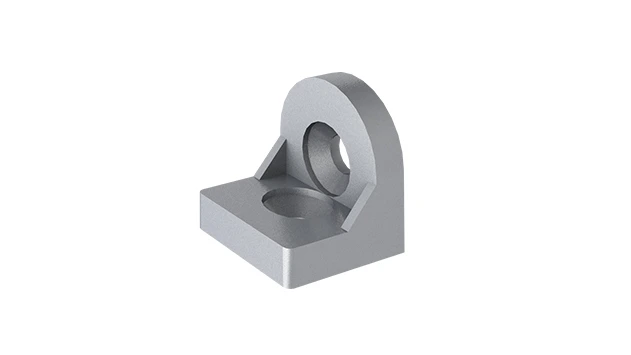
The turning angle aluminum profile connector provides a 90 degree hidden corner connection. 4040 it is means this size is used for 40 series aluminum profile.The corner code comes with set screws that allow for quick, easy connections.
In today's fast-paced manufacturing world, flexibility isn't just a buzzword—it's the backbone of staying competitive. Whether you're running a small workshop or a large-scale production facility, the ability to adapt quickly to changing product demands, reconfigure workspaces, and minimize downtime can make or break your operations. At the heart of this flexibility lies the often-overlooked hardware that holds your production lines together: the connectors, joints, and fasteners that turn raw materials into functional workbenches, material racks, and assembly stations. Among these, the Turning Angle Code 4040 stands out as a quiet hero, especially when paired with aluminum extrusion profiles . This unassuming component plays a critical role in building stable, adaptable, and efficient systems that align with lean manufacturing principles. Let's dive into why this small but mighty connector deserves a spot in your production toolkit.
First, a quick primer: the Turning Angle Code 4040 is a precision-engineered connector designed to join aluminum profiles at 90-degree angles. It's commonly used in constructing workbenches, flow racks, and material handling systems, where stability and adjustability are non-negotiable. Unlike clunky traditional joints that require welding or specialized tools, this angle code simplifies assembly, reduces maintenance headaches, and unlocks a level of versatility that old-school methods can't match. In this article, we'll explore five key benefits that make the Turning Angle Code 4040 a game-changer for flexible production lines.
1. Unmatched Structural Stability for Heavy-Duty Operations
When you're building a workbench that needs to support heavy machinery, or a material rack stacked with inventory, the last thing you want is wobbling, shifting, or sagging. Traditional connectors—like plastic clips or poorly fitted metal brackets—often loosen over time, especially under constant vibration or weight. This isn't just an annoyance; it's a safety risk. A unstable workbench could lead to tools slipping, products getting damaged, or worse, worker injuries.
The Turning Angle Code 4040 solves this problem with its robust design. Made from high-grade aluminum alloy, it's built to withstand the rigors of daily use. What really sets it apart, though, is its precision fit. The code is engineered to lock tightly into the T-slots of 4040 aluminum extrusion profiles, creating a connection that distributes weight evenly across the joint. Unlike bolt-on brackets that can loosen with vibration, the Turning Angle Code 4040's design ensures a snug, rattle-free fit that stays secure even after months of heavy use.
Consider a scenario: a automotive parts manufacturer uses a workbench equipped with Turning Angle Code 4040 connectors to assemble engine components. The workbench holds a 50kg torque wrench, a variety of heavy gauges, and bins of metal parts. Over weeks of constant use—workers leaning on the bench, tools being set down with force, and daily cleaning—the bench remains rock-solid. No squeaks, no shifts, no need for frequent tightening. That's the stability this angle code delivers.
2. Simplified Assembly and Lightning-Fast Reconfiguration
Lean manufacturing thrives on efficiency, and nothing kills efficiency like spending hours (or days) assembling or reconfiguring equipment. Traditional methods like welding or drilling require skilled labor, specialized tools, and plenty of time—time that could be better spent on actual production. The Turning Angle Code 4040 flips this script by making assembly and reconfiguration a breeze, even for workers with minimal technical training.
Here's how it works: the angle code slides into the T-slots of 4040 aluminum extrusion profiles and is secured with a simple hex key. No welding, no drilling, no messy adhesives. This means a team can build a basic workbench in under an hour, compared to half a day with traditional methods. But the real magic happens when you need to adapt. Let's say your production line switches from assembling small electronics to larger appliances—suddenly, your workbench needs an extra shelf, or your material rack needs to be taller. With Turning Angle Code 4040, you don't have to start from scratch. Just loosen the hex screws, reposition the profiles, and tighten them back up. The whole process takes minutes, not days.
One electronics manufacturer we worked with recently shared a story: they needed to reconfigure their assembly line to accommodate a rush order for a new smartphone model. Using workbenches built with Turning Angle Code 4040 and aluminum profiles, their team disassembled three old workstations and reassembled them into two larger, custom-shaped ones—all in a single afternoon. By the next morning, production was up and running, and they met their deadline with days to spare. That's the power of simplified adaptability.

3. Long-Term Cost Savings That Add Up
At first glance, investing in high-quality components like the Turning Angle Code 4040 might seem like a bigger upfront expense than cheaper plastic or low-grade metal connectors. But manufacturing isn't about cutting costs today—it's about building systems that save you money over the long haul. When you factor in durability, maintenance, and adaptability, the Turning Angle Code 4040 quickly proves its worth.
Let's break it down. Cheap plastic connectors might cost a fraction of the price, but they degrade quickly under heat, moisture, or heavy use. You'll find yourself replacing them every few months, adding up to higher long-term costs. Low-grade metal brackets, on the other hand, often rust or bend, leading to unstable structures that require frequent repairs. The Turning Angle Code 4040, made from corrosion-resistant aluminum alloy, lasts for years—even in harsh factory environments with oil, dust, or humidity. This means fewer replacements, less downtime for repairs, and lower maintenance costs.
Then there's the cost of adaptability. If your production needs change and you're using rigid, welded structures, you'll likely have to buy new equipment entirely. With Turning Angle Code 4040 and aluminum profiles, you can repurpose your existing components. A material rack can become a workbench, a workbench can become a conveyor support—all by reusing the same angle codes and profiles. This reduces waste and eliminates the need for expensive new purchases.
To put this in perspective, let's look at a quick comparison:
| Feature | Traditional Plastic Connectors | Turning Angle Code 4040 |
|---|---|---|
| Expected Lifespan | 6–12 months | 5+ years |
| Maintenance Frequency | Monthly (tightening/replacing) | Quarterly (minimal checks) |
| Reconfiguration Time | 8+ hours (requires new parts) | 1–2 hours (reuses existing parts) |
| Long-Term Cost (5 years) | $1,200 (replacement + labor) | $300 (initial purchase + minimal labor) |
Over five years, the savings are clear: the Turning Angle Code 4040 isn't just a better connector—it's a smarter investment.

4. Seamless Compatibility with Aluminum Profiles and Accessories
No production system exists in a vacuum. Your workbenches, racks, and stations need to work with a wide range of accessories—casters for mobility, shelves for storage, tool hooks, and even ESD (electrostatic discharge) components for sensitive electronics. The Turning Angle Code 4040 excels here, thanks to its compatibility with standard aluminum extrusion profiles and a vast ecosystem of accessories.
Aluminum extrusion profiles, especially the 4040 series, are the industry standard for modular systems. They feature T-slots along their length, which allow for easy attachment of accessories. The Turning Angle Code 4040 is designed to fit these T-slots perfectly, creating a uniform connection point that works with everything from basic brackets to specialized components. Need to add a caster wheel to your workbench? Just attach a caster bracket to the aluminum profile using the same T-slot that holds the Turning Angle Code 4040. Want to mount a LED light above your assembly station? Slide a light bracket into the T-slot and secure it with a hex screw. It's that simple.
This compatibility extends to other aluminum profiles, too. While the Turning Angle Code 4040 is optimized for 4040 profiles, it can also work with 3030 or 2020 profiles using adapter brackets—giving you even more flexibility. For example, a manufacturer might use 4040 profiles for the main frame of a workbench (for stability) and 2020 profiles for secondary shelves (to save space and weight), all connected seamlessly with Turning Angle Code 4040 and adapters.
ESD workbench applications are a great example of this versatility. Sensitive electronics like circuit boards or semiconductors require work surfaces that dissipate static electricity to prevent damage. An ESD workbench built with Turning Angle Code 4040 can easily integrate ESD mats, grounding straps, and metal shelves—all attached via the T-slots in the aluminum profiles. The angle code ensures the entire structure is grounded uniformly, providing reliable protection for delicate components.
5. Enhanced Safety and Ergonomics for Your Team
At the end of the day, your most valuable asset is your team. Unstable workspaces, awkwardly positioned tools, and poorly designed stations can lead to fatigue, injuries, and reduced productivity. The Turning Angle Code 4040 contributes to a safer, more ergonomic workplace in ways that go beyond just stability.
First, stability equals safety. As we discussed earlier, the Turning Angle Code 4040's secure connection reduces the risk of structures collapsing or tools falling. But it also allows for precise alignment, which is key for ergonomics. Workers come in all shapes and sizes, and a one-size-fits-all workbench height can lead to strained backs, shoulders, or necks. With modular systems built using Turning Angle Code 4040, you can adjust the height of workbenches, the angle of shelves, and the position of tools to fit each worker's needs. For example, a taller worker might need a bench that's 90cm high, while a shorter colleague might prefer 80cm—both can be achieved by simply cutting the aluminum profiles to length and reattaching them with the angle code.
The lightweight nature of aluminum profiles (paired with the Turning Angle Code 4040's secure fit) also makes it easier to add mobility without sacrificing safety. Adding casters to a workbench allows workers to move it closer to the production line, reducing the need to bend or stretch to reach materials. And because the Turning Angle Code 4040 ensures the bench remains stable even when moving, there's no risk of it tipping over or shifting during transport.
Another safety benefit is the elimination of sharp edges. Unlike welded metal structures, which can have jagged corners or protruding bolts, aluminum profiles and Turning Angle Code 4040 have smooth, rounded edges. This reduces the risk of cuts or scrapes—especially important in busy environments where workers are moving quickly.
One manufacturing plant we consulted with reported a 30% reduction in workplace injuries after switching to workbenches built with Turning Angle Code 4040 and aluminum profiles. Workers noted less strain from reaching, fewer near-misses with unstable racks, and a more comfortable, personalized workspace. Happy, healthy workers are more productive workers—and that's a benefit that impacts your bottom line every day.
Why Turning Angle Code 4040 Belongs in Your Production Line
In the world of flexible manufacturing, the smallest components often make the biggest difference. The Turning Angle Code 4040 might not be the most glamorous part of your production line, but its impact is undeniable: enhanced stability that protects your team and products, simplified assembly that saves time, long-term cost savings that boost your bottom line, compatibility that unlocks endless configurations, and ergonomic benefits that keep your workers happy and productive.
Whether you're building a new production line from scratch or upgrading an existing one, choosing the right connectors matters. The Turning Angle Code 4040, paired with aluminum extrusion profiles, isn't just a component—it's a foundation for lean, adaptable, and efficient manufacturing. It's the kind of investment that pays off in smoother operations, faster turnaround times, and a competitive edge that lasts.
So, the next time you're planning a workspace upgrade, don't overlook the power of a well-designed angle code. Your team, your products, and your bottom line will thank you.