- Company Articles
- Products and Technology
- Product knowledge
- 5 Myths About Parallel Rotatory Lean Pipe Joints Debunked

5 Myths About Parallel Rotatory Lean Pipe Joints Debunked
Related Product
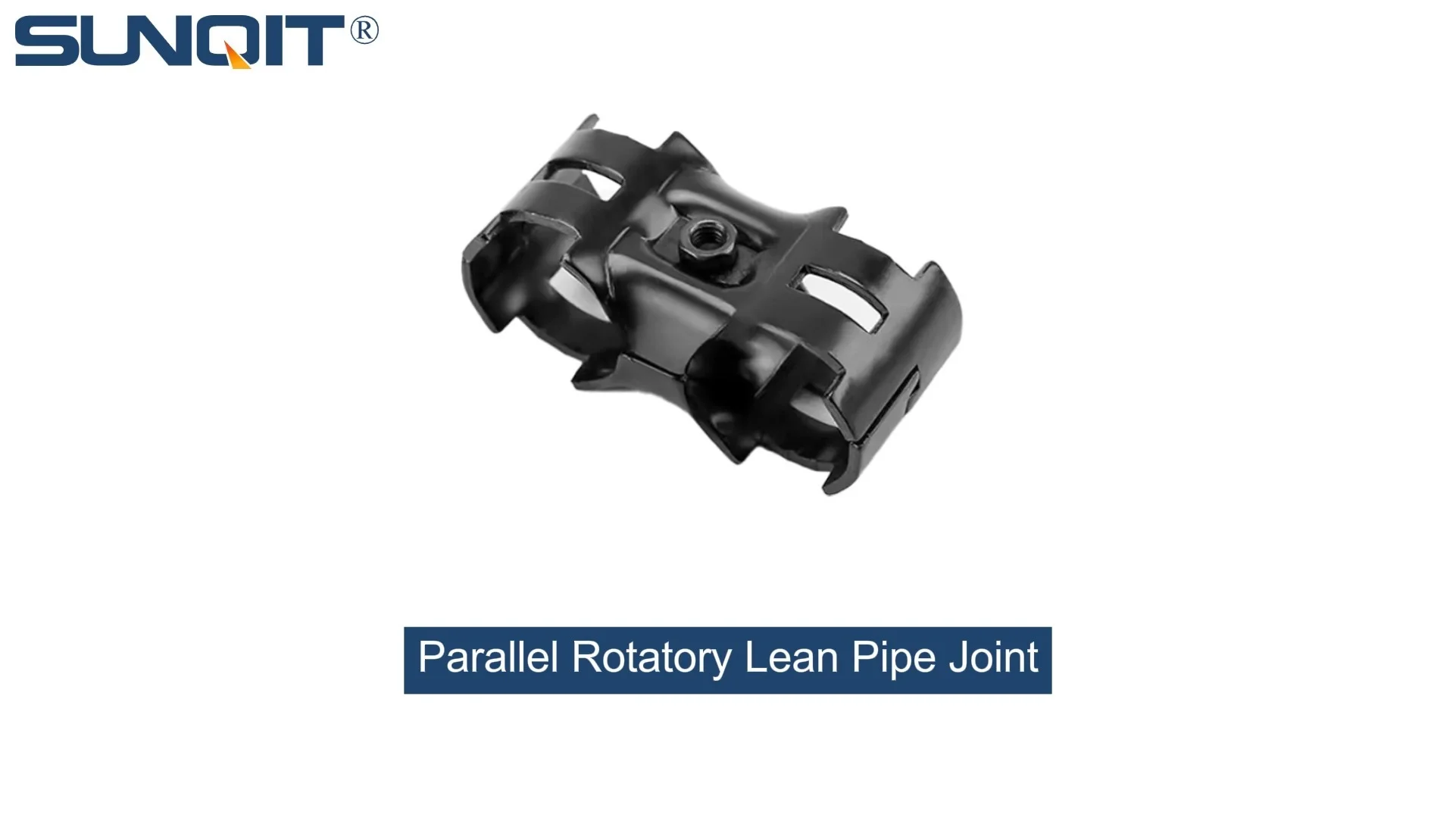
Parallel Rotatory Lean Pipe Joint
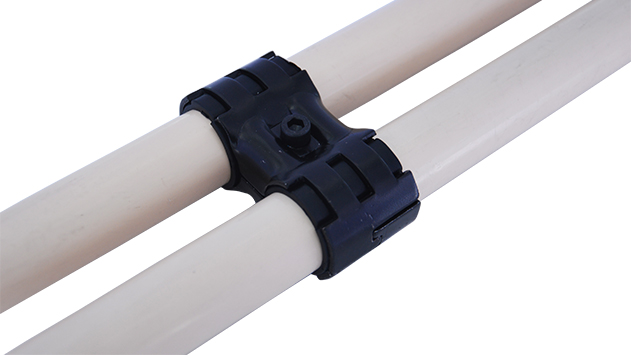
Parallel rotatory lean pipe joint, for 2 pcs pipe conenction in parallel direction with rotatory function.
If you've ever walked through a workshop, factory floor, or even a small garage-based business, you've probably seen the backbone of modern workflow efficiency: lean pipe systems. These versatile setups—made from pipes, joints, and accessories—are the unsung heroes of organized, adaptable workspaces. But within this world, one component often gets overshadowed by misconceptions: the parallel rotatory lean pipe joint. Today, we're pulling back the curtain on five common myths that might be keeping you from leveraging this game-changing tool in your lean system. Whether you're a small business owner building your first workbench or a plant manager looking to optimize assembly lines, let's separate fact from fiction.
Myth 1: "They're Only Useful for Large-Scale Manufacturing Plants"
Walk into a massive automotive factory, and you'll likely see rows of conveyor belts, material racks, and assembly stations built with lean pipe systems. It's easy to assume that components like parallel rotatory lean pipe joints are reserved for these industrial giants—after all, they look sturdy and technical. But here's the truth: these joints are just as valuable (if not more so) for small businesses, workshops, and even home-based operations.
Let's take a step back. What makes a parallel rotatory lean pipe joint unique? Unlike fixed lean pipe joints, which lock pipes into rigid angles, these joints allow for 360-degree rotation along a parallel axis. That means you can swivel sections of your setup—like a workbench shelf, a tool holder, or a material bin—without disassembling the entire structure. For a small business, this flexibility is gold. Imagine you run a custom jewelry workshop: your workbench needs to hold tools, raw materials, and finished pieces, but space is tight. With a parallel rotatory joint, you could mount a rotating tray above your bench, spinning it to access pliers one minute and gemstones the next—no more reaching across cluttered surfaces or wasting time rearranging.
Real-World Example: The Boutique Bakery That Scaled with Rotatory Joints
Take "Sweet Crust," a family-owned bakery in Portland with just 500 square feet of workspace. When they first started, they used static wooden shelves and fixed tables, which left little room for their expanding line of artisanal breads and pastries. Their biggest pain point? Cooling racks. They needed to cool loaves quickly but had nowhere to stack them without blocking walkways. A local lean system supplier suggested using aluminum lean pipe (lightweight, corrosion-resistant) and parallel rotatory joints to build a vertical rotating rack. Today, Sweet Crust has a 6-tiered rack where each level swivels out like a lazy Susan, allowing bakers to load, cool, and unload loaves without moving the entire rack. "We went from tripping over cooling racks to doubling our daily output," says owner Maria Gomez. "And the best part? We built it ourselves with basic tools—no industrial equipment required."
The key here is adaptability. Large factories use these joints for high-volume assembly lines, but small businesses use them to solve space constraints, streamline workflows, and reduce physical strain on workers. Whether you're building a turnover trolley for a home workshop or a modular workbench for a startup, parallel rotatory lean pipe joints prove that size doesn't matter—efficiency does.
Myth 2: "They Lack Durability Compared to Fixed Joints"
"If it moves, it must break faster"—this is the logic behind one of the most persistent myths about parallel rotatory lean pipe joints. Fixed joints, which lock pipes into place with set screws or compression, feel solid and unyielding, so it's natural to assume they're tougher. But modern engineering has turned this assumption on its head. Today's parallel rotatory joints are built to withstand daily use, heavy loads, and even harsh industrial environments—often outperforming fixed joints in long-term durability.
Let's dive into materials. Most parallel rotatory joints are made from high-grade materials like reinforced nylon, die-cast aluminum, or even stainless steel. Take aluminum lean pipe systems, for example: the joints are precision-machined to fit snugly around aluminum pipes, with internal bearings or bushings that reduce friction during rotation. This design minimizes wear and tear, even when the joint is swiveled dozens of times a day. Compare that to fixed joints, which rely on friction or set screws to hold pipes in place. Over time, those screws can loosen (especially with vibration from machinery), leading to wobbly structures that need constant tightening. Parallel rotatory joints, by contrast, distribute stress evenly across their rotating mechanism, reducing the risk of failure at connection points.
Load capacity is another area where these joints surprise skeptics. A standard parallel rotatory lean pipe joint (paired with a 28mm aluminum lean pipe) can typically support 50-80 kg per joint—more than enough for most workshop needs. Need to hold heavier items? Upgrading to a stainless steel version bumps that capacity to 120+ kg. For context, that's enough to support a fully loaded tool chest or a stack of metal parts on a rotating shelf. In fact, many lean system suppliers conduct rigorous testing: one supplier we spoke to reported a joint lasting 100,000+ rotations (that's 30+ rotations a day for 10 years) with no loss in performance.
Durability Tested: A Warehouse's 5-Year Experiment
In 2018, a distribution center in Chicago decided to put this myth to the test. They installed two identical material racks: one using fixed lean pipe joints and another using parallel rotatory joints (both with aluminum lean pipe). Both racks held the same load—40 kg boxes of electronics—and were used 12 hours a day, 5 days a week. After 5 years, the results were clear: the fixed joint rack required 17 repairs (mostly loose screws and cracked pipe connections), while the rotatory joint rack needed just 2 replacements (a worn bearing in one joint, easily swapped out in 10 minutes). "We were shocked," says facility manager Raj Patel. "We expected the moving parts to fail first, but the rotatory joints held up better because they didn't rely on screws that loosen over time. Now we're replacing all our fixed racks with rotatory ones."
So, are parallel rotatory joints less durable than fixed ones? The data says no. Their design, materials, and stress distribution make them a reliable choice for both light and heavy-duty applications—proving that movement and durability can go hand in hand.
Myth 3: "Installation Requires Specialized Training or Expert Technicians"
Let's be honest: anything with "rotatory" in the name sounds like it might require a PhD in engineering to assemble. We've all seen complex machinery that needs a certified technician to set up, and it's easy to lump parallel rotatory lean pipe joints into that category. But here's the surprise: these joints are designed with simplicity in mind. In fact, most people can assemble a basic structure with them in under an hour—no special training, no fancy tools, just a hex key and a little patience.
How is this possible? Let's break down the installation process. Unlike welded or bolted systems, lean pipe joints (including parallel rotatory ones) use a friction-fit design. Aluminum lean pipe, for example, slides into the joint's socket, and a set screw (or cam lever, in some models) tightens to secure it. For rotatory joints, the rotating mechanism is pre-assembled at the factory—you don't need to install bearings or align gears. It's like building with advanced Lego blocks: push the pipe in, twist to tighten, and you're done. Even better, most suppliers include color-coded instructions or online video tutorials that walk you through the process step by step.
Let's test this with a real scenario: building a simple rotating workbench shelf. You'll need: 2 aluminum lean pipes (1m each), 4 parallel rotatory joints, a hex key, and a level. Step 1: Attach two joints to the vertical pipes of your existing workbench (using the set screws). Step 2: Slide the horizontal shelf pipe into the rotatory sockets of the joints. Step 3: Tighten the set screws until the pipe is secure but still rotates smoothly. Step 4: Add a wooden or metal shelf board on top. Total time? About 30 minutes. No welding, no drilling, no calling in a technician. Even if you've never built anything before, the intuitive design guides you through it.
DIY Success: The Auto Repair Shop Owner Who Built His Own System
Jake Thompson, owner of "Jake's Garage" in Austin, had zero experience with lean pipe systems when he decided to upgrade his shop. "I'm a mechanic, not an engineer," he laughs. "But I was tired of my tools scattered across three different benches." He ordered a starter kit with aluminum lean pipe, parallel rotatory joints, and a few accessories. Using the supplier's online guide, he built a rotating tool caddy that mounts to his workbench. "The joints clicked into place so easily, I thought I was doing something wrong," he says. "I even took it apart and rebuilt it twice just to make sure. Now, I can spin the caddy to grab a wrench or a socket without moving from the car. If I can do it, anyone can."
The bottom line: installation is a non-issue. Lean system suppliers have spent decades refining these joints to be user-friendly, knowing that small businesses and DIYers are a huge part of their market. So next time you see a parallel rotatory joint, don't let the "technical" label intimidate you—grab a hex key and give it a try. You might be surprised by how quickly you're building.

Myth 4: "Their Applications Are Too Limited—They Only Work for Conveyors"
Mention "rotatory lean pipe joints," and many people picture conveyor belts—sections of roller track where products glide along, rotated by joints to change direction. While it's true that these joints excel in conveyor systems, limiting them to that role is like using a Swiss Army knife only to open letters. Parallel rotatory lean pipe joints are versatile tools that adapt to nearly any workspace need, from medical labs to retail displays, and everything in between.
Let's explore some unexpected applications. In healthcare, for example, clinics and hospitals use them to build mobile medical carts. A cart with a rotating top shelf allows nurses to spin medications, syringes, and gloves into easy reach without lifting heavy trays. In education, science labs use rotatory joints to create adjustable experiment stations: students can rotate beakers, scales, and Bunsen burners to share equipment or reconfigure their workspace for group projects. Even in retail, boutiques use them to build rotating product displays—spinning racks for jewelry, scarves, or small electronics that save floor space and let customers browse without moving.
Another underrated use? Ergonomic workstations. Repetitive strain injuries (RSIs) are a common problem in jobs that require constant reaching or bending. Parallel rotatory joints can help by bringing tools and materials to the worker, not the other way around. Imagine a factory worker assembling circuit boards: instead of stretching to grab components from a fixed bin, they spin a rotating shelf mounted at waist height. This reduces strain on shoulders and backs, cutting down on workplace injuries and boosting productivity. A study by the National Institute for Occupational Safety and Health (NIOSH) found that workstations with adjustable, rotating elements reduced RSI cases by 35% in a manufacturing setting—proof that these joints do more than just organize space; they protect workers, too.
Let's not forget about flexibility in growth. Startups and small businesses often outgrow their workspace quickly, and buying new furniture every time is expensive. Parallel rotatory joints solve this by letting you repurpose your existing setup. A rotating material rack in your garage today could become a rotating tool holder in your new workshop tomorrow, or a rotating display stand at a trade show next month. The joints and pipes are modular, so you can disassemble, reconfigure, and rebuild as your needs change—no waste, no extra cost.
From Garage to Gallery: How an Artist Repurposed Rotatory Joints
Elena Torres, a sculptor in Brooklyn, started with a small garage studio and a single parallel rotatory joint kit. "I needed a way to store my tools, clay, and finished pieces without cluttering the space," she says. She built a rotating shelf system that held her tools. As her business grew, she disassembled the shelves and used the same joints to build a rotating display stand for her art shows. "At first, I thought the joints were just for factories," she admits. "Now, I tell every artist I know about them. They're like the chameleons of workshop gear—they adapt to whatever I need."
So, are parallel rotatory lean pipe joints only for conveyors? Hardly. They're for anyone who wants a workspace that works with them—flexible, adaptable, and ready to evolve. The only limit is your imagination.

Myth 5: "They're Too Expensive—Cheaper Alternatives Work Just as Well"
Let's talk money. It's natural to compare the cost of parallel rotatory lean pipe joints to cheaper options: basic fixed joints, plastic pipe fittings, or even repurposed hardware store parts. At first glance, the price tag on a rotatory joint (typically $15-$30 per unit) might seem steep compared to a $5 fixed joint or a $2 PVC fitting. But here's the critical question: are you comparing upfront cost, or long-term value? When you factor in durability, flexibility, and productivity gains, parallel rotatory joints often end up being the most cost-effective choice—saving you money in the long run.
Let's break down the numbers. Suppose you need a material rack for your warehouse. Option 1: Use cheap plastic PVC fittings and pipes. Initial cost: $100. But PVC is brittle—if you overload it or bump it with a forklift, it cracks. You'll replace parts every 6-12 months, adding up to $200-$300 over 3 years. Option 2: Fixed lean pipe joints with steel pipes. Initial cost: $200. Sturdier, but if you need to reconfigure the rack (e.g., add a shelf or change the height), you'll have to buy new pipes and joints—another $150. Total over 3 years: $350. Option 3: Parallel rotatory lean pipe joints with aluminum lean pipe. Initial cost: $300. Durable (no replacements needed), and you can reconfigure the rack 10 times over without buying new parts. Total over 3 years: $300. Plus, you save time—no more disassembling and rebuilding from scratch. When you add in the productivity boost from a more efficient workspace, the rotatory joints pay for themselves in under a year.
Another hidden cost of "cheap alternatives" is inefficiency. A static workspace forces workers to waste time walking, reaching, or rearranging tools. With parallel rotatory joints, everything is within arm's reach, reducing motion waste. The Lean Enterprise Institute estimates that motion waste costs manufacturers up to 20% of their labor hours—meaning a small team of 5 workers could save $10,000+ annually by optimizing their workspace with rotatory joints. Suddenly, that $30 joint doesn't seem expensive at all.
Cost Comparison: Parallel Rotatory vs. Alternatives (3-Year Lifespan)
| Option | Initial Cost | Replacement/ Reconfiguration Costs | Total 3-Year Cost | Key Drawback |
|---|---|---|---|---|
| PVC Fittings + Pipes | $100 | $200-$300 (replacements) | $300-$400 | Brittle, limited load capacity |
| Fixed Lean Pipe Joints | $200 | $150 (reconfigurations) | $350 | No flexibility; requires new parts to reconfigure |
| Parallel Rotatory Lean Pipe Joints | $300 | $0 (no replacements; reconfigurable) | $300 | Higher upfront cost (offset by long-term savings) |
It's also worth noting that many lean system suppliers offer starter kits, which bundle parallel rotatory joints, aluminum lean pipe, and accessories at a discounted price. These kits are perfect for small businesses or first-time users, letting you test the system without overspending. And because the components are modular, you can expand your setup gradually—adding joints and pipes as your needs grow, rather than investing in a full system upfront.
The Startup That Saved $20k in Its First Year
"We were bootstrapping, so every dollar counted," says Priya Mehta, co-founder of "EcoPack," a sustainable packaging startup in San Francisco. They initially used secondhand wooden shelves and fixed metal racks, which cost $500 but limited their workflow. After switching to a lean system with parallel rotatory joints (total investment: $800), they reconfigured their workspace three times in six months as they scaled. "We saved at least 10 hours a week in labor—no more moving heavy boxes or searching for materials," Priya explains. "That's $20,000 in saved wages in our first year alone. The joints were the best business decision we made."
So, are parallel rotatory lean pipe joints too expensive? Only if you ignore the long-term savings, productivity gains, and flexibility they offer. In the world of lean systems, cheap alternatives often end up costing you more—while these joints prove that quality and value can go hand in hand.
Time to Rethink the Role of Parallel Rotatory Lean Pipe Joints
From small bakeries to high-tech factories, from home workshops to medical labs, parallel rotatory lean pipe joints are quietly transforming how we build and use workspaces. The myths we've debunked today—"they're only for big plants," "they're not durable," "installation is too hard," "applications are limited," "they're too expensive"—are just that: myths. These joints are designed for everyone who wants a workspace that adapts, endures, and empowers.
So, what's next? If you're tired of static, inefficient setups, it might be time to explore how parallel rotatory lean pipe joints can work for you. Start small: a rotating shelf, a mobile tool caddy, or a reconfigurable workbench. Talk to a lean system supplier about starter kits or custom solutions—many offer free consultations to help you design a setup that fits your space and budget. And remember: the goal of lean systems isn't just to organize your tools; it's to organize your workflow, reduce waste, and give you the freedom to focus on what matters most—growing your business, creating, or innovating.
Parallel rotatory lean pipe joints aren't just pieces of hardware. They're tools for progress. And in a world where adaptability is key, they might just be the secret weapon your workspace has been missing.