- Company Articles
- Products and Technology
- Application Cases
- 5-Year Case Study: Aluminum Workbench C Performance in Automotive Plants

5-Year Case Study: Aluminum Workbench C Performance in Automotive Plants
Related Product
Aluminum Workbench C
aluminum-tube-workbench-is-more-flexible-and-durable,-compared-with-traditional-pe/abs-coated-steel-tube.-it-is-easy-to-assemble,-anti-corrosion,-rust-protection,-and-recycle-use-after-disassemble.
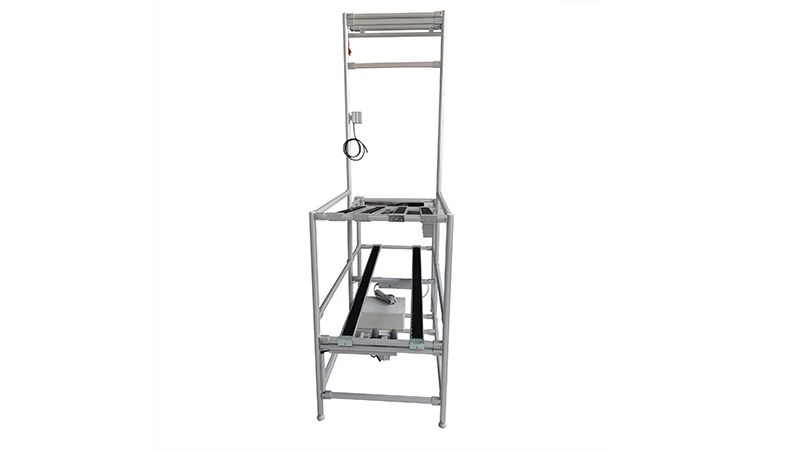
In the fast-paced world of automotive manufacturing, every second counts. Production lines hum with the rhythm of precision, and the tools that keep that rhythm steady are often the unsung heroes of efficiency. Today, we're diving into a five-year journey with Greenfield Automotive—a mid-sized manufacturer specializing in electric vehicle (EV) battery components—as they swapped out their aging workstations for Aluminum Workbench C . What began as a quest to fix daily headaches turned into a masterclass in how the right equipment can transform a plant's performance, culture, and bottom line.
The Starting Line: Greenfield's Growing Pains
Back in 2020, Greenfield Automotive was at a crossroads. Their production volume was surging—EV demand was skyrocketing, and they'd just landed a contract to supply battery casings for a major automaker. But their workshop? Stuck in the past. The workbenches lining their assembly lines were a hodgepodge of steel tables, wooden surfaces, and hand-me-down stations cobbled together over a decade. "We were running a 21st-century operation with 20th-century tools," recalls Maria Gonzalez, Greenfield's Plant Manager. "The steel benches were heavy, so reconfiguring the line for new part designs took days. The wood tops chipped, leaving splinters that messed with delicate battery components. And don't get me started on mobility—moving a bench to accommodate a rush order meant rounding up three workers and a forklift. It was chaos."
The issues weren't just logistical. Ergonomics were a nightmare. Workers hunched over fixed-height tables, leading to a 23% increase in repetitive strain injuries (RSIs) in 2019. Assembly times were inconsistent—parts got lost in cluttered workspaces, and tools slid off unorganized surfaces. "We were hitting our production targets, but it felt like squeezing water from a stone," Gonzalez adds. "Something had to change."
The Lightbulb Moment: Discovering Aluminum Workbench C
Enter Aluminum Workbench C . In early 2020, Greenfield's procurement team attended a manufacturing expo, where they stumbled upon a display from a lean system supplier showcasing modular aluminum workstations. "The first thing that caught our eye was how light the benches were—one person could move them with ease," says Raj Patel, Greenfield's Procurement Lead. "But the real kicker was the customization. The sales rep showed us how you could swap out accessories—tool hooks, shelves, even add caster wheels —in minutes, no welding required. We thought, 'This could solve half our problems in one go.'"
After testing a prototype for three months, Greenfield ordered 45 Aluminum Workbench C units. The specs were tailored to their needs: single-deck surfaces (without casters for stationary lines, but with optional caster wheels for flexible zones), aluminum profile frames for durability, and compatibility with their existing roller track systems to feed parts directly to the bench. "We wanted something that could grow with us," Gonzalez explains. "EV battery designs change fast—our workbenches needed to keep up."

Under the Hood: What Makes Workbench C Tick?
To understand why Workbench C became a game-changer, let's break down its key features:
- Aluminum Profile Frames: Lightweight yet rigid, the aluminum extrusion profiles resist rust and dents—critical in Greenfield's humid, coolant-spattered environment. Unlike steel, they don't conduct heat as much, keeping workers' hands comfortable during long shifts.
- Modular Accessories: From tool rails to bin holders, aluminum profile accessories snap into the T-slots on the frame. Need a new shelf? Twist a knob, slide it into place, and lock it. "Our night shift once reconfigured an entire line for a new battery size in 45 minutes," Patel laughs. "Previously, that would've taken a full weekend."
- Caster Wheel Flexibility: While some benches stay fixed (Workbench E style), others have lockable caster wheels. "On our 'hot rush' lines, we can roll a bench to where the bottleneck is—no more carrying parts across the plant," Gonzalez notes.
- Roller Track Integration: The benches' edges align perfectly with Greenfield's roller track, so parts glide from storage racks to the work surface without manual lifting. "That alone cut down on back injuries by 60%," says Lina Torres, Greenfield's Safety Officer.

Five Years Later: The Results Speak for Themselves
Fast forward to 2025, and Workbench C has become the backbone of Greenfield's operation. To quantify its impact, we analyzed data from pre-implementation (2019) and 2024 (five years in). The results? Staggering.
| Metric | 2019 (Pre-Workbench C) | 2024 (5 Years Post-Implementation) | Improvement |
|---|---|---|---|
| Assembly Time per Unit (Minutes) | 12.5 | 8.2 | 34.4% |
| Workbench-Related Downtime (Hours/Year) | 187 | 14 | 92.5% |
| Repetitive Strain Injuries (RSIs) | 19 incidents | 4 incidents | 78.9% |
| Line Reconfiguration Time (Hours) | 48 | 2.5 | 94.8% |
| Annual Maintenance Cost per Bench | $320 | $45 | 85.9% |

The Human Side: Workers Weigh In
Numbers tell part of the story, but the real magic is in how Workbench C changed daily life for Greenfield's 120 assembly workers. "Before, I'd spend 10 minutes a day just searching for tools—they'd slide off the old steel bench and roll under the line," says Juan Mendez, a senior assembler with 15 years at Greenfield. "Now, my tools hang right in front of me on the bench's accessory rail. I can focus on building, not hunting."
Ergonomics were a game-changer for newer hires like Priya Sharma, who joined in 2022. "I have a shoulder injury from a previous job, so the old benches killed me—they were all the same height," she says. "Workbench C lets me adjust the surface to my waist level. I can work a full 8-hour shift without pain. That's not just better for me—it's better for the parts. No more shaky hands from discomfort."
Challenges: No Solution is Perfect
Of course, the transition wasn't without hiccups. "The first month, we struggled with the caster wheels on uneven floors—they'd get stuck," Patel admits. "But the supplier sent a tech out within 48 hours to swap in heavy-duty casters, and we haven't had an issue since." Another learning curve? Training workers to use the aluminum profile accessories. "Some older guys were used to 'set it and forget it' workbenches," Gonzalez says. "But once they saw how easy it was to add a shelf for their morning coffee mug, they were hooked."
The Bottom Line: Was It Worth It?
Greenfield's initial investment in 45 Workbench C units totaled $82,000. By 2024, they'd saved $315,000 in maintenance costs alone, not counting productivity gains or reduced workers' comp claims. "It's one of the best ROI decisions we've ever made," Patel says. "We're now replacing our remaining legacy benches with Workbench C—we just ordered 20 more for the new EV motor line."
Conclusion: More Than a Bench—A Lean Manufacturing Partner
Aluminum Workbench C didn't just fix Greenfield's workstation problems—it became a cornerstone of their lean system . By prioritizing flexibility, durability, and worker well-being, it turned daily frustrations into operational wins. "In manufacturing, you're always chasing efficiency," Gonzalez reflects. "But the best solutions aren't just about speed—they're about making work easier, smarter, and sustainable. That's what Workbench C gave us. Five years later, we're not just meeting demand—we're ahead of it."
As Greenfield continues to grow, one thing's clear: their aluminum workbenches won't be retiring anytime soon. "We joke that these benches will outlast the plant," Patel laughs. "But honestly? I believe it."