- Company Articles
- Products and Technology
- Product knowledge
- 5S Organization: Aluminum Pipe with Board Holder Role

5S Organization: Aluminum Pipe with Board Holder Role
Related Product
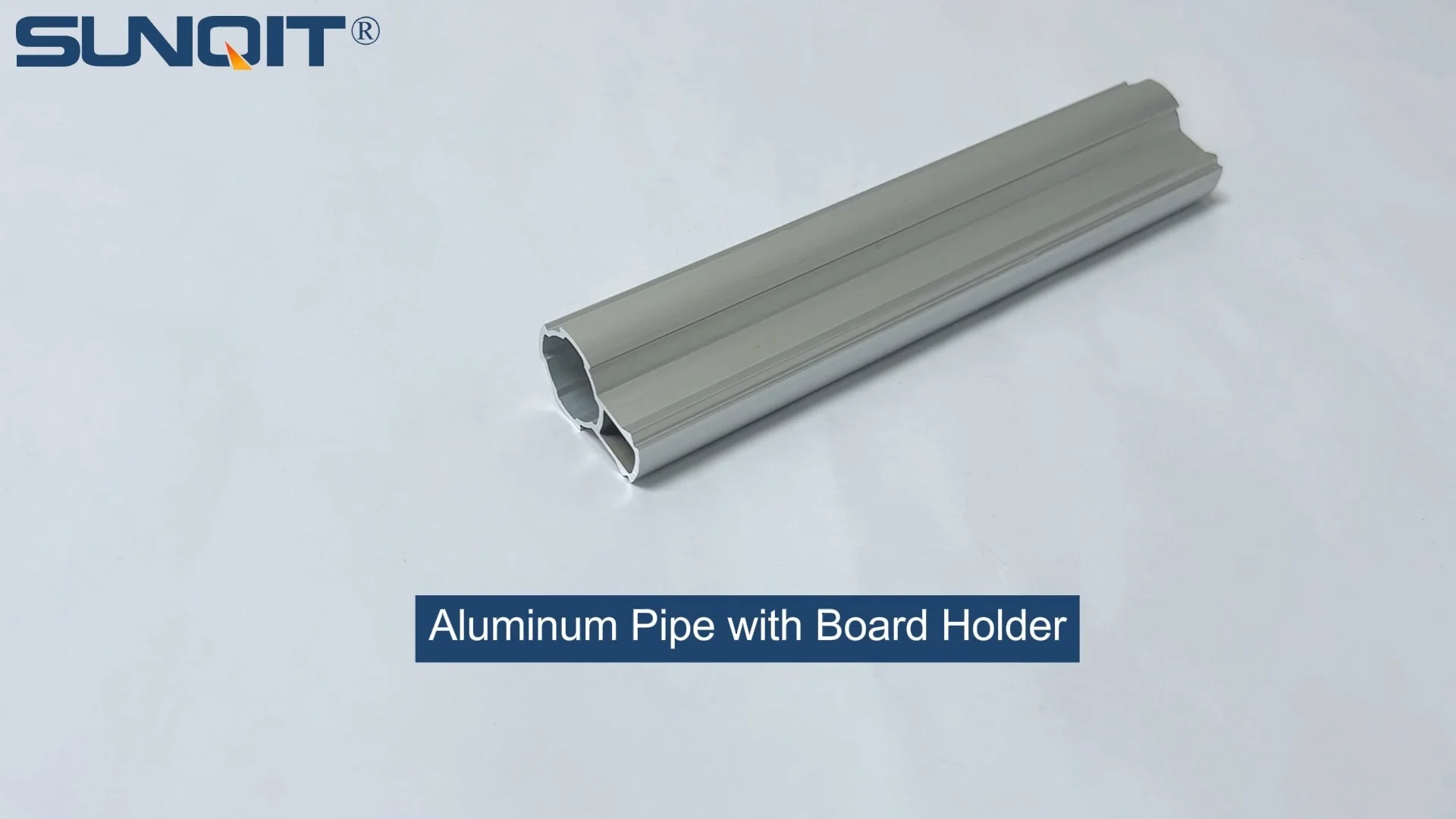
Aluminum Pipe with Board Holder
The linear rolling assembly can be arbitrarily connected in the protruding part of the card slot to increase the rigidity of the track.
Walk into any well-run workshop, factory, or office, and you'll notice something subtle but powerful: order. Tools have a home, materials are easy to find, and there's a sense of calm that comes from knowing where everything belongs. This isn't by accident—it's often the result of
5S organization
, a methodology that transforms chaotic spaces into (efficient) hubs of productivity. But behind every successful 5S implementation, there's usually a quiet hero: the right tools. Today, we're shining a light on one such tool that's been quietly revolutionizing workspaces worldwide: the
aluminum pipe with board holder
.
You might be thinking, "Aluminum pipes? Board holders? How do these simple components make such a big difference?" That's exactly what we're here to explore. From decluttering workbenches to streamlining material flow, from making cleaning a breeze to ensuring long-term sustainability, aluminum pipe systems—paired with versatile board holders—are the unsung champions of 5S. Let's dive in and discover how this humble combination is redefining what it means to "organize" a workspace.
Understanding 5S: The Foundation of Workplace Excellence
Before we unpack the role of aluminum pipe with board holder, let's quickly recap what 5S is all about. Originating from Japan, 5S is a lean management framework focused on creating and maintaining organized, safe, and efficient work environments. The "5S" stands for five Japanese words, each representing a step in the process: Seiri (Sort), Seiton (Set in Order), Seiso (Shine), Seiketsu (Standardize), and Shitsuke (Sustain). Together, they form a cycle that turns chaos into clarity, waste into value, and frustration into focus.
Sort (Seiri): Separate the Necessary from the Unnecessary
The first step in 5S is "Sort," which means going through every item in the workspace and asking: "Do we need this? When was the last time we used it?" The goal is to eliminate clutter by removing unneeded tools, broken equipment, or outdated materials. Think of it as spring cleaning for your workspace—but with a purpose. The fewer items you have, the easier it is to manage what's left.
Set in Order (Seiton): A Place for Everything, and Everything in Its Place
Once you've sorted out the clutter, "Set in Order" takes over. This step is about arranging the remaining items so they're easy to find, use, and return. Ever wasted 10 minutes hunting for a specific wrench or a box of screws? That's what Set in Order aims to fix. It's about creating visual cues—like labeled shelves, color-coded bins, or designated tool racks—that make organization intuitive.
Shine (Seiso): Keep the Workplace Clean and Inspectable
"Shine" isn't just about wiping down surfaces (though that's part of it). It's about making cleanliness a daily habit and using it as a way to inspect equipment for wear or damage. A clean workspace isn't just nicer to look at—it's safer, too. Spills, dust, or debris can lead to accidents or equipment malfunctions, so Shine ensures that the workspace stays spotless and functional.
Standardize (Seiketsu): Create Consistency Across the Workspace
What happens if everyone organizes their workstation differently? Chaos creeps back in. "Standardize" solves this by creating uniform processes for how things are sorted, stored, and cleaned. This could mean standardizing the height of workbenches, the location of tools, or the color of bins for different materials. The goal is to make organization consistent, so anyone walking into the workspace knows exactly where to find what they need.
Sustain (Shitsuke): Make 5S a Habit, Not a One-Time Project
The final step is "Sustain," which is all about maintaining the gains from the first four S's. 5S isn't a project with an end date—it's a culture. Sustain involves training employees, conducting regular audits, and celebrating successes to keep everyone motivated. Without Sustain, even the best-organized workspace will eventually slip back into disarray.
Meet the Star: Aluminum Pipe with Board Holder
Now that we've laid the groundwork for 5S, let's turn our attention to the star of the show:
aluminum pipe with board holder
. At first glance, it might seem like a simple combination—lightweight aluminum pipes connected by joints, with a board holder (a flat surface or panel) attached to hold tools, documents, or materials. But don't let its simplicity fool you. This system is a masterclass in modular design, versatility, and functionality.
Aluminum pipes are the backbone here. Unlike heavy steel pipes or flimsy plastic ones, aluminum strikes the perfect balance: it's strong enough to support tools and materials, yet lightweight enough to be easily reconfigured. It's also resistant to rust and corrosion, making it ideal for both indoor and outdoor use. The pipes come in various lengths and diameters, but the real magic is in the joints—swivel, fixed, or adjustable—that let you build almost any structure you can imagine: workbenches, shelving units, material racks, or even mobile trolleys.
Then there's the board holder. This is where organization gets personal. Whether it's a flat aluminum panel, a pegboard, or a magnetic board, the holder turns a plain pipe frame into a functional workspace. Hang tools from hooks, attach bins for small parts, or mount documents and checklists—suddenly, everything you need is right in front of you, no digging required. And because the system is modular, you can swap out board types (say, from a pegboard to a whiteboard) as your needs change.

How Aluminum Pipe with Board Holder Supports Each 5S Step
1. Sort: Decluttering with Purpose
Remember when we talked about "Sort" being about separating necessary items from unnecessary ones? Aluminum pipe with board holder makes this step almost effortless. Let's say you're setting up a new assembly workstation. Instead of dumping all your tools into a drawer or leaving them scattered on a table, you can use the board holder to create designated spots for only the tools you use daily.
For example, a mechanic might mount their most-used wrenches and screwdrivers on a pegboard attached to an aluminum frame, while storing rarely used specialty tools in a separate cabinet. This visual separation makes it easy to spot which items are essential (they're on the board) and which can be moved, donated, or discarded (they're not). No more "maybe we'll need this someday" clutter—just the tools that keep the job moving.
2. Set in Order: "A Place for Everything" Made Simple
"Set in Order" is where aluminum pipe systems truly shine. Let's take a
workbench
as an example. A typical workbench might have a flat surface, but with aluminum pipes and a board holder, you can build a multi-tiered setup: a lower shelf for heavy equipment, a middle board holder for tools, and an upper rack for materials. Add some
casters
(wheels) to the base, and suddenly your workstation is mobile—perfect for moving materials between stations.
Or consider a
flow rack
, a common sight in warehouses and factories. Flow racks use inclined shelves with rollers to let materials slide forward as items are removed, ensuring first-in, first-out (FIFO) inventory management. With aluminum pipes, you can build a custom flow rack that fits your exact material sizes—no more one-size-fits-all solutions that leave gaps or waste space. The board holder here might act as a backstop to prevent items from falling off, or as a label holder to identify what's on each shelf.
The key is flexibility. Unlike fixed wooden shelves or welded steel structures, aluminum pipe systems can be adjusted in minutes. Need to add a shelf? Swap out a joint. Want to lower the board holder? Shorten the pipes. This adaptability ensures that every item has a precise, accessible place—exactly what "Set in Order" demands.
3. Shine: Cleaning Without the Headache
"Shine" requires that workspaces are easy to clean, and aluminum pipe with board holder checks this box with ease. Aluminum's smooth, non-porous surface doesn't trap dust or grime, so a quick wipe with a damp cloth is usually all it takes to keep it looking new. Compare that to wooden workbenches, which can stain or warp if not sealed properly, or steel that rusts if you forget to dry it after cleaning.
The modular design helps, too. If a spill happens, you can easily detach the board holder or remove a shelf to clean hard-to-reach areas. No more moving heavy furniture or disassembling complicated structures—just lift, wipe, and reattach. And because aluminum is durable, you don't have to worry about scratches or dents from daily cleaning, ensuring your workspace stays shiny for years.
4. Standardize: Consistency Across the Board
In a factory with 50 workstations, consistency is key. You don't want one operator's setup to look completely different from another's—that's a recipe for confusion. Aluminum pipe systems make standardization a breeze because they're built from the same components: pipes, joints, and board holders. This means you can create a "template" workstation and replicate it across the entire facility.
For example, a electronics manufacturer might standardize on 40mm aluminum pipes for all workbenches, with a 60cm-wide board holder at 80cm height (elbow level for most workers). Hooks for tools are placed 10cm apart, and bins for components are color-coded (red for resistors, blue for capacitors). New employees can walk into any workstation and instantly know where to find what they need, reducing training time and errors.
Even better, aluminum pipe suppliers often offer pre-designed kits—like "Workbench E (single deck-without caster)" or "Material Rack B (3 row and 3 floor)"—that ensure every unit is identical. No more guessing if a shelf is level or a board is straight; the kits are pre-engineered for consistency.
5. Sustain: Long-Term Success Through Adaptability
The biggest challenge in 5S is "Sustain"—keeping the system working over time. Workplaces evolve: new tools are added, production demands change, or processes are updated. A rigid organization system that can't keep up will eventually be abandoned. But aluminum pipe with board holder? It evolves with you.
Let's say your team starts using a new, larger tool that won't fit on the current board holder. Instead of buying a whole new workstation, you can simply extend the aluminum frame or swap in a wider board. If you need to add more storage, attach extra shelves using the same joints and pipes. This adaptability means your 5S setup never becomes obsolete—it grows with your needs.
Durability plays a role here, too. Aluminum doesn't degrade over time, so your investment lasts. Unlike plastic systems that crack in extreme temperatures or wooden ones that rot, aluminum pipe systems can handle years of heavy use without losing functionality. When employees see that the organization tools are built to last, they're more likely to take ownership and maintain them—keeping the 5S cycle alive.

Real-World Impact: From Chaos to Clarity
To truly understand the power of aluminum pipe with board holder, let's walk through a hypothetical (but realistic) scenario. Meet ABC Electronics, a small manufacturer struggling with disorganized assembly lines. Their workbenches were cluttered, tools went missing daily, and workers spent 20% of their time searching for materials. Productivity was low, and frustration was high. Then, they decided to implement 5S with aluminum pipe systems.
Before 5S:
Workstations were a hodgepodge of wooden shelves, plastic bins, and metal racks. Tools were stored in drawers or hung haphazardly on nails. Materials were stacked on the floor, leading to trips and spills. Cleaning took hours because shelves were heavy and hard to move. New employees took weeks to learn where everything belonged.
After 5S with Aluminum Pipe Systems:
• Sort: Using aluminum board holders, the team identified and removed 30% of tools and materials that were rarely used. Only essential items stayed on the workbenches.
• Set in Order: They built custom workbenches with aluminum frames and pegboard holders for tools, plus flow racks for components. Casters made workstations mobile, so materials could be brought directly to the line.
• Shine: Aluminum surfaces were easy to wipe clean, and modular shelves could be detached for deep cleaning. Spills were cleaned in minutes, not hours.
• Standardize: All workstations were built to the same design, with color-coded bins and labeled hooks. A new employee could be productive on day one.
• Sustain: When ABC added a new product line, they simply reconfigured the aluminum pipes to fit the new tools and materials. No new equipment needed.
• Sort: Using aluminum board holders, the team identified and removed 30% of tools and materials that were rarely used. Only essential items stayed on the workbenches.
• Set in Order: They built custom workbenches with aluminum frames and pegboard holders for tools, plus flow racks for components. Casters made workstations mobile, so materials could be brought directly to the line.
• Shine: Aluminum surfaces were easy to wipe clean, and modular shelves could be detached for deep cleaning. Spills were cleaned in minutes, not hours.
• Standardize: All workstations were built to the same design, with color-coded bins and labeled hooks. A new employee could be productive on day one.
• Sustain: When ABC added a new product line, they simply reconfigured the aluminum pipes to fit the new tools and materials. No new equipment needed.
The results? Search time dropped by 75%, productivity increased by 25%, and employee satisfaction scores rose significantly. "It's like night and day," said one supervisor. "We used to fight the workspace; now it works for us." This isn't an isolated case—companies across manufacturing, warehousing, and even offices are seeing similar results by pairing 5S with aluminum pipe systems.
Aluminum vs. the Rest: Why It's the Best Choice for 5S
You might be wondering, "Why aluminum? Can't I use wood, steel, or plastic?" Let's break it down with a quick comparison:
| Material | Durability | Weight | Maintenance | 5S Suitability |
|---|---|---|---|---|
| Aluminum | High (rust/corrosion-resistant) | Lightweight (easy to reconfigure) | Low (wipe clean, no painting needed) | Excellent (modular, consistent, adaptable) |
| Wood | Low (prone to warping, staining, and pests) | Heavy (hard to move/adjust) | High (needs sealing, sanding, repainting) | Poor (lacks durability and standardization) |
| Steel | High (but rusts if not coated) | Very heavy (fixed, hard to reconfigure) | Medium (needs regular coating to prevent rust) | Fair (strong but inflexible) |
| Plastic | Low (cracks in extreme temps, weak under heavy loads) | Lightweight | Medium (scratches easily, hard to repair) | Poor (lacks strength and longevity) |
As the table shows, aluminum outperforms other materials in almost every category that matters for 5S. It's durable enough to last, lightweight enough to adapt, and low-maintenance enough to keep shining. When you add in the modularity and consistency it brings, it's clear why aluminum pipe with board holder has become the go-to choice for 5S practitioners.
Beyond the Basics: Accessories That Boost Functionality
No system is complete without the right accessories, and aluminum pipe with board holder is no exception. From joints that let you angle pipes at 45° or 90° to casters that make workstations mobile, these add-ons take organization to the next level. Let's look at a few key ones:
•
Aluminum Profile Accessories:
These include end caps (to smooth pipe edges), rubber strips (to prevent slipping), and connectors that let you attach pipes to walls or ceilings. They ensure a clean, finished look while adding functionality.
• Casters and Wheels: Add these to the base of your aluminum frame, and suddenly your workbench or rack becomes a mobile unit. Perfect for moving materials between stations or reconfiguring your workspace on the fly.
• Roller Tracks: These are essential for flow racks. By adding roller tracks to aluminum shelves, you create a gravity-fed system where materials slide forward as items are removed—no more reaching to the back of the shelf.
• Swivel Roller Balls: These small, rotating balls can be embedded in board holders or workbench surfaces to make moving heavy items (like boxes or tools) effortless. They reduce friction and strain, making "Set in Order" even easier.
• Casters and Wheels: Add these to the base of your aluminum frame, and suddenly your workbench or rack becomes a mobile unit. Perfect for moving materials between stations or reconfiguring your workspace on the fly.
• Roller Tracks: These are essential for flow racks. By adding roller tracks to aluminum shelves, you create a gravity-fed system where materials slide forward as items are removed—no more reaching to the back of the shelf.
• Swivel Roller Balls: These small, rotating balls can be embedded in board holders or workbench surfaces to make moving heavy items (like boxes or tools) effortless. They reduce friction and strain, making "Set in Order" even easier.
The beauty of these accessories is that they're designed to work seamlessly with aluminum pipes. You don't have to hunt for compatible parts—suppliers offer everything you need to build a fully customized system. Whether you're adding a single caster or a complete roller track assembly, the result is a workspace that's tailored to your exact needs.
Conclusion: The Heart of 5S Success
5S organization isn't just about tidying up—it's about creating a workspace that empowers people to do their best work. And at the heart of that transformation is the aluminum pipe with board holder. It's not flashy, but it's effective. It turns vague ideas like "declutter" or "organize" into tangible, actionable solutions. It adapts to your needs, grows with your business, and makes sustainability not just a goal, but a reality.
So the next time you walk into a well-organized workspace, take a closer look. Chances are, there's an aluminum pipe system holding it all together—quietly, efficiently, and reliably. And if you're looking to implement 5S in your own workplace, don't overlook this humble tool. It might just be the key to unlocking the order, efficiency, and peace of mind you've been searching for.
After all, 5S is about more than just organization—it's about respect for your team, your tools, and your work. And what better way to show that respect than by giving them a workspace built to support their success? With aluminum pipe with board holder, you're not just organizing—you're investing in a better, more productive future.