- Company Articles
- Products and Technology
- Product knowledge
- 60 Aluminum Roller Track Green vs. Standard Tracks: Core Differences Explained

60 Aluminum Roller Track Green vs. Standard Tracks: Core Differences Explained
Related Product
60 Aluminum Roller Track Green
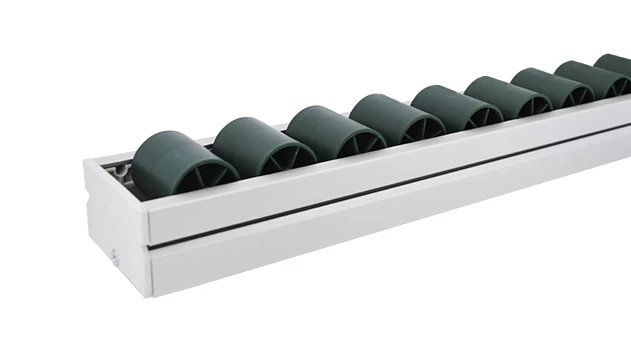
Modular system roller tracks aluminum gravity roller tracks are an excellent solution for transporting materials within industrial environments, warehouses and distribution centres.
Let's get real—when you're running a manufacturing line, every small component can throw off your entire workflow. Roller tracks are no exception. They're the unsung heroes that keep materials moving smoothly from point A to point B, and choosing the wrong one can lead to delays, increased maintenance costs, and even product damage.
If you've been exploring roller track options for your facility, you've probably come across Szsunqit's 60 Aluminum Roller Track Green. But how does it stack up against the standard tracks you've used for years? Is it worth the investment?
In this deep dive, we'll break down everything you need to know about the 60 Aluminum Roller Track Green—from its material composition to real-world performance—and compare it side-by-side with standard steel, plastic, and uncoated aluminum tracks. By the end, you'll have a clear picture of which track is the best fit for your lean system, conveyor line, or material handling needs.
What Exactly Is the 60 Aluminum Roller Track Green?
The 60 Aluminum Roller Track Green isn't just another roller track—it's a purpose-built component designed for modern manufacturing environments. Let's start with the basics:
First, it's made from high-quality 60-series aluminum extrusion profile. For those who aren't familiar, 60-series aluminum is a popular choice in industrial settings because it balances strength, lightweight, and corrosion resistance perfectly. It's stronger than many other aluminum alloys, so it can handle heavy loads without bending, but it's still light enough to make reconfiguration easy—something that's crucial for lean system setups where flexibility is key.
Next, the green coating. This isn't just for aesthetics. The coating is a durable, non-toxic layer that adds an extra level of wear resistance to the track. It prevents scratches from frequent use, and since it's non-toxic, it's safe for use in industries like medical device manufacturing where hygiene is a top priority. The green color also serves a practical purpose: it helps workers quickly identify specific lanes or sections in a busy conveyor system, reducing the risk of errors when moving materials.
But what makes this track stand out even more is its design. Szsunqit has engineered it to work seamlessly with their lean pipe system components. That means you can easily attach it to lean pipe workbenches, flow racks, or other parts of your lean setup without needing special tools or adapters. It's also designed to be reusable—if you decide to rearrange your production line, you can take the track apart and reassemble it elsewhere, which aligns with Szsunqit's core lean of "reusable and sustainable" solutions.
Let's talk about specs for a moment. The 60 Aluminum Roller Track Green typically comes in standard lengths (like 1m, 2m) but can be custom-cut to fit your specific needs (thanks to Szsunqit's custom solution offerings). The rollers are spaced evenly to ensure smooth material flow, and they're made from a high-quality plastic that reduces friction and noise. This is a big plus for facilities where noise levels are a concern, like 3C assembly lines where workers are in close proximity to conveyor systems all day.
Another thing to note: the track is compatible with a wide range of materials. Whether you're moving small 3C components, heavy medical device parts, or large boxes in a warehouse, the 60 green track can handle it. The load capacity varies depending on the length and configuration, but it's not uncommon for it to support up to 200kg per meter—more than enough for most manufacturing and warehousing needs.
In short, the 60 Aluminum Roller Track Green is a well-thought-out component that combines the best of aluminum's properties with a functional green coating and lean system compatibility. But how does it compare to the standard tracks you might be using now? Let's find out.
A Quick Overview of Standard Roller Tracks
Before we dive into the comparisons, let's take a moment to understand the standard roller tracks that are commonly used in manufacturing facilities:
1. Steel Roller Tracks
Steel tracks are the old reliable of the roller track world. They're heavy-duty and can handle very high loads—sometimes up to 500kg per meter. But they have their downsides. Steel is prone to rust if it's not galvanized, which means you have to spend time and money on regular maintenance like painting or rust removal. They're also very heavy, which makes reconfiguration a chore—something that's not ideal for lean system setups where flexibility is key.
2. Plastic Roller Tracks
Plastic tracks are lightweight and cheap, which makes them a popular choice for small-scale operations or facilities with low load requirements. But they're not built to last. Plastic can degrade over time, especially if it's exposed to UV light or high temperatures. They also can't handle heavy loads—most plastic tracks max out at around 50kg per meter. This makes them a poor choice for industries like automotive or medical device manufacturing where heavy components are common.
3. Uncoated Aluminum Roller Tracks
Uncoated aluminum tracks are a step up from steel and plastic. They're lightweight, corrosion-resistant, and can handle moderate loads (up to 150kg per meter). But they lack the extra wear resistance that a coating provides, so they're more prone to scratches from frequent use. They also don't have color coding, which can make it hard for workers to identify specific lanes in a busy conveyor system.

Core Differences: 60 Green Track vs. Standard Tracks
To help you see the differences clearly, we've put together a side-by-side comparison of the 60 Aluminum Roller Track Green with three common standard tracks:
| Feature | 60 Aluminum Roller Track Green | Standard Steel Track | Standard Plastic Track | Uncoated Aluminum Track |
|---|---|---|---|---|
| Material Composition | 60-series aluminum extrusion profile + green non-toxic coating + plastic rollers | Carbon steel (galvanized or uncoated) + steel rollers | PVC/PP plastic + plastic rollers | 60-series aluminum + plastic rollers |
| Weight (per meter) | 1.5kg | 5kg | 0.8kg | 1.4kg |
| Corrosion Resistance | Excellent (coating + aluminum) | Poor (rust-prone unless galvanized) | Good (but UV-sensitive) | Excellent |
| Wear Resistance | High (coating prevents scratches) | High (but prone to rust) | Low (easily damaged) | Moderate (no coating) |
| Color Coding | Yes (green) | No (gray/silver) | Sometimes (but limited colors) | No (silver) |
| Lean System Compatibility | Excellent (works with lean pipe components) | Poor (heavy, hard to reconfigure) | Moderate (light but not reusable) | Good (light but no coating) |
| Sustainability | High (reusable, recyclable) | Low (hard to recycle, requires maintenance) | Low (single-use, non-recyclable) | High (reusable, recyclable) |
| Maintenance Needs | Minimal (wipe clean) | High (rust removal, repainting) | Moderate (replace damaged parts) | Minimal (wipe clean) |
| Load Capacity (per meter) | Up to 200kg | Up to 500kg | Up to 50kg | Up to 150kg |
| Cost Over Lifecycle | Medium (higher initial cost, lower long-term cost) | High (low initial cost, high maintenance) | Low (low initial cost, short lifespan) | Medium (similar to green track but less durable) |

Real-World Applications: Where Does the 60 Green Track Shine?
Numbers and tables are great, but nothing beats real-world examples. Let's look at three industries where the 60 Aluminum Roller Track Green outperforms standard tracks:
1. 3C Assembly Lines
3C assembly lines (computers, communication, consumer electronics) require precision and flexibility. A leading smartphone manufacturer recently switched from standard steel tracks to Szsunqit's 60 green track in their conveyor system. The result? They reduced the time it takes to reconfigure their line by 40%—because the green track is lightweight and easy to move. They also noticed a 25% decrease in product damage, since the green coating prevents scratches on the delicate glass screens of the smartphones. And since the track is corrosion-resistant, they no longer have to spend time and money on rust removal and repainting—savings that add up over time.
2. Medical Device Manufacturing
Medical device manufacturing has strict hygiene and safety standards. The 60 green track's non-toxic coating is perfect for this industry— it's easy to clean and doesn't leach harmful chemicals into the environment. A medical device company used the green track in their lean system to move surgical instrument parts. Unlike plastic tracks, which couldn't handle the heavy load of stainless steel parts, the green track supported up to 180kg per meter. The green color also helped workers quickly identify lanes for sterile vs. non-sterile parts, reducing the risk of cross-contamination.
3. Warehousing & Logistics
In warehousing, flow racks are used to move boxes from one end to another. The 60 green track's smooth rollers reduce friction, so boxes slide easily without getting stuck. A logistics company replaced their uncoated aluminum tracks with green tracks in their flow racks. The green color helped workers quickly identify lanes for different product categories (e.g., green for electronics, blue for clothing—though the green track itself is a fixed color, it's easy to pair with other color-coded components). This reduced picking errors by 30% and improved overall efficiency in the warehouse.
Why Choose Szsunqit's 60 Aluminum Roller Track Green?
There are many aluminum roller tracks on the market, but Szsunqit's 60 green track stands out for a few key reasons:
- Lean System Compatibility: Szsunqit's track is designed to work seamlessly with their lean pipe system. This means you can build a complete lean setup—from workbenches to conveyor lines—using their components, which ensures consistency and easy integration.
- Custom Solutions: Szsunqit doesn't just sell tracks—they offer custom solutions tailored to your specific needs. Whether you need a track of a unique length, or a complete conveyor system designed for your medical facility, their team can help you design it.
- Sustainability: Szsunqit's core is "reusable and sustainable." The 60 green track is designed to be reused—if you rearrange your line, you can take it apart and reassemble it elsewhere. This reduces waste and saves you money over time.
- Quality: The track is made from high-quality 60-series aluminum extrusion profile, which ensures durability and strength. Szsunqit has strict quality control processes to ensure every track meets their high standards.
In short, Szsunqit's 60 Aluminum Roller Track Green is more than just a component—it's a part of a larger solution that helps you optimize your production line and improve efficiency.
Frequently Asked Questions
Is the 60 Aluminum Roller Track Green compatible with my existing lean system?
Yes! Szsunqit's track is designed to work with most standard lean system components, including lean pipe workbenches, flow racks, and conveyor parts. If you have unique components, Szsunqit also offers custom adapters as part of their custom solution offerings. This flexibility makes it easy to integrate the green track into your current setup without major overhauls.
How does the cost of the green track compare to standard steel tracks?
Initially, the 60 green track may be slightly more expensive than a standard steel track. But over time, it's more cost-effective. Steel tracks require regular maintenance (rust removal, repainting) which adds up. The green track has minimal maintenance needs—just wipe it down occasionally. It also has a longer lifespan (5+ years vs. 2-3 years for steel) and is reusable, so you don't have to buy new tracks every time you rearrange your line.
Can the green track handle heavy loads?
Absolutely! Depending on the length and configuration, the 60 green track can support up to 200kg per meter. This is more than enough for most manufacturing and warehousing needs, including heavy medical device parts and large boxes.
Is the green coating ESD-safe?
The standard 60 green track isn't ESD-coated, but Szsunqit offers custom ESD versions as part of their lean system solutions. If you need an ESD-safe track for industries like 3C assembly where static electricity is a concern, Szsunqit can provide it.
How long does the green coating last?
With proper use and maintenance, the green coating can last 5+ years. This is longer than most plastic tracks (which last 1-2 years) and uncoated aluminum tracks (which may scratch after 3-4 years).
Final Thoughts
The 60 Aluminum Roller Track Green from Szsunqit is a game-changer for modern manufacturing facilities. It combines the best of aluminum's properties—lightweight, corrosion-resistant, strong—with a functional green coating that adds wear resistance and color coding. When compared to standard steel, plastic, or uncoated aluminum tracks, it stands out for its flexibility, sustainability, and long-term cost savings.
Whether you're in 3C assembly, medical device manufacturing, or warehousing, the 60 green track can help you optimize your lean system, reduce waste, and improve efficiency. It's a small investment that can lead to big improvements in your workflow.
If you're ready to take your material handling system to the next level, consider exploring Szsunqit's 60 Aluminum Roller Track Green. It's more than just a track—it's a step toward a more efficient and sustainable production line.