- Company Articles
- Products and Technology
- Product knowledge
- 60 Aluminum Roller Track Grey Load Capacity: What You Need to Know

60 Aluminum Roller Track Grey Load Capacity: What You Need to Know
Related Product
60 Aluminum Roller Track Grey
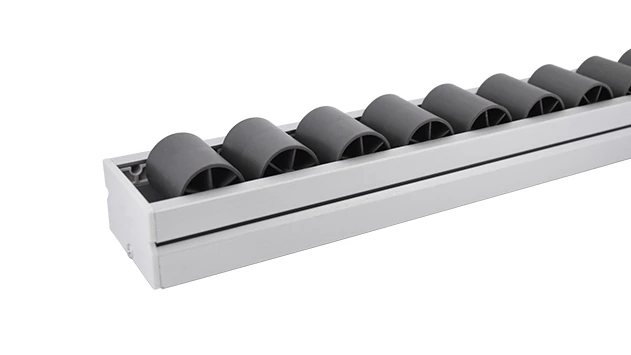
Modular system roller tracks aluminum gravity roller tracks are an excellent solution for transporting materials within industrial environments, warehouses and distribution centres.
Introduction: What Is 60 Aluminum Roller Track Grey?
If you're in manufacturing, warehousing, or logistics, you've probably come across roller tracks—those essential components that turn manual material handling into a smooth, efficient process. The 60 Aluminum Roller Track Grey is a standout option in the market, beloved by businesses for its unique blend of durability, lightweight design, and modern aesthetic. But when it comes to choosing the right track for your operations, one question always takes priority: What's its load capacity? This isn't just a minor detail; it's the difference between a system that enhances productivity and one that causes delays, product damage, or even workplace accidents. In this in-depth guide, we'll explore every aspect of the load capacity of 60 Aluminum Roller Track Grey, from the factors that shape it to how it integrates into your lean systems. By the end, you'll have the expertise to make a choice that boosts efficiency, reduces waste, and supports your long-term operational goals.
Aluminum roller tracks have become a staple in modern material handling because they offer a perfect balance of strength and flexibility. Unlike steel tracks, which are heavy and prone to rust, aluminum tracks are lightweight, corrosion-resistant, and easy to install. The 60 Aluminum Roller Track Grey takes this a step further with its sleek grey finish, which not only looks professional but also provides an extra layer of protection against scratches and wear. Whether you're building a flow rack for your warehouse, a conveyor system for your production line, or a lean pipe workbench for your assembly station, this track is a versatile solution that can adapt to your needs. But to get the most out of it, you need to understand its load capacity and how to match it to your specific requirements.
Why Load Capacity Matters for Your Operations
Load capacity is the maximum weight a roller track can safely support without deformation or failure. It's a critical specification because it directly impacts the safety and efficiency of your operations. Let's consider a real-world scenario: Suppose you install a roller track with a 100 lbs per linear foot capacity to support bins weighing 150 lbs each. Over time, the track will bend or warp, causing bins to get stuck or fall off. This not only damages your products but also creates a safety hazard for your employees. On the other hand, if you choose a track with a 300 lbs per linear foot capacity for bins that only weigh 50 lbs, you're wasting money on unnecessary strength and taking up valuable space that could be used for other purposes.
In lean manufacturing, every component is selected to eliminate waste and optimize flow. A roller track with the right load capacity ensures that materials move smoothly from one stage to the next, reducing bottlenecks and keeping your production line running at peak efficiency. It also extends the lifespan of your equipment, as it won't be overworked or underutilized. For example, a track that's properly matched to your load will experience less wear and tear, meaning you'll spend less on maintenance and replacements over time. Whether you're in the 3C assembly industry, medical device manufacturing, or, getting the load capacity right is a small decision that has a big impact on your bottom line.

Key Factors That Determine Load Capacity of 60 Aluminum Roller Track Grey
1. Material Quality: The Foundation of Strength
The 60 Aluminum Roller Track Grey is built from high-grade aluminum profile, which is renowned for its exceptional strength-to-weight ratio. Unlike steel, aluminum is lightweight but doesn't compromise on durability, making it ideal for applications where mobility and strength are both important. The thickness of the aluminum extrusion is a key factor here—thicker profiles can handle more weight without bending or warping. For instance, a 1.5mm thick aluminum track will have a higher load capacity than a 1.0mm thick one, assuming all other variables are equal.
But it's not just the thickness; the quality of the aluminum alloy matters too. Premium alloys like 6063-T5 are more resistant to corrosion and wear, ensuring that the track maintains its strength over time. The grey finish on this model isn't just for aesthetics—it's a protective coating that shields the aluminum from moisture, chemicals, and scratches, further enhancing its durability. When evaluating load capacity, always ask your supplier about the grade of aluminum used and the thickness of the profile. This information will give you a clear picture of how well the track can handle your specific load requirements.
2. Design and Construction: Every Detail Counts
How the track is designed and constructed directly affects its load-bearing ability. Let's start with roller spacing. Rollers that are spaced closer together distribute the weight of the load more evenly across the track. For example, if you have a bin weighing 50 lbs sitting on a track with rollers spaced 3 inches apart, each roller will support a smaller portion of the weight compared to a track with rollers spaced 6 inches apart. This means closer spacing allows for higher overall load capacity. In fact, reducing roller spacing by half can increase the track's load capacity by up to 30%, depending on the other factors involved.
Roller diameter is another critical factor. Larger rollers have a bigger contact area with the load, which reduces pressure and allows them to handle more weight. A 1-inch diameter roller can support more weight than a 0.75-inch one, as it spreads the load over a larger surface. Additionally, the material of the rollers matters—steel rollers are stronger than plastic ones, so they can handle heavier loads. However, plastic rollers are quieter and more resistant to corrosion, making them a better choice for environments where noise or moisture is a concern.
The frame of the track also contributes to its strength. A track with a reinforced frame (like one with extra aluminum supports along the sides) will have a higher load capacity than a basic frame. The way the track connects to other components (such as flow rack legs or conveyor frames) is equally important. Secure connections prevent the track from shifting or wobbling under load, which maintains its stability and load-bearing ability. When designing your system, work with an expert to ensure that all connections are properly engineered for your specific load requirements.
3. Installation and Maintenance: Proper Setup for Longevity
Even the strongest track won't perform well if installed incorrectly. Making sure the track is level is essential—an uneven track can cause loads to slide unevenly, putting extra stress on certain rollers and reducing the track's overall load capacity. Additionally, the track must be securely fastened to its support structure. Loose bolts or brackets can cause the track to shift under load, leading to instability and potential failure. For example, if a track is attached to a flow rack with weak bolts, the bolts may come loose over time, causing the track to sag and reducing its load capacity.
Regular maintenance is equally important for preserving the track's load capacity. Cleaning the rollers to remove debris (like dust, dirt, or small parts) ensures that they spin smoothly and distribute the load evenly. Lubricating the moving parts of the rollers reduces friction, which minimizes wear and tear. Neglecting maintenance can lead to premature wear—for instance, a roller that's clogged with debris may stop spinning, causing the load to drag and putting extra stress on the track. This can reduce the track's load capacity by up to 20% over time. To keep your track in top shape, create a maintenance schedule that includes regular cleaning, lubrication, and inspection of all components.
4. Environmental Conditions: Adapting to Your Space
Where you use the track matters a lot. If your facility is humid or exposed to chemicals, the aluminum might corrode faster, weakening the track. Extreme temperatures can also affect the material's properties—very cold environments might make aluminum more brittle, while high heat could soften it slightly. For example, a track used in a freezer warehouse (where temperatures are below 0°F) may have a lower load capacity than the same track used in a room-temperature facility.
The grey finish on the 60 Aluminum Roller Track Grey helps resist corrosion, but it's not impervious. In highly corrosive environments (like those with saltwater or strong chemicals), you may need to choose a track with an extra protective coating or even a stainless steel track. Additionally, the type of load you're handling can affect the track's performance. Sharp or abrasive loads can scratch the track's surface, leading to corrosion over time. To mitigate this, use bins or containers with smooth bottoms that won't damage the track.

Typical Load Capacity Ranges for 60 Aluminum Roller Track Grey
The load capacity of 60 Aluminum Roller Track Grey varies based on the factors we've discussed, but here's a general overview of what you can expect. Keep in mind that these are approximate ranges—always consult the product's technical datasheet or your supplier for exact specifications.
| Roller Spacing (Inches) | Roller Diameter (Inches) | Aluminum Profile Thickness (mm) | Maximum Load Capacity per Linear Foot (Lbs) |
|---|---|---|---|
| 3 | 1 | 1.5 | 250-300 |
| 3 | 1 | 1.2 | 200-250 |
| 4 | 1 | 1.5 | 200-250 |
| 4 | 0.75 | 1.5 | 150-200 |
| 5 | 1 | 1.2 | 120-180 |
| 5 | 0.75 | 1.2 | 100-150 |
These ranges assume that the track is installed correctly, maintained regularly, and used in a room-temperature environment with no corrosive elements. If your application deviates from these conditions, you may need to adjust your expectations. For example, a track used in a humid warehouse may have a load capacity that's 10-15% lower than the values in the table. Similarly, a track with steel rollers will have a higher load capacity than one with plastic rollers.
How to Choose the Right Load Capacity for Your Needs
1. Assess Your Application
Start by understanding your specific needs. What type of load will you be handling? How much does each load weigh? How often will the track be used? For example, if you're building a flow rack for your warehouse to hold bins of electronic components, each bin might weigh 30 lbs. If the rack has 5 bins per track, the total load per linear foot would be around 150 lbs. In this case, a track with a load capacity of 200 lbs per linear foot would be a safe choice (leaving a 50 lbs buffer to account for unexpected weight).
Consider the type of system you're building. Flow racks use roller tracks to allow materials to slide from the back to the front, so the track needs to support the weight of multiple bins at once. Conveyor systems use roller tracks to move products between workstations, so the track needs to support the weight of continuous flow. Lean pipe workbenches use roller tracks to hold materials within easy reach, so the track needs to support the weight of tools and parts used during assembly.
2. Consult with Experts
If you're unsure about the load capacity you need, reach out to a lean solution provider. These experts can help you analyze your operations, calculate your exact load requirements, and recommend the right track specifications. They can also design a custom system that integrates the 60 Aluminum Roller Track Grey with other components (like flow racks, conveyors, or workbenches) to optimize your workflow.
When consulting with experts, be prepared to provide details like the weight of your loads, the frequency of use, the environmental conditions, and the type of system you're building. This information will help them make an accurate recommendation. Additionally, ask for a load test report—this document shows how the track performs under real-world conditions, giving you peace of mind that it can handle your needs.
Integration with Lean Systems and Solutions
The 60 Aluminum Roller Track Grey is more than just a standalone component—it's a key part of lean systems that help optimize your workflow. Let's explore how it fits into common lean setups:
Flow Racks and Conveyors
Flow racks are a staple in lean warehousing, as they allow materials to move from the back to the front using gravity. The 60 Aluminum Roller Track Grey is ideal for flow racks because it's lightweight, durable, and smooth. For example, a flow rack used in a 3C assembly facility might use this track to hold bins of screws, nuts, and other small components. The track allows workers to grab components from the front, while new bins are added to the back—following the FIFO (First In, First Out) principle that reduces waste and improves efficiency.
Conveyor systems use roller tracks to move products between workstations, eliminating manual handling and speeding up production. The 60 Aluminum Roller Track Grey is perfect for this because it's easy to install and maintain. For instance, a conveyor system in a medical device manufacturing facility might use this track to move parts from the assembly station to the testing station. The track's smooth operation ensures that parts are transported without damage, while its corrosion-resistant finish makes it suitable for clean environments.
Lean Pipe Workbenches and Workstations
Lean pipe workbenches are flexible, modular workstations that can be customized to fit your needs. The 60 Aluminum Roller Track Grey can be attached to the side of a workbench to hold bins of parts, making it quick for workers to grab what they need. For example, a lean pipe workbench used in an automotive assembly facility might have a roller track attached to the right side to hold bins of bolts. This reduces motion waste (workers don't have to reach far to get parts) and keeps the workspace organized.
Workstations can also use roller tracks to create a smooth surface for assembling products. For instance, a workstation used in a consumer electronics facility might have a roller track on the top to hold a product during assembly. The track allows workers to rotate the product easily, reducing the time spent adjusting it and improving efficiency.
Custom Lean Solutions
Many businesses opt for custom lean solutions tailored to their specific needs. Whether you're in the medical industry, 3C assembly, or, a lean solution provider can design a system that uses the 60 Aluminum Roller Track Grey to optimize your processes. For example, a custom system for a pharmaceutical facility might include a combination of flow racks (to hold raw materials), conveyors (to move products between stages), and workbenches (to assemble finished products)—all integrated with the 60 Aluminum Roller Track Grey to create a seamless workflow.
Conclusion
Understanding the load capacity of 60 Aluminum Roller Track Grey is essential for making informed decisions about your material handling systems. By considering factors like material quality, design, installation, and environment, you can choose a track that meets your needs and supports your lean goals. Whether you're building flow racks, conveyor systems, or lean pipe workbenches, this track is a reliable choice that enhances efficiency and reduces waste.
Remember to assess your application carefully, consult with experts, and always choose a track with a buffer capacity (to account for unexpected weight). By doing so, you'll ensure that your system is safe, efficient, and built to last. The 60 Aluminum Roller Track Grey is more than just a component—it's an investment in your operational success. With the right knowledge and guidance, you can use it to create a system that transforms your material handling processes and drives your business forward.