- Company Articles
- Products and Technology
- Product knowledge
- 60 Aluminum Roller Track Grey vs. 80mm Track: When to Upgrade Width

60 Aluminum Roller Track Grey vs. 80mm Track: When to Upgrade Width
Related Product
60 Aluminum Roller Track Grey
Modular system roller tracks aluminum gravity roller tracks are an excellent solution for transporting materials within industrial environments, warehouses and distribution centres.
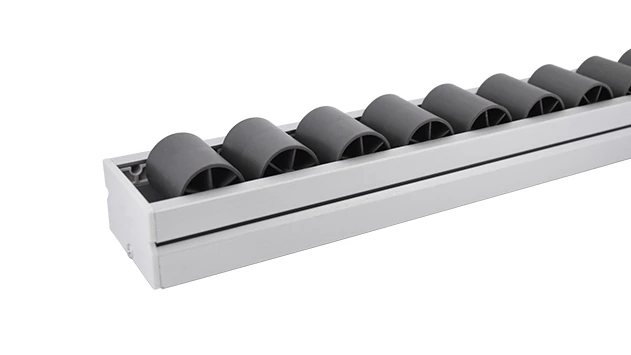
60 Aluminum Roller Track Grey vs. 80mm Track: When to Upgrade Width
In the world of lean manufacturing and efficient material handling, every component plays a critical role in keeping operations running smoothly. Roller tracks are among the unsung heroes—they form the backbone of flow racks, conveyors, and custom lean solutions, enabling seamless movement of parts and products across assembly lines, warehouses, and distribution centers. But not all roller tracks are created equal, and choosing the right width can significantly impact productivity, cost-efficiency, and scalability. Today, we're taking a close look at two popular options: the 60 Aluminum Roller Track Grey and the 80mm Aluminum Roller Track. We'll explore their features, ideal applications, key differences, and most importantly, when it makes sense to upgrade from the narrower 60mm track to the wider 80mm version.
What Is 60 Aluminum Roller Track Grey?
The 60 Aluminum Roller Track Grey is a versatile, medium-duty roller track designed for handling small to medium-sized items. As the name suggests, it features a 60mm width and is made from high-quality aluminum with a grey finish, which not only gives it a sleek, professional look but also provides excellent resistance to corrosion and wear. This track is a staple in many lean systems, particularly in industries where space is at a premium and components are lightweight to moderately heavy.
One of the key advantages of the 60mm grey track is its compatibility with a wide range of accessories, making it easy to integrate into existing flow racks or conveyor systems. It works seamlessly with plastic roller track guide rails (both yellow and grey), roller track connectors, and caster accessories, allowing for flexible configurations that adapt to changing production needs. For example, in a 3C assembly line, where small electronic components like circuit boards or phone parts are moved frequently, the 60mm track is ideal. Its narrow width saves valuable floor space, while its smooth rollers ensure that parts glide effortlessly from one station to the next.
Another benefit of the 60 Aluminum Roller Track Grey is its cost-effectiveness. Compared to wider tracks, it is more affordable, making it a great choice for businesses that are just starting to implement lean principles or have limited budgets. Additionally, its aluminum construction means it is lightweight yet durable, reducing the need for frequent replacements and lowering long-term maintenance costs. Many lean solution providers recommend this track for applications like small parts storage, light assembly lines, and pick-and-pack stations in warehouses.
What Is 80mm Aluminum Roller Track?
On the other end of the spectrum, the 80mm Aluminum Roller Track is a heavy-duty solution designed to handle larger, heavier items. With an 80mm width, it offers increased stability and load capacity, making it suitable for industries where bulkier components or products are moved regularly. This track is commonly used in automotive manufacturing, heavy equipment assembly, and large-scale operations, where the demand for handling heavier loads is high.
The 80mm track is constructed from robust aluminum extrusion profiles, ensuring it can withstand the rigors of continuous use. It is often paired with aluminum profile accessories to create sturdy conveyor systems that can transport items weighing up to several hundred kilograms. For instance, in an automotive plant, the 80mm track might be used to move engine parts, door panels, or other large components along the assembly line. Its wider surface area distributes weight more evenly, reducing the risk of items tipping over or getting stuck during transport.
Another advantage of the 80mm track is its scalability. As businesses grow and their production needs expand, the 80mm track can accommodate larger volumes and heavier loads without compromising performance. It is also compatible with heavy-duty caster wheels and roller track placon mounts, allowing for the creation of custom conveyor systems that can handle complex layouts and high-throughput operations. Many lean system suppliers highlight the 80mm track as a long-term investment for businesses looking to scale their operations and handle more demanding tasks.
Key Differences Between 60mm and 80mm Roller Tracks
| Feature | 60 Aluminum Roller Track Grey | 80mm Aluminum Roller Track |
| Width | 60mm | 80mm |
| Load Capacity | Up to 50-75 kg per meter (depending on roller spacing) | Up to 100-150 kg per meter (depending on roller spacing) |
| Ideal Load Size | Small to medium-sized items (e.g., 3C components, medical device parts) | Large, heavy items (e.g., automotive parts, industrial machinery components) |
| Space Efficiency | High (narrow width saves space) | Moderate (wider width requires more space) |
| Cost | More affordable | Higher initial cost |
| Common Applications | 3C assembly, small parts storage, light conveyor systems | Automotive manufacturing, heavy equipment assembly, large-scale |
| Compatibility | Works with standard accessories (e.g., plastic guide rails, small connectors) | Requires heavy-duty accessories (e.g., aluminum profile connectors, large casters) |
When to Stick with 60 Aluminum Roller Track Grey
Choosing to stick with the 60mm grey track is a smart decision in several scenarios. First, if your operations primarily handle small to medium-sized items that weigh less than 75 kg per meter, the 60mm track is more than sufficient. For example, in a medical device manufacturing facility where small surgical instruments or diagnostic components are assembled, the 60mm track provides the perfect balance of space efficiency and performance. Its narrow width allows for compact flow racks that fit into tight spaces, while its smooth rollers ensure that delicate parts are moved without damage.
Second, if you have limited floor space, the 60mm track is the way to go. In crowded warehouses or assembly lines, every inch counts, and the narrower track helps maximize available space. This is especially true in 3C assembly plants, where multiple production lines are often set up in close proximity. By using the 60mm track, businesses can fit more flow racks and conveyor systems into the same area, increasing overall productivity without expanding their facility.
Third, if you're working with a tight budget, the 60mm grey track offers excellent value for money. It is less expensive than the 80mm track, and its low maintenance costs mean that you won't have to spend a lot on upkeep. Many small to medium-sized businesses that are new to lean manufacturing start with the 60mm track because it allows them to implement lean principles without a significant upfront investment. As their operations grow, they can then consider upgrading to wider tracks if needed.
Finally, if your existing lean system is already built around 60mm components, sticking with the same width ensures compatibility and avoids the need for costly modifications. For example, if you have a flow rack system that uses 60mm track and plastic guide rails, switching to 80mm would require replacing all the tracks and accessories, which can be time-consuming and expensive. In such cases, it's better to continue using the 60mm track unless there's a clear need for a wider option.
When to Upgrade to 80mm Aluminum Roller Track
While the 60mm track is great for many applications, there are times when upgrading to the 80mm track is necessary. One of the most common reasons is an increase in load requirements. If your business is expanding and starting to handle larger, heavier items that exceed the 60mm track's load capacity, the 80mm track is a must. For instance, a company that initially produced small electronic devices might start manufacturing larger appliances like refrigerators or washing machines. In this case, the 60mm track would no longer be able to support the weight of these larger products, and upgrading to 80mm would be essential to maintain smooth operations.
Another scenario where upgrading makes sense is when you need to improve stability. Wider tracks provide a larger surface area, which reduces the risk of items tipping over during transport. This is particularly important in industries like automotive manufacturing, where large, bulky parts like car doors or engine blocks are moved along assembly lines. The 80mm track's wider profile ensures that these heavy items stay balanced, minimizing the chance of accidents and product damage.
Scalability is also a key factor. If you anticipate significant growth in your operations over the next few years, investing in the 80mm track now can save you money in the long run. The 80mm track is designed to handle higher volumes and heavier loads, so it can adapt to your changing needs without requiring frequent replacements. For example, a warehouse that is expanding its storage capacity and starting to handle larger pallets would benefit from the 80mm track, as it can support the weight of these pallets and ensure they move smoothly across the facility.
Additionally, if you're implementing a new lean system from scratch and have the budget, the 80mm track might be a better long-term investment. It offers greater flexibility and can be used for a wider range of applications, making it a versatile choice that can grow with your business. Many lean solution providers recommend the 80mm track for businesses that want to future-proof their operations and avoid the need for upgrades down the line.
Real-World Applications: Case Studies
Case Study 1: 3C Assembly Line Using 60mm Grey Track
A leading 3C manufacturer in China was looking to optimize its assembly line for smartphone production. The company needed a flow rack system that could handle small components like circuit boards, batteries, and screens, while also fitting into the limited space available. After consulting with a lean solution provider, they chose the 60 Aluminum Roller Track Grey.
The 60mm track was integrated into custom flow racks that were placed alongside the assembly stations. Each flow rack was equipped with plastic roller track guide rails and roller track connectors, allowing for easy adjustment as production needs changed. The narrow width of the track meant that the company could fit more flow racks into the same area, increasing the number of components available at each station and reducing the time workers spent retrieving parts.
The result was a 20% increase in productivity, as workers no longer had to walk long distances to get parts. The 60mm track's smooth rollers also reduced the risk of component damage, leading to a 15% decrease in defective products. The company was so satisfied with the results that they expanded the use of the 60mm track to other parts of their production facility.
Case Study 2: Automotive Parts Manufacturer Upgrading to 80mm Track
An automotive parts manufacturer in Europe was experiencing issues with its existing conveyor system, which used 60mm roller tracks. The company had recently started producing larger components like engine blocks and transmission parts, which exceeded the load capacity of the 60mm track. As a result, parts were getting stuck on the conveyor, leading to delays and increased downtime.
The manufacturer decided to upgrade to the 80mm Aluminum Roller Track. The new track was installed on their main conveyor line, replacing the old 60mm track. The 80mm track's higher load capacity and wider surface area allowed the larger components to move smoothly without getting stuck. Additionally, the company used heavy-duty caster accessories to ensure that the conveyor could handle the increased weight.
After the upgrade, the company saw a 30% reduction in downtime and a 25% increase in throughput. The 80mm track also proved to be more durable, reducing maintenance costs by 20% over the first year. The manufacturer now uses the 80mm track for all their heavy-duty conveyor systems, and they plan to expand its use to other parts of their facility.
Case Study 3: Medical Device Company Transitioning from 60mm to 80mm
A medical device company in the United States specialized in producing diagnostic equipment. Initially, they used the 60mm grey track for their assembly lines, which handled small components like sensors and circuit boards. However, as the company grew, they started producing larger devices like ultrasound machines and MRI scanners, which required heavier parts.
The company faced two options: either continue using the 60mm track with additional support or upgrade to the 80mm track. After evaluating their needs, they decided to upgrade to the 80mm track. The transition involved replacing the old 60mm tracks with 80mm tracks and installing new aluminum profile accessories to support the heavier loads.
The upgrade resulted in a 18% increase in production efficiency, as the larger parts moved more smoothly across the assembly line. The company also noticed a decrease in product damage, as the wider track provided better stability for the heavier components. The transition was a success, and the company now uses a mix of 60mm and 80mm tracks, depending on the size of the components being handled.
How to Choose the Right Track Width for Your Needs
Choosing between the 60mm grey track and the 80mm track requires careful consideration of your specific needs. Here are some steps to help you make the right decision:
1. **Assess Your Current Load Requirements**: Start by determining the size and weight of the items you currently handle. If your items are small to medium-sized and weigh less than 75 kg per meter, the 60mm track is likely sufficient. If they are larger and heavier, the 80mm track is a better choice.
2. **Evaluate Future Growth**: Consider how your business might grow in the next 3-5 years. If you anticipate handling larger or heavier items, the 80mm track is a more scalable option. It's better to invest in a wider track now than to have to upgrade later, which can be costly and time-consuming.
3. **Check Space Constraints**: Measure the available space in your facility. If you have limited floor space, the 60mm track is more space-efficient. If space is not an issue, the 80mm track offers greater flexibility.
4. **Consider Compatibility**: If you have an existing lean system, check if it's compatible with the track width you're considering. Switching to a different width may require replacing accessories, which can add to the cost.
5. **Consult a Lean Solution Provider**: If you're unsure which track to choose, consult a professional lean solution provider. They can assess your needs, recommend the best track width, and help you design a custom system that meets your specific requirements.
Conclusion
The choice between the 60 Aluminum Roller Track Grey and the 80mm Aluminum Roller Track depends on a variety of factors, including load requirements, space constraints, budget, and future growth plans. Both tracks are valuable tools in lean manufacturing, but they serve different purposes. The 60mm track is ideal for small to medium-sized items, tight spaces, and limited budgets, while the 80mm track is better suited for larger, heavier items, scalability, and long-term investments.
Ultimately, the key is to choose the track that aligns with your current needs and future goals. Whether you stick with the 60mm grey track or upgrade to the 80mm track, both options can help you improve productivity, reduce costs, and create a more efficient lean system. By understanding the features and applications of each track, you can make an informed decision that will benefit your business for years to come.
Remember, the success of your lean system depends not just on the track width, but also on how well it is integrated into your overall operations. Working with a reputable lean solution provider can help you design a system that maximizes the benefits of your chosen track and ensures that your operations run smoothly and efficiently.