- Company Articles
- Products and Technology
- Product knowledge
- 60 Aluminum Roller Track Grey vs. Composite Roller Track: Weight & Strength

60 Aluminum Roller Track Grey vs. Composite Roller Track: Weight & Strength
Related Product
60 Aluminum Roller Track Grey
Modular system roller tracks aluminum gravity roller tracks are an excellent solution for transporting materials within industrial environments, warehouses and distribution centres.
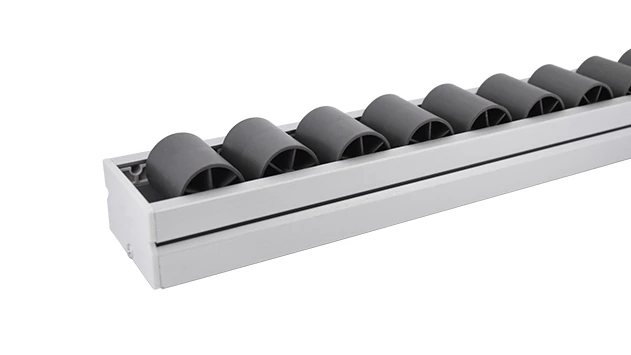
If you've ever walked through a busy production line or a well-organized warehouse, you've probably seen roller tracks hard at work. They're the quiet backbone of efficient material handling—moving parts from one station to another, keeping assembly lines flowing, and making sure products get where they need to go without hiccups. But not all roller tracks are created equal. Today, we're diving deep into two popular options: the 60 Aluminum Roller Track Grey and Composite Roller Track. We'll break down their weight, strength, and everything else you need to know to pick the right one for your operations.
What Is 60 Aluminum Roller Track Grey?
Let's start with the 60 Aluminum Roller Track Grey. As the name suggests, this track is made from high-quality aluminum alloy—specifically 6063-T5, a common material in aluminum extrusion profiles known for its excellent strength-to-weight ratio and corrosion resistance. The "60" refers to its width (around 60mm), and the grey finish comes from anodization, which adds an extra layer of protection against rust and wear.
This track is a favorite in lean manufacturing setups, often used in flow racks, conveyors, and lean pipe workbenches. Why? Because it's durable, easy to clean, and compatible with a wide range of aluminum profile accessories. Whether you're moving heavy automotive parts or delicate electronic components, this track can handle the load while keeping things smooth. Plus, since it's made of aluminum, it's fully recyclable—aligning perfectly with lean principles like sustainability and reusability.
What Is Composite Roller Track?
Composite Roller Track, on the other hand, is a mix of materials—usually fiberglass-reinforced plastic (FRP) or a similar composite. It's designed to be lightweight, low-friction, and quiet. Unlike aluminum, composite tracks don't rust, which makes them a good choice for wet or corrosive environments. They're also easier on the wallet upfront, which can be appealing for small businesses or projects with tight budgets.
But don't let the low cost fool you—composite tracks have their limits. They're not as strong as aluminum, so they're better suited for lighter loads. Think of them as the go-to for moving small parts, packaging materials, or items that don't require heavy-duty support. They're also great for environments where noise is a concern, like medical device manufacturing or office supply warehouses.

Head-to-Head: Weight & Strength
The title of this article focuses on weight and strength, so let's get to the heart of the matter. Below is a detailed comparison of these two tracks, covering not just weight and strength but also other key metrics that matter for your production line.
| Feature | 60 Aluminum Roller Track Grey | Composite Roller Track |
|---|---|---|
| Material Base | 6063-T5 Aluminum Alloy | Fiberglass-Reinforced Plastic (FRP) |
| Weight per Linear Meter | Approx. 1.8 kg/m | Approx. 1.2 kg/m |
| Max Load Capacity per Meter | Up to 500 kg | Up to 250 kg |
| Tensile Strength | ~240 MPa | ~150 MPa |
| Corrosion Resistance | Excellent (Anodized Finish) | Superior (No Metal Components) |
| Temperature Tolerance | -40°C to +120°C | -20°C to +80°C |
| Durability | 10+ Years (With Proper Care) | 5-7 Years (Average Lifespan) |
| Recyclability | 100% Recyclable | Limited (Hard to Separate Materials) |
| Maintenance Needs | Minimal (Occasional Cleaning) | Very Low (No Lubrication or Rust Prevention) |
| Noise Level | Low (Smooth Roller Movement) | Very Low (Quiet Plastic-on-Plastic Contact) |
Looking at the table, the 60 Aluminum Roller Track Grey clearly wins when it comes to strength and load capacity. It can handle twice as much weight per meter as the composite track, making it ideal for heavy-duty applications. But composite tracks are lighter, which can be a plus if you need to move or reconfigure your setup often. They also have better corrosion resistance—though aluminum's anodized finish is no slouch in that department.

Practical Applications: Where Each Track Shines
Let's talk about real-world use cases. The 60 Aluminum Roller Track Grey is a staple in industries that require robustness and precision. For example:
Automotive Assembly:
Moving heavy engine parts or chassis components from one station to another.
3C Assembly:
Supporting lean pipe workbenches where delicate but heavy electronic devices are put together.
Warehouse Flow Racks:
Storing and moving pallets of goods, thanks to its high load capacity.
Heavy Machinery Manufacturing:
Transporting large metal parts through the production line.
Composite Roller Track, on the other hand, excels in environments where weight, noise, or corrosion are top concerns:
Medical Device Manufacturing:
Handling sterile components without the risk of rust contamination.
Food Processing:
Moving packaging materials or light food items in wet, clean environments.
Office Supply Warehouses:
Quietly transporting boxes of paper or stationery.
Light Electronics:
Moving small circuit boards or accessories that don't require heavy support.
Cost & Long-Term Value
When it comes to cost, composite tracks are cheaper upfront. You might pay around $12 per meter for composite, compared to $20 per meter for aluminum. But let's look at the bigger picture—long-term value.
Aluminum tracks last twice as long as composite ones (10+ years vs.5-7). Plus, since they're fully recyclable, you can sell them back or repurpose them when you're done with your current setup. This aligns perfectly with lean solutions—focusing on sustainability and reusability to reduce waste and save money over time.
Composite tracks, while cheaper at first, need to be replaced more often. And since they're made of mixed materials, they're hard to recycle. So over 10 years, you might end up spending more on composite tracks (two replacements) than you would on a single set of aluminum tracks.
Another thing to consider: maintenance costs. Aluminum tracks require almost no maintenance—just occasional cleaning to remove dust or debris. Composite tracks are also low-maintenance, but they can scratch or dent easily, which might lead to unexpected repairs down the line.
How to Choose the Right Track for Your Needs
So, which track should you pick? Here are some key questions to ask yourself:
What's your load requirement?
If you're moving heavy items (over 250 kg per meter), go with aluminum. For lighter loads, composite is fine.
What's your environment like?
If your space is wet, corrosive, or noisy, composite might be better. If it's dry and requires high durability, aluminum is the way to go.
What's your budget?
If you need to save money now and don't mind replacing tracks later, composite is an option. But if you want to invest in long-term savings, aluminum is worth the upfront cost.
Are you building a lean system?
If you're focused on flexibility, reusability, and sustainability (core lean principles), aluminum is the better choice. It's easy to reconfigure and recycle, which fits perfectly with lean solutions.
Do you need precision?
Aluminum tracks offer better stability and precision, which is crucial for industries like 3C assembly or automotive manufacturing. Composite tracks might flex under heavy loads, leading to alignment issues.
For example, if you're setting up a conveyor system for heavy automotive parts, the 60 Aluminum Roller Track Grey is a no-brainer. But if you need a track for light medical supplies, composite might be more suitable.
Final Thoughts
Choosing between 60 Aluminum Roller Track Grey and Composite Roller Track isn't just about weight and strength—it's about finding the right fit for your production goals. Both have their place in the manufacturing world, but understanding their differences will help you make an informed decision.
At the end of the day, the best track is the one that helps you build a more efficient, flexible, and sustainable operation. Whether you opt for aluminum's durability or composite's versatility, the right choice will keep your lines moving smoothly and your costs in check.
Remember, every part of your production line—from the smallest roller track to the largest conveyor—plays a role in your overall success. So take the time to pick the right components, and you'll reap the benefits for years to come.
If you're still unsure which track to choose, consider reaching out to a lean solution provider who can help you assess your needs and recommend the best option for your specific setup. After all, the right track can make all the difference in your daily operations.