- Company Articles
- Products and Technology
- Product knowledge
- 60 Aluminum Roller Track Grey vs. Powder-Coated Aluminum Track: Finish Durability

60 Aluminum Roller Track Grey vs. Powder-Coated Aluminum Track: Finish Durability
Related Product
60 Aluminum Roller Track Grey
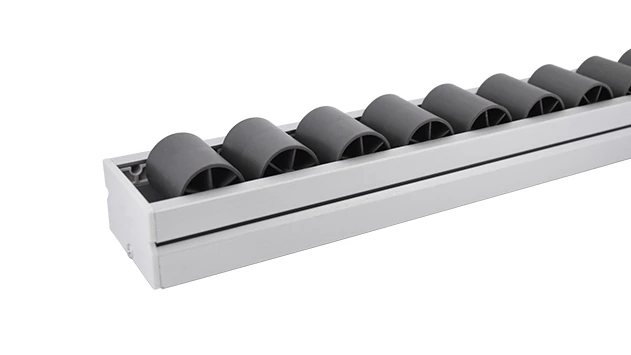
Modular system roller tracks aluminum gravity roller tracks are an excellent solution for transporting materials within industrial environments, warehouses and distribution centres.
When you're building or upgrading a lean system for your production line or warehouse, every component plays a role in keeping things running smoothly. Roller tracks are no exception—they're the backbone of flow racks, conveyors, and assembly lines, so choosing the right one matters. Today, we're putting two popular options head-to-head: the 60 Aluminum Roller Track Grey and the Powder-Coated Aluminum Track. Our focus? Finish durability—because how well a track's surface holds up over time directly impacts your workflow efficiency, maintenance costs, and bottom line.
Let's start with the basics. Both tracks are made from aluminum, which is lightweight yet strong—perfect for lean systems that prioritize flexibility and sustainability. But their finishes are worlds apart, and those differences can make or break your setup. Let's dive in.
Getting to Know the 60 Aluminum Roller Track Grey
The 60 Aluminum Roller Track Grey isn't just another piece of hardware—it's a workhorse in lean manufacturing. The "60" refers to its standard width (60mm), and the grey finish is more than aesthetic. This track is crafted from high-grade aluminum extrusion profile, then treated with an anodizing process that creates a protective layer directly on the metal surface.
Where do you find this track? Everywhere from 3C assembly lines (think smartphones and laptops) to medical device manufacturing floors. Why? Because the anodized grey finish often has electrostatic discharge (ESD) properties—critical for protecting sensitive electronics from static damage. It's also a staple in flow racks and conveyors, where it handles constant wear and tear without breaking a sweat.
Let's take a real-world example: A 3C assembly plant uses these grey tracks to move circuit boards from one station to the next. Every day, hundreds of boards slide across the tracks, and workers adjust the line to accommodate new product models. After a full year of use, the tracks still look almost new—no scratches, no chipping, no fading. That's the power of the anodized finish.
The Durability Secrets of the Grey Track's Finish
Anodizing isn't just a coating—it's a chemical transformation. When aluminum is anodized, it's dipped in an electrolyte solution and subjected to an electric current, which forms a hard, porous oxide layer on the surface. This layer is part of the metal itself, so it doesn't peel or chip off like paint or powder coat.
What does this mean for durability? Let's break it down:
- Scratch Resistance: The anodized layer is harder than the base aluminum, so it resists shallow scratches from boxes, tools, or parts. Even if you bump a metal container against it, the surface stays intact.
- Corrosion Resistance: The oxide layer acts as a barrier against moisture, dust, and chemicals. This makes the grey track ideal for warehouses with humidity or factories that use harsh cleaning agents.
- Fade Resistance: Unlike painted finishes, anodized grey doesn't fade under sunlight or UV exposure. It retains its color for years, even in well-lit workspaces.
- ESD Safety: Many grey tracks are treated to be ESD-compliant, which is non-negotiable for industries like 3C assembly and medical device manufacturing where static can damage sensitive components.
Another bonus? The anodized finish is compatible with a wide range of aluminum profile accessories—like connectors, brackets, and end caps—so you can easily customize your lean system without worrying about compatibility issues.

Powder-Coated Aluminum Track: Pros and Cons
Powder-coated aluminum tracks are a popular alternative, thanks to their vibrant colors and lower upfront cost. The process involves applying dry powder to the aluminum surface using an electrostatic gun, then curing it in an oven to form a thick, even coating. But how does this finish hold up in real-world conditions?
Let's start with the pros: Powder-coated tracks come in almost any color, so you can color-code your workflow (e.g., red for urgent orders, blue for regular production). They're also resistant to chipping and fading—if the coating is applied correctly. For low-traffic areas like retail warehouses or showrooms, this finish works well.
But there are downsides. The powder coat is a separate layer from the aluminum, so deep scratches can expose the bare metal underneath. This leads to corrosion over time, especially in moist environments. And while powder-coated tracks are durable, they're not as scratch-resistant as anodized grey tracks. For example, a warehouse using powder-coated tracks in a high-traffic flow rack might see scratches after just a few months of heavy use.
Another thing to note: Powder-coated tracks rarely have ESD properties. If you're working with sensitive electronics, this is a deal-breaker. You'd have to add extra ESD protection, which increases costs and complexity.

Head-to-Head Comparison: Finish Durability
To help you make an informed decision, let's compare the two tracks side by side. We've focused on the aspects that matter most for finish durability:
| Aspect | 60 Aluminum Roller Track Grey | Powder-Coated Aluminum Track | Key Takeaways |
|---|---|---|---|
| Finish Type | Anodized (integral oxide layer) | Powder-coated (external polymer layer) | Anodized finish is part of the metal; powder coat is a separate coating. |
| Scratch Resistance | 9/10 (resists shallow to moderate scratches) | 7/10 (prone to deep scratches exposing bare metal) | Anodized grey holds up better in high-traffic areas. |
| Corrosion Resistance | 9/10 (excellent barrier against moisture/chemicals) | 6/10 (good if unscratch; poor if damaged) | Anodized tracks are ideal for humid or chemical-heavy environments. |
| ESD Compatibility | Yes (often standard) | No (rarely ESD-safe) | Critical for 3C assembly and medical device manufacturing. |
| Maintenance Needs | Low (wipe with damp cloth; no touch-ups needed) | Medium (touch up scratches to prevent corrosion) | Anodized tracks save time and money on upkeep. |
| Long-Term Cost | Higher upfront; lower over time (5+ year lifespan) | Lower upfront; higher over time (3-4 year lifespan) | Anodized grey is more cost-effective in the long run. |
| Ideal Environments | 3C assembly, medical devices, wet/dusty warehouses | Retail, low-traffic flow racks, color-coded workflows | Choose based on your industry and usage intensity. |
How to Choose the Right Track for Your Lean System
Now that you know the differences, how do you pick the right track? Let's break down the key factors:
1. Industry and Environment
If you're in the 3C assembly or medical device industry, go with the 60 Aluminum Roller Track Grey. Its ESD safety and corrosion resistance are non-negotiable. For warehouses with high moisture or dust, the anodized finish is also a better choice.
For retail or low-traffic areas where color-coding matters, powder-coated tracks work well. Just avoid using them in high-traffic zones or environments with harsh chemicals.
2. Load and Usage Intensity
Do you move heavy loads (50kg+ boxes) on your flow rack or conveyor? The anodized grey track is stronger and more scratch-resistant, so it can handle heavy use without wear. Powder-coated tracks are better for lighter loads (under 30kg).
3. Budget and Long-Term Value
While the grey track has a higher upfront cost, it lasts longer and requires less maintenance. For example, if you spend $10 per meter on a grey track and it lasts 5 years, that's $2 per year. A powder-coated track might cost $7 per meter but only last 3 years—$2.33 per year. Over time, the grey track is cheaper.
4. Flexibility and Customization
Both tracks are part of lean systems, so they're flexible. But the grey track integrates seamlessly with aluminum profile accessories like connectors and brackets. Powder-coated tracks may have issues with compatibility if the coating is too thick.
Real-World Case Studies: Grey vs. Powder-Coated
Case Study 1: 3C Assembly Plant
A leading smartphone manufacturer in Shenzhen switched from powder-coated tracks to 60 Aluminum Roller Track Grey in their assembly line. Before the switch, they replaced powder-coated tracks every 2 years due to scratches and corrosion from cleaning agents. After switching, they haven't replaced any tracks in 3 years. The ESD-safe finish also reduced static-related defects by 22%—a huge win for quality control.
Case Study 2: Warehouse Logistics
A large e-commerce warehouse used powder-coated tracks for color-coding product lines. While the colors looked great, the tracks started chipping after 18 months of heavy use. They now mix grey and powder-coated tracks: grey for high-traffic flow racks and powder-coated for low-traffic color-coded zones. This cut replacement costs by 30% and kept their workflow organized.
Case Study 3: Medical Device Manufacturing
A medical device company needed tracks that could withstand daily disinfection with harsh chemicals. Powder-coated tracks peeled off after 6 months, but the grey tracks held up perfectly. The anodized finish didn't react to the chemicals, and the ESD safety protected sensitive devices. This reduced downtime by 15% and improved compliance with industry standards.
Maintenance Tips to Extend Track Lifespan
Proper maintenance can make any track last longer. Here are our top tips:
For 60 Aluminum Roller Track Grey:
- Wipe the tracks weekly with a damp cloth to remove dust and debris.
- Avoid abrasive cleaners like steel wool—they can scratch the anodized layer.
- Lubricate rollers every 3 months to keep them moving smoothly.
- Check aluminum profile accessories (connectors, brackets) monthly to ensure they're tight.
For Powder-Coated Aluminum Track:
- Use a soft cloth and mild detergent to clean—avoid harsh chemicals.
- Touch up scratches immediately with matching powder coat paint to prevent corrosion.
- Avoid heavy loads that can scratch the surface.
- Lubricate rollers every 2 months to reduce friction.
Final Thoughts
The choice between 60 Aluminum Roller Track Grey and Powder-Coated Aluminum Track boils down to your specific needs. If you're in an industry that requires ESD safety, durability, or resistance to harsh environments, the grey track is the clear winner. It's an investment that pays off in the long run with less maintenance and longer lifespan.
If you're in a low-traffic area where color-coding matters, powder-coated tracks are a good option. Just be prepared to replace them more often and touch up scratches regularly.
At the end of the day, both tracks are part of a lean system that helps you optimize your workflow. But when it comes to finish durability, the 60 Aluminum Roller Track Grey stands out. It's built to last, protect your products, and keep your line moving—no matter what.