- Company Articles
- Products and Technology
- Product knowledge
- 60 Aluminum Roller Track Grey vs. Titanium-Coated Track: Hardness & Wear Resistance

60 Aluminum Roller Track Grey vs. Titanium-Coated Track: Hardness & Wear Resistance
Related Product
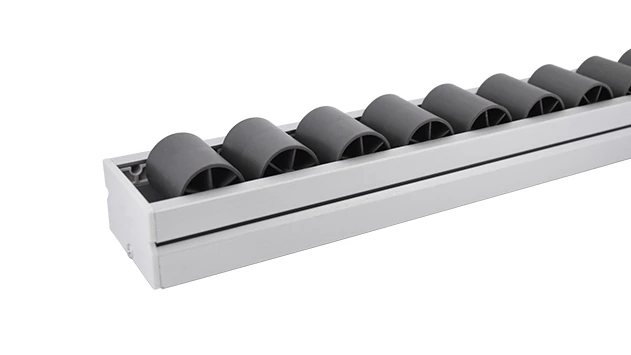
60 Aluminum Roller Track Grey
Modular system roller tracks aluminum gravity roller tracks are an excellent solution for transporting materials within industrial environments, warehouses and distribution centres.
If you've ever walked through a busy warehouse or a bustling production line, you've probably seen roller tracks hard at work. They're the quiet heroes moving boxes, parts, and products from one place to another, keeping operations smooth and efficient. But not all roller tracks are created equal—choose the wrong one, and you could end up with frequent breakdowns, costly replacements, and slowed-down workflows. Today, we're going to take a deep dive into two popular options: the 60 Aluminum Roller Track Grey and the Titanium-Coated Roller Track. We'll compare their hardness, wear resistance, and more to help you pick the best one for your needs.
First, let's set the stage. Roller tracks are everywhere in modern manufacturing and logistics. They're key components in conveyors, flow racks, and lean solution setups, where every second of efficiency counts. Whether you're in 3C assembly, automotive parts manufacturing, or warehouse logistics, the right roller track can make a huge difference in your bottom line. So let's get started by understanding what each of these tracks is all about.
Before we dive into the details, let's clarify: this article isn't about picking a "winner" but about finding the right fit for your specific operations. Both tracks have their strengths, and knowing when to use each will help you optimize your processes and save money.
What Is 60 Aluminum Roller Track Grey?
Let's kick things off with the 60 Aluminum Roller Track Grey. As the name suggests, this track is made from 60-series aluminum alloy—usually 6061 or 6063, which are known for their perfect balance of strength and lightweight. The "grey" part comes from its anodized finish, a process that coats the aluminum with a protective oxide layer. This finish not only gives it that sleek grey look but also boosts its corrosion resistance, making it ideal for damp or humid environments.
Manufacturing this track starts with extruding aluminum profiles into the desired shape—think of it like squeezing playdough through a mold, but with metal. The profiles are then cut to length, and rollers are attached using aluminum profile accessories like brackets and connectors. The result is a track that's easy to install, reconfigure, and maintain—perfect for lean manufacturing setups where flexibility is key.
Key features of the 60 Aluminum Roller Track Grey include:
- Lightweight: Easy to handle and install without heavy equipment.
- Corrosion-resistant: The anodized finish protects against rust and moisture.
- Cost-effective: More affordable upfront compared to coated steel tracks.
- Flexible: Compatible with a wide range of aluminum profile accessories, allowing quick adjustments.
- Low friction: Rollers glide smoothly, reducing energy use in conveyors.
You'll often find this track in applications like flow racks for small parts, conveyors in 3C assembly lines, and temporary material handling setups. It's great for light to medium loads—think boxes weighing up to 50kg per meter of track. If your operations don't involve super heavy items or constant, high-friction use, this could be the perfect fit.
For example, a small electronics factory in Shenzhen uses these tracks in their flow racks to store circuit boards. The lightweight design allows workers to easily adjust the rack heights when switching between product models, and the corrosion resistance keeps the tracks looking new even in the factory's air-conditioned, slightly humid environment.
What Is Titanium-Coated Roller Track?
Now let's talk about the Titanium-Coated Roller Track. Unlike the aluminum track, this one typically has a steel base—most often carbon steel or stainless steel—with a thin layer of titanium applied to the surface. The coating process is usually PVD (Physical Vapor Deposition), which involves heating titanium in a vacuum and depositing it onto the steel track as a vapor. This creates an extremely hard, durable layer that bonds tightly to the base metal.
The titanium coating is what makes this track stand out. It's super hard—harder than most steels—and has a low friction coefficient, meaning parts glide over it smoothly with less wear. The coating also adds resistance to chemicals and scratches, making it ideal for harsh environments where other tracks might fail quickly.
Key features of the Titanium-Coated Roller Track include:
- Exceptional hardness: Resists dents and deformation even under heavy loads.
- Superior wear resistance: Lasts much longer than uncoated steel or aluminum tracks.
- Low friction: Reduces energy use in conveyors and minimizes wear on moving parts.
- Chemical resistance: Handles exposure to oils, solvents, and other industrial chemicals.
- High temperature resistance: Can withstand extreme heat without losing its properties.
This track is a favorite in high-demand applications like heavy-duty conveyors in automotive manufacturing, where parts weighing 100kg or more are moved constantly. It's also great in environments with high friction, like warehouses where pallets are slid over tracks hundreds of times a day. If you need a track that can take a beating and keep going, this is the one to consider.
A large automotive plant in Guangzhou uses these tracks in their engine assembly line. The conveyors run 24/7, moving engine blocks that weigh over 150kg each. The titanium-coated tracks have been in use for 6 years without needing replacement, saving the plant thousands in maintenance costs.

Hardness Comparison: Testing Methods & Results
Hardness is a critical factor when choosing a roller track. It tells you how well the track can resist indentation and deformation under load. Let's compare the hardness of these two tracks using common testing methods:
| Testing Method | 60 Aluminum Roller Track Grey | Titanium-Coated Roller Track |
|---|---|---|
| Rockwell Hardness (HR) | HRB 65-70 | HRC 55-60 |
| Vickers Hardness (HV) | HV 100-120 | HV 500-600 |
| Brinell Hardness (HB) | HB 95-110 | HB 500-550 |
| Load Capacity (per meter) | Up to 70kg | Up to 150kg |
What do these numbers mean? Let's break it down. The Rockwell Hardness scale uses different scales: HRB for softer metals like aluminum, HRC for harder ones like steel. A titanium-coated track has a much higher HRC value, which means it's significantly harder than the aluminum track. For example, if you drop a 5kg tool on the aluminum track, it might dent, but the titanium-coated one would likely stay intact.
In practical terms, hardness translates to load capacity. The titanium-coated track can handle up to 150kg per meter of track, while the aluminum one maxes out at around 70kg. That's a big difference if you're moving heavy parts like engine blocks or large pallets. So if load capacity is a top priority, the titanium-coated track is the clear winner here.
Another way to think about hardness is resistance to deformation. If you have a conveyor that's constantly under load, a harder track won't bend or warp over time. This means less downtime for repairs and more consistent performance.

Wear Resistance Analysis: Real-World Scenarios & Data
Wear resistance is all about longevity. How long will the track last before it needs to be replaced? To answer this, let's look at both lab tests and real-world data.
Lab tests like the Taber Abrasion Test measure how well a material resists wear from friction. In this test, a rotating wheel rubs against the track surface, and the number of cycles until visible wear occurs is recorded. For the 60 Aluminum Roller Track Grey, this number is around 10,000 cycles. For the Titanium-Coated Track, it's closer to 30,000 cycles—three times longer! That means in a high-use environment, the titanium track will last three times as long before showing signs of wear.
But lab tests only tell part of the story. Let's look at real-world examples. A warehouse in Shanghai uses flow racks with 60 Aluminum tracks to store electronic components. They reported that the tracks needed replacement every 2.5 years, mainly due to wear on the rollers and surface scratches. Another warehouse in Guangzhou uses titanium-coated tracks for heavy pallets. They haven't had to replace any tracks in over 6 years—now that's a big difference in lifespan.
Friction coefficient is another key factor in wear resistance. The lower the friction, the less wear on both the track and the items moving on it. The 60 Aluminum Track has a friction coefficient of about 0.3, while the titanium-coated one is around 0.15. That means items slide twice as easily on the titanium track, reducing the amount of force needed to move them and minimizing wear over time.
In a study conducted by a logistics company, they compared the wear of both tracks in a conveyor system moving 100 boxes per hour. After one year, the aluminum track had 0.5mm of wear on the surface, while the titanium-coated track had only 0.1mm. This small difference adds up over time—after 5 years, the aluminum track would have 2.5mm of wear (needing replacement), while the titanium track would have only 0.5mm (still usable).
So what does this mean for your operations? If you have a setup that's used frequently—like a conveyor running 24/7—the titanium-coated track will save you money in the long run by reducing replacement costs. For less frequent use, the aluminum track is more cost-effective.
Application Suitability: Which Track Fits Your Needs?
Now that we know the technical details, let's figure out which track is right for your specific application. Let's break it down by industry and use case:
Light to Medium Loads (Up to 70kg per meter)
If your operations involve moving small to medium-sized items—like 3C components, small tools, or boxes weighing less than 70kg—the 60 Aluminum Roller Track Grey is perfect. It's lightweight, easy to install, and cost-effective. Industries that benefit from this include:
- 3C Assembly: For moving phone parts, laptop components, and other small electronics.
- Small Parts Logistics: In warehouses storing screws, bolts, and other tiny items.
- Retail Distribution: For moving small packages in order fulfillment centers.
- Food Processing: For lightweight food containers (if using food-grade aluminum).
Heavy Loads (Over 70kg per meter)
For heavy items like engine blocks, large pallets, or industrial machinery parts, the Titanium-Coated Track is the way to go. Its high hardness and wear resistance can handle the stress of heavy loads. Industries here include:
- Automotive Manufacturing: Conveyors moving engine parts, chassis components, etc.
- Heavy Machinery: Moving large machine parts in production lines.
- Warehouse Logistics: Storing and moving heavy pallets in distribution centers.
- Construction Materials: Moving bricks, tiles, and other heavy building materials.
Environment Factors
The environment where the track is used also plays a role. The 60 Aluminum Track's anodized finish makes it resistant to corrosion, so it's great for damp environments like food processing plants (if using food-grade aluminum) or coastal warehouses. The Titanium-Coated Track is better in dry, high-friction environments where corrosion isn't a big issue but wear is.
Flexibility Needs
If you need to reconfigure your setup often—like in lean manufacturing where lines change frequently—the aluminum track is more flexible. It's easy to disassemble and reassemble using aluminum profile accessories. The titanium track is more rigid, so it's better for permanent setups that don't need frequent changes.
For example, a toy factory that changes product lines every 3 months uses aluminum tracks because they can quickly adjust their flow racks to accommodate new toy sizes. A car factory that produces the same model for 5 years uses titanium tracks because their conveyor setup is permanent and handles heavy loads.
Cost-Benefit Analysis: Initial Investment vs. Long-Term Savings
Let's talk about money—because at the end of the day, cost is a big factor in any decision. Let's compare the upfront and long-term costs of both tracks:
| Cost Factor | 60 Aluminum Roller Track Grey | Titanium-Coated Roller Track |
|---|---|---|
| Upfront Cost (per meter) | $25-$35 | $60-$80 |
| Average Lifespan (years) | 2-3 | 5-7 |
| Annual Maintenance Cost (per meter) | $5-$10 | $2-$5 |
| Total Cost Over 6 Years (per meter) | $30*3 + $5*6 = $120 | $70*1 + $3*6 = $88 |
As you can see, even though the titanium track is more expensive upfront, over 6 years it's actually cheaper. Because it lasts longer and requires less maintenance. Let's do the math again for clarity:
For the aluminum track: If you buy it at $30 per meter, replace it after 2 years (so three times in 6 years), that's $90. Add $5 per year in maintenance: $30. Total is $120 per meter over 6 years.
For the titanium track: Buy once at $70 per meter, no replacement needed in 6 years. Maintenance is $3 per year: $18. Total is $88 per meter over 6 years.
That's a savings of $32 per meter over 6 years. If you have 100 meters of track, that's $3,200 saved—money that can be invested back into your business.
The point is, while the upfront cost is higher for titanium, the long-term savings are significant. If your operations run 24/7 or have high usage, the titanium track will pay for itself in a few years.
Maintenance Tips for Longevity
Proper maintenance can extend the life of any roller track. Let's look at how to care for each type:
Caring for 60 Aluminum Roller Track Grey
- Clean regularly: Wipe down the track with a damp cloth to remove dust and debris. Avoid harsh chemicals that can damage the anodized finish.
- Lubricate rollers: Use a light oil or silicone lubricant on the rollers every 6 months to reduce friction.
- Check for damage: Inspect the track monthly for dents or bent sections. replace any damaged parts immediately to prevent further wear.
- Avoid overloading: Stick to the recommended load capacity to prevent deformation.
Caring for Titanium-Coated Roller Track
- Clean with mild detergents: Use a soft brush and mild soap to remove dirt. Avoid abrasive cleaners that can scratch the titanium coating.
- Lubricate sparingly: The low friction of titanium means you don't need to lubricate as often—once a year is usually enough.
- Inspect coating: Check for chips or scratches in the titanium coating. If the base steel is exposed, apply a rust-resistant paint to prevent corrosion.
- Handle with care: Avoid dropping heavy tools on the track to prevent chipping the coating.
By following these simple maintenance steps, you can add years to the life of your roller tracks and keep your operations running smoothly. Remember, a little care goes a long way!
Case Studies: Real-World Success Stories
Case Study 1: 3C Assembly Plant Uses Aluminum Tracks for Flexibility
A 3C assembly plant in Shenzhen produces 10,000 smartphones per day. They needed a flexible material handling system to switch between different phone models quickly. They chose the 60 Aluminum Roller Track Grey for their flow racks and conveyors.
The lightweight design allowed workers to reconfigure the flow racks in just 1 hour (down from 2 hours with steel tracks). The anodized finish protected the tracks from the factory's humid environment, and the low friction rollers reduced energy use by 8%. After 2 years of use, the tracks were still in good condition, with minimal wear. The plant saved over $10,000 in setup costs and $5,000 in energy costs annually.
Case Study 2: Automotive Factory Switches to Titanium Tracks for Longevity
An automotive factory in Guangzhou had issues with their conveyor tracks wearing out too quickly. They were using steel tracks that needed replacement every 2 years, costing $50,000 annually. The conveyors run 24/7, moving engine blocks weighing 150kg each.
They switched to titanium-coated tracks. After 6 years, the tracks are still in use with no signs of major wear. The factory saved $200,000 in replacement costs and reduced maintenance time by 80% (from 10 hours per month to 2 hours). The titanium tracks also reduced friction, leading to a 10% decrease in energy use for the conveyors—saving an additional $8,000 per year.
These case studies show that choosing the right roller track can have a huge impact on your business's efficiency and profitability.
Conclusion: Making the Right Choice
So, which track should you choose? It all comes down to your specific needs:
Choose the 60 Aluminum Roller Track Grey if:
- You handle light to medium loads (up to 70kg per meter).
- You need flexibility to reconfigure your setup often.
- You work in a humid or corrosive environment.
- Upfront cost is a major concern.
Choose the Titanium-Coated Roller Track if:
- You handle heavy loads (over 70kg per meter).
- Your operations involve high-frequency, high-friction use.
- Long-term durability and low maintenance are priorities.
- You want to save money over the long run.
Both tracks are excellent choices, but they serve different purposes. By understanding your load requirements, usage frequency, and environment, you can pick the track that will keep your operations running smoothly and efficiently for years to come. Remember, the right roller track isn't just a purchase—it's an investment in your business's productivity and profitability.
Whether you're in 3C assembly, automotive manufacturing, or warehouse logistics, the right roller track can make all the difference. So take the time to evaluate your needs, compare your options, and make the choice that's best for your business.