- Company Articles
- Products and Technology
- Application Cases
- 60 Aluminum Roller Track Small Wheel in Aerospace Parts Handling: Precision Requirements

60 Aluminum Roller Track Small Wheel in Aerospace Parts Handling: Precision Requirements
Related Product
60 Aluminum Roller Track Small Wheel
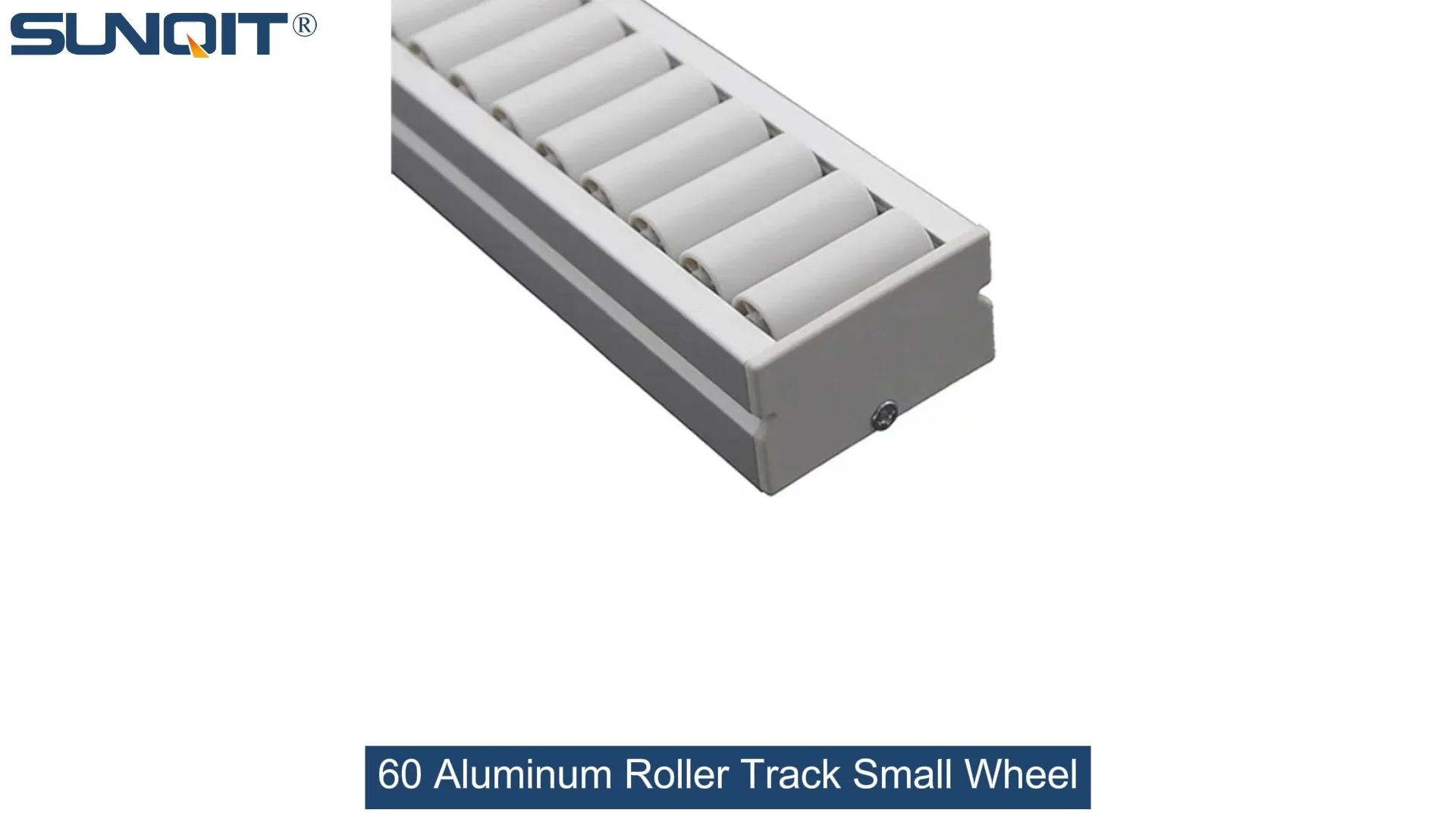
Modular system roller tracks aluminum gravity roller tracks are an excellent solution for transporting materials within industrial environments, warehouses and distribution centres.
Aerospace parts handling is a field where precision isn't just a nice-to-have—it's a non-negotiable necessity. Every component, from tiny circuit boards for satellites to intricate turbine blades for jet engines, demands extreme care. Even the smallest scratch or misalignment can lead to catastrophic failures, not to mention costly rework or replacements. That's why choosing the right equipment for moving these parts is critical. Among the many components that make aerospace handling efficient and safe, the 60 aluminum roller track small wheel stands out as a key player. Let's explore why this component is so essential and what precision standards it must meet to thrive in the aerospace industry.
What Is the 60 Aluminum Roller Track Small Wheel?
The 60 aluminum roller track small wheel is a compact, robust component designed to enable smooth, controlled movement of items along a track system. Crafted from high-grade aluminum alloy, it balances lightweight construction with impressive strength—two qualities that are paramount in aerospace applications. The "60" designation refers to its size specification, typically indicating a diameter of 60mm, making it ideal for handling smaller, more delicate aerospace components that require precise positioning. Unlike bulkier wheels, this small wheel fits into tight spaces, allowing for more flexible layout designs in assembly lines, inspection stations, and storage areas.
Precision Requirements for Aerospace Applications
Aerospace parts are engineered to tolerances that are often measured in microns. So, the equipment used to handle them must meet equally strict standards. Let's break down the key precision requirements for the 60 aluminum roller track small wheel:
1. Dimensional Accuracy
Every dimension of the wheel—from its diameter and thickness to the hole for the axle—must be exact. For the 60 aluminum roller track small wheel, the diameter tolerance is typically held to ±0.05mm. Why is this so important? If the wheel is even a hair too large, it won't fit into the track, causing jams. If it's too small, it will wobble as it rolls, leading to unstable movement of the aerospace part. This instability can result in misalignment during assembly or scratches on the part's surface. The axle hole also needs precise sizing to ensure the wheel spins freely without excessive play, which could cause vibration.
2. Surface Smoothness
The wheel's surface must be extremely smooth to minimize friction. Friction is the enemy here—it can scratch delicate aerospace parts, create jerky movement, or even generate static electricity (a big no-no for electronic components). The aluminum wheel is polished to a high finish, with a surface roughness (Ra) value of 0.8μm or lower. This level of smoothness ensures that parts glide along the track without resistance, reducing the risk of damage. Additionally, the smooth surface is easier to clean, which is crucial in aerospace environments where dust or debris can contaminate sensitive parts.
3. Load Capacity
While the wheel is small, it needs to support the weight of aerospace parts without deforming. The 60 aluminum roller track small wheel typically has a load capacity of 50kg per wheel. This may seem modest, but when multiple wheels are used together (like four wheels on a small cart), they can support heavier loads—up to 200kg or more. For example, a satellite's communication module might weigh 150kg, so using three wheels (each 50kg capacity) would provide a safe margin. The wheel's aluminum construction ensures it doesn't bend under load, maintaining its shape and performance over time.
4. Corrosion Resistance
Aerospace parts are often stored in controlled environments, but the equipment still needs to resist corrosion. Aluminum naturally forms a thin, protective oxide layer when exposed to air, making it resistant to rust and corrosion. This is a significant advantage over steel wheels, which require additional coatings (like zinc plating) to prevent rust. Even a small rust spot on a wheel can transfer to an aerospace part, leading to contamination or structural weakness. The aluminum wheel's corrosion resistance ensures it remains in top condition for years, reducing maintenance costs and downtime.
5. Compatibility with Other Components
The wheel must integrate seamlessly with other equipment like roller tracks, conveyor systems, and lean pipe workbenches. For instance, it should fit into standard aluminum profile tracks used in lean systems. The 60 aluminum roller track small wheel is designed to work with 20mm or 30mm wide tracks, which are common in aerospace facilities. This compatibility allows companies to easily upgrade their existing setups without having to replace all their equipment, saving time and money.

How It Fits Into Lean Systems for Aerospace
Lean manufacturing is a philosophy that focuses on reducing waste and improving efficiency—and it's a perfect fit for the aerospace industry, where every dollar and minute counts. The 60 aluminum roller track small wheel is a key component of lean solutions in aerospace parts handling. Let's see how it contributes:
Reducing Motion Waste
Motion waste refers to unnecessary movements by workers, like lifting heavy parts or reaching across long distances. The roller track wheels eliminate this waste by allowing parts to slide easily. For example, on a lean pipe workbench, workers can slide a component from one end to the other without lifting it, reducing fatigue and the risk of injury. This also speeds up the assembly process, as workers spend less time moving parts and more time working on them.
Improving Flow Efficiency
Conveyor systems equipped with the 60 aluminum roller track small wheel ensure parts move smoothly from one station to the next. This creates a continuous flow of work, reducing idle time and bottlenecks. In aerospace assembly lines, where each step depends on the previous one, a smooth flow is essential. For instance, a jet engine's compressor blade might move from the machining station to the inspection station via a conveyor, arriving exactly when the inspector is ready to check it. This eliminates waiting time and keeps the line moving efficiently.
Enhancing Flexibility
Lean systems are all about adaptability, and the aluminum roller track wheel supports this. The lightweight design of the wheel makes it easy to reconfigure tracks and workbenches as production needs change. For example, if a company switches from assembling one type of satellite component to another, they can quickly adjust the roller track layout to accommodate the new part. This flexibility is crucial in aerospace, where production runs are often small and customized.

Real-World Applications in Aerospace Parts Handling
Let's look at some specific ways the 60 aluminum roller track small wheel is used in aerospace:
1. Jet Engine Assembly
Jet engines are complex machines with thousands of parts. The 60 aluminum roller track small wheel is used to move components like fuel injectors and turbine blades along the assembly line. Each part is slid into position with precision, ensuring that every bolt is tightened correctly and every seal is properly installed. The smooth movement of the wheel reduces the risk of misalignment, which is critical for the engine's performance and safety.
2. Satellite Component Testing
Satellite components undergo rigorous testing, including vibration, temperature, and vacuum tests. The roller track wheels are used to move these components into and out of test chambers. The smooth movement ensures that the components aren't damaged during transfer, and the corrosion-resistant aluminum holds up well in the extreme conditions of the test chambers. For example, a satellite's solar panel might be moved into a thermal vacuum chamber using a cart equipped with 60 aluminum roller track small wheels, ensuring it's positioned correctly for testing.
3. Aerospace Warehouse Storage
In aerospace warehouses, parts are stored in racks that use roller tracks. The 60 aluminum roller track small wheel allows parts to slide down to the picking area, ensuring first-in-first-out (FIFO) inventory management. This is important because aerospace parts have strict shelf lives—using FIFO reduces waste from expired parts. For instance, small fasteners used in rocket construction are stored in fluent racks, and when a worker needs them, they slide down to the front of the rack, ready to be picked.
4. Electronic Component Handling
Electronic components for aerospace (like circuit boards for navigation systems) are extremely sensitive to static electricity and physical damage. The 60 aluminum roller track small wheel is used in ESD (electrostatic discharge) workstations to move these components. The aluminum wheel is conductive, which helps dissipate static electricity, protecting the components from damage. Additionally, the smooth movement ensures that the delicate circuit boards aren't scratched or bent during handling.

Comparing the 60 Aluminum Roller Track Small Wheel to Other Options
To understand why this wheel is the best choice for aerospace, let's compare it to other common options:
| Feature | 60 Aluminum Roller Track Small Wheel | Steel Wheel | Plastic Wheel |
|---|---|---|---|
| Dimensional Tolerance | ±0.05mm | ±0.1mm | ±0.2mm |
| Surface Roughness (Ra) | 0.8μm | 1.6μm | 3.2μm |
| Load Capacity per Wheel | 50kg | 100kg | 20kg |
| Corrosion Resistance | High (natural oxide layer) | Low (needs coating) | Medium (varies by material) |
| Weight | Light (100g) | Heavy (200g) | Light (50g) |
| Static Dissipation | Yes (conductive) | Yes (conductive) | No (insulative) |
| Temperature Resistance | -40°C to 150°C | -50°C to 200°C | -20°C to 80°C |
| Cost | Moderate ($5 per wheel) | High ($10 per wheel) | Low ($2 per wheel) |
As the table shows, the 60 aluminum roller track small wheel offers the best balance of precision, durability, and cost for aerospace applications. While steel wheels are stronger, they're heavier and more prone to corrosion. Plastic wheels are cheap but lack the precision and load capacity needed for aerospace parts. The aluminum wheel hits the sweet spot—lightweight, precise, corrosion-resistant, and affordable.
Benefits of Using the 60 Aluminum Roller Track Small Wheel
Let's summarize the key benefits of this component for aerospace parts handling:
1. Protects Delicate Parts
The wheel's precision and smoothness ensure that aerospace parts are moved without scratches, dents, or misalignment. This reduces the risk of costly damages and rework, which is critical in an industry where parts can cost thousands of dollars each.
2. Improves Efficiency
Smooth movement reduces the time spent on handling parts, allowing workers to focus on more value-added tasks. This increases overall production efficiency and helps meet tight aerospace deadlines.
3. Reduces Maintenance Costs
The aluminum wheel's corrosion resistance and durability mean it lasts longer than other options. This reduces the need for frequent replacements, saving time and money on maintenance.
4. Enhances Safety
The wheel's smooth movement and load capacity reduce the risk of accidents. Workers don't have to lift heavy parts, which reduces the chance of back injuries. Additionally, the conductive aluminum helps dissipate static electricity, protecting workers and components from ESD damage.
5. Supports Lean Manufacturing
The wheel integrates seamlessly into lean systems, helping aerospace companies reduce waste, improve flow, and enhance flexibility. This aligns with the industry's focus on efficiency and continuous improvement.
Conclusion
The 60 aluminum roller track small wheel is more than just a component—it's a critical tool that helps aerospace companies maintain the high standards of precision and safety they need. Its strict adherence to dimensional accuracy, surface smoothness, and load capacity makes it ideal for handling the most delicate aerospace parts. Whether it's used in assembly lines, testing facilities, or warehouses, this wheel delivers the performance and reliability that aerospace demands. By choosing the 60 aluminum roller track small wheel, aerospace companies can reduce costs, improve efficiency, and ensure the quality of their final products. It's a small component with a big impact on the aerospace industry.