- Company Articles
- Products and Technology
- Product knowledge
- 60 Aluminum Roller Track Small Wheel vs. Plastic: Key Performance Differences

60 Aluminum Roller Track Small Wheel vs. Plastic: Key Performance Differences
Related Product
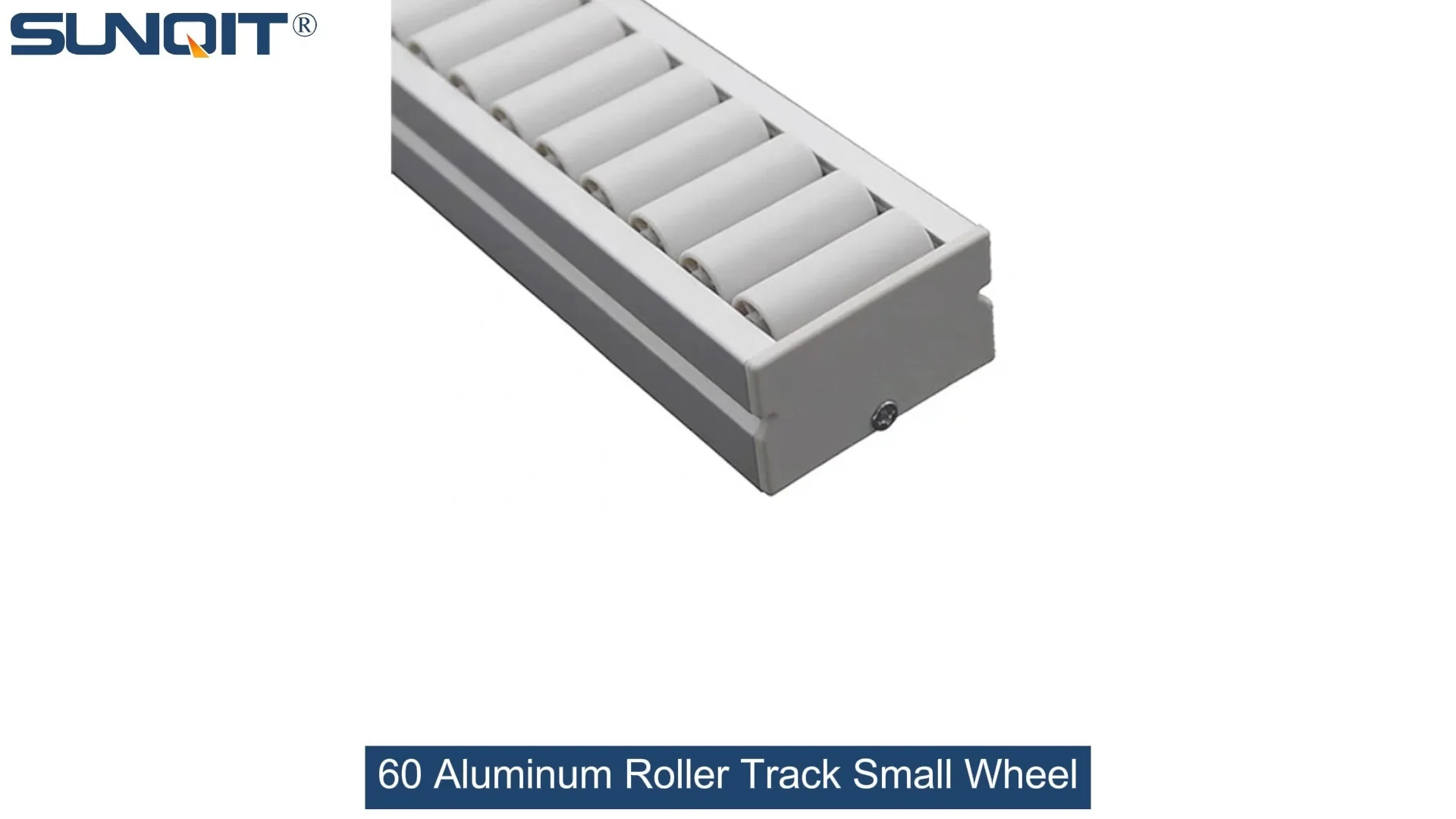
60 Aluminum Roller Track Small Wheel
Modular system roller tracks aluminum gravity roller tracks are an excellent solution for transporting materials within industrial environments, warehouses and distribution centres.
Roller tracks are the backbone of efficient material handling in modern manufacturing and logistics operations. Whether integrated into flow racks, conveyors, or lean solutions, they enable seamless movement of parts and products across assembly lines, warehouses, and distribution centers. Choosing between 60 aluminum roller track small wheels and plastic roller tracks—like the yellow plastic roller track guide rail—is a critical decision that impacts operational efficiency, cost, and long-term performance. This article dives deep into their key differences, helping you select the right option for your specific industry needs.
What Are 60 Aluminum Roller Track Small Wheels and Plastic Roller Tracks?
The 60 aluminum roller track small wheel is a precision-engineered component designed for heavy-duty industrial use. Made from high-grade aluminum alloy, these tracks feature small, smooth-rotating wheels spaced evenly to support continuous movement of items. They are a core part of lean systems, enabling flexible production setups that adapt to changing manufacturing needs.
Plastic roller tracks, such as the yellow plastic roller track guide rail, are lightweight alternatives crafted from durable polymers like nylon or PVC. They are often chosen for their low initial cost and quiet operation, making them popular in industries where noise reduction and lightweight handling are priorities.
Durability Comparison
Durability is a make-or-break factor for roller tracks, as they endure constant wear from moving items, environmental stressors, and human interaction.
60 Aluminum Roller Track Small Wheel Durability
Aluminum's inherent properties—corrosion resistance, impact strength, and thermal stability—make these tracks ideal for harsh industrial environments. The 60 aluminum roller track small wheels resist rust even in moisture-rich settings like medical device manufacturing or automotive parts washing stations. Tests show they maintain structural integrity at temperatures up to 150°C, suitable for industries like plastic injection molding where hot parts are transported. With regular use, their lifespan ranges from 5 to 10 years, reducing the need for frequent replacements.
Plastic Roller Track Durability
Plastic tracks are less robust. Nylon and PVC materials degrade under UV exposure, limiting outdoor use. High temperatures (above 80°C) cause warping or melting, excluding them from metalworking or high-heat manufacturing. Sharp objects easily scratch plastic surfaces, increasing friction and jamming risks in 3C assembly lines. Their average lifespan is 2-3 years, leading to more frequent replacements and operational disruptions.
Key Takeaway: Aluminum tracks outlast plastic in industrial settings, offering reliable performance over decades.

Load Capacity
Load capacity directly determines the types of items you can move, making it critical for production efficiency.
60 Aluminum Roller Track Small Wheel Load Capacity
These aluminum tracks support 50-100 kg per meter, depending on wheel spacing. They handle heavy automotive parts (engine blocks, transmission components), large home appliances, and warehouse logistics items. In flow racks for car parts storage, aluminum tracks easily bear engine block weights without sagging, ensuring uninterrupted material flow.
Plastic Roller Track Load Capacity
Plastic tracks are limited to 10-30 kg per meter, suitable for small 3C assembly parts (phone screens, circuit boards) or lightweight medical tools. Using them for heavy items causes deformation, leading to jams. For example, plastic tracks in a conveyor line for metal components would sag, disrupting production.
Key Takeaway: Aluminum tracks are essential for heavy-load applications, while plastic suits light-item handling.

Friction & Smoothness of Movement
Smooth movement minimizes jams and optimizes production speed.
60 Aluminum Roller Track Small Wheel Performance
Aluminum rollers have low friction coefficients, enabling consistent movement even with heavy loads. Precision bearings reduce resistance, making them ideal for lean solutions in communication device assembly lines where speed is critical. Their non-porous surface resists debris accumulation, maintaining smoothness over time. In conveyors for automotive parts, aluminum tracks ensure parts move quickly without jams.
Plastic Roller Track Performance
Plastic rollers have higher friction, slowing movement of heavy items. However, they operate quietly, beneficial in medical facilities. Plastic surfaces absorb oils and chemicals, increasing friction in lubricated environments like 3C assembly lines. Scratches from sharp objects further reduce smoothness, requiring frequent cleaning.
Key Takeaway: Aluminum tracks offer superior smoothness for heavy loads; plastic excels in quiet, light-load settings.

Maintenance Requirements
Low maintenance reduces downtime and operational costs.
60 Aluminum Roller Track Small Wheel Maintenance
Aluminum tracks need minimal upkeep. Corrosion resistance eliminates rust removal. Monthly damp cloth cleaning removes dust, and occasional silicone oil lubrication keeps wheels rotating freely. Inspections are easy—bent wheels or damaged tracks are visible and repairable quickly. In warehouse flow racks, aluminum tracks save labor costs with minimal cleaning needs.
Plastic Roller Track Maintenance
Plastic tracks require weekly cleaning to remove debris and prevent scratches. They need replacement every 6-12 months in high-use areas. Moisture absorption leads to mold growth, a concern in medical device manufacturing. For example, plastic tracks in 3C assembly lines need frequent part replacements, increasing operational expenses.
Key Takeaway: Aluminum tracks are low-maintenance, ideal for busy industrial operations.
Cost-Effectiveness
Cost considerations include initial investment and long-term value.
Initial Cost
Aluminum tracks cost 2-3 times more upfront than plastic. For small businesses, plastic may seem attractive initially.
Long-Term Cost
Aluminum's 5-10 year lifespan makes it more cost-effective. Over 8 years, plastic tracks need 4 replacements (total cost exceeding aluminum). Maintenance costs for plastic (cleaning, replacements) add up. In lean solutions for automotive manufacturing, aluminum tracks deliver higher ROI through reduced downtime.
Key Takeaway: Aluminum tracks offer better long-term value despite higher initial costs.
Ideal Application Scenarios
60 Aluminum Roller Track Small Wheel Applications
- Automotive manufacturing: Moving engine blocks and transmission parts
- Warehousing logistics: Flow racks for heavy storage items
- Medical device manufacturing: Corrosion-resistant material handling
- Home appliance assembly: Conveyors for refrigerators and washing machines
Plastic Roller Track Applications
- 3C assembly: Small electronic parts like phone screens
- Lightweight medical devices: Syringes and small tools
- Noise-sensitive environments: Medical facilities and offices
- Temporary setups: Short-term events or project-based operations
Key Performance Comparison Table
| Feature | 60 Aluminum Roller Track Small Wheel | Plastic Roller Track |
|---|---|---|
| Durability | 5-10 years lifespan, corrosion-resistant, impact-resistant | 2-3 years lifespan, UV-sensitive, prone to wear |
| Load Capacity | 50-100 kg per meter | 10-30 kg per meter |
| Friction & Smoothness | Low friction, consistent movement for heavy loads | Higher friction, quiet operation for light loads |
| Maintenance | Minimal (monthly cleaning, occasional lubrication) | Frequent (weekly cleaning, regular replacements) |
| Cost-Effectiveness | Higher initial cost, better long-term value | Lower initial cost, higher long-term expenses |
| Ideal Applications | Automotive, warehousing, medical device manufacturing | 3C assembly, light medical tools, noise-sensitive areas |
Conclusion
Choosing between 60 aluminum roller track small wheels and plastic roller tracks depends on your operational needs. Aluminum tracks excel in durability, load capacity, and long-term cost-effectiveness, making them ideal for heavy industrial applications like automotive manufacturing and warehousing logistics. Plastic tracks are suitable for light-item handling in noise-sensitive environments like 3C assembly lines. By evaluating your load requirements, environment, and budget, you can select the right roller track to optimize your lean solution, flow rack, or conveyor system for maximum efficiency.