- Company Articles
- Products and Technology
- Application Cases
- 60 Aluminum Roller Track White in 3C Assembly Lines: Workflow Optimization Guide

60 Aluminum Roller Track White in 3C Assembly Lines: Workflow Optimization Guide
Related Product
60 Aluminum Roller Track White
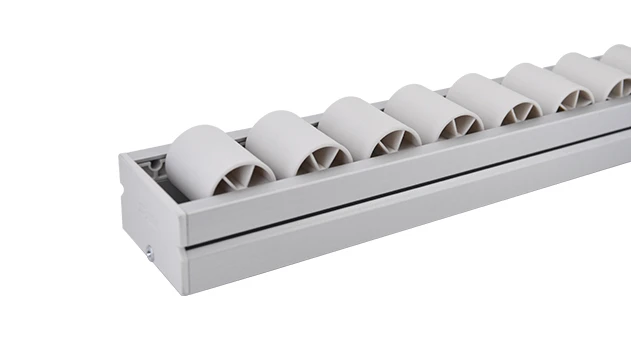
Modular system roller tracks aluminum gravity roller tracks are an excellent solution for transporting materials within industrial environments, warehouses and distribution centres.
60 Aluminum Roller Track White in 3C Assembly Lines: Workflow Optimization Guide
If you've ever stepped into a 3C assembly line—think smartphones, laptops, or smartwatches—you know the rhythm: fast-paced, precise, and unforgiving of even the smallest bottlenecks. Parts like microchips, battery cells, and camera lenses need to move smoothly from station to station, without delays or damage. But all too often, teams struggle with clunky material flow: workers reaching across messy workbenches, parts piling up at inspection stations, or fragile components getting scratched during manual transfers. That's where the 60 Aluminum Roller Track White comes in—an unsung hero that can turn chaotic workflows into streamlined, efficient processes.
What Is 60 Aluminum Roller Track White, Anyway?
Let's break it down simply. This track is a lean tool designed for 3C assembly lines (and beyond) to move materials with minimal friction. Made from high-quality aluminum alloy, it's lightweight but durable—perfect for handling the small, delicate parts common in 3C products. The white finish isn't just for looks: it's anti-static, which is critical for 3C assembly where static electricity can fry sensitive electronics like circuit boards.
The "60" refers to the profile width (60mm), which strikes a balance between stability and flexibility. The rollers are smooth, rust-resistant, and designed to spin freely—so bins of screws or trays of camera modules glide across without sticking. And since it's aluminum, you can cut it to any length, adjust angles, or reconfigure it whenever your line changes (which happens often in 3C, with new models launching every few months).
| Feature | 60 Aluminum Roller Track White | Standard Steel Track | Plastic Track |
|---|---|---|---|
| Material | Anti-static aluminum alloy | Galvanized steel | PVC plastic |
| ESD Safety | Yes (critical for 3C) | No (unless specially coated) | Rarely |
| Durability | High (rust-proof, scratch-resistant) | Medium (prone to rust over time) | Low (easily cracked) |
| Maintenance | Low (wipe clean, occasional lubrication) | Medium (needs rust prevention) | High (replace often) |
| Flexibility | Excellent (cut to length, adjust angles) | Limited (hard to reconfigure) | Minimal (fixed size) |
How It Fits Into 3C Assembly Workflows
The 60 Aluminum Roller Track White isn't a standalone tool—it works best when integrated with other lean systems. Let's look at three key ways it enhances 3C assembly:
1. Flow Racks: First-In-First-Out (FIFO) Made Easy
Flow racks are a staple in 3C assembly for storing parts like screws, connectors, or battery cells. By adding the 60 Aluminum Roller Track White to your flow rack, you create a gravity-fed system where bins slide forward as the front one is emptied. This means workers always grab the oldest parts first (FIFO), reducing waste from expired components (yes, even small parts have shelf lives!). For example, a smartphone assembly line using this setup for battery bins saw a 12% drop in wasted batteries in just one month.
2. Conveyors: Bridging Gaps Between Stations
Conveyors are great for moving large batches, but they don't always reach every station. The 60 Aluminum Roller Track White fills those gaps. Imagine a laptop assembly line: the motherboard needs to go from the soldering station to the testing station. Instead of having a worker carry it (risking static damage), you can connect the conveyor to the testing station with this track. The motherboard slides across smoothly, saving time and reducing defects.
3. Aluminum Profile Accessories: Customize to Your Line
One of the best things about this track is its compatibility with aluminum profile accessories. Need to angle the track to let parts slide down? Use a 45-degree connector. Want to stop parts from falling off the end? Add an aluminum end cap. These small adjustments make the track fit your line perfectly—not the other way around. For example, a smartwatch line used these accessories to create a curved track that guided watch cases around a corner, eliminating the need for a separate conveyor section.
Step-by-Step Guide to Optimize Your 3C Line With This Track
Ready to put the 60 Aluminum Roller Track White to work? Follow these steps to optimize your workflow:
Step 1: Find Your Bottlenecks
Before you install anything, walk your line and note where things get stuck. Ask your workers: Where do you waste the most time? Which parts are hardest to move? Common bottlenecks include:
• Workers walking more than 2 steps to grab parts.
• Parts piling up at inspection stations.
• Fragile components getting damaged during transfers.
Jot these down—they're your target areas.
• Workers walking more than 2 steps to grab parts.
• Parts piling up at inspection stations.
• Fragile components getting damaged during transfers.
Jot these down—they're your target areas.
Step 2: Design Your Layout
Now, plan where to place the track. For example:
• Add tracks to flow racks next to assembly stations so parts are within arm's reach.
• Use tracks to connect soldering stations to testing stations (angle them slightly for gravity flow).
• Install tracks under workbenches to slide empty bins back to the storage area.
Remember: Keep it simple. The goal is to reduce movement, not add complexity.
• Add tracks to flow racks next to assembly stations so parts are within arm's reach.
• Use tracks to connect soldering stations to testing stations (angle them slightly for gravity flow).
• Install tracks under workbenches to slide empty bins back to the storage area.
Remember: Keep it simple. The goal is to reduce movement, not add complexity.
Step 3: Install & Integrate
Installing the track is straightforward—no heavy tools needed. Use aluminum profile accessories like connectors and end caps to attach it to your existing flow racks or workbenches. For example, if you're adding it to a flow rack, use a T-slot connector to secure the track to the rack's frame. Make sure the track is level (or slightly angled) so parts slide smoothly. And don't forget to test it with actual parts—you want to ensure bins of screws or trays of lenses move without sticking.
Step 4: Test & Iterate (Lean Solution in Action)
Lean isn't a one-time fix—it's continuous improvement. After installing the track, ask your team for feedback: Is it easier to get parts? Are there still delays? For example, a smartphone line found that their track was too steep, causing battery bins to slide too fast. They adjusted the angle using a 30-degree connector, and the problem was solved. Small tweaks like this make all the difference.
Real-World Case Study: How a Laptop Line Boosted Efficiency by 18%
Let's take a concrete example. A laptop manufacturer in Shenzhen was struggling with their motherboard assembly line. The cycle time per unit was 42 seconds, and the defect rate for static damage was 0.7%. They decided to try the 60 Aluminum Roller Track White. Here's what happened:
• They added tracks to flow racks next to the soldering station, so workers didn't have to reach across the bench for capacitors and resistors.
• They connected the soldering station to the testing station with a track, eliminating manual transfers.
• They used aluminum profile accessories to add anti-slip stops at the end of each track to prevent motherboards from falling off.
The results? Cycle time dropped to 34.5 seconds (18% improvement), and static defects fell to 0.15%. The team saved over 2 hours of production time per day—time they used to increase output by 10%.
• They connected the soldering station to the testing station with a track, eliminating manual transfers.
• They used aluminum profile accessories to add anti-slip stops at the end of each track to prevent motherboards from falling off.
The results? Cycle time dropped to 34.5 seconds (18% improvement), and static defects fell to 0.15%. The team saved over 2 hours of production time per day—time they used to increase output by 10%.
Pro Maintenance Tips
To keep your track working well:
1. Clean the rollers weekly with a soft cloth and mild detergent (avoid harsh chemicals—they damage the anti-static coating).
2. Lubricate the rollers once a month with silicone-based lubricant (don't use oil—it attracts dust).
3. Check connectors and end caps every two weeks to make sure they're tight.
4. replace worn rollers immediately—they can cause parts to stick or scratch.
1. Clean the rollers weekly with a soft cloth and mild detergent (avoid harsh chemicals—they damage the anti-static coating).
2. Lubricate the rollers once a month with silicone-based lubricant (don't use oil—it attracts dust).
3. Check connectors and end caps every two weeks to make sure they're tight.
4. replace worn rollers immediately—they can cause parts to stick or scratch.
Why This Track Is a Game-Changer for 3C Assembly
At the end of the day, the 60 Aluminum Roller Track White is more than just a piece of metal. It's a tool that helps teams work smarter, not harder. It reduces waste (time, parts, defects), improves safety (no more carrying heavy bins), and adapts to your changing needs (thanks to aluminum profile accessories). For 3C assembly lines where every second counts, that's a game-changer.
So if you're tired of bottlenecks slowing down your line, give this track a try. It might not be the flashiest tool in your lean arsenal, but it's one that will deliver results—one smooth slide at a time.