- Company Articles
- Products and Technology
- Product knowledge
- 60 Aluminum Roller Track Yellow Dimensions: Length, Width & Thickness Guide

60 Aluminum Roller Track Yellow Dimensions: Length, Width & Thickness Guide
Related Product
60 Aluminum Roller Track Yellow
Modular syetem roller tracks aluminum gravity roller tracks are an excellent solution for transporting materials within industrial environments, warehouses and distribution centres.
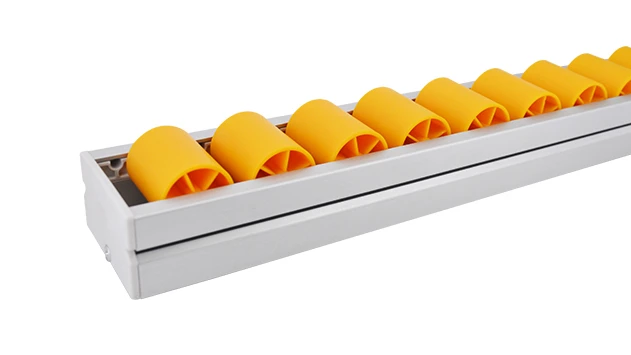
If you've ever worked in a warehouse, production line, or even a small workshop, you've likely come across roller tracks—those smooth, metal rails that let boxes, parts, and products glide effortlessly from one place to another. Today, we're diving deep into one of the most popular options out there: the 60 Aluminum Roller Track Yellow. Whether you're building a flow rack for your storage area, integrating it into a conveyor system, or setting up a lean pipe workbench for assembly, knowing its exact dimensions is key to getting your setup right. This guide will cover everything you need to know about length, width, thickness, and how to use this track to boost efficiency in your lean system.
1. What Is the 60 Aluminum Roller Track Yellow?
The 60 Aluminum Roller Track Yellow is a versatile component used in lean manufacturing and warehouse logistics. Made from high-quality aluminum, it's designed to be lightweight yet durable, with a bright yellow finish that makes it easy to spot in busy environments. This track is a staple in systems where smooth material flow is critical—think picking stations, assembly lines, and storage racks. Its name comes from the 60mm width of the roller surface, which is the part that comes into contact with your products. But there's more to it than just that number; let's break down the details.
2. Core Dimensions Breakdown
When choosing a roller track, the three most important dimensions to consider are length, width, and thickness. Each plays a role in how the track performs, how much weight it can hold, and where it can be installed. Below is a detailed breakdown of each dimension, along with standard options and customization possibilities.
| Dimension Type | Standard Options | Customization Possibilities | Key Notes |
|---|---|---|---|
| Length | 1000mm, 1200mm, 1500mm, 2000mm | Can be cut to any length (max 3000mm for most suppliers) | Longer lengths may require additional support to prevent sagging under heavy loads. |
| Width | Roller surface width: 60mm; Overall track width: 80mm (including side rails) | Side rail width can be adjusted for specific needs (rare, but possible) | The 60mm roller surface is ideal for medium-sized boxes and parts (e.g., 3C components, small medical devices). |
| Thickness | 1.2mm, 1.5mm, 2.0mm (aluminum profile thickness) | Thicker profiles (up to 2.5mm) available for heavy-duty applications | Thickness directly impacts load capacity: thicker profiles hold more weight without bending. |
| Roller Diameter | 12mm (standard) | 15mm option for larger products | Smaller rollers are better for lighter items, while larger ones handle heavier loads more smoothly. |
| Roller Spacing | 30mm (distance between rollers) | Custom spacing (25mm or 35mm) for specific product sizes | Closer spacing is better for small, lightweight items to prevent them from falling through. |
2.1 Length
The length of your roller track depends on the space you have and the workflow you're trying to create. Standard lengths like 1000mm or 1200mm are great for small workstations or tight spaces, while longer lengths (1500mm to 2000mm) are better for larger racks or conveyor systems. If your space requires a non-standard length, most suppliers offer cutting services—just make sure to measure twice before ordering to avoid mistakes. For example, if you're building a flow rack for your 3C assembly line, a 1500mm track might be perfect for holding a row of component boxes, allowing workers to grab parts without reaching too far.
2.2 Width
The width of the 60 Aluminum Roller Track Yellow is a critical factor in product compatibility. The 60mm roller surface is designed to accommodate products with a base width of at least 50mm—this ensures they don't tip over or get stuck. The overall width of the track (including side rails) is usually 80mm, which means you need to leave enough space in your frame to fit it. For example, if you're attaching the track to a lean pipe workbench, you'll need to make sure the workbench's frame has enough clearance for the 80mm width. The bright yellow finish also helps here—workers can quickly see where the track ends, reducing the risk of products falling off the side.
2.3 Thickness
The thickness of the aluminum profile determines how much weight the track can hold. Let's break down the standard thickness options:
-
1.2mm Thickness:
This is the lightest option, ideal for small, lightweight items like electronic components or small parts. It can hold up to 50kg per meter of track, making it perfect for pick-and-pack stations or small flow racks.
-
1.5mm Thickness:
A middle-ground option that balances weight and durability. It can hold up to 75kg per meter, so it's great for medium-sized boxes or parts used in medical device assembly. This is the most popular choice for most users, as it works well in a wide range of applications.
-
2.0mm Thickness:
The heavy-duty option. It can hold up to 100kg per meter, making it suitable for larger products like automotive parts or heavy boxes in a warehouse. If you're integrating the track into a conveyor system that handles heavy loads, this is the thickness you should go for.
When choosing thickness, think about the average weight of your products and how often the track will be used. If you're unsure, it's better to go with a slightly thicker profile—you don't want your track to bend or break under load.
3. Compatibility with Other Lean System Components
The 60 Aluminum Roller Track Yellow doesn't work in isolation—it's part of a larger lean system. To get the most out of it, you need to make sure it's compatible with the other components you're using. Let's look at some key components that pair well with this track:
-
Roller Track Connectors:
These small but essential parts let you attach the track to frames, racks, or other tracks. They come in various types—like end connectors, corner connectors, and T-connectors—so you can build custom layouts. For example, if you're building a flow rack, you'll use connectors to attach the track to the rack's vertical posts. Make sure to choose connectors that are designed for 60mm tracks to ensure a secure fit.
-
Flow Racks:
The 60 Aluminum Roller Track Yellow is a core component of flow racks. These racks use gravity to move products from the back to the front, so workers always pick from the most accessible item. A typical flow rack setup uses multiple tracks side by side, each holding a different product. The yellow track is easy to distinguish, so workers can quickly find the parts they need.
-
Conveyor Systems:
If you're building a conveyor system for your production line, this track can be used as part of the belt or roller conveyor. It's lightweight, so it doesn't add too much weight to the system, and the yellow finish makes it easy to spot any jams or issues. For example, in a 3C assembly line, the track can be used to move phone cases from the storage area to the assembly station.
-
Lean Pipe Workbenches:
Pairing the track with a lean pipe workbench creates a seamless workflow. You can attach the track to the side of the workbench, so parts slide directly from the rack to the work surface. This reduces the need for workers to lift or carry parts, saving time and reducing fatigue. For example, in a medical device workshop, the track can be used to move small tools from the storage rack to the assembly bench.
-
Side Guides:
To prevent products from falling off the track, you can add side guides like the plastic roller track guide rail yellow or grey. These guides attach to the sides of the track and keep products centered. They're especially useful in busy environments where products might be pushed or bumped.
4. How to Choose the Right Dimensions for Your Needs
Choosing the right dimensions for your 60 Aluminum Roller Track Yellow isn't a one-size-fits-all process. It depends on your specific application, the products you're handling, and the space you have. Here are some steps to help you make the right choice:
Step1: Assess Your Product Size & Weight
First, measure the size and weight of the products you'll be using on the track. For example, if you're handling small 3C components that weigh less than 5kg each, a 1.2mm thick track with a 1000mm length should work. If you're handling heavy automotive parts that weigh 20kg each, you'll need a 2.0mm thick track with a longer length (like 1500mm) to distribute the weight evenly.
Step2: Measure Your Space
Next, measure the space where you'll install the track. If you're building a flow rack in a small warehouse, you might need shorter lengths (like 1000mm) to fit the space. If you're integrating the track into a long conveyor system, you'll need longer lengths (like 2000mm) to cover the distance. Don't forget to leave space for connectors and other components.
Step3: Consider Your Workflow
Think about how the track will fit into your workflow. For example, if you're setting up a pick-and-pack station, you'll want the track to be at a height that's comfortable for workers to reach. If you're building a conveyor system, the track should be aligned with other components to ensure smooth flow. The yellow finish of the track can help here—workers can quickly see the path of the products, reducing errors.
Step4: Consult with a Supplier
If you're still unsure, don't hesitate to consult with a supplier. They can help you choose the right dimensions based on your needs and even provide custom cuts if necessary. Most suppliers have experience with different industries, so they can give you advice tailored to your specific application (like 3C assembly or medical device manufacturing).
5. Installation Tips for Beginners
Installing the 60 Aluminum Roller Track Yellow is relatively easy, but there are some tips to make sure it goes smoothly. Here are some steps to follow:
Tip1: Gather the Right Tools
You'll need a few basic tools: an Allen wrench (for connectors), a tape measure (to check dimensions), a level (to ensure the track is straight), and a screwdriver (for any additional fasteners). If you're cutting the track to a custom length, you'll also need a metal saw or a cutting tool designed for aluminum.
Tip2: Align the Track Properly
Before you attach the track, make sure it's aligned correctly. Use a level to ensure it's straight—if it's tilted, products might not glide smoothly. For flow racks, the track should be tilted slightly downward (about 5 degrees) to use gravity to move products. For conveyor systems, the track should be level to keep products moving at a steady pace.
Tip3: Secure the Track with Connectors
Use roller track connectors to attach the track to your frame or rack. Make sure the connectors are tight—loose connectors can cause the track to wobble, leading to products getting stuck or falling off. For longer tracks, add additional connectors every 500mm to ensure stability.
Tip4: Test the Track
Once the track is installed, test it with your products. Place a few items on the track and see how they glide. If they get stuck, check the alignment or the rollers—maybe some debris is blocking them. If they move too fast, adjust the tilt (for flow racks) or add a brake (for conveyor systems).
Tip5: Add Side Guides if Needed
If your products are prone to falling off the track, add side guides. These can be plastic or metal, and they attach to the sides of the track. The plastic roller track guide rail yellow is a popular choice—it matches the track's color and is durable enough to handle daily use.
6. Maintenance Guide
To keep your 60 Aluminum Roller Track Yellow working well for years, you need to perform regular maintenance. Here are some simple steps to follow:
-
Clean Regularly:
Dust and debris can build up on the rollers, causing products to stick. Use a dry cloth or a brush to clean the track every week. For stubborn dirt, use a mild detergent and water—just make sure to dry the track thoroughly to prevent rust.
-
Lubricate Rollers:
Every 3-6 months, lubricate the rollers with a light oil (like silicone oil). This keeps them moving smoothly and prevents wear and tear. Avoid using heavy oils—they can attract dust and make the problem worse.
-
Check Connectors:
Every month, check the connectors to make sure they're tight. Loose connectors can cause the track to wobble, so tighten them if necessary. If a connector is damaged, replace it immediately to prevent accidents.
-
replace Damaged Rollers:
If a roller is bent or broken, replace it right away. A damaged roller can cause products to get stuck or fall off the track. Most suppliers sell replacement rollers, so you don't have to replace the entire track.
-
Inspect the Track:
Every 6 months, inspect the track for signs of wear and tear—like dents, scratches, or bending. If the track is bent, it might need to be replaced. For minor scratches, you can touch up the yellow finish with paint to prevent rust.
7. Real-World Applications
The 60 Aluminum Roller Track Yellow is used in a wide range of industries. Let's look at some real-world examples to see how it's applied:
-
3C Assembly:
A smartphone manufacturer uses the track in their assembly line. The track is integrated into a conveyor system that moves phone cases from the storage area to the assembly station. The yellow finish makes it easy for workers to see the path of the cases, reducing errors. The 1.5mm thickness is perfect for the lightweight cases, and the 1500mm length covers the distance between the storage and assembly areas.
-
Medical Device Manufacturing:
A medical device company uses the track in their flow racks. The racks hold small parts like syringes and catheters, and the track allows workers to pick parts without reaching into the back of the rack. The 1.2mm thickness is ideal for the lightweight parts, and the yellow finish helps workers quickly find the parts they need.
-
Warehouse Logistics:
A large warehouse uses the track in their pick-and-pack stations. The track is attached to a lean pipe workbench, so workers can slide boxes from the rack to the packing table. The 2.0mm thickness handles the heavy boxes, and the 2000mm length covers the entire length of the workbench. The yellow finish makes it easy to spot the track in the busy warehouse.
-
Automotive Parts Manufacturing:
An automotive company uses the track in their conveyor system. The track moves engine parts from the machining area to the assembly line. The 2.0mm thickness handles the heavy parts, and the 1500mm length is perfect for the conveyor's layout. The yellow finish helps workers quickly identify any jams in the system.
8. Frequently Asked Questions
Let's answer some of the most common questions about the 60 Aluminum Roller Track Yellow:
Q: Can I cut the track to a custom length?
A: Yes! Most suppliers offer custom cutting services, or you can cut it yourself with a metal saw. Just make sure to measure the length accurately before cutting. For longer lengths (over 2000mm), you may need to add additional support to prevent sagging.
Q: What is the maximum load capacity of the track?
A: The load capacity depends on the thickness of the profile. A 1.2mm track can hold up to 50kg per meter, a 1.5mm track up to 75kg per meter, and a 2.0mm track up to 100kg per meter. Always check the load capacity before using the track for heavy items.
Q: Is the yellow finish durable?
A: Yes! The yellow finish is a powder coat that's resistant to scratches and wear. It's designed to last for years, even in busy environments. If the finish gets scratched, you can touch it up with paint to prevent rust.
Q: Can I use this track outdoors?
A: The track is made from aluminum, which is resistant to rust, but the yellow finish may fade over time if exposed to direct sunlight. If you need to use it outdoors, we recommend choosing a track with a UV-resistant finish or covering it with a shelter.
Q: Is the track compatible with other roller track accessories?
A: Absolutely! The 60 Aluminum Roller Track Yellow works with a wide range of accessories, including roller track connectors, side guides, end stops, and brake pads. Just make sure to choose accessories that are designed for 60mm tracks.
Q: How long does the track last?
A: With proper maintenance, the track can last for 5-10 years. Regular cleaning, lubrication, and inspection will help extend its lifespan. If you notice any signs of wear and tear (like bending or dents), replace the track immediately to prevent accidents.
9. Conclusion
The 60 Aluminum Roller Track Yellow is a versatile, durable component that can boost efficiency in any lean system. Whether you're building a flow rack, integrating it into a conveyor system, or setting up a lean pipe workbench, knowing its dimensions is key to getting your setup right. From length and width to thickness, each dimension plays a role in how the track performs. By following the tips in this guide, you can choose the right track for your needs and install it properly to get the most out of it. Remember to maintain the track regularly to keep it working smoothly for years to come.
If you're looking for a reliable supplier of the 60 Aluminum Roller Track Yellow, make sure to choose one that offers high-quality products and custom solutions. A good supplier will help you choose the right dimensions and provide support throughout the installation process. With the right track and setup, you can create a smooth, efficient workflow that saves time and reduces errors in your production or warehouse operations.