- Company Articles
- Products and Technology
- Product knowledge
- 60 Aluminum Roller Track Yellow vs. Custom Colors: Availability & Use Cases

60 Aluminum Roller Track Yellow vs. Custom Colors: Availability & Use Cases
Related Product
60 Aluminum Roller Track Yellow
Modular syetem roller tracks aluminum gravity roller tracks are an excellent solution for transporting materials within industrial environments, warehouses and distribution centres.
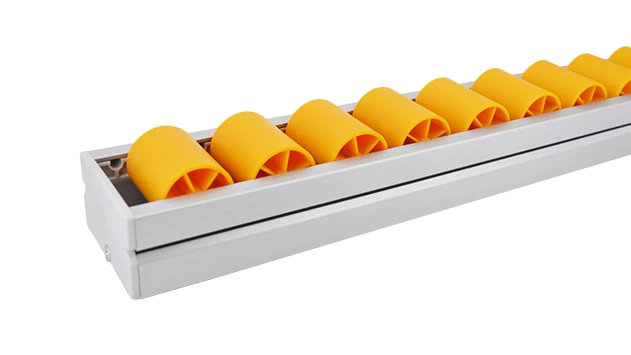
Walk through any busy manufacturing floor or warehouse, and you'll spot bright yellow roller tracks guiding parts from station to station. They're hard to miss—and for good reason: yellow is a universal signal for safety and efficiency in lean systems. But what if your operation needs something more tailored? Like a color that aligns with your brand, separates workflow zones, or meets industry-specific rules? That's where custom colors come in. Today, we're breaking down the 60 aluminum roller track—focusing on yellow vs. custom options—to help you pick the best fit for your needs.
What Is 60 Aluminum Roller Track?
The 60 aluminum roller track is a workhorse in lean manufacturing and warehousing. Crafted from durable aluminum extrusion profile (a core material in many lean pipe systems), it's built to handle medium-to-heavy loads smoothly. You'll find it in flow racks, conveyors, and flexible production lines—all key offerings from top flow rack suppliers like szsunqit.com. The "60" refers to its width, making it perfect for standard bins and boxes used in 3C assembly, automotive, and medical device manufacturing.
This track isn't just about moving parts—it's about optimizing workflow. It reduces bottlenecks, cuts down on manual handling, and keeps materials flowing exactly where they need to be. For any operation looking to adopt lean principles, the 60 aluminum roller track is a foundational piece.
Why Yellow Is the Go-To Standard
Yellow isn't a random choice—it's a strategic one. Here's why it's the most popular color for 60 aluminum roller tracks:
- Visibility: Yellow stands out against most backgrounds, so workers can easily spot workflow paths and avoid collisions. In lean solution design, visibility equals efficiency—yellow tracks keep materials moving without delays.
- Safety Compliance: Many OSHA and international safety standards recommend bright colors for high-traffic areas. Yellow warns workers of moving parts (like near conveyor belts) and helps prevent accidents.
- Availability: As a standard color, yellow tracks are almost always in stock. That means shorter lead times (1-3 business days) and lower minimum order quantities (MOQs) compared to custom colors.
- Cost-Effective: Since yellow is mass-produced, it's cheaper than custom colors. This makes it ideal for small businesses or operations with tight budgets.
Example: A 3C assembly line uses yellow 60 roller tracks on flow racks to deliver components to workstations. The bright color ensures that parts arrive on time, reducing downtime and boosting productivity. Conveyor suppliers often recommend yellow for standard systems because it's compatible with most setups and easy to install.

Custom Colors: When Standard Isn't Enough
While yellow works for most cases, custom colors are a game-changer for specialized operations. Here are scenarios where you should consider them:
- Brand Alignment: If your company wants to reinforce its identity, custom colors matching your logo (like red for a sports car brand or blue for a tech company) can make your facility feel cohesive.
- Zone Differentiation: Use different colors to separate zones—e.g., green for quality control, red for defective parts, or grey for bulk storage. This reduces errors and speeds up workflow.
- Industry-Specific Rules: Medical device manufacturers might choose white or grey tracks (they don't show dirt easily). Electronics companies may opt for black tracks to meet ESD workstation safety standards.
- Regulatory Compliance: Some industries require specific colors for safety or hygiene. For example, food processing plants might need stainless steel tracks with custom food-safe colors.
Available custom colors (per szsunqit.com) include grey, green, white, and black. Keep in mind: custom colors usually have longer lead times (7-14 days) and higher MOQs. But for operations that need them, the benefits far outweigh the costs.

Availability & Comparison Table
| Color Type | Lead Time | MOQ | Cost Range | Key Use Cases | Availability |
|---|---|---|---|---|---|
| Yellow (Standard) | 1-3 business days | 10 units | Low to Medium | Safety zones, high-traffic flow, general warehousing, 3C assembly | In stock (most flow rack suppliers) |
| Custom (Grey/Green/White/Black) | 7-14 business days | 50+ units | Medium to High | Brand alignment, zone differentiation, ESD workstations, medical clean rooms | Made to order (check with supplier) |
Practical Use Cases Deep Dive
1. 3C Assembly Line
A 3C assembly line (making smartphones, tablets) uses yellow 60 roller tracks for high-volume flow. The bright color ensures components reach ESD workstations quickly. For ESD-sensitive zones (where static can damage parts), they use custom black tracks. This mix keeps the line efficient and compliant with ESD standards.
2. Medical Device Warehouse
A medical device warehouse needs strict cleanliness. They use custom white 60 tracks for sterile product zones (white doesn't show dust). For fast-moving items (syringes, bandages), they use yellow tracks to help pickers find items quickly. This setup meets regulatory requirements and keeps operations smooth.
3. Automotive Parts Manufacturing
An automotive parts maker uses custom red and blue tracks to separate engine parts (red) and interior components (blue). Yellow tracks are used near conveyor belts to warn workers of moving parts. This zone differentiation reduces errors and improves workflow efficiency.
4. E-commerce Warehousing
An e-commerce warehouse handles thousands of orders daily. They use yellow tracks for fast-moving items (clothing, electronics) and custom grey tracks for bulk storage. This combination keeps the warehouse organized and reduces picking time during peak seasons.
How to Choose Between Yellow & Custom
To make the right choice, consider these factors:
- Workflow Needs: Do you need high visibility? Go yellow. Do you need zone separation? Pick custom.
- Safety Standards: Check if your industry requires specific colors (like ESD workstations needing black).
- Brand Identity: If brand consistency matters, custom colors are the way to go.
- Budget: Yellow is cheaper—custom colors cost more but offer long-term benefits.
- Lead Time: If you need tracks fast, yellow is better. Custom colors take longer but are worth it for specialized needs.
As a leading lean solution provider, we recommend starting with yellow for general use. For specialized needs, our team can design custom systems that fit your exact requirements—whether you need brand colors or industry-specific tracks.
Final Thoughts
The 60 aluminum roller track is a versatile tool for lean manufacturing and warehousing. Yellow is perfect for safety, visibility, and quick turnaround. Custom colors offer flexibility for brand alignment, zone differentiation, and industry rules. By considering your workflow needs, safety standards, budget, and lead time, you can pick the best option for your operation.
If you're still unsure, reach out to a trusted flow rack supplier. They can help you design a system that meets both your operational and aesthetic needs—whether you choose standard yellow or custom colors.