- Company Articles
- Products and Technology
- Product knowledge
- 60 Aluminum Roller Track Yellow vs. Other Sizes: When to Choose 60

60 Aluminum Roller Track Yellow vs. Other Sizes: When to Choose 60
Related Product
60 Aluminum Roller Track Yellow
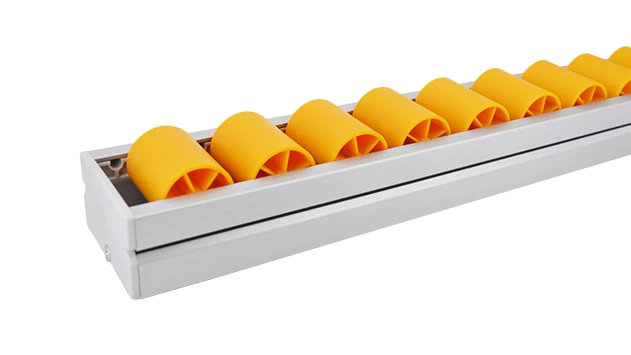
Modular syetem roller tracks aluminum gravity roller tracks are an excellent solution for transporting materials within industrial environments, warehouses and distribution centres.
If you've ever walked through a busy manufacturing plant or a well-organized warehouse, you've probably seen roller tracks in action—those smooth, rolling surfaces that move parts and boxes from one spot to another without heavy lifting. But not all roller tracks are the same, especially when it comes to size. Today, we're diving deep into the 60 aluminum roller track yellow: what it is, how it stacks up against smaller sizes like 38mm and 40mm, and when it's the right pick for your operations.
Whether you're setting up a new flow rack, integrating a conveyor into your lean pipe system, or looking to optimize your material handling, understanding the differences in roller track sizes can save you time, money, and headaches down the line. Let's get started.
What Makes the 60 Aluminum Roller Track Yellow Stand Out?
First, let's break down the basics of the 60 aluminum roller track yellow. The "60" here refers to the track's width (60mm), and the yellow color isn't just for looks—it's a high-visibility shade that helps workers spot the track easily, reducing the risk of misplacing parts or fumbling with materials. Made from durable aluminum, this track is built to last: it's resistant to rust, lightweight enough to move when needed, but strong enough to handle heavy loads.
One of the biggest perks of this track is its compatibility with a wide range of aluminum profile accessories. You can attach it to lean pipe workbenches, flow racks, or conveyors using simple connectors, making it a flexible addition to any lean solution. Plus, since it's part of a lean system, it's designed to be reusable and adaptable—if your production line changes, you can reconfigure the track instead of replacing it entirely.
60mm vs. 38mm & 40mm Roller Tracks: A Side-by-Side Look
To help you decide if the 60mm size is right for you, let's compare it to two common smaller sizes: 38mm and 40mm. We'll look at key factors like load capacity, ideal use cases, and compatibility.
| Track Size | Max Load Capacity (per meter) | Ideal Use Cases | Compatible Systems | Pros | Cons |
|---|---|---|---|---|---|
| 60mm Yellow Aluminum | Up to 300 kg | Heavy-duty flow racks, conveyor systems, automotive parts handling, large box storage | Lean pipe systems, aluminum profile workstations, industrial conveyors | High load capacity, high visibility, durable, compatible with many accessories | Wider (takes more space), slightly heavier than smaller sizes |
| 40mm | Up to 200 kg | Medium-load flow racks, 3C assembly lines, small to medium part handling | Lean pipe workbenches, light conveyor systems | Balanced load and space, easy to reconfigure | Not suitable for very heavy items |
| 38mm | Up to 150 kg | Light-load applications, small part storage, ESD workstations | ESD workbenches, small flow racks | Compact, lightweight, perfect for tight spaces | Lowest load capacity, limited to light use |
As you can see, the 60mm track shines when you need to handle heavier items. If your operations involve moving large boxes, automotive components, or other heavy parts, this size is a solid choice. On the other hand, if you're dealing with small, light parts, a 38mm or 40mm track will take up less space and be more cost-effective.

When Should You Pick the 60 Aluminum Roller Track Yellow?
Now that you know how the 60mm track compares to smaller sizes, let's talk about specific scenarios where this size is the best option. Here are four key situations:
1. You Need to Handle Heavy Loads
If your workflow involves moving heavy items—like automotive engine parts, large 3C assembly components, or industrial-sized boxes—the 60mm track's 300 kg per meter load capacity is a game-changer. It can support these heavy items without bending or breaking, making it ideal for high-stress environments.
2. You're Setting Up a Conveyor System
Conveyor systems in manufacturing plants often need to move parts across long distances. The 60mm track is sturdy enough to handle continuous use and heavy loads, so it's perfect for integrating into conveyor lines. Whether you're moving parts from assembly to packaging or from warehouse to production, this track can keep things running smoothly.
3. Your Flow Racks Hold Large or Bulky Items
Flow racks are a staple in warehouses and manufacturing plants for organizing materials. If your flow racks hold large boxes or bulky parts, the 60mm track provides the stability and width needed to keep these items sliding smoothly. The yellow color also helps workers quickly identify where to place and retrieve items, boosting efficiency.
4. You Want a Scalable Lean Solution
Lean systems are all about scalability and continuous improvement. The 60mm track is designed to grow with your business. If you think your load requirements might increase in the future, investing in this track now means you won't have to replace it later. You can add more tracks, connect them to new lean pipe workbenches, or integrate them into new conveyor systems as your operations expand.

How to Integrate the 60mm Track Into Your Lean Pipe System
The 60 aluminum roller track yellow isn't just a standalone product—it's a key part of a larger lean pipe system. Here's how you can use it with other components:
- Flow Racks: Attach the 60mm track to aluminum profile frames to create heavy-duty flow racks. The yellow track will help workers quickly find the right lane for their parts.
- Conveyors: Use the track as part of a conveyor system to move parts between workstations. The high load capacity means you can transport heavy items without issues.
- Lean Pipe Workbenches: Add the track to the side of a lean pipe workstation to create a sliding material tray. This lets workers access parts easily without leaving their station.
- Turnover Trolleys: Install the track on turnover trolleys to move heavy parts from one area to another. The durable aluminum construction can handle frequent use.
The best part? All these integrations are reusable. If you need to change your workstation layout or reconfigure your flow racks, you can simply detach the track and move it to a new location. This aligns perfectly with the lean of reducing waste and improving efficiency.
Real-World Uses of the 60mm Yellow Roller Track
Let's look at some examples of how businesses are using this track to optimize their operations:
Automotive Parts Warehouse
A large automotive parts warehouse needed to store and retrieve heavy engine components. They installed 60mm yellow roller tracks on their flow racks. The high load capacity supported the heavy parts, and the yellow color made it easy for workers to find the right components quickly. This reduced retrieval time by 25% and cut down on errors.
3C Assembly Line
A 3C assembly plant was struggling with moving large display panels from the production line to packaging. They added 60mm yellow tracks to their conveyor system. The track's width and load capacity handled the panels easily, and the high visibility helped workers spot any jams quickly. This improved line efficiency by 18%.
Medical Device Manufacturing
A medical device manufacturer needed a way to move heavy sterilization trays between workstations. They used the 60mm track on their lean pipe workbenches and turnover trolleys. The track's durability and load capacity were perfect for the trays, and the yellow color ensured workers handled the trays with care (since they were easy to see). This reduced the risk of damage to expensive medical devices.
Common Misconceptions & Pro Tips for Choosing the Right Track
Before you make your decision, let's clear up some common myths about roller tracks and share a few tips:
Myth: Bigger is always better
While the 60mm track is great for heavy loads, it's not always the best choice. If you're handling small, light parts, a 38mm or 40mm track will take up less space and be more cost-effective.
Myth: Yellow tracks are only for visibility
The yellow color does help with visibility, but it's also a sign of high-quality aluminum. Many manufacturers use yellow to indicate heavy-duty tracks, so you can trust that the 60mm yellow track is built to handle tough jobs.
Pro Tips:
- Check your load requirements first: Calculate the average weight of the items you'll be moving, then pick a track size that can handle that (plus a little extra for safety).
- Consider compatibility: Make sure the track works with your existing lean pipe system or aluminum profile accessories. If you're starting from scratch, ask your supplier for a complete package.
- Think about future needs: If you plan to expand your operations, choose a track that can grow with you. The 60mm track is a great investment for long-term scalability.
- Don't forget about maintenance: Aluminum tracks are low-maintenance, but you should clean them regularly to keep the rollers sliding smoothly. Avoid using harsh chemicals that can damage the surface.
Final Thoughts: Is the 60 Aluminum Roller Track Yellow Right for You?
The 60 aluminum roller track yellow is a versatile, durable option for businesses that need to handle heavy loads, set up conveyor systems, or optimize their flow racks. Its high visibility, compatibility with lean pipe systems, and scalability make it a smart choice for many industries—from automotive to 3C assembly.
Remember, the key to choosing the right track size is to understand your specific needs: What's the average weight of the items you'll be moving? How much space do you have? Do you need to scale in the future? By answering these questions, you can make an informed decision that will help you improve efficiency and reduce waste.
Whether you're setting up a new production line or upgrading your existing one, the 60mm yellow roller track is worth considering. It's not just a track—it's a tool that can help you build a more efficient, leaner operation.