- Company Articles
- Products and Technology
- Procurement Guidelines
- 60 Steel Roller Track Green Suppliers: Evaluating Sustainability & Quality Standards

60 Steel Roller Track Green Suppliers: Evaluating Sustainability & Quality Standards
Related Product
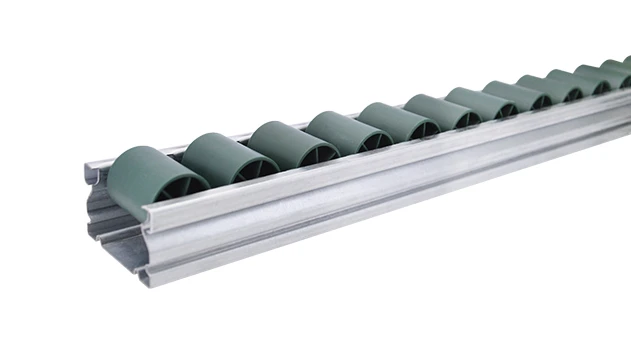
60 Steel Roller Track Green
The roller track can be installed with multiple accessories to create different slopes and configurations of flow racks.All steel conveyor 60 roller track accessories are engineered to perfectly fit the sliding rail.It is enable the movement of SLC boxes.
60 Steel Roller Track Green Suppliers: Evaluating Sustainability & Quality Standards
Introduction
In today's fast-paced manufacturing world, sustainability isn't just a buzzword—it's a necessity. As factories strive to reduce their carbon footprint and optimize their processes, every component they choose plays a role in this journey. One such component that often flies under the radar but has a huge impact is the 60 steel roller track green. Used in everything from flow racks to conveyors, this simple yet essential part helps move materials smoothly across production lines. But not all suppliers are created equal. Choosing a green supplier for your 60 steel roller track isn't just about doing the right thing for the planet—it's also about ensuring quality, durability, and long-term cost savings. In this article, we'll dive deep into what makes a 60 steel roller track supplier "green," the quality standards you should never compromise on, how to evaluate top suppliers, and why this choice matters for your lean manufacturing goals.
Manufacturers across industries—from 3C assembly to medical device production—are increasingly turning to lean solutions to streamline their operations. These solutions rely on components like 60 steel roller track green to create efficient, flexible workflows. But as the demand for lean systems grows, so does the need for suppliers who can deliver both quality and sustainability. A green supplier doesn't just sell a product; they partner with you to build a more responsible manufacturing ecosystem.
What Makes a 60 Steel Roller Track Supplier Green?
The term "green supplier" can mean different things to different people, but there are four core pillars that define true sustainability in the 60 steel roller track industry:
1. Responsible Material Sourcing
The foundation of any green product starts with the materials used. For 60 steel roller track green, this means prioritizing recycled steel over virgin steel. According to the World Steel Association, recycled steel reduces energy consumption by 75% compared to producing steel from raw iron ore. Every ton of recycled steel saves 1.5 tons of iron ore, 0.5 tons of coal, and 400 kilowatt-hours of electricity—enough to power a home for over a month. A transparent green supplier will share detailed information about their material sources, including the percentage of recycled content in their steel (ideally 80% or higher) and whether their suppliers follow ethical mining practices. Some suppliers even use steel from post-consumer waste, like old cars or appliances, which further reduces the environmental impact.
2. Eco-Friendly Production Processes
Even with recycled steel, production methods can undermine sustainability if not optimized. Look for suppliers who invest in energy-efficient machinery—like induction furnaces that use less energy than traditional blast furnaces. Renewable energy sources, such as solar or wind power, should power at least a portion of their factory operations. For example, a supplier with a 500-kW solar panel system can reduce their annual carbon emissions by over 600 tons. The green coating on the roller track is another critical factor: avoid suppliers who use liquid paint with volatile organic compounds (VOCs), which release harmful gases into the air. Instead, choose suppliers who use powder coating—an eco-friendly alternative that produces zero VOC emissions and results in a thicker, more durable finish.
3. Recyclability & End-of-Life Support
A truly green product is designed to be reused or recycled at the end of its lifespan. Steel is one of the most recyclable materials in the world—90% of steel products are recycled globally. However, not all suppliers offer end-of-life support. A forward-thinking green supplier will have a take-back program for old roller tracks, where they collect used components, refurbish them for reuse, or recycle them into new products. This closes the loop in the circular economy, ensuring that steel never ends up in landfills. Some suppliers even offer discounts on new roller tracks when you return old ones, making sustainability financially beneficial for your business.
4. Waste Reduction in Manufacturing
Green suppliers prioritize waste reduction at every stage of production. This includes using computer-aided design (CAD) software to optimize cutting patterns, which reduces scrap steel by up to 20%. Scrap steel that can't be reused in production is sold to recycling facilities instead of being discarded. Many green suppliers also implement lean manufacturing practices in their own factories—like 5S (Sort, Set in Order, Shine, Standardize, Sustain)—to eliminate waste and improve efficiency. This alignment with lean principles means they understand your needs better when you're looking for components to support your own lean solution.
Quality Standards You Should Never Compromise On
Sustainability is important, but it shouldn't come at the cost of quality. A 60 steel roller track green that breaks down easily will end up in the landfill sooner, negating any environmental benefits. Here are the key quality standards to look for:
1. ISO Certifications
ISO 9001 (Quality Management System) is a non-negotiable certification. It ensures the supplier follows consistent processes to deliver high-quality products, with regular audits to maintain compliance. ISO 14001 (Environmental Management System) is another critical certification—it demonstrates that the supplier has a structured approach to reducing their environmental impact, from waste management to energy efficiency. For factories that handle sensitive components, ISO 45001 (Occupational Health and Safety) is a bonus, as it indicates the supplier cares about their workers' well-being. Some suppliers also hold industry-specific certifications, like IATF 16949 for automotive parts or ISO 13485 for medical devices, which are essential if you operate in these sectors.
2. Load Capacity Testing
60 steel roller track green is designed to move heavy materials, so it needs to handle the weight without bending or breaking. Ask the supplier for load capacity test reports, which should include the maximum weight per linear meter (typically 500-1000 kg/m for high-quality tracks). For example, if you're using the track in a warehouse flow rack to store large automotive parts, you'll need a track that can support 800 kg/m or more. A reputable supplier will conduct these tests in an accredited laboratory and provide you with a certificate of compliance.
3. Corrosion Resistance
Steel is prone to rust, especially in humid environments like food processing or pharmaceutical factories. The green powder coating on the roller track should provide excellent corrosion resistance. Look for suppliers who test their coating against the ASTM B117 salt spray test, which simulates harsh environmental conditions. A track that passes this test should resist rust for at least 500 hours—enough to last for 10 years or more in most factories. Some suppliers also offer additional treatments, like zinc plating, to enhance corrosion resistance for extreme environments.
4. ESD Compliance (For Sensitive Industries)
If your production line handles sensitive electronic components (like in 3C assembly or medical device manufacturing), you'll need ESD-compliant roller tracks. Electrostatic discharge (ESD) can damage delicate parts, leading to costly defects. ESD-compliant tracks dissipate static electricity safely, preventing it from building up on the surface. Ask the supplier if their 60 steel roller track green meets ANSI/ESD S20.20 standards, which are the global benchmark for ESD control. They should provide a surface resistance test report (typically between 10^6 and 10^9 ohms) to prove compliance.
Evaluating Green Suppliers: A Comparative Analysis
To help you make an informed decision, we've compared three hypothetical green suppliers based on key criteria. This table reflects the standards you should look for in a reliable 60 steel roller track green supplier:
| Supplier Attribute | Green Supplier A | Green Supplier B | Green Supplier C |
|---|---|---|---|
| Sustainability Certifications | ISO 14001, LEED Gold | ISO 14001, Carbon Neutral Certified | ISO 14001, EU Ecolabel |
| Recycled Steel Content | 90% | 85% | 80% |
| Renewable Energy Usage | 60% solar-powered factory | 40% wind + solar | 30% solar |
| Quality Certifications | ISO 9001, IATF 16949 | ISO 9001, ISO 13485 | ISO 9001, ANSI/ESD S20.20 |
| Product Range | 60 steel roller track green, flow racks, conveyors, aluminum profile workstations | 60 steel roller track green, lean solution kits, ESD workstations | 60 steel roller track green, turnover trolleys, stainless steel pipe series |
| End-of-Life Support | Take-back program (50% discount on new tracks for returns) | Refurbishment service + recycling | Recycling program (free pickup for large orders) |
| Customization Options | Custom lengths, ESD coating, load capacity upgrades | Custom colors, modular designs, medical-grade finishes | Custom widths, corrosion-resistant treatments, food-safe coatings |
| Lead Time | 7-10 business days | 10-14 business days | 5-7 business days |
As you can see, each supplier has its strengths. Green Supplier A excels in renewable energy usage and product range, making it ideal for automotive factories. Green Supplier B is perfect for medical device manufacturers due to its ISO 13485 certification and medical-grade finishes. Green Supplier C offers fast lead times and food-safe coatings, which is great for food processing plants. The key is to choose a supplier that aligns with your industry's specific needs.
Case Study: How Green Roller Tracks Power Lean Solutions
Let's take a real-world example to see how 60 steel roller track green integrates into a lean solution. Suppose you run a 3C assembly factory that produces smartphones. Your factory has 50 workstations, and you're looking to reduce waste, improve material flow, and cut production time by 15%.
You partner with Green Supplier A, who designs a custom lean solution for your factory:
- Flow racks fitted with 60 steel roller track green to hold smartphone components (screens, batteries, circuit boards). The roller tracks allow workers to pick parts from the front of the rack, reducing bending and reaching by 70%.
- Conveyor systems using the same roller track to move partially assembled phones from one workstation to the next. The smooth movement reduces component damage by 30%.
- Modular aluminum profile workstations that can be adjusted as your product line changes. These workstations are reusable, so you don't need to buy new ones when you launch a new smartphone model.
- ESD-compliant roller tracks for the final assembly line, preventing static damage to delicate circuit boards.
After implementing this solution, your factory sees significant improvements:
- Production time reduced by 18% (exceeding your 15% target) due to faster material flow.
- Waste reduced by 25%—fewer damaged components and no need for disposable packaging.
- Energy consumption reduced by 12%—the efficient conveyor systems use less power than your old manual transport methods.
- Worker satisfaction increased by 20%—the ergonomic flow racks and workstations reduce fatigue.
This case study shows that choosing a green supplier isn't just about sustainability—it's about aligning with your lean manufacturing goals to create a more efficient and profitable operation. The 60 steel roller track green is the backbone of this solution, connecting flow racks, conveyors, and workstations to create a seamless, sustainable production line.
The Role of 60 Steel Roller Track Green in Sustainable Supply Chains
The impact of your 60 steel roller track green choice extends beyond your factory walls. It's part of a larger supply chain that includes your suppliers, customers, and even end-users. Here's how:
1. Reducing the Carbon Footprint of Your Supply Chain
By using recycled steel and eco-friendly production processes, green suppliers help reduce the overall carbon footprint of your supply chain. For example, if you order 100 meters of 60 steel roller track green from Green Supplier A (90% recycled content), you save 15 tons of iron ore, 5 tons of coal, and 40,000 kWh of electricity. This is equivalent to planting 200 trees or taking 5 cars off the road for a year. These savings add up quickly, especially if you're a large manufacturer with multiple production lines.
2. Improving Supply Chain Resilience
Green suppliers prioritize long-term relationships with their material providers, which makes their supply chains more resilient to disruptions (like raw material shortages or price fluctuations). For example, a supplier that uses recycled steel is less affected by changes in iron ore prices than one that uses virgin steel. This resilience translates to more stable prices and lead times for your business, reducing the risk of production delays.
3. Meeting Customer Demand for Sustainable Products
More and more customers are demanding sustainable products from their suppliers. By using green 60 steel roller track in your production line, you can highlight this in your marketing materials, giving you a competitive edge. For example, a medical device manufacturer that uses ESD-compliant, green roller tracks can market their products as "sustainably produced," which resonates with environmentally conscious hospitals and clinics.
4. Supporting the Circular Economy
Green suppliers are key players in the circular economy, which aims to eliminate waste and keep resources in use for as long as possible. When you return your old roller tracks to a supplier for recycling or refurbishment, you're closing the loop—these materials are turned into new products, reducing the need for virgin resources. This not only benefits the planet but also creates a more sustainable business model for your company.
Practical Tips for Choosing the Right Green Supplier
Now that you know what to look for, here are some practical tips to help you find the perfect 60 steel roller track green supplier:
1. Ask for Transparency
A reliable green supplier will be transparent about their processes. Ask them to share their sustainability report, material source documentation, and test certificates. If they're hesitant to provide this information, it's a red flag. For example, a supplier that can't tell you the percentage of recycled steel in their product is likely cutting corners.
2. Visit Their Factory (If Possible)
If you have the opportunity, visit the supplier's factory to see their production processes firsthand. Look for energy-efficient machinery, renewable energy installations, and waste management systems. This will give you a better idea of their commitment to sustainability than any brochure or website can.
3. Test the Product Before Ordering
Order a small sample of the 60 steel roller track green to test in your factory. Check its durability by placing heavy materials on it, test its smoothness by sliding components across it, and verify its corrosion resistance by exposing it to humid conditions for a few weeks. This will help you avoid costly mistakes down the line.
4. Consider Total Cost of Ownership (TCO)
Green suppliers may charge a slightly higher upfront price than non-green suppliers, but don't let that deter you. Calculate the total cost of ownership over the lifespan of the product. For example, a $100 roller track from a green supplier that lasts 10 years is cheaper than a $70 track from a non-green supplier that lasts only 3 years. The green track also saves you money on energy, replacements, and waste disposal.
5. Look for a Long-Term Partner
Choosing a green supplier is a long-term investment. Look for a supplier that understands your industry and can grow with your business. They should offer customization options, technical support, and end-of-life services to ensure your lean solution remains efficient and sustainable for years to come.
Conclusion
Choosing a green supplier for your 60 steel roller track green is one of the most impactful decisions you can make for your business and the planet. It's not just about reducing your carbon footprint—it's about improving quality, efficiency, and profitability. By prioritizing responsible material sourcing, eco-friendly production processes, and uncompromising quality standards, you can find a supplier that aligns with your lean manufacturing goals and helps you build a more sustainable future.
As the manufacturing industry continues to evolve, sustainability will become even more important. Customers will demand it, regulators will enforce it, and your competitors will adopt it. By acting now, you can stay ahead of the curve and create a competitive advantage for your business. So the next time you're in the market for 60 steel roller track green, take the time to evaluate your suppliers carefully. Your planet, your workers, and your wallet will thank you.