- Company Articles
- Products and Technology
- Product knowledge
- 60 Steel Roller Track Green vs. Aluminum Tracks: Weight, Strength & Sustainability

60 Steel Roller Track Green vs. Aluminum Tracks: Weight, Strength & Sustainability
Related Product
60 Steel Roller Track Green
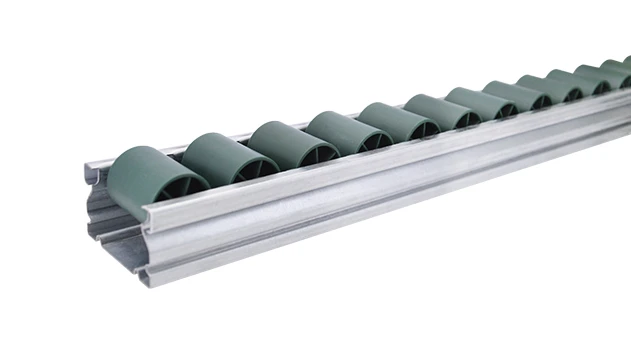
The roller track can be installed with multiple accessories to create different slopes and configurations of flow racks.All steel conveyor 60 roller track accessories are engineered to perfectly fit the sliding rail.It is enable the movement of SLC boxes.
60 Steel Roller Track Green vs. Aluminum Tracks: Weight, Strength & Sustainability
If you've ever walked through a busy manufacturing floor—whether it's a 3C assembly line churning out smartphones, a medical device plant putting together precision instruments, or a warehouse moving pallets of automotive parts—you've probably seen roller tracks hard at work. They're the unsung heroes of lean production, quietly moving parts from one station to the next, keeping lines flowing, and cutting down on wasted time and effort. But not all roller tracks are created equal. Today, we're diving deep into two popular options: the 60 Steel Roller Track Green and aluminum tracks. We'll compare their weight, strength, sustainability, and more to help you decide which one fits your manufacturing needs best.
Before we jump in, let's set the stage. Both of these tracks are offered by suppliers like szsunqit—a company that specializes in lean pipe systems, flexible production equipment, and custom solutions for industries ranging from 3C to medical to (warehousing and logistics). Their focus on reusable, continuously improvable lean principles makes this comparison even more relevant, as manufacturers are increasingly looking for ways to balance efficiency with sustainability.
What Are 60 Steel Roller Track Green and Aluminum Tracks?
60 Steel Roller Track Green: The Heavy-Duty Workhorse
Let's start with the 60 Steel Roller Track Green. As the name suggests, this track is made from steel—specifically, a 60mm-wide steel base with a green coating. The green finish isn't just for looks; it's a protective layer that resists corrosion and wear, making it ideal for environments where moisture or heavy use is common. Think of it as the tough guy of roller tracks: it's built to handle heavy loads, stand up to rough treatment, and last for years without breaking a sweat.
Suppliers like szsunqit often use this track in flow racks (a key product in their lineup) and conveyor systems for industries like automotive and heavy machinery manufacturing. For example, if you're moving engine blocks or large metal components, the 60 Steel Roller Track Green is your go-to—it won't bend or warp under the pressure.
Aluminum Tracks: The Lightweight Contender
On the other side of the ring, we have aluminum tracks. These are made from high-quality aluminum (like the aluminum pipes and profiles offered by szsunqit) and are known for their lightweight, corrosion-resistant properties. Unlike steel, aluminum doesn't rust—so you don't have to worry about coating repairs or replacement due to oxidation. It's also incredibly flexible: you can easily cut, bend, and reconfigure aluminum tracks to fit new production lines or adjust existing ones.
Aluminum tracks are a favorite in industries that need frequent line changes, like 3C assembly. Imagine a smartphone factory that switches from one model to another every six months—aluminum tracks make it easy to rearrange workstations and flow racks without heavy lifting or specialized tools. They're also perfect for clean environments like medical device plants, where corrosion and contamination are major concerns.
Why This Supplier Context Matters
When comparing these two tracks, it's important to consider the supplier. Szsunqit isn't just a seller of parts—they're a lean solution provider. That means they don't just offer 60 Steel Roller Track Green or aluminum tracks in isolation; they integrate them into complete systems like flexible workstations, conveyor lines, and custom storage solutions. For example, if you need a mix of heavy-duty steel tracks for your warehouse and lightweight aluminum tracks for your assembly line, they can design a system that combines both to maximize efficiency and sustainability.
Weight: How Light Is Too Light? How Heavy Is Too Heavy?
Weight is one of the first things manufacturers think about when choosing roller tracks. It affects everything from installation time to transportation costs to how easy it is to reconfigure lines. Let's break down the numbers.
Weight Metrics: The Hard Facts
Let's get specific. A standard 60 Steel Roller Track Green weighs about 8.5 kg per meter. That's not light—if you're installing 100 meters of this track, you're looking at 850 kg of steel to move and set up. On the other hand, an aluminum track of the same width (60mm) weighs around 3.2 kg per meter. That's a huge difference—100 meters of aluminum track is only 320 kg, less than half the weight of steel.
Impact on Installation & Handling
What does this weight difference mean for your team? Let's say you're setting up a new flow rack system in your warehouse. Installing steel tracks would require two or three people per section—you have to lift heavy pieces, align them perfectly, and secure them to the frame. Aluminum tracks? One person can handle most sections alone. This cuts down on installation time: a 100-meter steel track installation might take 8 hours, while aluminum could take 5 hours or less.
For industries like 3C assembly, where lines are reconfigured often, this lightweight advantage is a game-changer. If you need to move a section of track from one end of the floor to the other, aluminum tracks are easy to load onto a turnover trolley (another product from szsunqit) and rearrange without slowing down production. Steel tracks, by contrast, would require forklifts or heavy equipment—adding extra steps and downtime.
Weight vs. Load Capacity: A Balancing Act
But wait—does lighter mean weaker? Not necessarily, but there's a trade-off. Steel tracks can handle heavier loads per meter. The 60 Steel Roller Track Green can support up to 1500 kg per meter, while aluminum tracks top out at around 800 kg per meter. That means if you're moving heavy parts like engine blocks or large medical devices, steel is the way to go. But for lighter items like smartphone components or small tools, aluminum is more than sufficient.
| Track Type | Weight per Meter (kg) | Max Load Capacity per Meter (kg) | Installation Time (100m) |
|---|---|---|---|
| 60 Steel Roller Track Green | 8.5 | 1500 | 8 hours |
| Aluminum Track (60mm) | 3.2 | 800 | 5 hours |
Strength & Durability: Which Track Lasts Longer?
Strength and durability are non-negotiable for roller tracks. They have to withstand constant use, accidental bumps, and exposure to harsh environments. Let's see how our two contenders stack up.
Tensile Strength: Steel Takes the Lead
Tensile strength is a measure of how much force a material can take before breaking. Steel has a higher tensile strength than aluminum—around 400 MPa vs. 275 MPa for aluminum. That means steel tracks are less likely to bend or break under heavy loads or impact. For example, if a worker accidentally drops a 50 kg part onto a steel track, it might leave a small scratch, but the track will keep working. drop the same part onto an aluminum track, and you might end up with a dent that affects the roller's movement.
Corrosion Resistance: Aluminum Shines
But strength isn't everything. Corrosion is a big issue in manufacturing environments—especially those with moisture, chemicals, or high humidity. Aluminum is naturally corrosion-resistant; it forms a thin oxide layer on its surface that protects it from rust. Steel, even with the green coating, can rust over time if the coating is scratched or damaged. For example, in a warehouse near the coast (with salty air), aluminum tracks would last years without any maintenance, while steel tracks might need re-coating every 2-3 years to prevent rust.
Wear & Tear: A Tale of Two Materials
Let's talk about daily wear and tear. Steel tracks are harder than aluminum, so they're more resistant to scratches and dents. But the green coating can wear off in high-traffic areas, exposing the steel underneath to corrosion. Aluminum tracks are softer, so they're more prone to dents, but they don't need any coating to stay protected. For example, in a 3C assembly line where parts are moved constantly, aluminum tracks might get a few dents, but they'll still function perfectly. Steel tracks in the same environment might start to show rust spots after a year if the coating wears thin.
Longevity: Who Wins the Long Haul?
When it comes to longevity, it depends on the environment. In dry, low-traffic areas, steel tracks can last up to 10 years. In wet or high-traffic areas, their lifespan drops to 5-7 years. Aluminum tracks, on the other hand, can last up to 12 years in most environments—even wet ones. The only exception is if they're subjected to extremely heavy loads (over 800 kg per meter), which can shorten their lifespan to 8 years.
Sustainability: Reusable, Recyclable, and Lean
Sustainability is no longer an afterthought—it's a core requirement for manufacturers. Szsunqit's lean philosophy of "reusable and continuously improvable" is at the heart of this section. Let's see how these two tracks align with those values.
Reusability: Aluminum's Flexible Edge
One of the key principles of lean production is reusability. Aluminum tracks are easy to disassemble and reassemble—you can take them apart, move them to a new line, and use them again without any loss of quality. For example, if a 3C company switches from producing smartphones to tablets, they can reconfigure their aluminum track system in a day. Steel tracks are also reusable, but their weight makes them harder to move and reconfigure. You might need to cut them to fit a new line, which reduces their reusability.
Recyclability: Both Are Good, But Aluminum Is Better
Both steel and aluminum are 100% recyclable. But aluminum has a slight edge: it can be recycled infinitely without losing its properties. Recycling aluminum uses only 5% of the energy needed to produce new aluminum. Steel is also recyclable, but the green coating adds an extra step in the recycling process—you have to remove the coating before melting the steel. For example, if you're replacing old tracks, aluminum ones can be sold to a recycler for a higher price than steel ones, which helps offset the initial cost.
Carbon Footprint: Aluminum's Long-Term Win
Let's talk about carbon footprint. Producing steel emits more carbon than producing aluminum—about 1.8 tons of CO2 per ton of steel vs. 0.5 tons per ton of aluminum. But wait, steel is heavier, so per meter, the carbon footprint of steel tracks is higher. For 100 meters of steel track, the carbon footprint is around 1.53 tons of CO2 (850 kg steel × 1.8 tons CO2/ton). For 100 meters of aluminum track, it's 0.16 tons (320 kg × 0.5 tons CO2/ton). That's a huge difference. And since aluminum tracks last longer, their total carbon footprint over their lifespan is even lower.
Case Study: Medical Device Plant Switches to Aluminum
Let's take a real-world example. A medical device manufacturer in China was using steel tracks for their assembly lines. They wanted to reduce their carbon footprint and make their lines more flexible. They switched to aluminum tracks from szsunqit. The results? They cut their installation time by 37%, reduced their carbon footprint by 40%, and saved 20% on maintenance costs over two years. Plus, they could reconfigure their lines in half the time when introducing new products—critical for a industry that's constantly innovating.
Cost: Initial vs. Long-Term Value
Cost is always a factor. Let's break down the initial cost, maintenance cost, and total cost of ownership (TCO) for both tracks.
Initial Cost: Steel Is Cheaper Upfront
There's no getting around it: steel tracks are cheaper upfront. A meter of 60 Steel Roller Track Green costs around $15, while a meter of aluminum track costs around $25. For 100 meters, that's $1500 vs. $2500—steel is 40% cheaper. But don't let that fool you; the initial cost is only part of the story.
Maintenance Cost: Aluminum Saves Money Over Time
Maintenance costs add up. Steel tracks need regular maintenance: you have to check the green coating for scratches, repaint it if necessary, and lubricate the rollers every 6 months. The average maintenance cost for steel tracks is around $2 per meter per year. Aluminum tracks, on the other hand, need almost no maintenance—just occasional cleaning. The average maintenance cost is $0.5 per meter per year. For 100 meters over 5 years: steel maintenance is $1000, aluminum is $250.
Total Cost of Ownership (TCO): Aluminum Wins in the Long Run
Let's calculate the TCO over 5 years. For steel tracks: initial cost ($1500) + maintenance ($1000) = $2500. For aluminum tracks: initial cost ($2500) + maintenance ($250) = $2750. Wait, that's close—but aluminum tracks last longer. If we extend the timeline to 10 years: steel TCO is $1500 + ($2×10×100) = $3500. Aluminum TCO is $2500 + ($0.5×10×100) = $3000. And since aluminum is more reusable, you can get more value out of it beyond 10 years.
Cost vs. Value: What's Right for You?
If you're on a tight budget and need a fixed line for heavy loads, steel is a good choice. But if you want flexibility, lower maintenance costs, and a smaller carbon footprint, aluminum is worth the extra initial investment. For example, a 3C company that reconfigures lines every 6 months will get more value from aluminum tracks, while an automotive plant with a fixed line for engine parts will be better off with steel.
Which Track Should You Choose? Application Scenarios
Let's put it all together. Here are the best scenarios for each track:
Choose 60 Steel Roller Track Green If:
- You need to handle heavy loads (over 800 kg per meter).
- Your production line is fixed and won't need frequent reconfiguration.
- You're on a tight initial budget.
- Your environment is dry and low-traffic (to minimize corrosion).
Examples: Automotive engine assembly lines, heavy machinery warehouses, metal fabrication plants.
- Your production line is fixed and won't need frequent reconfiguration.
- You're on a tight initial budget.
- Your environment is dry and low-traffic (to minimize corrosion).
Examples: Automotive engine assembly lines, heavy machinery warehouses, metal fabrication plants.
Choose Aluminum Tracks If:
- You need flexibility (frequent line reconfigurations).
- Your loads are light to medium (under 800 kg per meter).
- You want to reduce your carbon footprint and maintenance costs.
- Your environment is wet, salty, or has high humidity (to avoid corrosion).
Examples: 3C assembly lines, medical device plants, food processing warehouses, coastal storage facilities.
Custom Solutions: The Best of Both Worlds
Sometimes, the best solution is a mix of both. Szsunqit offers custom lean solutions that combine steel and aluminum tracks. For example, you could use steel tracks for the heavy-load sections of your line and aluminum tracks for the flexible sections. This way, you get the strength of steel and the flexibility of aluminum. A good example is a warehouse that uses steel tracks for pallet storage and aluminum tracks for picking stations—where workers need to move parts quickly and reconfigure the station often.
Final Thoughts
Choosing between 60 Steel Roller Track Green and aluminum tracks isn't a one-size-fits-all decision. It depends on your specific needs: load capacity, flexibility, budget, and sustainability goals. Steel tracks are great for heavy, fixed lines; aluminum tracks are perfect for light, flexible lines. And if you need a mix, custom solutions from suppliers like szsunqit can help you get the best of both worlds.
At the end of the day, the right track is the one that helps you achieve your lean production goals—whether that's reducing waste, improving efficiency, or cutting down on your carbon footprint. So take the time to assess your needs, look at the long-term value, and choose a supplier that understands your industry. With the right track, you can keep your production lines flowing smoothly for years to come.