- Company Articles
- Products and Technology
- Product knowledge
- 60 Steel Roller Track Grey vs. Plastic Tracks: Durability & Cost Comparison

60 Steel Roller Track Grey vs. Plastic Tracks: Durability & Cost Comparison
Related Product
60 Steel Roller Track Grey
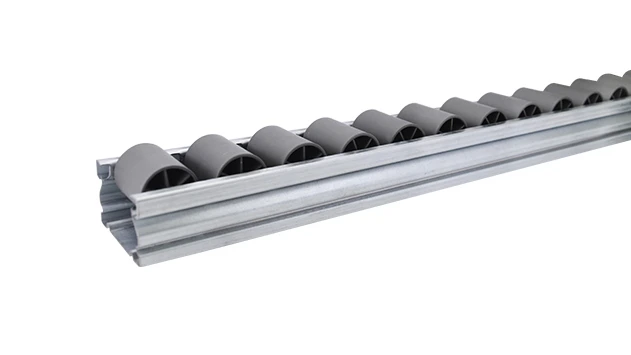
The roller track can be installed with multiple accessories to create different slopes and configurations of flow racks.All steel conveyor 60 roller track accessories are engineered to perfectly fit the sliding rail.
60 Steel Roller Track Grey vs. Plastic Tracks: Durability & Cost Comparison
If you've ever stood on a factory floor watching a production line slow down because a roller track keeps jamming, or found yourself replacing plastic track segments every few months due to wear, you know how critical choosing the right track system is. For manufacturers in industries like 3C assembly, automotive, or medical device production, the choice between steel and plastic roller tracks isn't just about cost—it's about keeping operations smooth, reducing downtime, and sticking to lean principles (like those our site emphasizes: reusable, sustainable solutions). Today, we're diving deep into two popular options: the 60 Steel Roller Track Grey and plastic roller tracks (like the yellow or grey plastic guide rails you might see in flow racks or conveyors). We'll compare their durability, cost, and real-world performance to help you make the best decision for your line.
What Are 60 Steel Roller Track Grey and Plastic Tracks?
Let's start with the basics. The 60 Steel Roller Track Grey is a heavy-duty option from our roller track lineup. It's crafted from high-quality steel with a grey coating that resists rust and scratches, making it ideal for busy production environments where constant use is the norm. This track is designed to handle high loads and maintain its shape even under pressure. On the other hand, plastic roller tracks (like our yellow or grey plastic guide rails) are lightweight, made from durable engineering plastics such as polypropylene (PP) or nylon. They offer low friction, which means items move smoothly along them, and they're often used in applications where weight is a concern or where corrosion resistance (without a metal coating) is needed.
Both tracks are integral parts of various lean manufacturing systems. For example, you might find 60 Steel Roller Track Grey in a conveyor system moving heavy automotive parts, while plastic tracks could be part of a flow rack holding small electronic components for 3C assembly. Understanding their core characteristics is the first step to choosing the right one for your needs.
Durability Comparison: Steel vs. Plastic
Durability is a top concern for any manufacturing manager—no one wants to deal with unexpected track failures that halt production. Let's break down how these two tracks stack up in key durability areas.
Material & Build Quality
The 60 Steel Roller Track Grey is built to last. Its steel construction (with a thickness of around 1.5 to 2.0 mm, similar to our stainless steel pipe series) gives it a rigid structure that can withstand heavy impacts and constant wear. The grey coating adds an extra layer of protection against rust and chemicals, which is essential in industries like automotive where oils and solvents are common. Plastic tracks, while durable in their own right, are made from polymer materials that are more flexible than steel. This flexibility can be an advantage (they absorb minor impacts better) but also a drawback—if overloaded, they can crack or warp over time.
Wear Resistance
When it comes to wear resistance, steel tracks have a clear edge. Metal surfaces are naturally more resistant to wear from constant contact with rollers or heavy items. For example, in a flow rack used for storing engine parts, the 60 Steel Roller Track Grey will maintain its surface integrity for years, whereas a plastic track might start to show signs of wear (like smoothed edges or minor chips) after just a few months of heavy use. This wear on plastic tracks can eventually lead to less consistent movement of items, which can disrupt the flow of your production line.
Load Capacity
Load capacity is another critical factor. The 60 Steel Roller Track Grey can handle significantly higher loads than plastic tracks. On average, steel tracks can support up to 500 kg per meter, making them ideal for heavy items like automotive components or large warehouse boxes. Plastic tracks, by contrast, are better suited for lighter loads—typically around 150 to 250 kg per meter. This makes them a good choice for 3C assembly lines where small electronic parts (like phone screens or circuit boards) are being moved. For instance, a lean pipe workbench with a plastic track might be used to assemble small devices, while a conveyor with steel tracks would handle heavier packages in a warehouse setting.
Environmental Tolerance
Manufacturing environments can be harsh, with extreme temperatures, chemicals, and moisture. How do these tracks hold up? Steel tracks are highly resistant to extreme temperatures—they won't warp in hot conditions or become brittle in cold ones. They also stand up well to chemicals like oils, solvents, and cleaning agents, which is why they're often used in medical device manufacturing where cleanliness is a priority. Plastic tracks, however, are more sensitive to environmental factors. High temperatures can cause them to warp, while cold temperatures can make them brittle. Some chemicals (like strong solvents) can also degrade the plastic over time, leading to premature failure. So if your production line operates in a controlled environment (like a 3C assembly plant with stable temperatures), plastic tracks might work, but for harsher settings, steel is the safer bet.
Maintenance Needs
Maintenance is another aspect of durability. Steel tracks require occasional lubrication to keep rollers moving smoothly—this is a small cost, but it's necessary to prevent wear and tear. However, they don't need to be replaced as often, so the long-term maintenance effort is low. Plastic tracks, on the other hand, need less lubrication (since plastic has natural low friction), but they do require more frequent inspections. Over time, the surface of plastic tracks can wear down, and if overloaded, they might crack or break. This means you'll need to replace segments of plastic track more often than steel, which adds to your maintenance workload and costs.
Cost Comparison: Upfront vs. Long-Term
Cost is always a factor in any business decision, but it's important to look beyond upfront prices and consider the total cost of ownership (TCO). Let's compare the two tracks in terms of upfront cost, maintenance cost, and TCO.
| Cost Factor | 60 Steel Roller Track Grey | Plastic Roller Track |
|---|---|---|
| Upfront Cost (per meter) | Higher (e.g., $40–$60) | Lower (e.g., $15–$30) |
| Replacement Frequency | Every 5–7 years | Every 2–3 years |
| Annual Maintenance Cost (per meter) | Higher (e.g., $10–$15: lubrication, coating touch-ups) | Lower (e.g., $5–$10: inspections, minor replacements) |
| Total Cost of Ownership (over 7 years) | ~$110–$165 per meter | ~$105–$175 per meter |
Let's unpack this table. The upfront cost of steel tracks is higher, but they last longer and require less frequent replacement. For example, over 7 years, you'd need to replace plastic tracks three times (every 2–3 years) compared to just once for steel. While steel's annual maintenance cost is higher, the lower replacement frequency balances this out. In some cases, steel might even be cheaper over the long term. For instance, if you have a 10-meter section of track: over 7 years, steel would cost around $1,100–$1,650, while plastic could cost $1,050–$1,750. The difference is small, but when you factor in downtime from track failures (which is more common with plastic), steel becomes the more cost-effective option.
Another thing to consider is downtime. If a plastic track fails, it can halt your production line for hours while you replace it. Steel tracks are less likely to fail unexpectedly, so you'll have less downtime. This is a hidden cost that many managers overlook—downtime can cost thousands of dollars per hour, so choosing a track that reduces downtime is worth the investment.
Real-World Performance in Key Industries
Let's look at how these tracks perform in the industries we serve. Our site caters to a wide range of sectors, including automotive, 3C assembly, medical device manufacturing, and warehousing logistics. Here's how each track fits into these industries:
Automotive Manufacturing
Automotive plants are busy, with heavy parts (like engine blocks or transmission components) moving along conveyors and flow racks. The 60 Steel Roller Track Grey is perfect here—its high load capacity and durability can handle the constant flow of heavy items. For example, a conveyor system using steel tracks can move engine parts from one station to another without breaking down, reducing downtime and keeping production on schedule. Plastic tracks would struggle with these heavy loads, leading to frequent replacements and disruptions.
3C Assembly
3C assembly lines (for computers, communication devices, and consumer electronics) deal with small, lightweight parts. Plastic tracks are a good fit here—they're lightweight, easy to install, and offer smooth movement for small items. For instance, a flow rack with plastic tracks might be used to store small electronic components, allowing workers to pick parts quickly and efficiently. However, if the line is handling slightly heavier items (like laptop shells), steel tracks might be a better choice to ensure long-term durability.
Medical Device Manufacturing
Medical device manufacturing requires strict adherence to cleanliness and safety standards. Steel tracks are ideal here because they're easy to clean and resistant to chemicals used in sterilization. They also hold up well to the controlled temperatures in medical facilities. For example, a conveyor with steel tracks might be used to move sterile medical devices from the assembly line to packaging, ensuring that no contaminants are introduced during the process. Plastic tracks could work here, but only if they're made from medical-grade materials and the environment is strictly controlled.
Warehousing Logistics
Warehouses handle a mix of light and heavy items, from small boxes to large pallets. The choice between steel and plastic tracks depends on the items being stored. For heavy pallets or boxes, steel tracks are better—they can handle the weight and resist wear from constant use. For lighter boxes (like those containing consumer electronics), plastic tracks are a cost-effective option. Our custom lean solutions can help you design a warehouse system that uses the right tracks for each area, optimizing both cost and efficiency.
When to Choose 60 Steel Roller Track Grey vs. Plastic Tracks?
So how do you decide which track to use? Here's a quick guide:
Choose 60 Steel Roller Track Grey if:
- You need to handle heavy loads (over 250 kg per meter).
- Your production environment is harsh (extreme temperatures, chemicals, or moisture).
- You want to minimize long-term costs and downtime.
- You're in industries like automotive or medical device manufacturing.
- You need to handle heavy loads (over 250 kg per meter).
- Your production environment is harsh (extreme temperatures, chemicals, or moisture).
- You want to minimize long-term costs and downtime.
- You're in industries like automotive or medical device manufacturing.
Choose Plastic Tracks if:
- You're handling light loads (under 250 kg per meter).
- Your production environment is controlled (stable temperatures, no harsh chemicals).
- You want a lower upfront cost.
- You're in industries like 3C assembly or light warehousing.
- You're handling light loads (under 250 kg per meter).
- Your production environment is controlled (stable temperatures, no harsh chemicals).
- You want a lower upfront cost.
- You're in industries like 3C assembly or light warehousing.
Conclusion: Choose the Right Track for Your Lean System
The choice between 60 Steel Roller Track Grey and plastic tracks isn't a one-size-fits-all decision. It depends on your specific needs—load capacity, environmental conditions, budget, and industry. Steel tracks are durable and cost-effective over the long term, making them ideal for heavy loads and harsh environments. Plastic tracks are cheaper upfront and better for light loads in controlled settings.
At our site, we understand that every manufacturing line is unique. That's why we offer custom lean solutions tailored to your industry and needs. Whether you need steel tracks for an automotive conveyor, plastic tracks for a 3C flow rack, or a mix of both, our team can help you design a system that optimizes efficiency, reduces waste, and grows with your business. So don't just pick a track—pick a solution that works for you.