- Company Articles
- Products and Technology
- Solution
- 60 Steel Roller Track Grey with Workbench E: Optimizing Lean Workstation Layouts

60 Steel Roller Track Grey with Workbench E: Optimizing Lean Workstation Layouts
Related Product
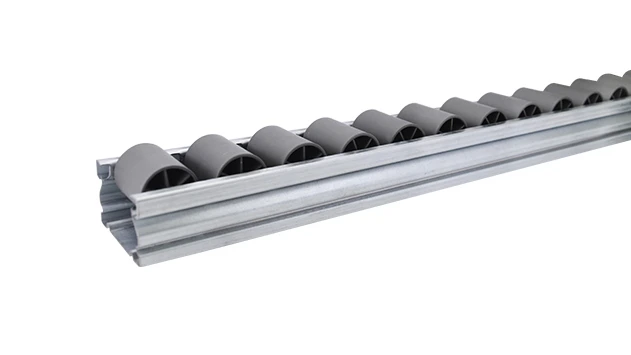
60 Steel Roller Track Grey
The roller track can be installed with multiple accessories to create different slopes and configurations of flow racks.All steel conveyor 60 roller track accessories are engineered to perfectly fit the sliding rail.
Every manufacturing team knows the grind: parts piling up at bottlenecks, workers trekking across the floor for supplies, layouts that feel like concrete when your production needs shift. Lean manufacturing isn't just a buzzword—it's a promise of smarter work, not harder. But turning that promise into reality requires tools that don't just do a job, but adapt to your job. Today, we're breaking down two game-changers that can redefine your workstation efficiency: the 60 Steel Roller Track Grey and Workbench E. Together, they're the backbone of a flexible lean system that grows with your business, cuts waste, and puts control back in your hands.
Why 60 Steel Roller Track Grey Is a Lean Must-Have
Let's get into the nitty-gritty of the 60 Steel Roller Track Grey. At first glance, it's a simple steel track with rollers—but don't let simplicity fool you. This track is engineered for durability and performance, making it a staple in industries from 3C assembly to automotive manufacturing.
Built from high-grade cold-rolled steel with a matte grey powder coating, it resists scratches, corrosion, and stains—critical for environments where cleanliness (like medical device production) or heavy use (like automotive parts handling) is non-negotiable. The coating also reduces glare, which is a small but impactful detail for workers spending hours at the station.
Pro Tip:
For wet or humid environments (like food processing or outdoor storage), pair the track with stainless steel rollers to boost corrosion resistance.
Workbench E: Your Station's Versatile Backbone
Workbench E (single deck, no casters) isn't just a table—it's a modular platform designed to support lean workflows. Made from lightweight yet robust aluminum, it balances strength with flexibility, so you can customize it without weighing down your space.
The single-deck design features an anti-slip, wear-resistant surface that holds tools and parts in place, even during fast-paced assembly. Without casters, it stays rock-solid for heavy tasks like drilling or tightening bolts—but if you later need mobility, you can add casters with minimal effort (thanks to pre-drilled mounting points).
What sets Workbench E apart from traditional workbenches is its adaptability. If your team switches from assembling smartphones to tablets, you don't need a new bench—just reconfigure the attached components to fit the new parts. It's lean at its core: reusable, sustainable, and always improving.

Pairing 60 Steel Roller Track Grey with Workbench E: A Step-by-Step Guide
The real magic happens when these two components work together. Let's walk through how to integrate them into a 3C assembly station—one of the most common use cases for lean systems.
Step 1: Prepare the Workbench E
Start by placing Workbench E in your desired location. Ensure it's level (use adjustable leveling feet if needed) to prevent parts from sliding off the surface. If you're using an ESD surface, connect it to your facility's grounding system to eliminate static.
Step 2: Mount the 60 Steel Roller Track Grey
Use internal rotary aluminum joints to attach the track to the side of Workbench E. These joints let you adjust the track's angle (from 0° to 45°) to control part flow speed. For 3C assembly, a 15° angle works best—fast enough to keep parts moving, but slow enough to prevent damage.
Step3: Integrate Flow Racks
Position a flow rack next to the track. Load the rack with raw parts (like circuit boards or batteries) so they slide down to the track via gravity. This creates a "pull" system: parts move to the station only when needed, reducing overstock and waste.
Step4: Add Lean Pipe Shelves
Use aluminum lean pipe to build a shelf above Workbench E. Attach tool holders for screwdrivers, pliers, and testers—keeping everything within arm's reach. This cuts down on movement waste (a key lean principle) and reduces the risk of lost tools.
| Layout Type | Best For | Key Components | Efficiency Benefits |
|---|---|---|---|
| Linear Track + Workbench | Small-scale 3C assembly lines | 60 Steel Roller Track Grey, Workbench E, Flow Rack | Reduces part retrieval time by 20%; minimizes cross-traffic. |
| U-Shaped Track + Workbench | High-volume automotive parts assembly | 60 Steel Roller Track Grey, Workbench E, Conveyor, Internal Rotary Joint | Cuts movement waste by 30%; supports continuous flow. |
| L-Shaped Track + Workbench | Warehousing order picking | 60 Steel Roller Track Grey, Workbench E, Aluminum Lean Pipe | Maximizes space utilization by 25%; speeds up order fulfillment. |

Real-World Impact: How ABC Tech Transformed Their 3C Line
ABC Tech is a 3C assembly plant specializing in wireless earbuds. Before adopting the 60 Steel Roller Track Grey and Workbench E, their line was plagued by bottlenecks: workers spent 18 minutes per hour walking to grab parts from a distant storage room, and 10% of parts were damaged during transport.
They decided to redesign their 5 assembly stations with the lean components. Here's what changed:
22%
Reduction in production time per unit
18%
drop in part damage rate
$50k/year
Labor cost savings
35%
Increase in daily output
"We used to think we needed expensive automation to boost efficiency," says ABC Tech's production manager. "But these two components gave us better results at a fraction of the cost. The track and workbench are so easy to adjust—when we launched our new earbud model, we reconfigured the stations in a day. No downtime, no hassle."
Level Up Your Lean Station with Additional Components
Once you have the core setup, you can add more lean tools to make it even more powerful. Here are our top picks:
Internal Rotary Aluminum Joint:
This joint is a game-changer for adaptability. It lets you rotate the 60 Steel Roller Track Grey or lean pipe shelves 360° without tools. If you need to redirect part flow or adjust a shelf height, just twist the joint—perfect for teams that switch products frequently.
Conveyor System:
For longer production lines, connect the 60 Steel Roller Track Grey to a conveyor. This lets parts move from the workbench to the next station automatically, reducing manual handling and fatigue. It's ideal for automotive or medical device manufacturing where parts are heavy or bulky.
ESD Workstation Accessories:
For electronics manufacturing, add ESD-safe mats, wrist straps, and tool holders to your Workbench E. This protects sensitive components from static discharge, which can cause costly defects.
Lean Pipe Material Rack:
Use aluminum lean pipe to build a material rack next to the workbench. Store finished products or packaging materials here—keeping the station organized and reducing clutter.
Choosing the Perfect Layout for Your Industry
Not all layouts work for all industries. Here's how to pick the right one for your team:
3C Assembly:
Go for a linear layout with the 60 Steel Roller Track Grey and Workbench E. The track feeds small parts directly to the worker, and the workbench provides enough space for precise assembly. Add ESD components to protect circuit boards.
Medical Device Manufacturing:
Opt for a U-shaped layout with a conveyor. The U-shape lets workers access parts from multiple angles, and the conveyor moves finished devices to quality control. Use stainless steel components to meet hygiene standards.
Final Thoughts: Build a Lean Workstation That Works for You
Lean manufacturing is about more than cutting costs—it's about creating a workspace where your team can thrive. The 60 Steel Roller Track Grey and Workbench E are more than tools; they're investments in efficiency, adaptability, and worker satisfaction. By pairing these components with other lean tools like aluminum lean pipe and internal rotary joints, you can build a station that grows with your business, reduces waste, and boosts productivity.
Whether you're a small 3C startup or a large automotive plant, these components can help you turn lean principles into tangible results. The best part? You don't need to overhaul your entire line at once. Start with one workstation, see the difference, and expand from there. Small changes lead to big wins.
So, what are you waiting for? It's time to stop settling for rigid, inefficient workstations. Embrace the flexibility of the 60 Steel Roller Track Grey and Workbench E—and watch your team's productivity soar.