- Company Articles
- Products and Technology
- Product knowledge
- 60 Steel Roller Track Small Wheels vs. Casters: Key Differences in Application

60 Steel Roller Track Small Wheels vs. Casters: Key Differences in Application
Related Product
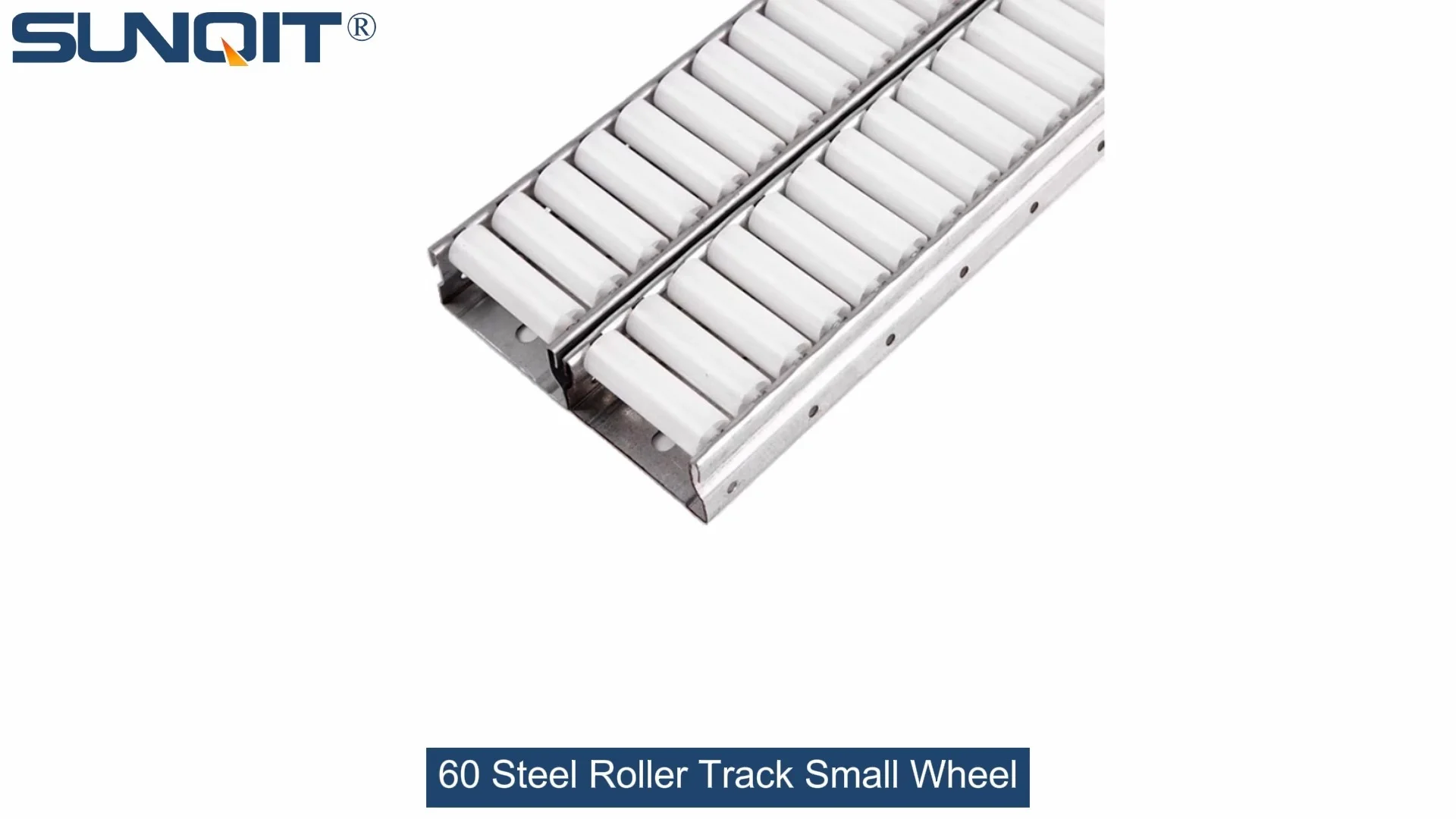
60 Steel Roller Track Small Wheel
Modular system roller tracks aluminum gravity roller tracks are an excellent solution for transporting materials within industrial environments, warehouses and distribution centres.
60 Steel Roller Track Small Wheels vs. Casters: Key Differences in Application
If you've ever walked through a busy manufacturing floor or a well-organized warehouse, you've probably seen two essential components working behind the scenes to keep operations running smoothly: roller tracks and casters. But when it comes to choosing between 60 steel roller track small wheels and caster wheels for your material handling needs, it's not always clear which one fits best. Let's dive deep into their differences, applications, and how to pick the right one for your lean solution.
What Are 60 Steel Roller Track Small Wheels?
Let's start with 60 steel roller track small wheels—these are the unsung heroes of linear material flow. As the name suggests, they're small, steel-made wheels that fit into roller tracks to create a smooth, low-friction surface for moving items in a straight line.
First, let's talk about their specs. The 60 steel roller track small wheels are designed for medium to heavy loads, typically ranging from 50 to 200 kg per wheel (depending on the model). They're made from high-quality steel, which means they're durable enough to handle constant use in harsh manufacturing environments—think automotive assembly lines or 3C production floors where parts are moved around all day long.
Where do you find these wheels? They're a core component of flow racks and conveyors. For example, a flow rack uses these roller wheels to let bins of parts slide down to the picker, following the first-in-first-out (FIFO) principle that's central to lean manufacturing. Conveyors, too, rely on these wheels to transport products from one station to another without manual intervention—saving time and reducing the risk of human error.
Another common application is in lean pipe workbenches. A workbench where parts need to be moved from one end to the other quickly can benefit from a section of roller track with these small wheels, making the process seamless. For industries like medical device manufacturing, where precision and hygiene are key, these steel wheels are easy to clean and maintain, which is a big plus.
What makes these wheels stand out? Their focus on linear movement. They're not meant for turning or swiveling—they're built to keep things moving in a straight line efficiently. This makes them perfect for scenarios where you need a consistent, predictable flow of materials, like in a production assemble line where components move from assembly to testing to packaging in a fixed path.
What Are Casters?
Now, let's shift our attention to caster wheels—these are the go-to for mobility. A caster wheel is a wheel mounted on a frame (called a yoke) that allows objects to move easily. Unlike roller track wheels, casters are designed for omnidirectional movement—meaning they can roll forward, backward, and turn 360 degrees, making them ideal for moving heavy items around tight spaces.
There are several types of casters, but the ones most relevant to our discussion are swivel casters (like the 360° swivel expanding stem casters wheel with brake) and fixed casters. Swivel casters let you turn the wheel in any direction, while fixed casters only move straight. Many casters also come with brakes, which is crucial for keeping mobile units stable when they're not in use—like a lean pipe workbench on casters that needs to stay put while a worker is assembling parts.
Caster wheels are made from a variety of materials, including steel, rubber, and polyurethane. Steel casters are great for heavy loads, while rubber or polyurethane ones are quieter and better for protecting floors. For example, in a medical device manufacturing facility, rubber casters might be used on turnover trolleys to avoid scratching the cleanroom floors.
Where do you use casters? They're everywhere: on turnover trolleys, mobile workstations, material racks, and even some lean pipe workbenches. If you need to move a workstation from one part of the floor to another to accommodate a new production line, casters make that possible in minutes. For warehouses, casters on pallet jacks or hand trolleys let workers move heavy loads around without straining their backs.
The key advantage of casters is their versatility. They can handle a wide range of loads (from light to extra heavy) and adapt to different environments. Whether you're moving a small bin of parts or a large piece of equipment, there's a caster wheel that fits the job.
Head-to-Head Comparison: 60 Steel Roller Track Small Wheels vs. Casters
| Key Feature | 60 Steel Roller Track Small Wheels | Casters | Best For |
|---|---|---|---|
| Movement Type | Strictly linear—moves only in a straight line along the roller track. | Omnidirectional—can roll forward/backward and turn 360° (swivel casters). | Roller Wheels: Fixed flow paths (conveyors, flow racks). Casters: Mobile units (trolleys, workbenches). |
| Load Capacity | Medium to heavy—50-200 kg per wheel (model-dependent). | Wide range—10-50 kg (light) to 500+ kg (extra heavy) per caster. | Roller Wheels: Consistent linear flow of medium loads. Casters: Variable loads needing mobility. |
| Application Scenario | Static/semi-static setups with fixed material flow (flow racks, conveyors, assembly lines). | Dynamic setups requiring frequent movement (turnover trolleys, mobile workstations). | Roller Wheels: Production lines, warehouse storage. Casters: Maintenance carts, portable stations. |
| Durability | High—steel construction resists wear from constant linear use. | Material-dependent: Steel (durable) or rubber/polyurethane (quiet, floor-friendly). | Roller Wheels: Harsh manufacturing environments. Casters: Cleanrooms (rubber) or heavy-duty areas (steel). |
| Lean System Integration | Perfect for flow-based lean systems (FIFO, just-in-time) in conveyors/flow racks. | Ideal for flexible lean systems (quick reconfiguration, mobile workstations). | Roller Wheels: Streamlining material flow. Casters: Adapting to changing production needs. |
| Maintenance Needs | Minimal—occasional lubrication and alignment checks. | Regular—inspect wear, tighten bolts, lubricate joints, check brakes. | Roller Wheels: Low-maintenance setups. Casters: High-use mobile units. |
How to Choose Between Them for Your Lean Solution?
Choosing between 60 steel roller track small wheels and casters isn't a one-size-fits-all decision. It depends on your specific needs. Here are key questions to guide you:
1. **Linear Flow or Mobility?** If you need steady, straight-line material movement (like a conveyor system), roller track wheels are best. For moving items around freely (like a mobile lean pipe workbench), casters are the way to go.
2. **Load Requirements?** Roller track wheels handle medium-heavy loads in linear flow, while casters cover everything from light to extra-heavy loads with mobility.
3. **Static or Dynamic Setup?** For fixed layouts (flow racks in a warehouse), roller tracks work. For layouts that change often (3C assembly lines switching product models), casters let you adjust quickly.
Let's take real-world examples:
- A 3C assembly plant uses flow racks with roller track wheels to slide phone components to pickers. Mobile lean pipe workbenches with casters bring tools directly to assembly stations, cutting travel time.
- A medical supply warehouse uses flow racks (roller tracks) for FIFO storage. Turnover trolleys with casters transport supplies to production areas, navigating narrow hallways easily.
The best lean solutions often combine both. A conveyor (roller tracks) feeding parts to a mobile workstation (casters) creates seamless, flexible flow—aligning with our core lean: "reusable, sustainable improvement". Both components are reusable and reconfigurable as needs evolve.
Maintenance Tips for Longevity
To maximize component life, follow these maintenance steps:
**For 60 Steel Roller Track Small Wheels:**
- Clean wheels regularly to remove debris causing friction.
- Check track alignment—misalignment leads to uneven wear.
- Lubricate bearings every 3-6 months (use-dependent) for smooth rolling.
- replace bent/worn wheels to avoid flow disruptions.
**For Casters:**
- Inspect wheels for cracks/flattening—replace worn ones promptly.
- Tighten frame bolts to ensure stability.
- Lubricate swivel joints/bearings every 2-4 months to prevent rust.
- Test brakes (if present) regularly for safety.
These simple steps extend component life and keep operations running smoothly.
Conclusion
60 steel roller track small wheels and casters are both essential to modern material handling, but they serve distinct roles. Roller tracks excel at linear flow (conveyors, flow racks), while casters enable mobility (trolleys, mobile workbenches).
The right choice depends on your needs: linear flow vs. mobility, static vs. dynamic setup, load capacity. By understanding these differences, you can build a lean system that's efficient, flexible, and aligned with your operational goals.
Whether you need roller track wholesale, caster wheel wholesale, or custom lean solutions, our products are designed to be reusable and sustainable—helping you improve operations over time. Next time you plan your material handling system, consider these two components—they might be the difference between a good operation and a great one.