- Company Articles
- Products and Technology
- Solution
- 60 Steel Roller Track White and Workbench E: Optimizing Assembly Stations

60 Steel Roller Track White and Workbench E: Optimizing Assembly Stations
Related Product
60 Steel Roller Track White
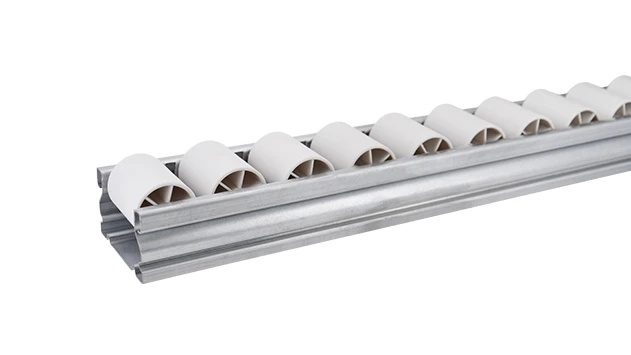
The roller track can be installed with multiple accessories to create different slopes and configurations of flow racks.All steel conveyor 60 roller track accessories are engineered to perfectly fit the sliding rail.It is enable the movement of SLC boxes.
60 Steel Roller Track White and Workbench E: Optimizing Assembly Stations
Assembly stations are the heartbeat of any manufacturing line—every second saved, every movement reduced, and every part organized contributes to smoother operations, lower costs, and happier teams. But achieving that ideal workflow isn't just about hard work; it's about choosing the right tools that align with lean principles. Today, we're diving into two game-changers for assembly optimization: the 60 Steel Roller Track White and Workbench E. Together, they don't just add to your workspace—they transform it into a lean, mean, productivity machine.
What Makes 60 Steel Roller Track White Stand Out?
Key Features of 60 Steel Roller Track White
Let's start with the 60 Steel Roller Track White. At first glance, it might look like a simple strip of steel with rollers, but there's more to it than meets the eye. Made from high-quality steel with a sleek white finish, this roller track isn't just durable—it's designed to withstand the rigors of daily manufacturing use while keeping its clean, professional look. The white coating adds an extra layer of protection against corrosion and scratches, making it ideal for industries where hygiene and appearance matter (like medical device production or 3C assembly).
The 60mm width (hence the name) is a sweet spot for most assembly line parts—from small electronic components to larger mechanical pieces. The rollers are spaced evenly to ensure smooth, consistent movement of parts along the track, so you don't have to worry about jams or stuck items slowing down your line. And because it's compatible with a wide range of lean tools (like flow racks and conveyors), you can easily integrate it into your existing setup or build a new one from scratch.
But what really sets this roller track apart is its versatility. You can mount it horizontally on workbenches to feed parts directly to workers, attach it to flow racks to store and retrieve materials efficiently, or even link it to conveyors for longer, automated lines. In 3C assembly lines, for example, the 60 Steel Roller Track White is often used to move phone casings from one station to the next—reducing the need for workers to reach across cluttered tables or walk to grab parts.
Another key benefit is its low maintenance. The steel construction means it doesn't bend or break easily, and the white finish is easy to clean—just wipe it down with a damp cloth to remove dust or debris. For factories that operate 24/7, this low maintenance is a huge plus; it minimizes downtime and keeps the line running smoothly.
Unpacking Workbench E: Your Lean Workspace Foundation
Why Workbench E Is a Lean Favorite
Now, let's talk about Workbench E. If the 60 Steel Roller Track White is the "flow" of your assembly station, Workbench E is the "foundation." This single-deck workbench (without casters, as per its design) is built using sturdy aluminum profiles and lean pipe components—two materials that are synonymous with lean manufacturing's focus on durability and reusability.
Ergonomics is a big part of Workbench E's appeal. Its height is optimized for standing workers (or you can add adjustable feet if needed) to reduce back strain and fatigue over long shifts. The single deck provides ample space for tools, parts, and equipment, while the aluminum profile frame ensures stability even when holding heavy items. And because it's made from lean pipe and aluminum profile parts, you can easily customize it—add shelves, tool holders, or even the 60 Steel Roller Track White to the side to create a fully integrated workspace.
Workbench E is perfect for lean practices because it helps eliminate waste. No more searching for tools or parts—everything is within arm's reach. No more wobbly work surfaces that cause errors—its solid frame keeps your workspace steady. And since it's built with reusable components, you can reconfigure it as your assembly needs change (like switching from assembling phones to tablets) without having to buy a whole new workbench.
For industries like medical device production, Workbench E's aluminum profile construction is a must. Aluminum is non-porous, so it doesn't harbor bacteria—making it easy to sanitize and meet strict hygiene standards. In 3C assembly, the lightweight yet sturdy design means you can move the workbench (with help) if you need to rearrange your line, without compromising on stability.
Synergy Between 60 Steel Roller Track White and Workbench E
The magic happens when you combine the 60 Steel Roller Track White with Workbench E. Let's take a deep dive into a real-world scenario: a 3C assembly line for wireless earbuds.
Workbench E serves as the main station where workers assemble the earbuds. The flat, stable deck holds their tools (like precision screwdrivers and soldering irons) and the main components (like the battery and speaker).
A 60 Steel Roller Track White is mounted on the side of Workbench E, connected to a flow rack nearby. This track feeds small parts (like earbud tips or charging ports) directly to the worker—no more turning around or walking to grab items. The smooth rollers ensure that parts glide easily, so workers don't have to exert extra force to get what they need.
Once an earbud is assembled, the worker can slide it along another 60 Steel Roller Track White to the next station (like quality control) without having to pick it up and carry it. This reduces the risk of dropping or damaging the finished product.
For quality control, another Workbench E is set up with a 60 Steel Roller Track White attached. Inspectors can slide the earbuds along the track to check for defects, then send them to packaging via another track.
This setup reduces unnecessary movement by up to 30% (based on lean manufacturing data), which translates to more completed units per hour and fewer worker injuries. For medical device production, the clean white finish of the roller track and the sturdy aluminum profile of Workbench E are ideal—they meet the strict hygiene standards required for assembling devices like syringes or diagnostic tools. The white finish also makes it easy to spot any contaminants, ensuring that the final product is safe for use.
Beyond the Basics: Integrating with Other Lean Tools
The 60 Steel Roller Track White and Workbench E are great on their own, but they become even more powerful when paired with other lean tools from the product lineup. Let's look at a few examples:
Flow Racks:
Attach the 60 Steel Roller Track White to flow racks to create a "first-in, first-out" (FIFO) storage system. This ensures that older parts are used first, reducing waste from expired or obsolete materials. For example, in a medical device factory, flow racks with the roller track can store sterile components, keeping them organized and easy to access. Workers can simply pull the parts from the front of the rack, and new parts slide down automatically.
Conveyors:
Link the 60 Steel Roller Track White to conveyors for longer assembly lines. In an automotive parts factory, this setup can move engine components from Workbench E (where they're assembled) to a conveyor that takes them to the next stage of production (like painting). The roller track acts as a bridge between the workbench and the conveyor, ensuring a smooth transition of parts.
Aluminum Profile Accessories:
Add aluminum profile accessories (like tool holders or shelf brackets) to Workbench E to further organize your workspace. For instance, you can attach a tool holder to the side of the workbench to keep screwdrivers and pliers within easy reach, or add a shelf above to store manuals or quality checklists. These accessories are easy to install and remove, so you can adjust your workspace as needed.
Turnover Trolleys:
Use turnover trolleys to transport parts between Workbench E stations. The 60 Steel Roller Track White can be attached to the trolleys to make loading and unloading parts easier. For example, in a warehouse, you can use a turnover trolley with the roller track to move parts from storage to Workbench E—reducing the need for manual lifting.
All these integrations are part of a complete lean solution—one that focuses on reusability, sustainability, and continuous improvement. Whether you're in 3C assembly, medical device production, or (warehousing and logistics), this combination of tools can help you optimize your assembly stations and achieve your lean goals.
Real-World Impact: Case Studies
Case Study 1: 3C Assembly Line Optimization
A leading 3C manufacturer was struggling with low productivity in their phone assembly line. Workers were spending too much time walking to grab parts, and the assembly stations were cluttered with tools and materials. The company decided to implement Workbench E and 60 Steel Roller Track White in their line.
After the implementation, the manufacturer saw a 25% increase in daily production. Workers no longer had to walk to grab parts—they were fed directly via the roller track. The cluttered workstations were replaced with organized Workbench E setups, reducing errors by 15%. The company also noted that worker fatigue decreased significantly, leading to lower turnover rates and higher employee satisfaction.
The manufacturer also reported a 20% reduction in waste from damaged parts. Because parts were sliding along the roller track instead of being carried, there were fewer drops and scratches—saving the company thousands of dollars in replacement costs.
Case Study 2: Medical Device Production Efficiency
A medical device company needed to improve the hygiene and efficiency of their syringe assembly line. The existing workstations were made of wood, which was hard to clean, and parts were stored in plastic bins that were difficult to access. The company switched to Workbench E (with aluminum profiles) and 60 Steel Roller Track White (with its clean white finish).
The results were impressive: a 20% reduction in time spent on cleaning, and a 18% increase in production. The aluminum workbenches were easy to sanitize, and the roller track fed sterile components directly to workers. The company also passed their next hygiene audit with flying colors, as the white finish of the roller track made it easy to spot any contaminants.
The company's quality control team reported a 12% decrease in defects, as the stable Workbench E and smooth roller track reduced errors during assembly. This led to fewer product recalls and higher customer satisfaction.
Benefits of the Combined Solution: A Quick Overview
| Benefit | How It's Achieved | Impact on Assembly Stations |
|---|---|---|
| Reduced Movement | Direct part feeding via 60 Steel Roller Track White | 30% fewer steps per worker, higher productivity |
| Improved Hygiene | White steel finish (anti-corrosion) and aluminum profiles | Meets medical/clean industry standards, reduces contamination risks |
| Flexibility | Reusable components (lean pipe, aluminum profiles) | Easily reconfigure stations as needs change, no need for new equipment |
| Durability | High-quality steel and aluminum materials | Longer lifespan, lower replacement costs, minimal downtime |
| Ergonomics | Optimized height of Workbench E | Reduced worker fatigue and injuries, higher employee satisfaction |
| Waste Reduction | FIFO storage via flow racks, smooth part movement | 20% less waste from damaged parts or expired materials |
| Low Maintenance | Steel construction and easy-to-clean finish | Minimizes downtime, keeps lines running 24/7 |
Why Choose This Lean Solution for Your Assembly Line?
In today's competitive manufacturing landscape, every advantage counts. The 60 Steel Roller Track White and Workbench E offer a unique combination of flexibility, durability, and efficiency that can help you stay ahead of the curve. Here's why you should consider them:
Lean Principles at Heart:
Both tools are designed with lean manufacturing in mind—focusing on reducing waste, improving flow, and continuous improvement. They align with the "kaizen" philosophy of making small, incremental changes to achieve big results.
Customizable:
You can easily add or remove components to fit your specific assembly needs. Whether you're assembling small electronics or large mechanical parts, these tools adapt to you.
Sustainable:
The reusable components mean you don't have to throw away entire workstations or tracks when your needs change—reducing your environmental footprint and saving money in the long run.
Proven Results:
As shown in the case studies, these tools deliver measurable improvements in productivity, efficiency, and worker satisfaction. They're not just theoretical—they work in real-world factories.
Cost-Effective:
While the initial investment may seem high, the long-term savings from reduced waste, lower maintenance, and higher productivity make these tools a smart choice for any manufacturing business.
Conclusion
The 60 Steel Roller Track White and Workbench E are more than just tools—they're investments in your assembly line's future. By combining smooth part flow, sturdy workspaces, and lean principles, they help you create assembly stations that are efficient, ergonomic, and adaptable. Whether you're in 3C assembly, medical device production, or any other manufacturing industry, this combination can help you optimize your operations and achieve your business goals.
So why wait? Start transforming your assembly stations today with the 60 Steel Roller Track White and Workbench E. Your workers, your bottom line, and your customers will thank you.