
Why 60 Steel Roller Track White Is a Game-Changer for Lean Kanban
If you've ever walked through a well-organized manufacturing floor or a warehouse, chances are you've seen those smooth, gliding roller tracks that make moving parts and products a breeze. Today, we're diving deep into one specific star player: the 60 Steel Roller Track White, and how it can supercharge your Lean Kanban systems. Whether you're new to Kanban or looking to upgrade your existing setup, this guide will give you practical, actionable tips to implement it effectively. From choosing the right components to training your team, we'll cover everything you need to know to create a workflow that's smoother, faster, and more efficient.
Quick Refresher: What Is Lean Kanban Anyway?
For those who might need a quick recap, Lean Kanban is a visual management system that originated from Toyota's production lines. It's all about three core principles: visualizing work, limiting work in progress (WIP), and optimizing the flow of materials or tasks. Unlike push systems where work is forced through the pipeline regardless of demand, Kanban is a pull system—meaning work only moves forward when the next stage is ready to handle it. Roller tracks like the 60 Steel White variant are perfect here because they enable that seamless flow, reducing friction and wait times between stations. They turn static piles of parts into a dynamic, moving stream that keeps your team focused and productive.

Key Benefits of Choosing 60 Steel Roller Track White
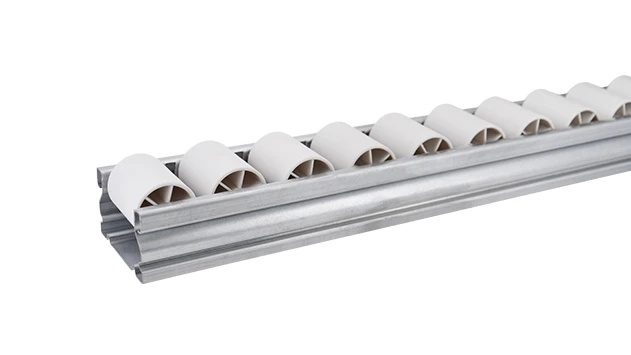
Not all roller tracks are created equal. The 60 Steel Roller Track White stands out for several reasons:
- Durability: Made from high-quality steel with a thickness that can handle heavy loads (up to 50kg per meter, depending on the setup), it won't bend or break even with constant use. This makes it ideal for industries like automotive manufacturing where parts can be bulky and heavy.
- Smooth Flow: The white rollers are designed to glide effortlessly, ensuring parts move quickly and quietly from one station to the next. No more struggling to push boxes or components—gravity does the work for you.
- Visibility: The crisp white color of the track makes it easy to spot any blockages, dirt, or debris. This is critical for industries like medical device manufacturing where cleanliness is non-negotiable.
- Compatibility: It works seamlessly with other lean tools like flow racks, conveyors, and lean pipe workbenches. This means you can integrate it into your existing setup without having to replace everything.
- Flexibility: The track can be cut to custom lengths and connected with various joints, allowing you to create layouts that fit your specific workflow. Whether you need a straight line, a curve, or a split, the 60 Steel Roller Track White can adapt.

Step-by-Step Implementation Tips
Implementing the 60 Steel Roller Track White isn't just about installing it—you need to plan carefully to get the most out of it. Let's break down the process into actionable steps:
1. Assess Your Current Workflow
Before you start, take a close look at your current Kanban system. Where are the bottlenecks? Which areas need better flow? For example, if your assembly line has a station where parts pile up because workers can't move them fast enough, that's a perfect spot for the roller track. Talk to your team—they're the ones on the ground every day, so they know the pain points best. Ask them questions like: "Which tasks take longer than they should?" and "Where do you waste the most time?" Their answers will help you prioritize where to install the track first.
2. Choose the Right Components
The 60 Steel Roller Track White doesn't work alone. You'll need to pair it with compatible parts to create a complete system. Here's a detailed table of essential components:
| Component | Purpose | Key Considerations |
|---|---|---|
| 60 Steel Roller Track White | Main track for smooth material flow | Choose length based on your workflow; opt for corrosion-resistant coating if used in damp environments |
| Roller Track Connectors | Join multiple tracks together or attach to frames | Use steel connectors for heavy loads; plastic connectors for lighter applications |
| End Support with Stop | Prevent items from falling off the end of the track | select stops with rubber padding to reduce noise and damage to parts |
| Flow Rack | Store parts on the track for easy access | Choose a rack with adjustable shelves to fit different part sizes |
| Lean Pipe Workbench | Workstation where parts are processed | Ensure the workbench height matches the track to create a seamless transition |
3. Install with Precision
Installation is crucial to the success of your system. Here's how to do it right:
- Level the Track: Use a spirit level to ensure the track is perfectly horizontal (or slightly tilted downward for gravity flow). Even a 1-degree tilt can cause items to move too fast or get stuck.
- Secure Connectors: Tighten all connectors firmly to prevent the track from shifting. For heavy loads, use bolts instead of screws for extra stability.
- Test the Flow: After installation, place a few parts on the track to see how they move. If they get stuck, adjust the angle or clean the rollers.
4. Train Your Team
Your team needs to know how to use the new system effectively. Schedule a training session where you demonstrate:
- How to load items onto the track (avoid overloading—stick to the recommended weight limit)
- How to spot and fix common issues like jammed rollers or loose connectors
- How to maintain the track (cleaning, lubrication, etc.)
Encourage hands-on practice during the training. The more comfortable your team is with the system, the more likely they are to use it correctly.
5. Test Before Full Deployment
Don't roll out the new system across your entire facility all at once. Start with a small pilot project—maybe one assembly line or a single flow rack. This allows you to iron out any kinks before scaling up. For example, if you're testing the track in a 3C assembly station, monitor how long it takes for parts to move from one station to the next. Are there any jams? Do workers find it easy to use? Gather feedback and make adjustments. Once the pilot is successful (e.g., you've reduced cycle time by 10% or more), you can expand to other areas.
Real-World Examples of Success
Let's look at how different industries have used the 60 Steel Roller Track White to transform their Lean Kanban systems:
3C Assembly Industry
A leading 3C assembly plant that produces smartphone components was struggling with bottlenecks in their camera lens assembly line. Parts were piling up at the inspection station, causing delays downstream. They installed the 60 Steel Roller Track White between the inspection station and the final assembly station, paired with a lean pipe workbench at the assembly end. The result? Cycle time for that step decreased by 20%, and workers reported less fatigue because they no longer had to walk back and forth to retrieve parts. The white color of the track also made it easier to spot any missing or damaged lenses, reducing defects by 15%.
Medical Device Manufacturing
A medical device manufacturer that produces insulin pumps needed a way to move sensitive circuit boards between stations without static damage. They integrated the 60 Steel Roller Track White with an ESD workstation. The track's smooth surface ensured that the circuit boards glided without friction, and the white color made it easy to check for any dust or debris that could compromise the boards. The team also used roller track connectors to create a custom layout that fit their specific workflow. This setup not only improved efficiency but also helped them pass their annual ISO 13485 audit with flying colors—auditors praised the system's cleanliness and compliance with strict hygiene standards.
Warehouse Logistics
A large warehouse that handles consumer electronics was struggling with slow picking times. They installed the 60 Steel Roller Track White in their flow racks to create a first-in, first-out (FIFO) system. Workers could pull items from the front of the rack, and new items were replenished from the back. This reduced picking time by 25% because workers no longer had to search for items—they were always at the front of the rack. The white track also made it easier to scan barcodes, reducing errors by 18%.
Integrating with Other Lean Tools for Maximum Impact
The 60 Steel Roller Track White is even more powerful when combined with other lean tools:
Flow Racks
Flow racks are the perfect companion for the roller track. They hold the track at an angle, allowing gravity to move parts from the back to the front. This is ideal for FIFO systems, as older items are used first. For example, in a warehouse, flow racks with the 60 Steel Roller Track White can store small parts like screws or connectors, making them easy to access and replenish.
Conveyors
For longer distances, connect the roller track to a conveyor system. This allows items to move automatically from one part of the facility to another, saving time and labor. For example, a conveyor can take finished products from the assembly line to the packaging area, with the roller track handling the final stages (e.g., moving products from the conveyor to the packaging workstation).
Lean Pipe Workbenches
Lean pipe workbenches are flexible and customizable. Adding the 60 Steel Roller Track White to the bench creates a workstation that's both efficient and adaptable. For example, in a 3C assembly plant, a lean pipe workbench with a roller track can hold small components like phone screens, allowing workers to slide them directly to their work area without having to reach or bend over.
Custom Lean Solutions
Every business is unique. If your needs are specific, consider a custom lean solution. For example, a car parts manufacturer might need a track system that can handle heavy engine components. A lean solution provider can design a setup with reinforced tracks and heavy-duty connectors to meet those needs. The 60 Steel Roller Track White is versatile enough to be part of any custom solution.
Maintenance Tips to Keep Your System Running Smoothly
To get the most out of your 60 Steel Roller Track White, regular maintenance is key. Here's a suggested schedule:
- Daily: Wipe down the rollers and frame with a clean, dry cloth to remove dirt and debris. This prevents jams and ensures smooth flow.
- Weekly: Check all connectors and fasteners for looseness. Tighten any that are wobbly to keep the track stable. Also, inspect the rollers for any signs of wear (e.g., cracks or bent edges).
- Monthly: Apply a small amount of silicone-based lubricant to the rollers. Avoid oil-based lubricants, as they can attract dust and cause jams. Be sure to wipe off any excess lubricant to prevent it from getting on parts.
- Quarterly: Conduct a full inspection of the system. Check the alignment of the track, the condition of the flow rack, and any other connected components. This is a good time to make any major adjustments or upgrades (e.g., replacing worn rollers or adding new connectors).
- Annually: Bring in a lean solution expert to audit your system. They can identify areas for improvement and suggest upgrades that will further optimize your workflow.
Continuous Improvement
Lean is a journey, not a destination. Encourage your team to suggest improvements to the system. Maybe the track needs to be longer, or the angle adjusted. Small changes can make a big difference in efficiency. For example, if workers find that items move too fast down the track, adding a slight brake (like a rubber pad) or adjusting the slope can fix the issue. Or if parts are getting stuck at a certain point, adding a few extra rollers can help. The key is to keep listening to your team and making adjustments as needed.
Final Thoughts: Embrace the Flow
The 60 Steel Roller Track White is more than just a piece of equipment—it's a tool that can transform your Lean Kanban system. By following these implementation tips, you'll create a workflow that's smoother, faster, and more efficient. Remember to assess your needs, choose the right components, train your team, and keep optimizing. Whether you're in 3C assembly, medical device manufacturing, or warehouse logistics, this track can help you achieve your lean goals.
So, what are you waiting for? Start exploring how the 60 Steel Roller Track White can improve your operations today. Your team will thank you, and your bottom line will too. After all, in the world of lean manufacturing, every small improvement adds up to big results.