- Company Articles
- Products and Technology
- Solution
- 60 Steel Roller Track White: Ideal Solution for Medical Device Manufacturing

60 Steel Roller Track White: Ideal Solution for Medical Device Manufacturing
Related Product
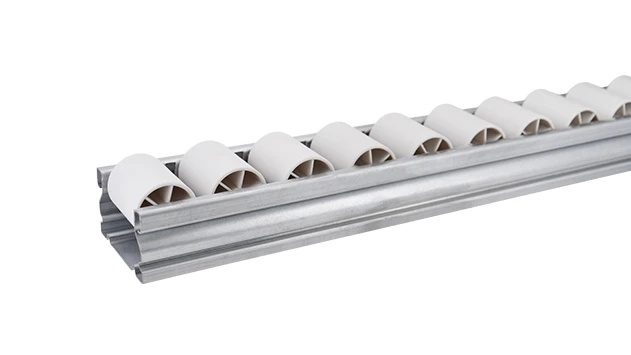
60 Steel Roller Track White
The roller track can be installed with multiple accessories to create different slopes and configurations of flow racks.All steel conveyor 60 roller track accessories are engineered to perfectly fit the sliding rail.It is enable the movement of SLC boxes.
60 Steel Roller Track White: Ideal Solution for Medical Device Manufacturing
The Unsung Hero of Medical Device Production: Material Handling
Medical device manufacturing is a world where precision isn't just a goal—it's a necessity. Every stitch in a surgical gown, every component in a pacemaker, every test tube in a diagnostic kit has to be perfect. But what if the way you move these components is holding you back? What if your current material handling system is causing delays, contamination, or damage to delicate parts? That's where the right tools come in, and the 60 Steel Roller Track White is one tool that's changing the game.
Let's be honest: material handling isn't the most glamorous part of medical manufacturing. But it's the backbone of everything you do. If parts can't move smoothly from one station to another, your entire line slows down. If your tracks are hard to clean, you risk failing regulatory audits. If your system isn't flexible, you can't adapt to new product lines or changing demand. The 60 Steel Roller Track White addresses all these issues and more.
What Makes 60 Steel Roller Track White Special?
Let's break down the features that make this roller track a must-have for medical device manufacturers:
Corrosion-Resistant White Coating:
The white powder coating isn't just aesthetic. It's a barrier against rust and bacteria, which is critical for sterile environments. Unlike bare steel, which can harbor germs or corrode over time, this coating keeps the track clean and compliant with FDA and ISO standards.
Heavy-Duty Steel Build:
This track can handle up to 500 lbs per linear foot (depending on configuration). Whether you're moving metal surgical instruments or bulk packs of diagnostic reagents, it won't bend or break.
Smooth Roller Action:
The rollers are precision-engineered to reduce friction, so parts glide without jamming. This minimizes the risk of damage to delicate components like catheters or sensor chips.
Easy to Integrate:
It works seamlessly with flow racks, ESD workstations, and other lean system components. You can use roller track connectors to create custom layouts—straight lines, curves, or even multi-level systems.
Synergy with Lean Components
The 60 Steel Roller Track White doesn't work alone. When paired with other lean tools, it becomes a powerful system that optimizes your entire production process. Let's look at some key combinations:
1. Flow Racks for FIFO Inventory
Flow racks are a staple in lean manufacturing, and when you add 60 Steel Roller Track White to them, you get a first-in-first-out (FIFO) system that's perfect for medical components. For example, if you're storing sterile syringes, FIFO ensures that the oldest stock is used first, reducing waste and ensuring product freshness. The smooth rollers make it easy for workers to pick parts without disturbing the rest of the rack.
2. ESD Workstations for Static-Sensitive Parts
Many medical devices (like pacemakers or glucose monitors) have electronic components that are sensitive to static electricity. ESD workstations dissipate static, but you need a way to move parts to these stations without exposing them to static discharge. The 60 Steel Roller Track White can be coated with an anti-static layer to prevent this, making it safe for electronic components.
3. Conveyors for Automated Lines
If you're using automated systems (like robotic arms for assembly), the 60 Steel Roller Track White can connect to conveyors to create a fully automated line. This reduces human error and increases production speed. For example, you can use the track to move parts from a flow rack to a robotic assembly station, then to a packaging conveyor.
Real-World Use Cases in Medical Manufacturing
Let's take a look at how this roller track is used in actual medical device factories:
Case 1: Surgical Instrument Assembly
A leading surgical instrument manufacturer in Texas uses 60 Steel Roller Track White to connect flow racks to ESD workstations. The flow racks hold blade blanks, handles, and screws. Workers pick parts from the rack, assemble the instruments at the workstation, then send them via the track to a sterilization station. The white coating makes it easy to spot any contamination, and the smooth rollers ensure that instruments don't get scratched during transport.
Case 2: Diagnostic Kit Packaging
A California-based diagnostic kit maker uses this track to move kits from assembly to packaging. The track is integrated with a conveyor system that takes kits to a labeling station, then to a box-sealing machine. The easy-to-clean surface ensures that kits remain sterile, and the flexible layout allows the company to switch between different kit sizes in minutes.
Case 3: Medical Implant Storage
A orthopedic implant manufacturer uses flow racks with 60 Steel Roller Track White to store hip and knee replacements. The FIFO system ensures that implants are used in the order they were manufactured, which is critical for traceability. The white coating keeps the implants free from rust and contamination, and the heavy-duty build supports the weight of the metal implants.
Comparison to Other Tracks
How does this track compare to other options? Let's see:
| Feature | 60 Steel Roller Track White | Plastic Roller Track | Stainless Steel Track (Uncoated) |
|---|---|---|---|
| Hygiene Compliance | Excellent (easy to clean, anti-bacterial) | Good (but can crack and trap dirt) | Fair (prone to fingerprints and water spots) |
| Load Capacity | High (up to 500 lbs/ft) | Low (up to 100 lbs/ft) | High (but more expensive) |
| Cost-Effectiveness | Great (low maintenance, long lifespan) | Poor (needs frequent replacement) | Fair (high upfront cost) |
| Flexibility | High (custom connectors, layouts) | Medium (limited connector options) | Medium (rigid) |
Customization Options
Every medical facility has unique needs. Here are some ways you can customize the 60 Steel Roller Track White:
Length:
Available in any length from 1ft to 20ft (or longer with connectors).
Connectors:
Choose from 90-degree, 135-degree, or straight connectors to create custom layouts.
Anti-Static Coating:
Add an anti-static layer for electronic components like pacemakers or sensor devices.
Edge Guards:
Install plastic or metal edge guards to prevent parts from falling off the track.
Load Capacity:
Reinforce the track to handle heavier loads (up to 1000 lbs/ft).
Why It's Worth the Investment
Let's talk about the return on investment (ROI) of the 60 Steel Roller Track White:
Reduced Maintenance Costs:
The white coating is resistant to wear and tear, so you won't have to replace tracks as often. It also requires minimal cleaning—just a quick wipe with a disinfectant.
Fewer Regulatory Fines:
The compliant design ensures you pass FDA and ISO audits with ease. No more costly fines or production shutdowns.
Increased Production Speed:
Smooth roller action reduces downtime from jammed parts. This can increase your output by 15-20%.
Flexibility for Growth:
The customizable layout allows you to adapt to new product lines or changing demand without rebuilding your entire system.
How to Get Started
If you're ready to implement the 60 Steel Roller Track White in your facility, follow these steps:
1. Audit Your Current System:
Identify pain points—slow lines, dirty tracks, or inflexible layouts.
2. Consult a Lean Solution Supplier:
Work with a supplier who understands medical manufacturing. They'll help you design a custom system.
3. Test a Pilot Line:
Install the track in a small section of your line to see how it works. Gather feedback from workers.
4. Train Your Team:
Teach your workers how to use the new system—connecting tracks, cleaning them, and adjusting layouts.
5. Scale Up:
Once you're satisfied with the pilot, roll out the system to your entire line.
Debunking Common Myths
Let's set the record straight on some common misconceptions about steel roller tracks:
Myth:
Steel tracks are too heavy to move.
Fact:
The 60 Steel Roller Track White is lightweight (about 10 lbs per linear foot) and easy to reconfigure.
Myth:
White tracks get dirty easily.
Fact:
The powder coating is stain-resistant. You can wipe off spills or dirt in seconds.
Myth:
Steel tracks are expensive.
Fact:
Over time, they're cheaper than plastic tracks because they last longer and need less maintenance.
Myth:
Steel tracks generate static.
Fact:
You can add an anti-static coating to prevent static discharge, making it safe for electronic components.
The Future of Medical Material Handling
The medical device industry is evolving rapidly. With the rise of personalized medicine and 3D-printed implants, manufacturers need more flexible material handling systems. The 60 Steel Roller Track White is future-proof—its customizable design allows you to adapt to new technologies and production methods.
Another trend is automation. The 60 Steel Roller Track White can be integrated with robotic arms and conveyor systems to create fully automated lines. This reduces human error and increases efficiency, which is critical for high-volume production.
Final Thoughts
The 60 Steel Roller Track White is more than just a tool—it's an investment in your company's success. It helps you produce high-quality medical devices, comply with regulations, and adapt to changing demand. Whether you're a small startup or a large multinational, this roller track can transform your production line.
So, if you're tired of dealing with slow lines, dirty tracks, or inflexible systems, it's time to make a change. The 60 Steel Roller Track White is the ideal solution for medical device manufacturing—reliable, compliant, and flexible.
Remember: in medical manufacturing, every detail matters. The right material handling system can make all the difference between a successful product launch and a costly failure. Choose the 60 Steel Roller Track White, and take your production line to the next level.