- Company Articles
- Products and Technology
- Application Cases
- 60 Steel Roller Track White in 3C Assembly Lines: Application Guide

60 Steel Roller Track White in 3C Assembly Lines: Application Guide
Related Product
60 Steel Roller Track White
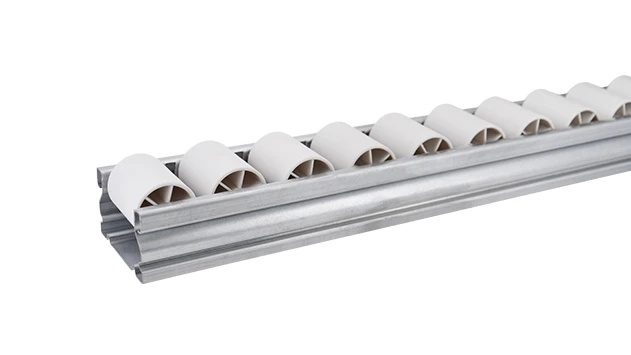
The roller track can be installed with multiple accessories to create different slopes and configurations of flow racks.All steel conveyor 60 roller track accessories are engineered to perfectly fit the sliding rail.It is enable the movement of SLC boxes.
Ever walked through a 3C assembly line and wondered how those tiny, delicate components move so smoothly from one station to the next? Chances are, you've seen a 60 Steel Roller Track White in action—quietly powering the flow of parts that eventually become your favorite smartphone, laptop, or tablet. For manufacturers in the 3C space, efficiency isn't just a buzzword; it's the difference between meeting tight deadlines and falling behind. That's where this roller track comes in: a simple yet powerful tool that's become a staple in modern lean assembly lines.
In this guide, we'll dive deep into what makes the 60 Steel Roller Track White stand out, how it integrates with other key components like flow racks and ESD workstations, and why it's a go-to choice for 3C assembly teams looking to optimize their processes. Whether you're a small workshop just starting with lean practices or a large factory scaling up production, this guide will give you all the insights you need to make the most of this versatile component.
What Is 60 Steel Roller Track White?
The 60 Steel Roller Track White is a precision-engineered component designed for material handling in assembly lines. Its name points to two core attributes: the 60mm width (a common size for 3C component trays) and the smooth white finish that adds both aesthetic appeal and functional durability. Each roller is spaced evenly to ensure even the smallest 3C parts—think microchips, USB connectors, or camera modules—glide without jams or delays.
What makes it a favorite in 3C factories? Let's start with its build: high-grade steel means it can handle moderate to heavy loads (up to 50kg per meter, depending on the design) without bending or warping. The white coating isn't just for looks—it's a corrosion-resistant layer that protects against rust and scratches, critical for clean environments where dust or debris can ruin sensitive electronics. And unlike rigid, fixed tracks, this one is modular, so it fits right into lean manufacturing's "adapt and improve" philosophy.
Key Features That Make It Ideal for 3C Assembly
Let's break down the features that set this roller track apart from others:
- Durable Steel Construction: Unlike plastic tracks that crack under repeated use, this steel track holds up to the daily grind of 3C assembly. It's perfect for moving batches of components without worrying about damage to the track or the parts.
- Static-Safe Compatibility: When paired with ESD workstations, this track helps prevent electrostatic discharge— a major risk for 3C components like motherboards or sensors. The steel material can be grounded to dissipate static, keeping your parts safe.
- Modular Design: It's easy to cut, extend, or reconfigure the track as your assembly line changes. This flexibility is a cornerstone of lean manufacturing, allowing you to adapt to new products or processes without overhauling your entire setup.
- Quiet Operation: The precision-machined rollers run silently, reducing noise in the factory. This makes for a more comfortable work environment and helps workers focus on their tasks without distractions.
- Wide Accessory Compatibility: It works with a range of lean system components—from flow racks to lean pipe workbenches. You can use roller track connectors to link sections, or placon mounts to attach it to workstations, making integration a breeze.

How It Integrates With Other Lean Components
The 60 Steel Roller Track White doesn't work in isolation—it's part of a larger ecosystem of lean tools. Here's how it fits with key components in 3C assembly lines:
1. Flow Racks: Streamlining Material Storage
Flow racks are essential for 3C factories, as they let you store components in a first-in, first-out (FIFO) system. Adding this roller track to your flow rack turns it into a dynamic feeding system: components slide down to the front of the rack as workers take them, ensuring no parts are left unused or expired. For example, a flow rack filled with smartphone batteries can use this track to feed batteries directly to the assembly station, cutting down on time spent retrieving parts.
2. ESD Workstations: Protecting Sensitive Parts
3C components are highly sensitive to static, so ESD workstations are non-negotiable. This roller track can be integrated into these workstations to create a safe path for parts. Imagine a workstation where a worker is assembling a smartwatch: the track brings in the watch case, then the circuit board, then the screen—all without static buildup. This not only protects the parts but also speeds up the assembly process, as workers don't have to handle parts manually.
3. Lean Pipe Workbenches: Enhancing Worker Efficiency
Lean pipe workbenches are the heart of many 3C assembly lines, as they're customizable to fit any task. Attaching this roller track to the workbench creates a dedicated material flow path right at the worker's fingertips. For instance, a workbench assembling laptop keyboards can use the track to bring in keycaps, then the circuit board, then the frame—all within arm's reach. This reduces the time workers spend moving around, cutting down on fatigue and increasing productivity.
4. Custom Lean Solutions: Tailored to Your Line
Every 3C assembly line is unique, so a custom lean solution is often the best choice. This roller track is a key part of these solutions—whether you need a curved track to navigate around a machine or a track that connects to a conveyor belt. A good supplier can help you design a system that uses this track to optimize your workflow, ensuring every part of your line is efficient and flexible.

Practical Applications in 3C Assembly Lines
Let's look at real-world uses of this roller track in 3C factories:
1. Component Feeding to Assembly Stations
In a smartphone assembly line, this track is used to feed small components like buttons, cameras, and speakers to workers. Each component is placed in a tray that slides down the track to the assembly station. This ensures workers always have the parts they need right in front of them, eliminating delays caused by searching for components. It also reduces the risk of parts being misplaced or damaged, as they're contained in trays.
2. Finished Product Transfer to Testing
Once a product is assembled, it needs to be tested. This track moves finished products from the assembly station to the testing station. For example, a batch of wireless earbuds slides down the track to a station where they're checked for sound quality and battery life. The smooth movement ensures the earbuds aren't jostled, which could affect test results. This step is crucial for maintaining high quality standards.
3. Inventory Management: FIFO for Raw Materials
Beyond assembly, this track is used in inventory management. Flow racks with this track store raw materials like circuit boards or screens in a FIFO system: new materials are added to the back of the rack, and old ones slide to the front. This ensures no materials are left unused, reducing waste and keeping stock fresh. For example, a factory producing tablets can use this system to store touch screens, ensuring the oldest screens are used first.
4. Packaging & Shipping: Gentle Product Handling
After testing, products need to be packaged and shipped. This track moves finished products from the testing station to the packaging station. For example, a batch of laptops slides down the track to a station where they're placed in boxes and sealed. The smooth movement avoids scratches or dents, ensuring the products reach customers in perfect condition. It also speeds up the packaging process, as workers don't have to carry heavy batches of products.
Installation & Maintenance Guide
Installing and maintaining this roller track is easy—here's how:
Installation Steps
- Plan Your Layout: Map out where you want the track to go. Consider the flow of components, workstation positions, and obstacles. This helps you determine the length of the track and the number of connectors needed.
- Gather Components: You'll need the track sections, roller track connectors, a measuring tape, and a screwdriver. Ensure all components are compatible.
- Assemble the Track: Connect sections using connectors. Most snap or screw into place—no welding needed. Ensure the track is level to avoid jams or fast-moving parts.
- Attach to Workstations: Use placon mounts or brackets to attach the track to your flow rack, ESD workstation, or lean pipe workbench. Ensure it's firmly attached to avoid wobbling.
- Test the Flow: Slide sample components down the track to check for smooth movement. Adjust the tilt or tighten connectors if needed.
Maintenance Tips
- Clean Regularly: Wipe the track with a dry cloth every week to remove dust and debris. For stubborn dirt, use a mild detergent and soft brush.
- Lubricate Rollers: Apply a small amount of lubricant to the rollers every month to keep them running smoothly. Use a lubricant safe for steel and the white finish.
- Check for Wear: Inspect the track for bent rollers or scratched finish. replace bent rollers immediately to avoid damage to components.
- Tighten Connectors: Vibration can loosen connectors—check and tighten them every two weeks.
Comparison: 60 Steel Roller Track White vs. Other Options
| Feature | 60 Steel Roller Track White | Plastic Roller Track | Aluminum Roller Track |
|---|---|---|---|
| Material | High-grade steel | PVC/ABS | Aluminum alloy |
| Durability | Excellent (resists bending/warping) | Good (prone to cracking) | Very good (lightweight but strong) |
| Static Resistance | Yes (when grounded) | No (unless treated) | Yes (natural ESD properties) |
| Compatibility with Lean Systems | Wide (flow racks, lean pipe workbenches) | Limited (fewer accessories) | Wide (but more expensive) |
| Cost | Moderate | Low | High |
| Best For | 3C assembly lines (efficiency/durability) | Small workshops (low budget) | Heavy-duty applications (automotive) |
Why This Track Is a Must-Have for 3C Factories
For 3C manufacturers, every second counts. The 60 Steel Roller Track White helps you save time and money by:
- Reducing worker fatigue and increasing productivity.
- Protecting sensitive components from damage and static.
- Adapting to your changing assembly line needs.
- Lasting longer than plastic alternatives, saving you money on replacements.
Whether you're a small workshop or a large factory, this track is a smart investment that will help you optimize your 3C assembly line.
Choosing the Right Supplier
When buying 60 Steel Roller Track White, look for a supplier that offers:
- High-quality components that meet industry standards.
- Wholesale options for bulk orders (to save money).
- Custom solutions tailored to your assembly line.
- After-sales support for installation and maintenance.
A good supplier will also have a wide range of accessories—like roller track connectors and placon mounts—to ensure your track integrates seamlessly with your existing lean system. This way, you can get everything you need in one place, making the process easier and more efficient.