- Company Articles
- Products and Technology
- Installation And Maintenance
- 60 Steel Roller Track White Installation Mistakes to Avoid

60 Steel Roller Track White Installation Mistakes to Avoid
Related Product
60 Steel Roller Track White
The roller track can be installed with multiple accessories to create different slopes and configurations of flow racks.All steel conveyor 60 roller track accessories are engineered to perfectly fit the sliding rail.It is enable the movement of SLC boxes.
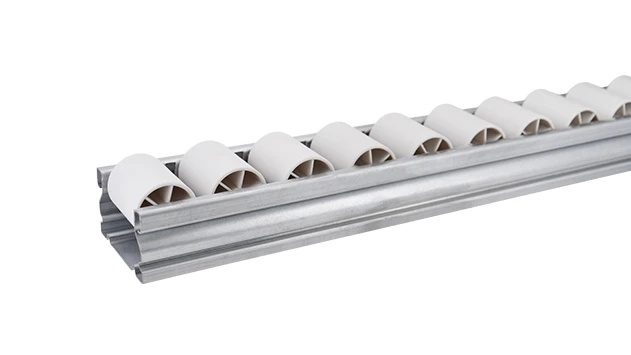
If you've ever worked with manufacturing lines, warehouses, or lean pipe systems, you know how critical smooth material flow is to keeping operations running. The 60 Steel Roller Track White is a workhorse in this space—it's used in flow racks, conveyors, and assembly lines to move parts quickly and efficiently. But here's the catch: even small installation errors can turn this reliable component into a source of frustration. Jamming parts, slow production, safety hazards, and increased maintenance costs are just a few of the issues that can arise. To help you get it right the first time, we've compiled 60 common mistakes (grouped by category) to avoid when installing this roller track.
Part 1: Pre-Installation Mistakes (15 Mistakes)
1. Not Measuring the Installation Area Accurately
Many teams skip precise measurements, assuming they can "eyeball" the space. This leads to tracks that are too long (hanging off the flow rack frame) or too short (leaving gaps between sections). The impact? Parts get stuck at gaps or fall off the end, disrupting the entire line. Correct Practice: Use a laser measure to get exact length, width, and height dimensions of the installation area. Account for obstacles like pillars or adjacent equipment that might affect track placement.
2. Choosing the Wrong Roller Track Connector
Using plastic connectors for heavy-load applications is a common mistake. Plastic connectors can break under pressure, leading to track collapse. Correct Practice: Match the connector material to the load: use metal roller track connectors for heavy loads (over 50kg per meter) and high-quality plastic for light loads. Ensure connectors are compatible with the 60 Steel Roller Track White.
3. Ignoring Load Capacity Specifications
Overlooking the track's load limit (usually listed in the product manual) is a recipe for disaster. Overloading the track can cause rollers to bend or break, leading to safety hazards. Correct Practice: Calculate the maximum load per meter your line will handle (include the weight of parts and containers) and choose a track that exceeds this by 20% for safety.
4. Skipping Compatibility Checks for Aluminum Profile Accessories
If you're installing the track on aluminum profiles (common in lean systems), using incompatible aluminum profile accessories (like brackets or mounts) can lead to unstable installation. Correct Practice: Verify that all accessories (mounts, brackets) fit the profile size (e.g., 4040, 3030) and the track's dimensions before starting.
5. Not Preparing the Installation Site
Installing tracks on an unclean or uneven floor is a mistake. Dirt and debris can get stuck in rollers, while uneven surfaces lead to poor alignment. Correct Practice: Clean the site thoroughly and use a level to check the floor. If the floor is uneven, use shims or adjustable feet to create a flat base.
6. Forgetting to Gather All Tools Before Starting
Running back and forth to get tools mid-installation wastes time and increases the risk of mistakes. Correct Practice: Prepare all necessary tools: a torque wrench, level, straightedge, screwdriver set, and safety gloves before you begin.
7. Not Reading the Product Manual
Many teams think they know how to install the track without reading the manual. But the manual contains critical details like torque specifications for fasteners and alignment guidelines. Correct Practice: Have every team member read the manual and discuss key points before starting the installation.
8. Choosing Low-Quality Replacement Parts
Using cheap, non-genuine parts (like rollers or connectors) to save money leads to frequent breakdowns. Correct Practice: Use only genuine parts from a reliable supplier to ensure durability and compatibility.
9. Ignoring Environmental Factors
Installing the track in a humid area without considering rust protection is a mistake. Steel tracks are prone to corrosion if not treated. Correct Practice: Apply an anti-rust coating if the installation area is humid or exposed to moisture. Use stainless steel connectors if rust is a major concern.
10. Not Planning for Future Expansion
Installing tracks that can't be extended later limits your ability to scale operations. Correct Practice: Leave extra space at the ends of the track and use modular connectors that allow for easy expansion.
11. Skipping Safety Training for the Team
Installing heavy steel tracks without safety training increases the risk of injuries (like back strains or cuts). Correct Practice: Train all team members on proper lifting techniques, tool safety, and emergency procedures before starting.
12. Not Checking for ESD Requirements
If the track is used in an ESD workstation (for sensitive electronics), ignoring static protection leads to static damage to parts. Correct Practice: Use ESD-compatible rollers and connectors, and ground the track properly to dissipate static.
13. Choosing the Wrong Slope Angle
The slope angle of the track determines how fast parts flow. Choosing the wrong angle (too steep or too shallow) leads to issues. Correct Practice: Refer to the product manual for recommended slope angles (usually 1-3 degrees for most applications). Test with sample parts to adjust the angle if needed.
14. Not Preparing the Track for Installation
Unpacking the track and installing it immediately without checking for damage is a mistake. Bent rollers or dented sections can cause jams. Correct Practice: Inspect each track section for damage (bends, dents, worn rollers) before installation. replace damaged sections.
15. Forgetting to Label Track Sections
If you're installing multiple track sections, not labeling them leads to confusion during assembly. Correct Practice: Label each section with a number or letter to ensure they're installed in the right order.
Part 2: Assembly Mistakes (15 Mistakes)
16. Misaligning Roller Track Connectors
Gaps between track sections are often caused by misaligned connectors. When parts move over these gaps, they get stuck or slow down. Correct Practice: Use a straightedge to align sections before tightening connectors. Ensure rollers are in a straight line across sections.
17. Tightening Fasteners Too Much
Over-tightening fasteners can damage the track or connectors. This leads to cracks or deformation, reducing the track's lifespan. Correct Practice: Use a torque wrench to tighten fasteners to the specification in the manual (usually 8-10 Nm for steel tracks).
18. Leaving Loose Fasteners
Loose fasteners cause tracks to shift over time, leading to misalignment and jams. Correct Practice: Double-check all fasteners after assembly. Re-tighten any loose ones and mark them for future checks.
19. Incorrect Roller Spacing
Spacing rollers too far apart causes small parts to get stuck; spacing them too close increases friction, slowing down parts. Correct Practice: Follow the manual's roller spacing guidelines (usually 50-100mm for 60 Steel Roller Track White). Test with sample parts to adjust spacing.
20. Using Worn-Out Tools
Dull screwdrivers or broken torque wrenches lead to improper assembly. Correct Practice: Use sharp, well-maintained tools. replace any worn-out tools before starting.
21. Not Securing the Track to the Frame
Leaving the track loose on the flow rack frame causes it to shift during use. Correct Practice: Use aluminum profile accessories (like brackets or clamps) to secure the track firmly to the frame. Ensure every 50cm section is secured.
22. Mixing Different Track Types
Combining 60 Steel Roller Track White with other track types (like plastic) leads to inconsistent flow. Correct Practice: Use the same track type throughout the installation to ensure uniform flow.
23. Ignoring Roller Direction
Installing rollers in the wrong direction (opposite to the flow) makes parts move backward. Correct Practice: Check the roller direction before installation. Rollers should spin in the direction of material flow.
24. Not Cleaning Rollers Before Assembly
Dust or debris on rollers can cause jams. Correct Practice: Wipe each roller with a clean cloth before assembly to remove dust or oil.
25. Skipping Connector Lubrication
Dry connectors can be hard to tighten and may rust over time. Correct Practice: Apply a small amount of lubricant (like silicone oil) to connectors before assembly to ease installation and prevent rust.
26. Installing Tracks Upside Down
The 60 Steel Roller Track White has a specific top and bottom. Installing it upside down leads to poor flow and increased wear. Correct Practice: Check the product label to identify the top side before installation.
27. Not Using Spacers Between Sections
Spacers help maintain consistent gaps between sections. Skipping them leads to uneven flow. Correct Practice: Use spacers (as recommended in the manual) to ensure uniform gaps between track sections.
28. Overlapping Track Sections
Overlapping sections cause rollers to rub against each other, leading to wear and tear. Correct Practice: Ensure sections are flush (no overlap) before tightening connectors.
29. Not Checking for Smooth Rotation
After assembly, many teams skip checking if rollers spin smoothly. Stuck rollers cause parts to jam. Correct Practice: Spin each roller by hand to ensure it rotates freely. If a roller is stuck, adjust the fasteners or replace it.
30. Forgetting to Test Section by Section
Installing all sections at once and then testing leads to difficulty identifying which section is causing issues. Correct Practice: Test each section after assembly (before moving to the next) to ensure it works properly.

Part3: Alignment & Leveling Mistakes (15 Mistakes)
31. Not Leveling the Track
An uneven track causes parts to flow to one side or get stuck. Correct Practice: Use a spirit level to check the track's levelness. Adjust the frame or use shims to make the track perfectly level.
32. Misaligning Multiple Tracks
When installing multiple parallel tracks (for wide parts), misalignment leads to parts jamming at junctions. Correct Practice: Use a straightedge to ensure all tracks are parallel. Check the distance between tracks at both ends to confirm alignment.
33. Ignoring ESD Grounding
For ESD workstations, not grounding the track leads to static buildup, damaging sensitive parts. Correct Practice: Connect the track to an ESD ground wire using a metal clamp. Test the ground resistance with a meter to ensure it's within the required range (less than 10^6 ohms).
34. Overlooking Slope Angle Adjustment
A slope angle that's too steep causes parts to move too fast (risk of falling off), while a shallow angle leads to no flow. Correct Practice: Adjust the slope angle using adjustable feet. Test with sample parts to find the optimal angle.
35. Not Checking for Gaps Between Rollers
Gaps between rollers cause small parts to get stuck. Correct Practice: Ensure there are no gaps between rollers. If gaps exist, adjust the roller spacing or replace the track section.
36. Forgetting to Adjust for Thermal Expansion
Steel expands in heat. Installing tracks without leaving expansion gaps leads to deformation. Correct Practice: Leave a 2-3mm gap between track sections to allow for thermal expansion.
37. Misaligning Track Junctions
Junctions between tracks (like from a flow rack to a conveyor) that are misaligned cause parts to jam. Correct Practice: Use a straightedge to align junctions. Ensure the rollers at the junction are at the same height.
38. Not Checking for Vertical Alignment
Vertical misalignment (tracks at different heights) leads to parts getting stuck when moving from one track to another. Correct Practice: Use a level to check the vertical alignment of track junctions. Adjust the frame to make sure tracks are at the same height.
39. Ignoring the Track's Load Distribution
Concentrating loads on one section of the track leads to deformation. Correct Practice: Ensure loads are distributed evenly across the track. Use dividers if needed to separate parts.
40. Not Testing Flow with Actual Parts
Testing with dummy parts (like cardboard) doesn't reflect real-world conditions. Correct Practice: Test the track with actual parts used in your operations to ensure smooth flow.
41. Overlooking Edge Protection
Sharp edges on the track can cause injuries or damage parts. Correct Practice: Install edge protectors (like rubber strips) on the ends of the track to prevent injuries and part damage.
42. Not Checking for Vibrations
Vibrations from nearby equipment can cause parts to shift or fall off the track. Correct Practice: Use vibration-dampening pads under the frame to reduce the impact of vibrations.
43. Ignoring the Track's Orientation
Installing the track in the wrong direction (against the flow of parts) leads to inefficiency. Correct Practice: Confirm the track's orientation with the production team to ensure it aligns with the material flow.
44. Not Adjusting for Part Size
Using the same track setup for all part sizes leads to issues. Small parts need tighter roller spacing; large parts need wider spacing. Correct Practice: Adjust roller spacing based on the size of the parts you're moving.
45. Forgetting to Document Alignment Settings
Not writing down alignment settings makes it hard to replicate or fix the track later. Correct Practice: Record the slope angle, levelness, and spacing settings in a logbook for future reference.

Part4: Safety & Longevity Mistakes (10 Mistakes)
46. Not Testing Load Limits After Installation
Skipping load tests leads to unexpected track collapse. Correct Practice: Test the track with 120% of the maximum load (as per specifications) to ensure it can handle the weight. Leave the load on for 24 hours to check for deformation.
47. Skipping Anti-Rust Coating
Steel tracks corrode over time if not protected. Correct Practice: Apply a high-quality anti-rust coating (like epoxy) to the track after installation. Reapply the coating every 6 months to maintain protection.
48. Ignoring User Feedback
Staff who use the track daily notice issues (like jams) but often their feedback is ignored. Correct Practice: Hold regular meetings with the team to collect feedback. Address any issues immediately.
49. Not Training Staff on Safe Use
Untrained staff may load parts incorrectly, leading to jams or injuries. Correct Practice: Train staff on how to load parts (evenly distributed), how to stop the flow in case of jams, and how to report issues.
50. Skipping Regular Maintenance Checks
Neglecting maintenance leads to increased wear and tear. Correct Practice: Schedule monthly maintenance checks: clean rollers, tighten fasteners, check alignment, and replace worn parts.
51. Using Harsh Cleaners on Rollers
Harsh chemicals (like bleach) damage rollers and cause them to wear out quickly. Correct Practice: Use mild soap and water to clean rollers. Avoid abrasive cleaners.
52. Not Replacing Worn Rollers
Worn rollers cause parts to jam. Correct Practice: replace rollers as soon as they show signs of wear (like scratches or reduced rotation).
53. Ignoring Environmental Conditions
Exposing the track to extreme temperatures (over 60°C) leads to deformation. Correct Practice: Avoid installing the track in areas with extreme temperatures. Use heat-resistant rollers if necessary.
54. Not Securing Loose Parts
Loose parts (like connectors) can fall off and cause injuries. Correct Practice: Check for loose parts during maintenance and tighten them immediately.
55. Forgetting to update the System
Lean pipe systems require continuous improvement. Not updating the track setup leads to inefficiency. Correct Practice: Review the track setup every 3 months. Adjust the slope angle, spacing, or alignment to optimize flow.
Part5: Post-Installation Mistakes (5 Mistakes)
56. Not Documenting the Installation Process
Without documentation, it's hard to replicate the installation or fix issues later. Correct Practice: Write down every step of the installation (including tools used, settings, and tests). Store the document in a safe place.
57. Skipping Warranty Registration
Many teams forget to register the track's warranty, missing out on free repairs or replacements. Correct Practice: Register the warranty with the supplier within 30 days of installation.
58. Using Non-Genuine Replacement Parts
Non-genuine parts (like rollers or connectors) don't fit properly, leading to issues. Correct Practice: Use only genuine parts from the supplier to ensure compatibility and durability.
59. Not Monitoring Performance Metrics
Skipping performance metrics (like flow rate, jam frequency) leads to missed opportunities for improvement. Correct Practice: Track metrics like the number of jams per day, flow rate (parts per minute), and maintenance time. Use these metrics to identify areas for improvement.
60. Forgetting to Celebrate Success
Finally, many teams forget to recognize the hard work of the installation team. This reduces morale and motivation. Correct Practice: Celebrate the successful installation with the team—even a small reward (like pizza or a team lunch) goes a long way.
Common Mistakes vs. Correct Practices Table
| Mistake | Impact | Correct Practice |
|---|---|---|
| Using plastic roller track connectors for heavy loads | Connector breakage, track collapse | Use metal connectors for loads over 50kg/meter |
| Not leveling the track | Parts get stuck or flow to one side | Use spirit level to adjust track to perfect level |
| Over-tightening fasteners | Track deformation, connector damage | Use torque wrench to tighten to manual specs |
| Ignoring ESD grounding | Static damage to sensitive parts | Connect track to ESD ground wire and test resistance |
| Skipping load tests | Unexpected track collapse | Test with 120% of max load for 24 hours |
| Not cleaning rollers before assembly | Part jams | Wipe rollers with clean cloth to remove dust |
| Misaligning track sections | Gaps between sections, part jams | Use straightedge to align sections flush |
| Ignoring user feedback | Unresolved issues, reduced efficiency | Collect feedback monthly and address issues |
| Skipping anti-rust coating | Track corrosion, reduced lifespan | Apply epoxy coating every 6 months |
| Not documenting installation steps | Difficulty replicating or fixing issues | Record all steps, settings, and tests in a logbook |
Final Thoughts
Installing the 60 Steel Roller Track White correctly is key to ensuring smooth material flow in your lean pipe system, flow rack, or conveyor. By avoiding these 60 mistakes, you can reduce downtime, improve safety, and extend the track's lifespan. Remember to use quality parts (like metal roller track connectors and aluminum profile accessories), follow the manual, and prioritize continuous improvement (a core lean principle). With the right approach, this track will be a reliable asset for your operations for years to come.