- Company Articles
- Products and Technology
- Product knowledge
- 60 Steel Roller Track White Load Testing: Ensuring Safety and Reliability

60 Steel Roller Track White Load Testing: Ensuring Safety and Reliability
Related Product
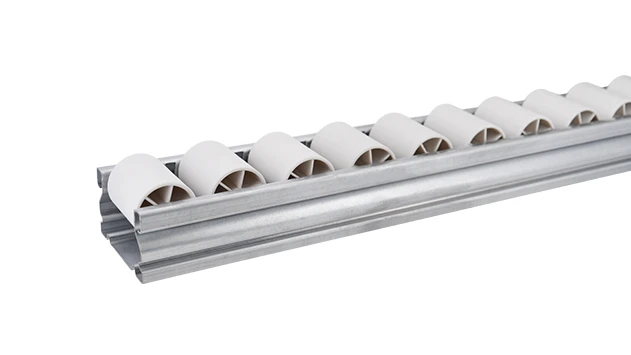
60 Steel Roller Track White
The roller track can be installed with multiple accessories to create different slopes and configurations of flow racks.All steel conveyor 60 roller track accessories are engineered to perfectly fit the sliding rail.It is enable the movement of SLC boxes.
Introduction
In the dynamic world of manufacturing, where every second counts and efficiency is the backbone of success, the reliability of production line components cannot be overstated. Roller tracks are among the most critical elements in many lean systems, facilitating the smooth movement of materials across flow racks, conveyors, and workstations. For businesses that depend on lean solutions to streamline their operations, choosing components that meet rigorous safety and performance standards is not just a preference—it's a necessity. This article dives deep into the load testing process of the 60 Steel Roller Track White, a key product from our lineup, and explains why this testing is essential to ensuring the safety and reliability of your manufacturing setup.
The 60 Steel Roller Track White is a versatile component designed to handle heavy loads while maintaining optimal performance. Made from high-quality steel with a durable white finish, it's engineered to resist wear and tear, making it ideal for use in high-traffic areas of production lines. Whether integrated into a flow rack for or a conveyor system for 3C assembly, this roller track plays a pivotal role in keeping operations running smoothly. But how do we ensure that it can withstand the demands of real-world use? The answer lies in comprehensive load testing.
What is the 60 Steel Roller Track White?
Before delving into the load testing process, let's take a closer look at the 60 Steel Roller Track White itself. This component is part of our extensive range of lean pipe and accessory products, designed to support various lean manufacturing applications. It features a robust steel construction with a thickness that ensures stability even under heavy loads. The white finish not only gives it a clean, professional appearance but also provides an extra layer of protection against corrosion, extending its lifespan in industrial environments.
The 60 Steel Roller Track White is compatible with a wide range of accessories, making it easy to integrate into existing systems or new lean pipe workbench setups. Its design allows for smooth movement of materials, reducing friction and minimizing the effort required to transport goods. This makes it an excellent choice for industries like automotive manufacturing, where efficiency and precision are key, as well as for medical device production, where cleanliness and reliability are paramount.

Why Load Testing Matters
Load testing is a critical step in the quality assurance process for any component that bears weight. Without proper testing, there's a risk of component failure, which can lead to a host of problems—from production downtime and damaged products to workplace accidents. For businesses that rely on lean systems to optimize their operations, even a small component failure can disrupt the entire workflow, resulting in significant losses.
In industries like 3C assembly, where delicate electronic components are handled daily, the reliability of roller tracks is especially important. A failure could lead to damaged parts, delays in production, and increased costs. Similarly, in, where heavy boxes and materials are moved constantly, a weak roller track could collapse under load, posing a safety risk to workers and damaging inventory. Load testing helps mitigate these risks by verifying that the component can handle the maximum intended load consistently, ensuring that it performs reliably under real-world conditions.
Another reason load testing is essential is compliance with industry standards. Many manufacturing industries have strict regulations regarding the safety of equipment and components. By conducting load tests, we ensure that our products meet or exceed these standards, giving our customers peace of mind that they're using safe, reliable components in their operations.

The Load Testing Process for 60 Steel Roller Track White
The load testing process for the 60 Steel Roller Track White is a comprehensive procedure designed to simulate real-world conditions and measure the component's performance under various loads. Here's a detailed breakdown of the steps involved:
1. Preparation
First, the roller track is installed in a controlled environment that mimics its typical use case. For this test, we mounted the track onto a flow rack structure, similar to how it would be used in a setting. This ensures that the test conditions are as close to real-world as possible. We also ensured that all connections and accessories were properly installed to avoid any variables that could affect the test results.
2. Incremental Load Application
Next, we applied incremental loads to the roller track. Starting with a minimal load, we gradually increased the weight at set intervals. Each load was applied for a specific duration to allow the component to settle and for us to observe any changes in its performance. The increments were chosen based on the expected maximum load of the roller track, ensuring that we covered both normal and peak usage scenarios.
3. Measurement and Observation
During each load application, we measured several key parameters to evaluate the roller track's performance. These included:
- Deflection: The amount the roller track bends under load. Excessive deflection can indicate structural weakness.
- Stability: Whether the track remains securely attached to the frame and does not shift or wobble under load.
- Roller Movement: How smoothly the rollers move under load. Any resistance or jamming could indicate a problem.
- Signs of Wear: Visible damage to the track or rollers, such as cracks, dents, or deformation.
4. Maximum Load Testing
Once we reached the maximum intended load for the roller track, we maintained that load for an extended period to observe its long-term performance. This step is crucial because it simulates the component being used under peak load for an extended time, which is common in busy manufacturing environments.
5. Failure Point Testing (Optional)
In some cases, we may continue to increase the load beyond the intended maximum to determine the failure point. This helps us understand the component's limits and ensures that there is a safety margin between the intended load and the point of failure. However, for the 60 Steel Roller Track White, we found that it exceeded the expected maximum load by a significant margin, demonstrating its robustness.
Test Results and Analysis
The load testing of the 60 Steel Roller Track White yielded impressive results. Below is a table summarizing the key findings from the test:
| Test Parameter | Value |
|---|---|
| Roller Track Model | 60 Steel Roller Track White |
| Material Thickness | 2.0 mm |
| Intended Maximum Load | 400 kg |
| Test Load Increments | 50 kg, 100 kg, 150 kg, ..., 500 kg |
| Maximum Test Load Achieved | 500 kg |
| Deflection at 400 kg | Less than 1 mm |
| Deflection at 500 kg | 1.2 mm (within acceptable limits) |
| Signs of Wear or Damage | None observed up to 500 kg |
| Roller Movement Smoothness | Consistently smooth at all load levels |
The results show that the 60 Steel Roller Track White not only meets but exceeds its intended maximum load of 400 kg. At 500 kg, the deflection was minimal (1.2 mm) and well within acceptable limits, indicating that the component remains stable even under heavy loads. No signs of wear or damage were observed during the test, demonstrating the durability of the steel construction and the quality of the finish.
The smooth roller movement at all load levels is another key finding. This ensures that materials can be moved easily across the track, reducing friction and minimizing the effort required by workers. This is particularly important in lean systems, where efficiency is a top priority.
Overall, the test results confirm that the 60 Steel Roller Track White is a reliable and safe component that can handle the demands of real-world manufacturing environments. Its robust construction and excellent performance under load make it an ideal choice for a wide range of applications.
Real-World Applications of 60 Steel Roller Track White
The 60 Steel Roller Track White is used in a variety of industries, each with unique requirements and challenges. Let's explore some of these applications and how the load testing ensures reliability in each:
1. 3C Assembly
In 3C assembly lines, where electronic components like smartphones and laptops are assembled, the 60 Steel Roller Track White is used in conveyors to move parts between workstations. The load testing ensures that the track can handle the weight of component boxes and assemblies, allowing for smooth and efficient movement. This reduces delays in production and ensures that delicate components are not damaged during transport.
2. Medical Device Manufacturing
Medical device manufacturing requires strict adherence to cleanliness and safety standards. The 60 Steel Roller Track White's white finish is easy to clean, making it suitable for use in cleanroom environments. The load testing ensures that it can handle the weight of medical equipment parts, such as surgical instruments and diagnostic devices, without failure. This reliability is crucial in an industry where precision and safety are non-negotiable.
3.
In settings, the 60 Steel Roller Track White is integrated into flow racks to store and move heavy boxes and materials. The load testing confirms that it can handle the weight of these items, ensuring that the rack remains stable and safe. This is particularly important in busy warehouses where materials are moved constantly, reducing the risk of accidents and improving efficiency.
4. Automotive Manufacturing
Automotive manufacturing involves the movement of heavy parts, such as engine components and body panels. The 60 Steel Roller Track White is used in conveyors and flow racks to transport these parts, and the load testing ensures that it can handle the weight without failure. This helps maintain the efficiency of the production line and reduces the risk of delays.
How 60 Steel Roller Track White Fits Into Lean Solutions
Lean manufacturing is all about optimizing processes, reducing waste, and improving efficiency. The 60 Steel Roller Track White is a key component in many lean solutions, helping businesses achieve these goals. Its durability and reliability mean that it can be used repeatedly, aligning with the lean principle of sustainability. Additionally, its compatibility with other lean pipe components makes it easy to adapt and modify as needs change, supporting continuous improvement.
For example, a company looking to optimize its operations might use the 60 Steel Roller Track White in a flow rack system. This allows for efficient storage and retrieval of materials, reducing the time and effort required to move goods. The load testing ensures that the system is safe and reliable, allowing the company to focus on improving other aspects of their operations.
Another example is a lean pipe workbench setup in a 3C assembly line. The roller track can be integrated into the workbench to facilitate the movement of parts, making the assembly process more efficient. The reliability of the track ensures that the workbench remains stable and functional, supporting the lean goal of minimizing downtime.
Conclusion
The load testing of the 60 Steel Roller Track White is a critical step in ensuring the safety and reliability of this component. The test results demonstrate that it is a robust, durable product that can handle heavy loads consistently, making it an ideal choice for a wide range of manufacturing applications. Whether used in flow racks, conveyors, or lean pipe workbenches, the 60 Steel Roller Track White provides the reliability and performance that businesses need to optimize their lean systems.
At our company, we are committed to providing high-quality lean solutions that meet the needs of our customers. The load testing process is just one of the ways we ensure that our products are safe, reliable, and built to last. By choosing components like the 60 Steel Roller Track White, businesses can rest assured that they're investing in quality and efficiency, helping them achieve their lean manufacturing goals.
In conclusion, load testing is an essential part of the quality assurance process for any component that bears weight. It helps mitigate risks, ensures compliance with industry standards, and gives customers peace of mind. The 60 Steel Roller Track White's impressive performance in load testing confirms its status as a top-quality component that can support the demands of modern manufacturing.