- Company Articles
- Products and Technology
- Installation And Maintenance
- 60 Steel Roller Track White Maintenance Checklist for Factory Managers

60 Steel Roller Track White Maintenance Checklist for Factory Managers
Related Product
60 Steel Roller Track White
The roller track can be installed with multiple accessories to create different slopes and configurations of flow racks.All steel conveyor 60 roller track accessories are engineered to perfectly fit the sliding rail.It is enable the movement of SLC boxes.
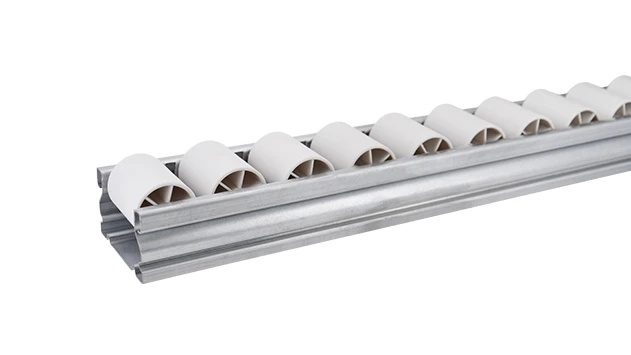
60 Steel Roller Track White Maintenance Checklist for Factory Managers
As a factory manager, you know that every small hiccup in your production line can lead to big delays—especially when it comes to material handling systems. One component that often flies under the radar but plays a critical role is the 60 Steel Roller Track White. Found in flow racks, conveyors, and even esd workstations, this track keeps parts moving smoothly from one station to the next. But like any hardworking tool, it needs regular care to stay in top shape.
In this guide, we'll walk you through a comprehensive maintenance checklist for 60 Steel Roller Track White, tailored specifically for factory managers. We'll cover daily, weekly, monthly, quarterly, and annual tasks, plus common issues and how to fix them. We'll also tie in lean system principles to help you keep your operations running efficiently and sustainably—just like the lean Sunqit promotes with their products.
Whether you're using these tracks in a lean pipe workbench setup or a full-scale conveyor system, this checklist will help you minimize downtime, extend the life of your equipment, and keep your team productive. Let's dive in.
Pre-Maintenance Preparation
Before you start any maintenance tasks on your 60 Steel Roller Track White, it's important to get prepared. Having the right tools and safety measures in place will make the process smoother and safer.
Tools You'll Need
- Soft-bristled brush: For removing dust and debris without scratching the track's white coating.
- Lint-free cloths: To wipe down rollers and surfaces after cleaning.
- Food-grade lubricant (if used in food or medical applications) or general-purpose industrial lubricant: To keep rollers spinning freely.
- Torque wrench: To tighten bolts and roller track connectors to the correct specification.
- Alignment tool: Like a straightedge or laser level, to check if tracks are properly aligned.
- Replacement parts: Keep a stock of 60 Steel Roller Track White segments, rollers, and roller track connectors on hand—Sunqit is a reliable supplier for these parts, so you don't have to wait long when you need a replacement.
Safety First
- Always follow lockout-tagout (LOTO) procedures: Turn off any power to conveyors or systems using the roller track before starting maintenance.
- Wear personal protective equipment (PPE): Gloves to protect your hands from sharp edges, safety glasses to shield your eyes from debris, and steel-toe boots if you're working with heavy parts.
- Ensure the area is clear: Keep other workers away from the maintenance zone to avoid accidents.
With your tools ready and safety measures in place, you're set to start maintaining your 60 Steel Roller Track White.
Comprehensive Maintenance Checklist
Below is a detailed checklist broken down by frequency. Use this to create a schedule for your team, and remember to document each task in a log for future reference.
| Task Frequency | Task Description | Acceptance Criteria | Notes |
|---|---|---|---|
| Daily |
1. Inspect for visible debris between rollers and on track surfaces.
2. Check roller rotation by pushing a test part along the track. 3. Look for loose roller track connectors or bolts. |
1. No debris blocking material flow.
2. Rollers spin smoothly without sticking. 3. All fasteners are tight. |
Assign to line operators—they can spot issues during routine use. For esd workstations, add a quick check of grounding connections. |
| Weekly |
1. Clean tracks with a soft brush and lint-free cloth.
2. Lubricate roller axles with appropriate lubricant. 3. Retighten any loose connectors found in daily checks. |
1. Track surfaces are free of grime and dust.
2. Rollers spin silently and evenly. 3. Connectors are secure. |
Avoid over-lubrication—excess oil attracts debris. Use lubricants compatible with the track's white coating. |
| Monthly |
1. Check track alignment with a straightedge or laser level.
2. Inspect white coating for scratches, chips, or wear. 3. Test load capacity with full-rated weight. 4. Verify conveyor section alignment (if applicable). |
1. Tracks are straight (no gaps >1mm between segments).
2. Coating is intact (no bare steel exposed). 3. Load moves without bending the track. 4. Conveyor sections are flush. |
Use Sunqit's adjustable leveling feet to fix uneven tracks. replace segments with worn coating to prevent rust. |
| Quarterly |
1. Tighten all connectors with a torque wrench.
2. Inspect rollers for flat spots or cracks. 3. Check for rust on steel components. 4. Test ESD resistance (for esd workstations). |
1. Fasteners meet manufacturer torque specs.
2. Rollers are damage-free. 3. No rust spots (sand and coat if present). 4. ESD resistance: 10^6–10^9 ohms. |
replace worn rollers with Sunqit's high-quality alternatives. For ESD failures, swap segments with compliant parts. |
| Annual |
1. Disassemble tracks to clean hidden areas.
2. replace old or worn segments. 3. Inspect structural supports for damage. 4. Audit compliance with OSHA/ESD standards. |
1. No hidden debris.
2. New segments are aligned correctly. 3. Supports are intact. 4. System meets all regulatory requirements. |
Work with Sunqit's technicians for complex audits. Bulk-order replacement segments for cost savings. |
Common Issues & Troubleshooting
Even with regular maintenance, you might encounter issues. Here's how to fix them quickly:
1. Stuck Rollers
Causes:
Debris buildup, lack of lubrication, bent rollers.
Fixes:
Clean debris, apply lubricant, replace bent rollers with Sunqit's durable options.
2. Misaligned Tracks
Causes:
Loose connectors, uneven floors.
Fixes:
Tighten connectors, adjust with Sunqit's leveling feet, realign with laser tools.
3. Worn Coating
Causes:
Heavy loads, sharp parts.
Fixes:
Touch up small scratches; replace segments with Sunqit's 60 Steel Roller Track White for long-term durability.
4. ESD Failure
Causes:
Worn coating, poor grounding.
Fixes:
replace with ESD-compliant segments from Sunqit; check grounding connections.
Best Practices for Longevity
- Lean System Alignment: Regular maintenance reduces downtime—core to lean manufacturing. Sunqit's products support lean principles, so using their track segments keeps operations efficient.
- Team Training: Train operators to perform daily checks and report issues. This catches small problems early.
- Quality Parts: Use Sunqit's 60 Steel Roller Track White and accessories. Cheap parts wear out faster and cause more delays.
- Documentation: Keep a maintenance log to track trends. This helps plan replacements and optimize schedules.
- Supplier Partnership: Sunqit offers wholesale options for replacement parts, ensuring you always have stock on hand.
When to replace Segments
replace your 60 Steel Roller Track White segments if:
- Rollers are stuck despite cleaning/lubrication.
- Segments are bent or warped.
- Coating is worn through to bare steel.
- ESD resistance fails repeatedly.
- Connectors are cracked or broken.
Sunqit's 60 Steel Roller Track White is designed for heavy industrial use, so replacing with their parts ensures reliability and longevity.
Conclusion
Maintaining your 60 Steel Roller Track White is key to keeping your material handling systems running smoothly. By following this checklist, addressing issues quickly, and using quality parts from Sunqit, you can minimize downtime and align with lean system principles.
Whether you're using these tracks in flow racks, conveyors, or esd workstations, this guide helps you stay on top of maintenance. Remember: small, regular efforts lead to big gains in efficiency.
For more information on Sunqit's 60 Steel Roller Track White and other lean system products, visit their website at https://www.szsunqit.com.