- Company Articles
- Products and Technology
- Product knowledge
- 60 Steel Roller Track White vs. Anodized Aluminum: Durability Showdown

60 Steel Roller Track White vs. Anodized Aluminum: Durability Showdown
Related Product
60 Steel Roller Track White
The roller track can be installed with multiple accessories to create different slopes and configurations of flow racks.All steel conveyor 60 roller track accessories are engineered to perfectly fit the sliding rail.It is enable the movement of SLC boxes.
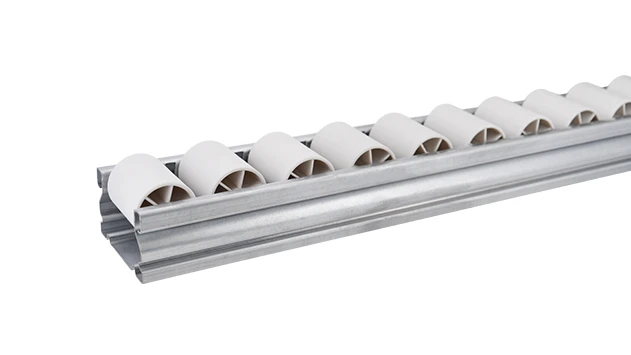
If you've ever walked through a busy manufacturing plant or a well-organized warehouse, you've probably seen roller tracks in action—those smooth, rolling surfaces that move parts, boxes, and products from one place to another without a hitch. But not all roller tracks are created equal. Today, we're putting two popular options head-to-head: the 60 Steel Roller Track White and Anodized Aluminum Roller Track. We'll break down their durability, performance, and best uses so you can make the right choice for your operation.
First, let's set the stage. Roller tracks are the backbone of efficient material handling systems. They're used in flow racks, conveyors, and lean pipe workbenches to reduce friction, speed up processes, and cut down on manual labor. The material you choose can make a huge difference in how long your system lasts, how much maintenance it needs, and how well it handles your specific workload.
What Is 60 Steel Roller Track White?
Let's start with the steel option. The 60 Steel Roller Track White is exactly what it sounds like: a roller track made from high-quality steel, coated with a white protective layer. This coating isn't just for aesthetics—it's designed to shield the steel from rust and corrosion, making it suitable for indoor use in dry environments.
The steel base gives this track exceptional strength. It can handle heavy loads without bending or warping, which is why it's a favorite in industries like automotive manufacturing and heavy machinery assembly. The white coating also makes it easier to spot dirt or debris, helping you keep your workspace clean and efficient.
One thing to note: while the coating is durable, it can chip if hit by a heavy object or scraped repeatedly. If the steel underneath is exposed, it might start to rust over time—so occasional maintenance is key here. But for many operations, the initial cost savings and raw strength of steel make this a great choice.
What Is Anodized Aluminum Roller Track?
Now let's talk about the aluminum competitor. Anodized Aluminum Roller Track is made from aluminum profiles that undergo an anodization process. This process creates a thin, hard oxide layer on the surface of the aluminum, which is integrated into the metal itself (unlike a paint coating that sits on top).
The result? A track that's resistant to corrosion, scratches, and wear. Even if the surface gets scratched, the anodized layer doesn't peel off—so the aluminum underneath stays protected. This makes it perfect for environments where corrosion is a concern, like food processing plants, medical device manufacturing facilities, or humid warehouses.
Aluminum is also lighter than steel, which means the track is easier to install and reconfigure. This flexibility is a big plus for lean systems that need to adapt to changing production needs. And since aluminum doesn't rust, you'll spend less time on maintenance and more time on getting work done.
Durability Showdown: Key Factors Compared
| Durability Factor | 60 Steel Roller Track White | Anodized Aluminum Roller Track | Winner |
|---|---|---|---|
| Corrosion Resistance | Good (white coating protects against rust; risk of corrosion if coating chips) | Excellent (anodized layer is integrated, resists corrosion even with scratches) | Anodized Aluminum |
| Wear Resistance | High (steel base is tough; coating wears over time but base remains strong) | Moderate to High (anodized layer is hard but may scratch under heavy abrasive use) | 60 Steel Roller Track White |
| Load Capacity | Very High (ideal for loads over 500kg per meter) | High (suitable for 200-400kg per meter; lighter weight reduces support strain) | 60 Steel Roller Track White |
| Temperature Tolerance | Wide range (-40°C to 200°C; coating may degrade at extreme highs) | Excellent (-50°C to 300°C; no warping or discoloration) | Anodized Aluminum |
| Impact Resistance | Exceptional (steel absorbs shocks well; coating may dent but base holds) | Good (aluminum is ductile but can bend under heavy impact) | 60 Steel Roller Track White |
| Maintenance Needs | Moderate (regular checks for chipped coating; occasional rust prevention) | Low (no rust concerns; simple cleaning with mild soap) | Anodized Aluminum |
| Long-Term Lifespan | 5-8 years (with proper maintenance) | 10-15 years (minimal maintenance required) | Anodized Aluminum |
Real-World Applications: Where Each Shines
60 Steel Roller Track White in Action
Steel tracks are a workhorse in industries where heavy loads and impact resistance are non-negotiable. Let's take automotive manufacturing as an example. Car parts like engines and transmissions are heavy—often weighing hundreds of kilograms. A steel roller track can handle these loads day in and day out without breaking a sweat.
Warehouses that store large pallets of goods also benefit from steel tracks. If you're using a flow rack to store heavy boxes of machinery parts, a steel roller track will keep everything moving smoothly. Suppliers like szsunqit offer flow rack wholesale options with steel tracks that are built to last in these demanding environments.
Another great use case is in construction material storage. Steel tracks can handle the weight of metal beams, pipes, and other heavy construction supplies, making them ideal for material racks in construction yards (though they should be covered to protect from rain and snow).
Anodized Aluminum Roller Track in Action
Aluminum tracks are the go-to choice for industries where cleanliness and corrosion resistance are top priorities. Let's talk about medical device manufacturing. In this industry, hygiene is everything—you can't have rust or corrosion contaminating sensitive medical equipment. Anodized aluminum tracks are non-porous, easy to clean, and resistant to chemicals, making them perfect for this setting.
3C assembly (computers, communication devices, consumer electronics) is another area where aluminum tracks excel. Products like smartphones and laptops are lightweight but require precise handling. Aluminum tracks are smooth and quiet, which is important in a precision assembly line. Szsunqit's lean pipe workbenches with aluminum roller tracks are a popular choice for 3C assembly stations because they're easy to reconfigure as production needs change.
Food processing plants also love aluminum tracks. The anodized layer is food-safe and resists bacteria growth, which is crucial for meeting food safety standards. Whether you're moving boxes of produce or packages of processed food, aluminum tracks will keep your line running clean and efficient.
Cost-Benefit Analysis: Short-Term vs. Long-Term
Let's get down to numbers. On average, 60 Steel Roller Track White costs about $15-$20 per meter, while Anodized Aluminum Roller Track costs around $25-$30 per meter. At first glance, steel seems like the cheaper option—but let's look at the long-term costs.
Steel tracks need regular maintenance: checking for chipped coating, touching up with paint, and applying anti-rust spray. Over 5 years, this maintenance could add up to $5-$10 per meter. Plus, steel tracks typically last 5-8 years before needing replacement.
Aluminum tracks, on the other hand, have almost no maintenance costs. They last 10-15 years without needing replacement. Let's do the math:
For 10 meters of track:
Steel: Initial cost ($175) + 5 years maintenance ($75) + replacement at year 7 ($175) = Total $425 over 10 years.
Aluminum: Initial cost ($275) + 0 maintenance = Total $275 over 10 years.
Steel: Initial cost ($175) + 5 years maintenance ($75) + replacement at year 7 ($175) = Total $425 over 10 years.
Aluminum: Initial cost ($275) + 0 maintenance = Total $275 over 10 years.
As you can see, aluminum is cheaper in the long run. But if you're on a tight initial budget and don't need the track to last 10+ years, steel might be the better choice. It all depends on your specific needs and how long you plan to use the track.
Maintenance Tips for Maximum Durability
Caring for 60 Steel Roller Track White
1. Clean regularly: Wipe down the track with a dry cloth to remove dirt and debris. This prevents scratches that can chip the coating.
2. Check for chipped coating: Inspect the track monthly for any chips or scratches. If you find any, touch up the area with a matching white paint to prevent rust.
3. Avoid moisture: Keep the track away from water and humidity. If it gets wet, dry it immediately.
4. Lubricate rollers: Apply a small amount of lubricant to the rollers every 6 months to keep them rolling smoothly.
Caring for Anodized Aluminum Roller Track
1. Clean with mild soap: Use a soft cloth and mild soap to clean the track. Avoid abrasive cleaners that can scratch the anodized layer.
2. Dry thoroughly: After cleaning, dry the track completely to prevent water spots.
3. Avoid heavy impacts: While aluminum is durable, it can bend under heavy impact. Be careful when moving heavy objects over the track.
4. Lubricate rollers: Like steel tracks, lubricate the rollers every 6 months to maintain smooth operation.
Final Verdict: Which Should You Choose?
So, which roller track is the winner? It depends on your needs. Let's summarize:
Choose 60 Steel Roller Track White if:
- You need to handle heavy loads (over 500kg per meter)
- Your environment is dry and indoor
- Impact resistance is a top priority
- You're on a tight initial budget
- You need to handle heavy loads (over 500kg per meter)
- Your environment is dry and indoor
- Impact resistance is a top priority
- You're on a tight initial budget
Choose Anodized Aluminum Roller Track if:
- You work in a corrosive or humid environment
- Cleanliness and hygiene are crucial
- You need a lightweight, easy-to-reconfigure track
- Long-term low maintenance is important
- You work in a corrosive or humid environment
- Cleanliness and hygiene are crucial
- You need a lightweight, easy-to-reconfigure track
- Long-term low maintenance is important
No matter which option you choose, it's important to buy from a reputable supplier. Szsunqit is a leading supplier of both steel and aluminum roller tracks, along with flow racks, conveyors, and custom lean solutions. They offer high-quality products that are designed to meet the needs of modern manufacturing and warehousing operations. Whether you're looking for flow rack wholesale, conveyor systems, or lean pipe workbenches, szsunqit has you covered.
In the end, the best roller track is the one that fits your specific operation. Take the time to evaluate your needs, consider the long-term costs, and choose the material that will help you run your business more efficiently.