- Company Articles
- Products and Technology
- Product knowledge
- 60 Steel Roller Track White vs. Galvanized: Coating Performance Comparison

60 Steel Roller Track White vs. Galvanized: Coating Performance Comparison
Related Product
60 Steel Roller Track White
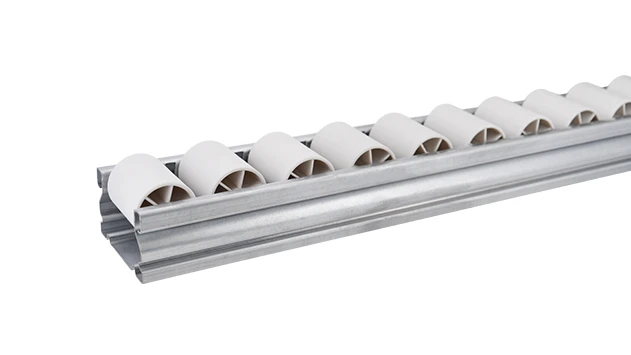
The roller track can be installed with multiple accessories to create different slopes and configurations of flow racks.All steel conveyor 60 roller track accessories are engineered to perfectly fit the sliding rail.It is enable the movement of SLC boxes.
Introduction
Roller tracks are the unsung heroes of modern manufacturing and warehousing—they keep materials moving smoothly, reduce manual handling, and are the backbone of efficient flow racks and conveyors. For anyone building or optimizing a lean system, choosing the right roller track coating isn't just a minor detail; it directly impacts durability, maintenance costs, and even the overall look of your workspace. Today, we're diving deep into two popular coating options for 60 steel roller tracks: white coating and galvanized coating. We'll break down their processes, benefits, drawbacks, and help you decide which one fits your lean solution best.
What Are 60 Steel Roller Tracks?
60 steel roller tracks are a versatile and widely used component in industrial settings, defined by their 60mm width (or diameter, depending on the design) that balances load capacity and flexibility. They're engineered to facilitate the smooth flow of materials, making them essential for flow racks in picking operations, conveyors in assembly lines, and even custom lean pipe systems tailored to specific production needs. Whether you're moving small electronic components in a 3C assembly line or heavy metal parts in an automotive warehouse, these tracks play a crucial role in keeping operations running without hiccups.
At their core, 60 steel roller tracks align with lean principles: they minimize waste by reducing manual handling, improve flow by ensuring consistent material movement, and are durable enough to withstand repeated use—all key factors in building a sustainable, efficient workspace. For businesses looking to optimize their processes, choosing the right coating for these tracks is a critical step in maximizing their value.

White Coating for 60 Steel Roller Tracks
Coating Process
White coating for 60 steel roller tracks is typically applied via powder coating—a process that's both eco-friendly and highly durable. Here's a step-by-step breakdown:
- Pre-Treatment: The steel tracks are thoroughly cleaned to remove dirt, grease, and rust. This involves degreasing with alkaline solutions, rinsing with water, pickling with acid to eliminate rust, and passivation to create a protective layer that enhances powder adhesion.
- Electrostatic Spraying: Dry powder (usually polyester or epoxy-based) is charged with an electrostatic gun and sprayed onto the grounded steel tracks. The static charge ensures the powder adheres evenly to every surface, including crevices and edges.
- Curing: The coated tracks are placed in a high-temperature oven (180–200°C) for 15–20 minutes. The heat melts the powder, forming a smooth, hard, and uniform layer that bonds tightly to the steel.
Key Benefits
- Aesthetic Appeal: White coating gives tracks a clean, modern look that's perfect for industries like medical device manufacturing or 3C assembly, where a tidy, professional workspace is essential.
- Easy Cleanability: The non-porous, smooth surface of white powder coating makes it simple to wipe down with a damp cloth, keeping tracks free from dust and debris—critical for hygiene-sensitive environments.
- Chemical Resistance: Polyester and epoxy powders are resistant to many common industrial chemicals, including cleaning agents, mild solvents, and oils. This makes white-coated tracks ideal for settings where spills are frequent.
- ESD Compatibility: White coating can be formulated with electrostatic discharge (ESD) additives, which dissipate static electricity. This is a game-changer for electronics manufacturing, where static can damage sensitive components.
- Uniform Coverage: Powder coating ensures every part of the track is covered evenly, eliminating drips or thin spots common with liquid paint.
Potential Drawbacks
- Scratch Sensitivity: While durable, white powder coating can scratch if hit with heavy or sharp objects. A deep scratch exposes the steel underneath, which can lead to rust if not touched up promptly.
- Limited Corrosion Resistance in Wet Environments: White coating provides good protection against mild moisture, but it's less effective than galvanized coating in constantly wet or humid settings (like outdoor warehouses or areas with frequent water exposure).
- Touch-Up Requirements: Scratches or chips need to be touched up with matching powder or paint to maintain protection, adding to long-term maintenance costs.

Galvanized Coating for 60 Steel Roller Tracks
Coating Process
Galvanized coating involves applying a layer of zinc to steel tracks to protect them from corrosion. Two main methods are used for industrial roller tracks:
- Hot-Dip Galvanizing: This is the most common method for heavy-duty tracks. It involves dipping the steel tracks into a bath of molten zinc (around 450°C). The zinc reacts with the steel to form a thick, durable alloy layer that bonds tightly to the surface. The result is a coating that's 5–10 times thicker than electro-galvanizing.
- Electro-Galvanizing: This method uses an electric current to deposit a thin layer of zinc onto the steel surface. It's often used for smaller parts or applications where a precise, uniform coating is needed (like small roller components). However, it's less durable than hot-dip galvanizing.
Key Benefits
- Superior Corrosion Resistance: Zinc acts as a "sacrificial anode"—it has a higher electrochemical potential than steel, so when both are exposed to moisture, zinc oxidizes first, protecting the steel from rust. This makes galvanized tracks ideal for wet, outdoor, or coastal environments.
- High Impact Durability: The thick zinc layer can withstand heavy impacts and abrasion, making it perfect for handling heavy loads (like engine parts, metal components, or large boxes).
- Low Maintenance: Galvanized tracks require minimal upkeep—they don't need repainting or touch-ups as often as white-coated tracks. Even if scratched, the zinc around the scratch continues to protect the steel.
- Long-Term Cost-Effectiveness: While the initial cost might be slightly higher than white coating, galvanized tracks last longer in harsh environments, reducing replacement costs over time. For example, a galvanized track can last up to 20 years in outdoor settings, compared to 5–10 years for white coating.
Potential Drawbacks
- Aesthetic Limitations: Galvanized tracks have a dull, silver-gray finish that might not fit the modern, clean look some industries prefer (like medical or 3C assembly).
- Zinc Whiskers Risk: In some cases, galvanized coatings can form tiny zinc whiskers—thin, needle-like structures that can cause electrical shorts in electronics manufacturing. This makes galvanized tracks less suitable for ESD-sensitive environments.
- Harder to Clean: The rough, textured surface of hot-dip galvanized tracks can trap dust and debris, making them harder to wipe down compared to smooth white coating.
- Limited Chemical Resistance: Galvanized coating is less resistant to acidic or alkaline chemicals than white powder coating. For example, exposure to strong acids can corrode the zinc layer quickly.
Head-to-Head Comparison
| Aspect | White Coating | Galvanized Coating |
|---|---|---|
| Coating Process | Powder coating (electrostatic spraying + curing) | Hot-dip or electro-galvanizing |
| Corrosion Resistance | Good (mild moisture only) | Excellent (wet/humid/outdoor environments) |
| Scratch Resistance | Moderate (scratches expose steel) | High (zinc continues to protect even if scratched) |
| Aesthetic Appeal | Modern, clean (ideal for professional settings) | Dull silver-gray (functional, not decorative) |
| Cleanability | Easy (smooth surface) | Hard (textured surface traps dust) |
| ESD Compatibility | Yes (with additives) | No (risk of zinc whiskers) |
| Maintenance Requirement | High (touch-ups for scratches) | Low (minimal upkeep) |
| Initial Cost | Lower | Higher |
| Long-Term Cost | Higher (frequent replacement in harsh environments) | Lower (longer lifespan) |
| Ideal Use Cases | Medical, 3C assembly, clean warehouses | Automotive parts, outdoor warehouses, heavy load handling |
How to Choose the Right Coating for Your Needs
Choosing between white coating and galvanized coating depends on several key factors. Here's a step-by-step guide to help you decide:
1. Evaluate Your Environment
If your workspace is exposed to moisture (like outdoor warehouses, coastal areas, or facilities with frequent water use), galvanized coating is the clear choice. Its superior corrosion resistance will keep tracks from rusting and extend their lifespan. For dry, indoor environments (like medical labs or 3C assembly lines), white coating is more suitable.
2. Consider Your Application
- ESD-Sensitive Industries: If you're handling electronic components, white coating with ESD additives is essential to prevent static damage.
- Heavy Load Handling: For moving heavy parts (over 50kg per track), galvanized coating's durability is unmatched.
- Hygiene Requirements: Medical or food processing industries need easy-to-clean surfaces—white coating is the best option.
3. Aesthetic Preferences
If you want your workspace to look modern and professional (e.g., for client visits or brand image), white coating is the way to go. If aesthetics aren't a priority and you're focused on functionality, galvanized coating works fine.
4. Budget & Long-Term Value
White coating has a lower initial cost, but it may need replacement sooner in harsh environments. Galvanized coating costs more upfront, but it lasts longer—making it a better investment for long-term use. For example, if you plan to use the tracks for 10+ years in a wet warehouse, galvanized coating will save you money in the long run.
5. Maintenance Capacity
If you don't have time or resources for regular touch-ups, galvanized coating is the better choice. White coating requires frequent checks for scratches and chips, especially in high-traffic areas.
Real-World Applications
Case Study 1: Medical Device Assembly Line
A leading medical device manufacturer in Shenzhen needed to upgrade their flow racks to meet ISO 13485 (medical device quality management) standards. They chose white-coated 60 steel roller tracks for three reasons:
- The clean white finish aligned with strict hygiene requirements, making it easy to spot and remove debris.
- The ESD-safe formulation protected their sensitive electronic components from static damage.
- The smooth surface reduced friction, allowing parts to move seamlessly—cutting manual handling time by 25%.
The upgrade helped the manufacturer maintain compliance with medical regulations and improve overall efficiency, aligning with their lean system goals.
Case Study 2: Automotive Parts Warehouse
An automotive parts warehouse in Guangzhou was struggling with rusted conveyor tracks due to frequent exposure to moisture. They replaced their old tracks with galvanized 60 steel roller tracks. The results were impressive:
- Rust-related downtime dropped by 30%—the galvanized coating resisted moisture even in the damp warehouse environment.
- The durable surface handled heavy engine parts (up to 100kg per track) without scratching or denting.
- Maintenance costs decreased by 40%—no more monthly touch-ups or repainting.
The galvanized tracks were a key part of their lean solution to minimize waste and improve productivity.
Case Study 3: 3C Assembly Line
A 3C assembly plant (producing smartphones) needed to reconfigure their flow racks to accommodate a new product line. They chose white-coated 60 steel roller tracks:
- The bright white finish made the workspace look modern and organized, boosting employee morale.
- The ESD-safe coating prevented static from damaging sensitive phone components.
- The tracks were easy to reconfigure—part of the plant's lean pipe system that allows quick adjustments to production lines.
The upgrade helped the plant reduce production errors by 18% and cut reconfiguration time by half.
Conclusion
Choosing between white coating and galvanized coating for your 60 steel roller tracks isn't a one-size-fits-all decision. It depends on your environment, application, budget, and aesthetic preferences. White coating shines in clean, dry, ESD-sensitive settings like medical or 3C assembly lines, while galvanized coating excels in harsh, wet, heavy-load environments like automotive warehouses.
Both options are integral to building efficient flow racks, conveyors, and lean systems that reduce waste and improve productivity. Whether you're looking to optimize your assembly line or upgrade your warehouse, the right coating will help you get the most out of your roller tracks for years to come. Remember: the best choice is the one that aligns with your specific needs and supports your long-term lean solution goals.