- Company Articles
- Products and Technology
- Product knowledge
- 60 Steel Roller Track Yellow Alignment: Ensuring Smooth Material Flow

60 Steel Roller Track Yellow Alignment: Ensuring Smooth Material Flow
Related Product
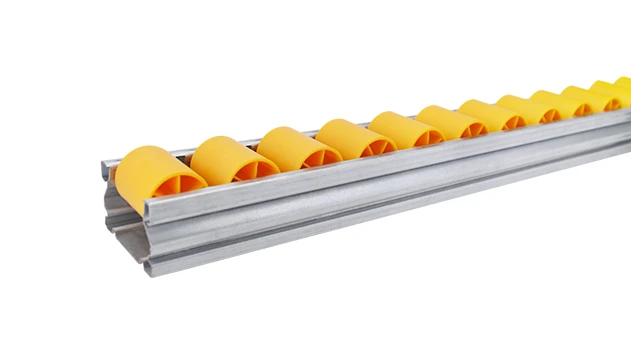
60 Steel Roller Track Yellow
The roller track can be installed with multiple accessories to create different slopes and configurations of flow racks.All steel conveyor 60 roller track accessories are engineered to perfectly fit the sliding rail.
Why Alignment Matters More Than You Think
Let's get real here—most factory managers focus on big-ticket items like new machinery or software, but the small stuff? It's often the bottleneck that slows everything down. If you've ever watched a worker struggle to push a component along a track, or dealt with a 10-minute jam on your conveyor line because a roller was off-kilter, you know exactly what I mean. Today, we're talking about the 60 Steel Roller Track Yellow—a workhorse in lean systems across industries like 3C assembly, automotive, and medical device manufacturing. And more importantly, how getting its alignment right can turn a frustrating workflow into a seamless, efficient process that keeps your production line humming.
The 60 Steel Roller Track Yellow isn't just a piece of metal with rollers. It's a critical link between your flow rack and lean pipe workbench, moving parts from storage to assembly without unnecessary lifting or pushing. When it's aligned properly, parts glide smoothly—workers don't waste energy, downtime drops, and your line's throughput goes up. But when it's off? You're looking at jams, damaged components, and unhappy team members. So let's dive into how to do it right.
What Is the 60 Steel Roller Track Yellow?
First, let's make sure we're all on the same page. The 60 Steel Roller Track Yellow is a heavy-duty component designed for medium to heavy loads (up to 50kg per meter, depending on the setup). Its yellow coating isn't just for looks—it's highly visible, so workers can spot the track easily and avoid tripping or misplacing parts. The steel construction makes it durable enough to handle daily wear and tear in busy factories, and the rollers are spaced perfectly to ensure consistent flow of boxes, trays, or components.
This track is a favorite in lean solutions because it's flexible—you can cut it to length, connect multiple sections, and adjust it to fit your specific layout. Whether you're using it to connect a flow rack to a conveyor, or to create a gravity-fed line to your lean pipe workbench, it's versatile enough to adapt to your needs.

Step-by-Step Alignment Guide for 60 Steel Roller Track Yellow
Alignment isn't rocket science, but it does require attention to detail. Let's break it down into simple, actionable steps:
1. Pre-Alignment Prep
Before you start, you need to get your workspace ready. Here's what to do:
- Turn off any connected conveyor systems to avoid accidents.
- Clean the area where the track will be installed—remove dirt, debris, or old parts that could make the track sit unevenly.
- Gather your tools (we've got a handy table below to list them).
| Tool Name | Purpose | Pro Tip |
|---|---|---|
| 24-inch Spirit Level | Check horizontal and vertical level of track sections | Use a magnetic level for faster, more secure placement on steel tracks |
| Measuring Tape | Ensure consistent gaps between track sections | Double-check measurements—even 0.5mm gaps can cause jams |
| Adjustable Wrench | Tighten/loosen track supports and connectors | Use a torque wrench for consistent tightness to avoid over-tightening |
| Dry Cloth & Brush | Clean rollers and track surfaces | Use compressed air for hard-to-reach debris in roller gaps |
| Test Components | Validate flow with actual parts from your production line | Use the heaviest component you'll move to simulate real-world conditions |
2. Lay Out Track Sections
Start by laying out all your 60 Steel Roller Track Yellow sections in the desired path. Make sure the sections are aligned end-to-end with minimal gaps (no more than 0.5mm). If you're connecting to a flow rack or lean pipe workbench, ensure the track is positioned to match the height of those components—you don't want a step between the track and the workbench.
3. Level Each Section
This is the most critical step. For each section:
- Place the spirit level across the track (horizontal check) and adjust the supports until the bubble is centered.
- Place the level along the length of the track (vertical check) to ensure there's a slight downward slope (1-2 degrees) for gravity-fed flow. Too steep, and parts will slide too fast; too flat, and they won't move at all.
- Repeat this for every section—don't skip any!
4. Check Roller Rotation
Once the sections are level, spin each roller to make sure it moves freely. If any roller is stuck, clean it or replace it—one stuck roller can jam the entire track.
5. Test Material Flow
Now it's time to put the track to the test. Grab actual components from your production line (like a 3C assembly tray or a metal housing) and let them slide along the track. Here's what to look for:
- Do parts move smoothly without stopping?
- Are there any spots where parts slow down or get stuck?
- Do parts align correctly with the next component (like a conveyor or lean pipe workbench)?
If you notice any issues, adjust the level or gap between sections until everything flows perfectly.
6. Secure the Track
Once you're happy with the flow, tighten all the bolts to secure the track sections. Then, recheck the level—tightening bolts can sometimes shift the track slightly. Finally, give the track a gentle shake to ensure it's stable.

Common Alignment Mistakes to Avoid
Even the best teams make mistakes. Here are the top ones to watch out for:
- Rushing the process: Alignment takes time—skipping steps will lead to problems later.
- Ignoring vertical level: Most people only check horizontal level, but vertical slope is key for gravity flow.
- Using fake test parts: A piece of cardboard won't tell you how a 5kg battery pack will move—always use real components.
- Forgetting to recheck: After tightening bolts, always go back and recheck the level.
Integration with Other Lean Components
The 60 Steel Roller Track Yellow doesn't work alone. It's part of a bigger lean system that includes flow racks, conveyors, and lean pipe workbenches. Let's see how it fits in:
Imagine a 3C assembly line: Parts are stored in a flow rack. When a worker needs them, they slide along the 60 Steel Roller Track Yellow directly to their lean pipe workbench. Once the component is assembled, it goes onto a conveyor to the next station. This closed loop eliminates unnecessary lifting, reduces fatigue, and speeds up production. It's not just about individual parts—it's about building a lean solution that works for your team.
Another example: In a medical device factory, the track connects a storage flow rack to a sterile lean pipe workbench. Parts glide in without touching the floor, reducing contamination risks. This is critical for compliance and quality control.
Case Study: How Alignment Boosted Production
Let's look at a real-world example (names changed for privacy):
ABC Electronics is a mid-sized factory that makes smartphone chargers. Their old roller tracks were misaligned, leading to 15 minutes of downtime per shift due to jams. They switched to the 60 Steel Roller Track Yellow and followed our alignment steps. Here's what happened:
| Metric | Before Alignment | After Alignment |
|---|---|---|
| Downtime per Shift | 15 minutes | 3 minutes |
| Throughput Increase | N/A | 12% |
| Worker Fatigue Feedback | 7/10 (High) | 3/10 (Low) |
| Jam Frequency | 4x per Shift | 0.5x per Shift |
The factory manager said: "We didn't realize how much the track alignment was holding us back. After fixing it, our team is happier, and we're making more chargers without extra overtime. It's a small change that made a huge difference."
Maintenance Tips for Long-Term Performance
Once your track is aligned, you need to keep it that way. Here's how:
- Weekly Cleaning: Wipe down the track and rollers to remove debris.
- Monthly Alignment Check: Recheck the level and gaps to catch small shifts early.
- Quarterly Lubrication: Apply silicone lubricant to rollers to keep them spinning freely.
- Worker Training: Teach your team to spot signs of misalignment (like slow flow or jams) and report them immediately.
Final Thoughts
The 60 Steel Roller Track Yellow is a small component, but it plays a big role in your factory's efficiency. Getting its alignment right isn't just about smooth material flow—it's about reducing waste, saving time, and making your team's job easier. Whether you're integrating it with a flow rack, conveyor, or lean pipe workbench, remember: attention to detail is key. Follow the steps we've outlined, avoid the common mistakes, and you'll have a track that keeps your production line running smoothly for years to come.
At the end of the day, lean systems are about making small, consistent improvements. And this? This is one improvement that delivers big results.