- Company Articles
- Products and Technology
- Installation And Maintenance
- 60 Steel Roller Track Yellow Alignment Tools: Ensuring Level Installation

60 Steel Roller Track Yellow Alignment Tools: Ensuring Level Installation
Related Product
60 Steel Roller Track Yellow
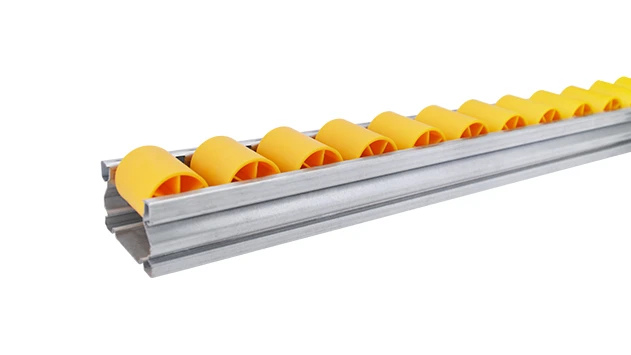
The roller track can be installed with multiple accessories to create different slopes and configurations of flow racks.All steel conveyor 60 roller track accessories are engineered to perfectly fit the sliding rail.
Imagine walking into a busy manufacturing facility—conveyors hum, workers move efficiently, and parts glide smoothly along roller tracks. But what if those tracks were slightly off-kilter? A tiny misalignment could slow down production, cause parts to jam, or even lead to safety hazards. That's why getting the installation right, especially for critical components like 60 steel roller track yellow, is non-negotiable. Today, we're diving deep into the tools and techniques that keep these tracks level, reliable, and ready to support your lean manufacturing goals. Whether you're setting up a new production line or upgrading an existing one, understanding how to align 60 steel roller track yellow properly will save you time, money, and headaches down the line.
What Makes 60 Steel Roller Track Yellow Stand Out?
60 steel roller track yellow is a heavy-duty roller track designed for high-volume manufacturing environments. Made from durable steel with a bright yellow coating, it's easy to spot and resistant to wear and tear. The 60mm width makes it ideal for handling medium to large parts, from automotive components to consumer electronics. Its rollers are designed to reduce friction, allowing parts to move with minimal effort. This track is commonly used in flow racks, conveyors, and lean workstations, where smooth material flow is essential. Whether you're in the 3C assembly industry, medical device manufacturing, or any other sector that relies on efficient material handling, 60 steel roller track yellow is a versatile solution that can adapt to your needs.
Key Alignment Tools for 60 Steel Roller Track Yellow
Installing 60 steel roller track yellow with perfect alignment requires the right tools. Let's take a closer look at each of these essential tools and how they contribute to a level installation:
- Roller Track Connectors: These are the backbone of your track system. Our roller track connectors are designed to fit perfectly with 60 steel roller track yellow, ensuring a tight, stable connection between segments. They're made from high-quality materials to withstand heavy loads and repeated use.
- Leveling Tools: A digital spirit level is a great choice for precise measurements. It gives you instant feedback on whether the track is level, making adjustments faster and more accurate. For longer tracks, a laser level can project a straight line across the entire length, helping you spot even the smallest misalignments.
- Adjustment Accessories: Adjustable feet are a must for uneven floors. Our caster accessories include adjustable feet that can be twisted to raise or lower supports, ensuring the track stays level regardless of the floor condition. Shims are another option for small adjustments—they're thin pieces of material that can be placed under supports to fill gaps.
- Measuring Tape & Straightedge: A long measuring tape helps you confirm the length of the track, while a straightedge (like an aluminum profile) ensures the segments are aligned end-to-end. This step is crucial to avoid gaps or overlaps between tracks.
- Wrenches & Screwdrivers: Use the right size wrench to tighten roller track connectors. Avoid over-tightening, as this can warp the track or damage the connectors. A screwdriver is useful for adjusting smaller fasteners on supports and feet.

Step-by-Step Guide to Level Installation
Follow these detailed steps to install 60 steel roller track yellow with perfect alignment:
1. Pre-Installation Preparation
First, gather all your tools and materials. Make sure you have the correct number of track segments, roller track connectors, supports, adjustable feet, and any other accessories you might need. Check the installation area: clear any debris, and if the floor is uneven, use a level to map out the high and low spots. This will help you decide where to place adjustable feet to compensate for the unevenness.
2. Lay Out the Track Segments
Place the 60 steel roller track yellow segments on the floor where they'll be installed. Arrange them in the exact configuration you need—whether it's a straight line, a curve, or a combination. Use a straightedge to ensure the segments are aligned end-to-end. This initial layout is critical because any misalignment here will be amplified once the track is secured.
3. Secure the Connectors
Attach roller track connectors to join the segments. For straight tracks, use straight connectors; for curves, use angled connectors. Tighten the bolts just enough to hold the segments together—you'll need to adjust them later to ensure level alignment. Make sure each connector is seated flush against the ends of the tracks to avoid gaps.
4. Install Supports and Adjust Level
Place supports under the track at regular intervals (every 2-3 feet, depending on load). Attach adjustable feet to the bottom of each support. Use your level to check the height of each support. If a support is too high, twist the adjustable foot to lower it; if it's too low, raise it. Continue this process until all supports are at the same height, ensuring the track is level across its entire length.
5. Check for Alignment
Once the supports are adjusted, run a straightedge along the top of the track to check for any dips or bumps. Adjust the supports as needed. Use a laser level to verify that the track is level both horizontally (side to side) and vertically (end to end). This double-check ensures that the track is perfectly aligned in all directions.
6. Final Tightening and Testing
After confirming the track is level, tighten all roller track connectors and support fasteners securely. Use a torque wrench if necessary. Test the track by rolling a variety of parts along it—they should glide smoothly without resistance. If not, adjust the alignment until it's perfect.

Common Alignment Issues & Solutions
Even with careful installation, issues can arise. Here's how to resolve them:
| Issue | Solution |
|---|---|
| Uneven Track Surface | Use a level to identify high/low spots. Adjust adjustable feet or add shims to level the track. |
| Misaligned Connectors | Loosen fasteners, realign segments, and retighten. Ensure connectors are flush against track ends. |
| Bent Rollers | replace bent rollers with new ones. Conduct regular maintenance checks to catch issues early. |
| Loose Supports | Tighten support fasteners. Add additional fasteners if needed for extra security. |
Benefits of Proper Alignment
Proper alignment of 60 steel roller track yellow offers numerous advantages:
- Improved Material Flow: Level tracks reduce bottlenecks, allowing parts to move seamlessly between stations.
- Reduced Wear & Tear: Less friction extends the life of rollers, connectors, and parts, lowering maintenance costs.
- Enhanced Safety: Level tracks prevent parts from falling off, reducing workplace accidents.
- Higher Efficiency: Smooth material flow lets workers focus on value-added tasks, boosting productivity.
- Better Quality Control: Undamaged parts lead to fewer defects and higher product quality.
Integration with Other Lean Solutions
60 steel roller track yellow is part of a larger lean ecosystem:
Flow Racks
Flow racks use roller tracks for FIFO inventory management. 60 steel roller track yellow ensures parts move smoothly from back to front, reducing waste and improving inventory turnover.
Conveyors
Roller tracks integrate with conveyors to create continuous material flow. Proper alignment prevents jams and keeps production moving.
Lean Workstations
Our Workbench E and other lean workstations use roller tracks to feed parts directly to workers, reducing reach time and increasing efficiency.
Custom Lean Solutions for Your Industry
At our company, we offer tailored lean solutions:
- Custom Design: Our experts design systems with 60 steel roller track yellow, flow racks, and conveyors to fit your needs.
- Wholesale Options: Get the best value with wholesale pricing on all lean products.
- Industry-Specific Solutions: We cater to 3C assembly, medical devices, and more, optimizing systems for your sector.
- Sustainable Solutions: Reusable materials reduce environmental impact while maintaining quality.
Conclusion
60 steel roller track yellow is a vital component of lean manufacturing, but its performance depends on proper alignment. By using the right tools—like roller track connectors and adjustable feet—and following our step-by-step guide, you can ensure a level installation that boosts efficiency, safety, and productivity. Whether you need a single track or a complete lean system, our team is here to support you. Let's build a manufacturing environment that's smooth, efficient, and built to last.