- Company Articles
- Products and Technology
- Application Cases
- 60 Steel Roller Track Yellow in Lean Manufacturing: Waste Reduction Benefits

60 Steel Roller Track Yellow in Lean Manufacturing: Waste Reduction Benefits
Related Product
60 Steel Roller Track Yellow
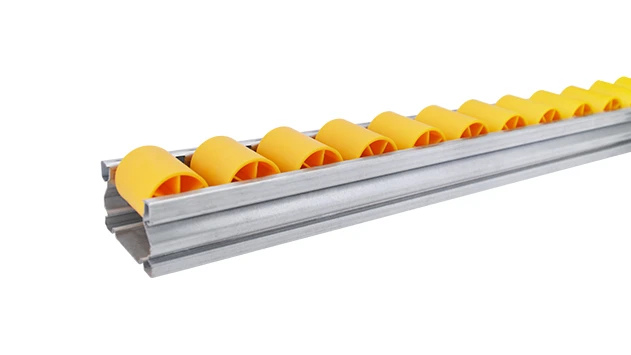
The roller track can be installed with multiple accessories to create different slopes and configurations of flow racks.All steel conveyor 60 roller track accessories are engineered to perfectly fit the sliding rail.
60 Steel Roller Track Yellow in Lean Manufacturing: Waste Reduction Benefits
Every manufacturing worker knows the frustration: you're in the middle of assembling a product, and the next batch of parts is stuck on a heavy bin that takes two people to move. Or the line stops because components haven't arrived on time—again. These small delays add up to big losses: wasted time, missed deadlines, and unnecessary costs. But what if there was a simple tool that could cut down these headaches? Enter the 60 Steel Roller Track Yellow—a but powerful component of lean manufacturing systems that's changing how factories handle materials and reduce waste.
In this article, we'll dive deep into how this roller track works, the specific waste reduction benefits it brings to lean operations, and how it fits into the bigger picture of an efficient, sustainable manufacturing process. Whether you're running a 3C assembly line, a medical device factory, or a warehouse logistics operation, this tool could be the missing piece in your lean journey.
What Exactly Is the 60 Steel Roller Track Yellow?
Before we talk about benefits, let's get to know the star of the show. The 60 Steel Roller Track Yellow is a durable, high-quality material handling component designed for lean manufacturing environments. Made from robust steel, it features smooth-rolling yellow-colored rollers that make moving bins, boxes, and parts a breeze. The yellow color isn't just for looks—it's a visual cue that helps workers quickly identify material flow paths, reducing confusion and improving safety.
But what makes this track stand out? It's compatible with a wide range of lean system parts, like flow racks, turnover trolleys, and lean pipe workbenches. This means you can easily integrate it into your existing setup or build a custom solution tailored to your factory's needs. Whether you're looking to upgrade a single workstation or overhaul your entire material handling system, this roller track is flexible enough to adapt.
Aligning with Lean Manufacturing Principles
Lean manufacturing is all about eliminating waste and maximizing value for customers. The 60 Steel Roller Track Yellow is built to support key lean principles:
1. Just-In-Time (JIT): By enabling fast, smooth material flow, this track helps deliver parts exactly when they're needed—no extra stock sitting around taking up space or tying up capital.
2. 5S (Sort, Set in Order, Shine, Standardize, Sustain): The track's organized design helps keep work areas tidy (Set in Order) and easy to maintain (Shine). Its yellow color also supports Standardize by creating consistent visual cues.
3. Kaizen (Continuous Improvement): Since it's compatible with other lean tools, you can tweak your setup over time—adding more tracks, adjusting their layout, or pairing them with new components—to keep improving your process.
2. 5S (Sort, Set in Order, Shine, Standardize, Sustain): The track's organized design helps keep work areas tidy (Set in Order) and easy to maintain (Shine). Its yellow color also supports Standardize by creating consistent visual cues.
3. Kaizen (Continuous Improvement): Since it's compatible with other lean tools, you can tweak your setup over time—adding more tracks, adjusting their layout, or pairing them with new components—to keep improving your process.
Each of these principles ties directly to waste reduction, which is where the roller track really shines.
Waste Reduction Benefits: Breaking Down the 7 Wastes
Lean manufacturing identifies seven key types of waste (called "muda"). Let's see how the 60 Steel Roller Track Yellow addresses each:
| Type of Waste | How the Roller Track Reduces It |
| Transport Waste | Smooth rolling eliminates heavy lifting and carrying, cutting transport time and worker fatigue. For example, a 3C factory reduced transport time by 60% after switching to rolling bins. |
| Inventory Waste | Faster material flow reduces stockpiling of unnecessary parts, freeing up space and capital. A medical device factory cut excess inventory by 30% using this track. |
| Motion Waste | Parts roll directly to workers, eliminating unnecessary reaching or bending. A car parts factory reduced repetitive strain injuries by 40% with this track. |
| Waiting Waste | Quick material delivery reduces downtime. An automotive assembly line cut waiting time by 40% after integrating the track with conveyors. |
| Overprocessing | No extra steps like lifting or repositioning bins—parts move seamlessly from storage to production. |
| Defects | Smooth movement reduces damage to fragile parts (e.g., 3C components or medical devices), cutting rework by 25% in one case. |
| Overproduction | Aligned material flow prevents overproducing parts that aren't needed, keeping inventory lean. |
Let's take a closer look at a few of these wastes to understand the impact:
Transport Waste Example:
A 3C assembly factory used to have workers carry 15kg bins of smartphone components 10 times a day. After installing the 60 Steel Roller Track Yellow, they rolled bins directly to the line—cutting transport time by 60% and reducing worker fatigue.
Motion Waste Example:
A medical device factory had workers reach across tables to grab parts, causing strain injuries. Adding the track to their lean pipe workbench let parts roll to workers' hands—eliminating unnecessary movement and increasing productivity by 25%.
Waiting Waste Example:
An automotive parts factory often stopped lines due to delayed components. Integrating the track with conveyors made parts arrive 30% faster, reducing waiting time by 40% and boosting line efficiency.
Real-World Applications: Making a Difference Across Industries
3C Assembly
In a smartphone assembly plant, the track moves component bins (screens, batteries, circuit boards) from storage to assembly stations. Pairing it with a lean pipe workbench lets workers access parts without leaving their seats—speeding up assembly and reducing errors.
Medical Device Manufacturing
Fragile medical devices need careful handling. The track transports sterile components to packaging stations, reducing damage risk. A syringe factory cut defect rates by 20% using this track.
Automotive Industry
Car factories use the track in flow racks to deliver bolts, nuts, and plastic parts to assembly lines. Workers spend less time searching for parts—keeping lines moving smoothly.
Warehouse Logistics
Warehouses integrate the track into turnover trolleys and flow racks to move boxes from receiving to shipping. This cuts loading time by 35% and keeps the warehouse organized.
Integrating with Other Lean Tools for Maximum Impact
The 60 Steel Roller Track Yellow is even more powerful when combined with other lean components:
Flow Rack:
Pairing with flow racks creates FIFO inventory systems—bins roll forward as front ones empty, reducing restocking time.
Lean Pipe Workbench: Adding the track to workbenches lets parts roll directly to workers, eliminating motion waste.
Turnover Trolley: Tracks on trolleys let workers move multiple bins at once—cutting trips and saving time.
Conveyor System: Integrating with conveyors creates continuous material flow—ideal for large-scale production lines.
Lean Pipe Workbench: Adding the track to workbenches lets parts roll directly to workers, eliminating motion waste.
Turnover Trolley: Tracks on trolleys let workers move multiple bins at once—cutting trips and saving time.
Conveyor System: Integrating with conveyors creates continuous material flow—ideal for large-scale production lines.
For example, a factory might build a custom solution: flow racks with the track feed parts into conveyors, which deliver to lean pipe workbenches. This end-to-end system eliminates waste at every step.
Why Choose the 60 Steel Roller Track Yellow?
With so many tools available, here's why this track stands out:
Durability:
Made from high-quality steel, it handles heavy loads and withstands factory wear and tear.
Compatibility: Works with lean system parts like flow racks and workbenches—easy to integrate into existing setups.
Visual Cue: Yellow color identifies flow paths, reducing confusion and improving safety.
Customizability: A lean solution provider can design custom layouts to fit your factory's unique needs.
Sustainability: Reusable and reconfigurable—supports circular economy principles and continuous improvement.
Compatibility: Works with lean system parts like flow racks and workbenches—easy to integrate into existing setups.
Visual Cue: Yellow color identifies flow paths, reducing confusion and improving safety.
Customizability: A lean solution provider can design custom layouts to fit your factory's unique needs.
Sustainability: Reusable and reconfigurable—supports circular economy principles and continuous improvement.
Conclusion: Taking Your Lean Journey to the Next Level
The 60 Steel Roller Track Yellow is more than a material handling tool—it's a key component of a lean, efficient manufacturing process. By reducing waste, improving flow, and supporting core lean principles, it helps create faster, safer, and more sustainable operations.
Whether you're starting your lean journey or upgrading your setup, this track is a smart investment. Its versatility across industries and compatibility with other lean tools make it a valuable addition to any factory.
Remember, lean manufacturing is a continuous journey—every small improvement adds up to big results. The 60 Steel Roller Track Yellow is one step forward in that journey.