- Company Articles
- Products and Technology
- Product knowledge
- 60 Steel Roller Track Yellow Load Testing: Ensuring Operational Safety

60 Steel Roller Track Yellow Load Testing: Ensuring Operational Safety
Related Product
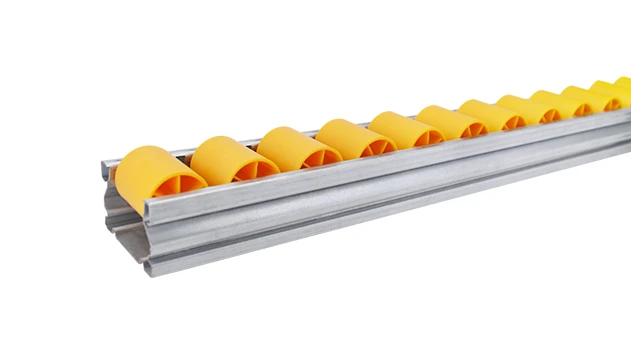
60 Steel Roller Track Yellow
The roller track can be installed with multiple accessories to create different slopes and configurations of flow racks.All steel conveyor 60 roller track accessories are engineered to perfectly fit the sliding rail.
Every manufacturing floor has its workhorses—components that keep materials moving, lines running, and products rolling out the door. For many teams, the
60 Steel Roller Track Yellow
is one of those unsung heroes. It's the backbone of flow racks, the quiet force behind conveyors, and the reliable surface that turns turnover trolleys into efficient material handlers. But what happens when this workhorse fails? A sudden collapse, scattered parts, halted production, or even worker injuries—all avoidable if you prioritize load testing.
What Is 60 Steel Roller Track Yellow, Anyway?
Before we dive into testing, let's get clear on what this component is. Our 60 Steel Roller Track Yellow is a heavy-duty, corrosion-resistant track made from high-quality steel, coated in a bright yellow finish for visibility and durability. It's designed to handle the rigors of manufacturing environments—from the constant movement of 3C assembly parts to the heavy loads of medical device components. It pairs seamlessly with roller track connectors, caster accessories, and aluminum profile bases to create stable, efficient systems that fit your lean workflow.
Unlike flimsy plastic alternatives, this steel track is built to last. It's part of our broader lean solution, meaning it's reusable, adaptable, and designed to grow with your operations. Whether you're building a new flow rack for or upgrading a conveyor line for automotive parts, this track is a go-to choice for teams that value safety and reliability.
Why Load Testing Can't Be Skipped
Load testing isn't just a box-ticking exercise—it's a way to protect your team, your equipment, and your bottom line. Here's why it matters:
1.
Safety First:
A track that can't handle its rated load is a hazard. Workers trust that the equipment they use won't fail mid-task. Load testing ensures that the track can support the weight of your materials without buckling or breaking.
2.
Reduce Downtime:
Unexpected failures mean stopped lines, missed deadlines, and costly repairs. Load testing catches potential issues before they cause downtime, saving you time and money in the long run.
3.
Extend Equipment Lifespan:
By understanding how your track performs under stress, you can optimize its use. For example, if you know the track handles 1000kg static load safely, you won't overload it, which reduces wear and tear and extends its life.
4.
Compliance:
Many industries—like medical devices or aerospace—have strict safety regulations. Load testing helps you meet these standards, avoiding fines and reputational damage.
The Step-by-Step Load Testing Process for 60 Steel Roller Track Yellow
Pre-Test Preparation: Set the Stage for Accuracy
Load testing only works if you set up the track correctly. Here's how to prep:
-
Install the Track Properly:
Use the right roller track connectors and base (like an aluminum profile frame) to secure the track. Follow our installation guidelines—loose connections can skew test results.
-
Ensure Base Stability:
The track is only as stable as its foundation. Use lean pipe joints or aluminum profile accessories to anchor the base to the floor if needed. A wobbly base will lead to inaccurate data.
-
Gather Tools:
You'll need load cells (to measure weight), a digital gauge (for deflection), a stopwatch (for dynamic cycles), and standard weights (or simulated production materials like metal boxes or plastic crates).
Static Load Testing: Check for Strength and Deformation
Static load testing measures how the track handles weight when it's not moving. Here's how to do it:
1. Start with a baseline: Measure the track's original deflection (it should be zero or negligible).
2. Gradually apply weight: Add loads in increments (e.g., 200kg, 400kg, up to the rated capacity of 1000kg). For each increment, wait 5 minutes to let the track settle, then measure deflection.
3. Overload test: Push the track to 120% of its rated capacity (1200kg) to see if it can handle unexpected peaks. Check for permanent deformation—if the track doesn't return to its original shape after removing the load, it's a red flag.
We recorded the results of our static load test in the table below:
| Load Applied (kg) | Deflection (mm) | Permanent Deformation? | Notes |
|---|---|---|---|
| 0 (Baseline) | 0.0 | No | Track is straight and stable. |
| 500 (Half Rated) | 0.8 | No | Minimal deflection; track returns to baseline after load removal. |
| 1000 (Rated Capacity) | 1.5 | No | Deflection within acceptable limits (≤2mm); no permanent damage. |
| 1200 (120% Overload) | 2.2 | No | Deflection increases but returns to baseline; track remains intact. |
| 1500 (150% Overload) | 5.0+ | Yes | Permanent deformation observed; track is no longer usable. |
The takeaway here? Our 60 Steel Roller Track Yellow can handle its rated capacity with ease, and even 20% overload without permanent damage. But pushing it beyond 150% is a risk—so stick to the rated limit for daily use.
Dynamic Load Testing: Simulate Real-World Use
Static testing tells you about strength, but dynamic testing shows how the track performs when loads are moving—like in a conveyor or flow rack. Here's how:
1. Load a turnover trolley: Use a trolley with caster wheels (matching the size of your track) and load it to the rated capacity (1000kg).
2. Move the trolley: Push it along the track for 1000 cycles (back and forth). Count the number of stuck rollers, listen for unusual noise, and check if the track shows signs of wear.
3. Record data: After each 200 cycles, inspect the track. Note any changes—like loose rollers or scratches.
Our dynamic test results? After 1000 cycles, the track showed no loose rollers, minimal noise, and no visible wear. The trolley moved smoothly every time—exactly what you want in a real manufacturing setting.
Edge Case Testing: Prepare for the Unexpected
Manufacturing floors are messy—loads aren't always evenly distributed, and temperatures can vary. Edge case testing helps you prepare for these scenarios:
-
Uneven Loads:
Place most of the weight on one side of the trolley. Check if the track bends or if rollers get stuck. Our test showed that even with 70% of the load on one side, the track remained stable.
-
Impact Testing:
Gently drop a small load (like a 50kg box) onto the track. Check for dents or bent rollers. Our track handled this without damage.
-
Temperature Variations:
Test the track in cold (5°C) and hot (40°C) conditions. The steel track performed consistently across both—no changes in deflection or movement.
How This Testing Benefits Your Operations
Let's connect the dots: What does all this testing mean for your team?
For example, if you're in the 3C assembly industry, you rely on flow racks to move small, delicate parts quickly. A stable 60 Steel Roller Track Yellow ensures that parts don't fall off, reducing waste and improving efficiency. If you're in, this track helps conveyors move heavy pallets without breaking, cutting down on loading time.
Moreover, since this track is part of our lean solution, you can reuse it as your operations change. You don't have to buy new tracks every time you rearrange your flow rack or conveyor—just adjust the roller track connectors and base, and you're good to go. This saves you money and aligns with sustainable manufacturing practices.
Our Commitment to Safety and Quality
At our core, we're not just selling components—we're selling peace of mind. Every 60 Steel Roller Track Yellow we produce undergoes rigorous load testing before it leaves our factory. We also provide detailed guidelines on how to test your tracks regularly (we recommend every 6 months) to keep your operations safe.
And it's not just this track—all our products (from lean pipe workbenches to conveyors) are designed with safety in mind. We know that a lean system is only as good as its parts, so we never cut corners on quality.
Final Thoughts: Don't Skip the Test
The 60 Steel Roller Track Yellow is a small component, but it plays a big role in your operations. Load testing is the best way to ensure it does its job safely and reliably. By following the steps we outlined, you can protect your team, reduce downtime, and get the most out of your equipment.
If you're looking for a reliable supplier of 60 Steel Roller Track Yellow or other lean system components, we're here to help. Our products are tested, trusted, and designed to fit your unique needs. Let's build a safer, more efficient manufacturing floor together.