- Company Articles
- Products and Technology
- Procurement Guidelines
- 60 Steel Roller Track Yellow Quality Check: What to Inspect Before Purchase

60 Steel Roller Track Yellow Quality Check: What to Inspect Before Purchase
Related Product
60 Steel Roller Track Yellow
The roller track can be installed with multiple accessories to create different slopes and configurations of flow racks.All steel conveyor 60 roller track accessories are engineered to perfectly fit the sliding rail.
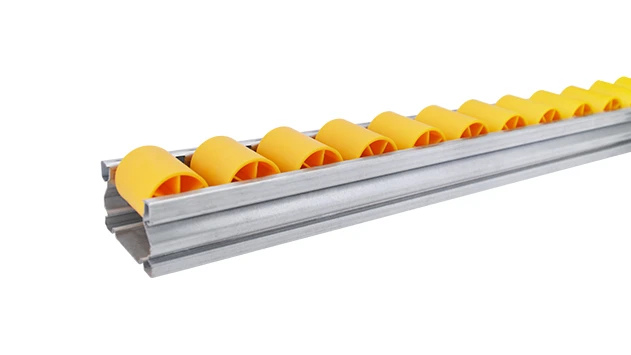
Introduction: The Role of 60 Steel Roller Track Yellow in Modern Manufacturing
Walk through any bustling production line or well-organized warehouse, and you'll spot roller tracks doing the heavy lifting—moving parts smoothly from station to station, keeping workflows uninterrupted, and cutting down on manual labor. Among the many roller track options available, the 60 Steel Roller Track Yellow stands out for its unique blend of durability, visibility, and versatility. It's a workhorse in industries like 3C assembly, medical device manufacturing, and warehouse logistics—places where reliable, efficient material handling is non-negotiable.
In a 3C assembly line, for instance, this track might carry smartphone components from a soldering station to a testing area, while in a medical warehouse, it could transport sterile supplies to packaging zones. It's also a key part of flow racks, conveyors, and lean pipe systems—core components of lean solutions that help businesses eliminate waste, boost productivity, and adapt quickly to changing demands.
But not all 60 Steel Roller Track Yellow products are created equal. A low-quality track can lead to frequent jams, broken parts, and unexpected downtime—costing your business time, money, and customer trust. That's why knowing exactly what to inspect before making a purchase is critical. This guide will walk you through every detail you need to check to ensure you're getting a high-quality product that meets your needs and integrates seamlessly into your existing systems.
Key Inspection Criteria for 60 Steel Roller Track Yellow
To evaluate the quality of a 60 Steel Roller Track Yellow, you need to dive into several core components. Below is a detailed breakdown of the most important factors, along with how to assess each one:
| Inspection Area | What to Check | Why It Matters |
|---|---|---|
| Roller Material & Coating | 60 steel grade confirmation, yellow coating thickness (50-100 microns ideal), adhesion, corrosion resistance | Ensures durability against wear/tear, prevents rust, maintains visibility in busy environments |
| Track Frame Construction | Steel gauge (12-gauge+ for heavy loads), weld quality, frame alignment, edge smoothness | Supports heavy loads without bending, ensures smooth roller movement, reduces injury risks |
| Roller Rotation & Smoothness | Spin consistency, friction level, noiseless operation, load-bearing capacity | Prevents jams, reduces energy waste, ensures steady part movement |
| System Compatibility | Fit with flow rack accessories, conveyor parts, lean pipe system components | Seamless integration into existing workflows, avoids costly modifications |
| Industry Compliance | Lean solution standards alignment, safety certifications (OSHA/ISO), quality reports | Guarantees reliability in high-demand settings, meets regulatory requirements |

1. Roller Material & Coating Quality
The rollers are the heart of any roller track, so their material and coating are non-negotiable. Let's break down how to assess each:
**60 Steel Grade Confirmation**: First, verify that the rollers are made from genuine 60-grade steel. This steel is known for its high tensile strength (around 600 MPa) and resistance to deformation—critical for handling heavy loads in busy environments. Ask the supplier for a material test report (MTR) to confirm the steel grade; a reputable supplier will have this on hand.
**Yellow Coating Thickness**: The yellow coating serves two key purposes: visibility and corrosion protection. Use a coating thickness gauge to measure it—aim for 50 to 100 microns. A coating thinner than 50 microns will wear off quickly, exposing the steel to rust. Thicker than 100 microns might crack or peel when the roller spins.
**Coating Adhesion**: Perform a simple tape test to check adhesion. Apply a piece of masking tape to the coating, press firmly, and peel it off quickly. If any coating comes off with the tape, the adhesion is poor—this means the coating will chip or peel in real-world use.
**Uniformity**: Inspect the coating for uniformity. Blotchy or patchy areas indicate a subpar application process (like uneven spraying). These areas will wear faster, leading to premature rust and reduced visibility.
**Corrosion Resistance**: Ask the supplier for a salt spray test report. A good coating should resist rust for at least 48 hours in a salt spray environment. This is especially important if your track will be used in humid or chemical-exposed areas (like medical device manufacturing).

2. Track Frame Construction
The frame holds everything together, so it needs to be strong and well-built. Here's how to inspect it:
**Steel Gauge**: The frame's steel thickness (measured in gauge) directly impacts its load capacity. For heavy-duty use (like moving car parts or medical equipment), opt for a 12-gauge or thicker frame. A 14-gauge frame might bend under loads over 300 kg, causing rollers to misalign and parts to jam. Use a caliper to measure the frame's thickness if possible.
**Weld Quality**: Examine all welds carefully. They should be smooth, continuous, and free of gaps, bubbles, or slag (the rough residue left from welding). A poor weld can break under stress—for example, if a heavy box is dropped on the track. Ask for a weld strength test report to confirm the welds meet ISO 15085 standards (for railway applications) or similar industry benchmarks.
**Frame Alignment**: Place the track on a flat concrete floor and check its straightness. Use a laser level or straightedge to verify that the frame doesn't have any bends or warps. A bent frame will cause rollers to be out of alignment, leading to uneven part movement and increased friction.
**Edge Treatment**: Run your hand along the frame's edges. They should be smooth and free of sharp burrs. Sharp edges can cause cuts to workers or damage to delicate parts (like 3C components). If you find burrs, it's a sign of poor manufacturing quality.
3. Roller Rotation & Smoothness
Smooth roller rotation is essential for uninterrupted workflow. Here's how to test it:
**Manual Spin Test**: Take a roller and spin it with your finger. It should spin freely for 5-10 seconds without stopping abruptly. If it stops quickly, there's too much friction in the bearing—this will lead to jams and increased energy use. Test multiple rollers from the same track to ensure consistency.
**Friction Level**: Place a small, lightweight object (like a plastic part) on the track and tilt it slightly. The object should roll smoothly without sticking. If it sticks, the rollers have too much friction, which will slow down your workflow.
**Load Test**: Apply a load equal to the track's rated capacity (e.g., 500 kg) and leave it for 24 hours. Afterward, check if the frame has bent or the rollers have become misaligned. Then, push the load along the track— it should move easily without requiring excessive force. A high-quality track will handle its rated load with no issues.
**Noise Level**: Listen to the rollers as they spin. They should operate quietly—no grinding, squeaking, or rattling noises. Loud noises indicate worn bearings or poor roller alignment, which will need replacement sooner than later.
4. System Compatibility
A roller track doesn't work alone—it's part of a larger system. So compatibility with your existing components is crucial:
**Flow Rack Integration**: If you're using the track in a flow rack, ensure it fits the rack's side rails and mounting points. For example, does it have pre-drilled holes that align with your flow rack's brackets? Can it be attached using standard flow rack accessories (like clamps or bolts)? A compatible track will save you time and money on modifications.
**Conveyor Compatibility**: For conveyor systems, check if the track matches your conveyor's speed (e.g., 0.5-1 m/s) and load capacity. Does it fit into your conveyor's frame? Can it be connected to other conveyor sections without gaps? A mismatched track can cause bottlenecks or damage your conveyor motor.
**Lean Pipe System Fit**: Lean pipe systems rely on modular components that can be easily rearranged. A compatible 60 Steel Roller Track Yellow should attach to lean pipe workbenches or frames using standard clamps. For example, can you use a lean pipe clamp to mount the track to a lean pipe frame? This flexibility allows you to adjust your system as your needs change (like adding more tracks to a lean pipe flow rack).
**Universal Mounting**: Look for tracks with universal mounting holes or slots. This makes it easier to install the track in different systems—whether you're using it in a flow rack today or a conveyor tomorrow. It also future-proofs your investment.
5. Industry Compliance & Documentation
High-quality tracks meet industry standards and come with proper documentation:
**Lean Solution Alignment**: If you're using the track in a lean system, it should align with lean principles like reusability and continuous improvement. For example, can the track be easily moved or modified? Does it help reduce waste (like eliminating manual part carrying)? A track that fits into your lean solution will boost your overall efficiency.
**Safety Certifications**: The track should meet OSHA (U.S.) or ISO 45001 (international) safety standards. This includes things like edge smoothness (no sharp edges) and load capacity labeling (clear marks indicating the maximum weight the track can handle). Avoid tracks without clear safety labels.
**Quality Documentation**: Ask the supplier for the following documents:
- Material Test Report (MTR) for 60 steel rollers
- Salt Spray Test Report for coating corrosion resistance
- Weld Strength Test Report
- ISO 9001 Quality Management Certification (for the supplier)
A reputable supplier will provide these documents without hesitation. If they can't, it's a sign they don't stand behind their product.
Practical Inspection Steps: A Step-by-Step Guide
Now that you know what to check, here's a step-by-step process to follow before purchasing:
Step 1: Visual Inspection
Start with a thorough visual check:
- Look for chipped or peeling yellow coating.
- Check for loose rollers or bent frames.
- Examine welds for gaps or bubbles.
- Run your hand along edges to check for burrs.
Step 2: Manual Tests
Next, perform manual tests:
- Spin multiple rollers to check for smooth, consistent rotation.
- Place the track on a flat surface to check alignment.
- Bend the frame slightly (without excessive force) to see if it returns to shape.
Step 3: Load Test
Apply a load equal to 110% of the track's rated capacity (e.g., 550 kg for a 500 kg track). Leave it for 24 hours, then:
- Check if the frame has bent.
- Test roller rotation under load.
- Ensure no rollers have come loose.
Step 4: Compatibility Test
If possible, bring a sample of your existing components (like a flow rack bracket or lean pipe clamp) to the supplier. Test if the track fits with these components. For example, can you attach the track to your flow rack bracket using standard bolts?
Step 5: Request Documentation
Ask the supplier for all relevant documents (MTR, salt spray test report, weld report, certifications). Review these documents carefully to ensure they meet your standards.
Common Red Flags to Avoid
Watch out for these signs of poor quality:
- **Chipped/Peeling Coating**: Exposes steel to rust, reduces visibility.
- **Loose Rollers**: Rollers that wiggle or fall out will cause jams.
- **Bent Frame**: Leads to misaligned rollers and uneven part movement.
- **Loud Noises**: Indicates worn bearings or poor alignment.
- **No Documentation**: Supplier can't provide test reports or certifications.
- **Uneven Coating**: Thinner areas will rust faster.
- **Sharp Edges**: Increases injury risks for workers.
If you notice any of these red flags, walk away. A low-quality track may be cheaper upfront, but it will cost you more in downtime and replacements.
How This Track Fits Into Your Lean Solution
Lean manufacturing is about reducing waste and improving efficiency—and a high-quality 60 Steel Roller Track Yellow plays a key role in this:
**Reduced Downtime**: A quality track rarely breaks down, so you won't have to stop production to fix it. This saves you time and money (downtime can cost up to $10,000 per hour in some industries).
**Improved Flow**: The yellow coating makes the track highly visible, so workers can easily see where parts are moving. This reduces bottlenecks and ensures parts get to the right station at the right time.
**Reusability**: High-quality tracks are durable and can be reused in different systems. For example, if you rearrange your flow rack, you can take the track with you and reinstall it elsewhere. This aligns with the lean principle of reusing resources to reduce waste.
**Continuous Improvement**: Lean systems are designed to be adjusted over time. A compatible track allows you to add more rollers, extend the track length, or move it to a new location—helping you continuously improve your workflow.
**Cost Savings**: While a high-quality track may cost 20-30% more upfront, it lasts 2-3 times longer than a low-quality one. This reduces replacement costs and boosts your long-term ROI.
Conclusion: Invest in Quality for Long-Term Success
A 60 Steel Roller Track Yellow is more than just a piece of metal—it's a critical component of your manufacturing or warehouse system. By taking the time to inspect its quality before purchase, you can avoid costly downtime, improve efficiency, and ensure it fits seamlessly into your lean solution.
Remember to check the roller material and coating, frame construction, roller rotation, compatibility with your systems, and compliance with industry standards. Watch out for red flags like chipped coating and loose rollers. And don't forget to ask for documentation to prove the track's quality.
Investing in a high-quality track is an investment in your business's success. It will help you maintain a smooth, efficient workflow, reduce waste, and keep your production line running at its best. So take the time to do your due diligence—your bottom line will thank you.