- Company Articles
- Products and Technology
- Product knowledge
- 60 Steel Roller Track Yellow Working Principle: Smooth Material Flow Explained

60 Steel Roller Track Yellow Working Principle: Smooth Material Flow Explained
Related Product
60 Steel Roller Track Yellow
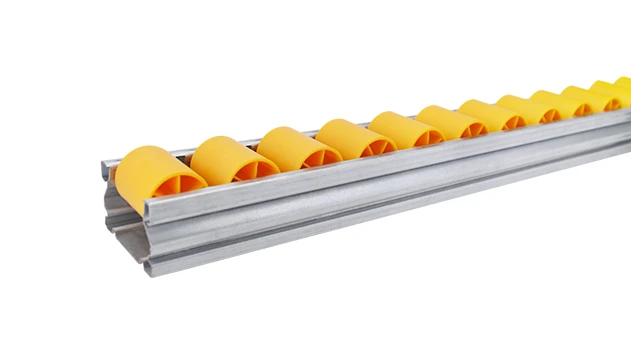
The roller track can be installed with multiple accessories to create different slopes and configurations of flow racks.All steel conveyor 60 roller track accessories are engineered to perfectly fit the sliding rail.
Material flow is the unsung hero of any manufacturing line or warehouse operation. When parts glide seamlessly from storage to assembly, or boxes move quickly from sorting to shipping, everything hums along—teams meet deadlines, costs stay low, and customers get their orders on time. But when flow hits a snag? It's like a traffic jam in your production floor: parts pile up, workers waste time chasing stuck items, and every minute of delay eats into your bottom line. That's where the 60 Steel Roller Track Yellow comes in—a small but powerful component that turns bottlenecks into smooth, efficient pathways.
In this article, we'll dive deep into what the 60 Steel Roller Track Yellow is, its core components, how it works, and why it's become a go-to solution for industries ranging from 3C assembly to automotive manufacturing. We'll also explore how it fits into lean manufacturing practices and share tips to keep it running at peak performance.
What Is the 60 Steel Roller Track Yellow?
The 60 Steel Roller Track Yellow is a gravity-fed material handling system designed to move items—from small components to heavy boxes—with minimal effort. It's built for durability and simplicity: high-strength steel rollers are mounted on a sturdy frame, with bright yellow plastic guide rails that keep items aligned as they move. The "60" in its name refers to its standard width (60mm), a size that balances versatility and load capacity for most industrial uses.
Unlike powered conveyors, this track relies on gravity to do the work. Install it at a slight incline, place an item on the higher end, and watch it glide smoothly to the lower end—no electricity, no motors, no complex controls. It's perfect for applications where you need to move items short distances, like from a storage rack to a picking station, or from an assembly line to a packaging area.
Pro Tip: The 60 Steel Roller Track Yellow is compatible with a wide range of load sizes—from small plastic bins (10x10cm) to large cardboard boxes (up to 50x50cm). Just adjust the incline based on the weight of your items: lighter loads need a steeper slope (4-5 degrees), while heavier loads work best with a gentler incline (2-3 degrees).
Core Components of the 60 Steel Roller Track Yellow
Every part of the 60 Steel Roller Track Yellow is designed for function and longevity. Let's break down its key components and what they do:
| Component Name | Primary Function | Key Features |
|---|---|---|
| High-Strength Steel Rollers | Reduce friction to enable smooth item movement | Corrosion-resistant zinc coating, 60mm diameter, 1.2mm thick steel |
| Yellow Plastic Guide Rails | Align items along the track and prevent veering | Bright yellow for visibility, wear-resistant PVC material, 10mm height |
| Roller Track Connector | Join multiple track sections for longer pathways | Durable aluminum alloy, tool-free assembly, compatible with most aluminum profiles |
| Shock-Absorbent End Stop | Stop items at the end of the track without damage | Rubberized top, adjustable position, fits 60mm track width |
| Aluminum Profile Frame | Support rollers and guide rails | Lightweight 2020 aluminum profile, T-slot design for easy accessory attachment |
Each component works together to create a system that's easy to assemble, adjust, and maintain. For example, the roller track connector lets you link 2-meter sections into a 10-meter track in minutes—no welding or special tools needed. And the yellow plastic guide rails are replaceable, so if one gets worn, you can swap it out without replacing the entire track.

How Does the 60 Steel Roller Track Yellow Work?
The working principle of the 60 Steel Roller Track Yellow is simple, but it's rooted in basic physics: gravity and friction. Let's walk through the process step by step:
Step 1: Incline Installation
First, you mount the track on a frame (like an aluminum profile rack) at a slight incline. The exact angle depends on the weight of your items—for example, a box of 3C components (like smartphone batteries) might need a 4-degree slope, while a heavy automotive part (like a brake caliper) needs a 2-degree slope. This incline uses gravity to pull items down the track.
Step 2: Friction Reduction
When you place an item on the higher end of the track, the steel rollers spin as the item moves. Steel rollers have a low friction coefficient (around 0.05), which means they reduce the resistance between the item and the track. This makes it easy for even heavy items to glide without manual pushing.
Step 3: Alignment with Guide Rails
The bright yellow plastic guide rails run along the length of the track, keeping items centered. If an item starts to veer off course, the guide rails gently nudge it back into place—preventing jams and ensuring items reach their destination safely. This is especially important for delicate items like medical device components or 3C parts, which can be damaged if they fall off the track.
Step 4: Load Distribution
The rollers are spaced 50mm apart, which evenly distributes the weight of the item. This means even a heavy box (up to 50kg) won't bend or damage the track. The aluminum profile frame adds extra support, so the track can handle continuous use in high-traffic areas like assembly lines or warehouses.
Step 5: Seamless Integration
Using roller track connectors, you can link multiple sections of the 60 Steel Roller Track Yellow to create longer pathways. You can also integrate it with other material handling systems, like flow racks or conveyors. For example, you might connect the track to the end of a powered conveyor—items flow from the conveyor to the track, reducing energy use and letting workers pick items at their own pace.

Why Yellow? The Significance of Color in Manufacturing
You might wonder: why is the guide rail yellow? It's not just for aesthetics—color coding plays a critical role in industrial safety and efficiency. Here's why yellow is the perfect choice:
- Visibility: Yellow stands out against most industrial backgrounds (like gray concrete floors or blue metal racks). This makes the track easy to see, reducing the risk of workers tripping over it or misplacing items.
- Safety: In many manufacturing standards (like OSHA), yellow is used to signal "caution" or "movement." This tells workers that the area around the track is for moving materials, not for standing or storing items.
- Standardization: Bright yellow helps teams quickly identify material flow pathways. For example, in a 3C assembly line, yellow tracks might be used for moving finished components, while blue tracks are for raw materials—making it easy to follow the production process.
- Durability: The yellow plastic used for the guide rails is wear-resistant and UV-stable. It won't fade over time, even if exposed to harsh industrial lighting or cleaning chemicals.
The yellow color also aligns with lean manufacturing principles. It helps teams visualize the flow of materials, which is a key part of the 5S methodology (Sort, Set in Order, Shine, Standardize, Sustain). When everyone can see where materials are moving, it's easier to spot bottlenecks and make improvements.
Integration with Lean Solutions
The 60 Steel Roller Track Yellow is more than just a material handling tool—it's a core component of lean manufacturing. Lean is all about eliminating waste (muda) and continuous improvement, and this track fits perfectly into that philosophy:
1. Reduces Motion Waste
Motion waste is when workers spend time walking, reaching, or lifting items unnecessarily. With the 60 Steel Roller Track Yellow, items come directly to the worker—no more walking to a storage rack to grab a box. For example, in a medical device factory, a nurse might use a track to move syringes from storage to the packaging station, cutting down on walking time by 30%.
2. Supports FIFO Inventory Management
First-In-First-Out (FIFO) is a key lean practice that ensures older inventory is used before newer inventory. When you install the 60 Steel Roller Track Yellow in a flow rack, items are loaded from the back and taken from the front. This means the first item you put in is the first one you take out—reducing obsolete stock and ensuring fresh parts are used first.
3. Reusable and Adaptable
Lean manufacturing emphasizes reusability and continuous improvement. The 60 Steel Roller Track Yellow is designed to be taken apart and reassembled quickly. If you rearrange your production line, you can use roller track connectors to move the track to a new location—no need to buy new equipment. This aligns with the "sustainable improvement" of many lean solutions.
4. Low Maintenance
Waste isn't just about time—it's about money spent on repairs and replacements. The 60 Steel Roller Track Yellow has no moving parts (other than the rollers), so it requires minimal maintenance. A quick clean every month and occasional lubrication are all it takes to keep it running smoothly. This reduces downtime and saves money on repair costs.
Lean Hack: Pair the 60 Steel Roller Track Yellow with a flow rack to create a "supermarket" system. This is a lean practice where parts are stored in a central location (like a supermarket shelf) and restocked as needed. Workers can grab parts from the front of the rack, and the track ensures new parts slide forward automatically—keeping the production line running without interruptions.
Real-World Applications of the 60 Steel Roller Track Yellow
The 60 Steel Roller Track Yellow is used in almost every manufacturing and warehouse industry. Let's look at some real-world examples of how it's making a difference:
1. 3C Assembly Line
In a smartphone factory, the 60 Steel Roller Track Yellow is used to move small components (like camera modules or charging ports) from storage to the assembly station. The track is installed on a flow rack, so workers can grab parts without leaving their seats. This reduces motion waste and speeds up the assembly process—helping the factory produce 20% more phones per day.
2. Automotive Parts Warehouse
A large automotive parts warehouse uses the track to move boxes of brake pads and engine components to the picking station. The track is installed at a 3-degree incline, so heavy boxes (up to 40kg) glide smoothly. This reduces the need for manual lifting, cutting down on worker fatigue and injury rates by 25%.
3. Medical Device Manufacturing
A medical device company uses the 60 Steel Roller Track Yellow to move delicate components (like IV stand parts or monitor screens) from the production line to the packaging area. The yellow guide rails keep items aligned, so they don't get damaged during transport. This reduces product defects by 15%—critical for a industry where quality is non-negotiable.
4. Warehousing and Logistics
A logistics company uses the track in its sorting area. Packages are placed on the track at the higher end, and they glide to the correct sorting bin based on their destination. This reduces the time it takes to sort packages by 30%—helping the company meet its same-day delivery goals.
Maintenance Tips for Long-Lasting Performance
To keep your 60 Steel Roller Track Yellow running smoothly for years, follow these simple maintenance tips:
1. Clean Regularly
Dust, debris, and small parts can get stuck between the rollers, slowing them down. Use a soft brush or compressed air to clean the track every week. For stubborn dirt, use a damp cloth with mild soap—avoid harsh chemicals that can damage the yellow guide rails.
2. Lubricate Rollers Occasionaly
Apply a small amount of light oil (like silicone oil) to the roller bearings every 3-6 months. This keeps the rollers spinning freely and reduces friction. Don't over-lubricate—too much oil can attract dust and cause jams.
3. Check Connectors and Frame
Inspect the roller track connectors and aluminum frame every month. Tighten any loose connectors, and replace any bent or damaged frame parts. This ensures the track stays stable and safe to use.
4. replace Worn Parts
If a roller is bent or a guide rail is cracked, replace it immediately. Worn parts can cause jams or damage your items. You can find replacement parts (like yellow guide rails or rollers) from most lean solution suppliers.
5. Avoid Overloading
Don't exceed the track's load capacity (50kg per meter). Overloading can bend the rollers or damage the frame. If you need to move heavier items, use a wider track (like 80mm) or add extra support to the frame.
Conclusion
The 60 Steel Roller Track Yellow is a small but powerful tool that can transform your material flow. It's easy to install, low maintenance, and integrates seamlessly into lean solutions. Whether you're in 3C assembly, automotive manufacturing, or warehousing, this track system can help you reduce waste, speed up production, and keep your team safe.
At the end of the day, material flow is about more than just moving items—it's about keeping your business running smoothly. The 60 Steel Roller Track Yellow is a simple solution that delivers big results: fewer bottlenecks, less waste, and happier workers. So next time you're looking to improve your production line or warehouse, give it a try—you won't be disappointed.